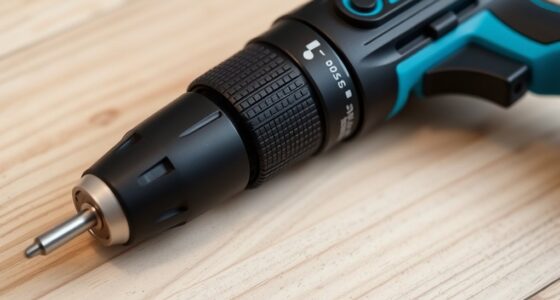
Using a drywall screw gun for fast installation helps you quickly secure drywall panels with less effort. It speeds up the process by allowing you to drive screws uniformly and efficiently, reducing physical strain and project time. You’ll achieve consistent screw placement and depth, resulting in a professional finish. Proper safety precautions and technique are key to maximum efficiency. For more tips on mastering drywall installation with a screw gun, keep exploring the essential techniques.
Key Takeaways
- Set the appropriate clutch and speed to drive screws efficiently without over-driving or damaging drywall.
- Maintain perpendicular alignment and steady pressure for consistent screw depth and secure fastening.
- Use the tool to quickly move between drywall sheets, reducing installation time significantly.
- Prioritize safety by wearing goggles and ensuring the tool is in good condition before use.
- Regularly practice proper technique to improve workflow, minimize fatigue, and achieve a professional finish.

Using a drywall screw gun can substantially speed up your installation process, making it easier to secure drywall panels efficiently. This power tool simplifies what used to be a labor-intensive task, allowing you to drive screws quickly and consistently. However, while the convenience is undeniable, practicing power tool safety remains indispensable. Always wear safety goggles and hearing protection, and make certain your workspace is clear of obstructions. Keep your hands away from the screw bit and double-check that the gun is in good working condition before starting. Proper safety measures prevent accidents and guarantee you can work confidently, especially when handling multiple sheets of drywall.
Speed up drywall installation safely with a screw gun—wear protective gear and check your tool before starting.
When operating a drywall screw gun, it’s vital to maintain control over the tool’s speed and depth. Set the screw gun’s clutch to avoid over-driving screws, which can damage drywall or compromise the surface. Proper technique involves holding the gun perpendicular to the panel’s surface, applying steady pressure, and letting the tool do the work. This consistency helps achieve a smooth, even finish and minimizes the need for extensive drywall finishing techniques later. If screws are driven too deep, they may break the paper surface or cause indentations, making finishing more difficult. Conversely, screws that are too shallow won’t secure the drywall properly, risking future cracks or detachment.
Using a drywall screw gun also allows you to maintain a steady workflow, especially when working on large projects. You can quickly move from one sheet to the next without constantly switching tools or hand-driving screws. This efficiency not only saves time but also reduces fatigue, enabling you to focus on quality craftsmanship. As you work, keep the screw gun aligned properly to prevent uneven screw placement. Consistent screw spacing and depth are critical for a professional-looking finish, and mastering these drywall finishing techniques ensures your project looks polished. Additionally, utilizing a drywall screw gun promotes protective styling benefits, minimizing physical strain and reducing the risk of slips or mishaps during operation.
In addition to speed, a drywall screw gun promotes safer work practices when used correctly. It reduces the strain on your hands and wrists compared to manual screwdrivers and minimizes the risk of slipping or stripping screws. To maximize safety, take regular breaks to avoid fatigue, which can lead to careless handling. Properly storing and maintaining your tool ensures it remains safe to use and prolongs its lifespan. When combined with good drywall finishing techniques, a drywall screw gun becomes an invaluable asset that enhances both your efficiency and the quality of your work. Ultimately, mastering its use and adhering to safety protocols will help you achieve professional results quickly and safely.
Frequently Asked Questions
Can I Use a Drywall Screw Gun for Other Fastening Tasks?
Yes, you can use a drywall screw gun for alternative fastening tasks. Its design allows for accessory compatibility, making it suitable for tasks like installing cabinetry or securing other materials. Just make certain you select the right bits and settings for each project. However, keep in mind that some specialized tasks might require different tools for ideal results, but overall, a drywall screw gun offers versatile functionality for various fastening needs.
What Safety Precautions Should I Take When Using a Drywall Screw Gun?
Safety comes first, so don’t let your guard down. Always wear protective gear like goggles and gloves, and follow safe handling practices to prevent accidents. Keep your work area clean and secure, and make sure the screw gun is in good condition before use. Remember, a little caution now saves a lot of trouble later. Stay alert and use the tool responsibly to avoid injuries.
How Do I Troubleshoot if the Screw Gun Jams?
When your screw gun jams, start by unplugging it and examining the bit and screw feed. Clear any debris or stuck screws using jam clearing techniques like gently removing the screw and cleaning the screw gun’s maintenance parts. Regularly check and maintain your tool to prevent jams. If issues persist, consult the manufacturer’s instructions or consider replacing worn parts to keep your screw gun running smoothly.
What Is the Ideal Screw Depth Setting for Different Drywall Thicknesses?
Think of setting screw depth like tuning a guitar string—you want just the right tension. For standard drywall thickness of 1/2 inch, set your screw gun to about 1/8 inch below the surface. For thicker drywall, like 5/8 inch, increase the depth slightly to make sure the screw holds firmly without breaking through. Always adjust based on drywall thickness and check your screw depth to get perfect, flush results.
Are Cordless Drywall Screw Guns as Effective as Corded Models?
Cordless drywall screw guns are quite effective, especially with their improved battery life and ergonomic design. You’ll find they offer excellent portability and ease of use, allowing you to work comfortably for longer periods. While corded models provide continuous power, cordless tools give you flexibility without sacrificing performance, making them ideal for various projects. Just guarantee your battery is charged and choose a model with a comfortable grip for ideal results.
Conclusion
By now, you see how a drywall screw gun can turn a time-consuming task into a swift, efficient process. Just like the swift messenger of old, it delivers results with speed and precision. Embracing this tool means you won’t be caught like a knight without his sword—delayed and unprepared. So, equip yourself wisely, and you’ll conquer your drywall project with the same zeal as a hero of legend, forging ahead with confidence.