To drastically improve your jigsaw cut quality, you need to match your blade type with the material, adjust the cutting speed accordingly, and use the right tooth pattern. For softer materials, high-speed steel blades work best at higher speeds, while tougher materials need bi-metal or carbide blades at slower speeds. Perfecting your technique and understanding performance helps prevent wobbling and uneven edges. Keep these principles in mind, and you’ll gain access to cleaner, more precise cuts every time—there’s much more to discover.

Get business pricing on tools and workshop supplies
- Business-only prices and quantity discounts
- Tax-exempt purchasing
- Multiple users, one account, clear invoices
Key Takeaways
- Matching blade tooth pattern to material significantly improves cut smoothness and reduces splintering.
- Using the correct blade material for specific materials enhances durability and cut precision.
- Adjusting cutting speed based on blade and material type minimizes heat and prevents blade damage.
- Proper technique, including consistent pressure and angle, ensures cleaner, more accurate cuts.
- Selecting the right blade and settings together maximizes efficiency and prolongs blade lifespan.
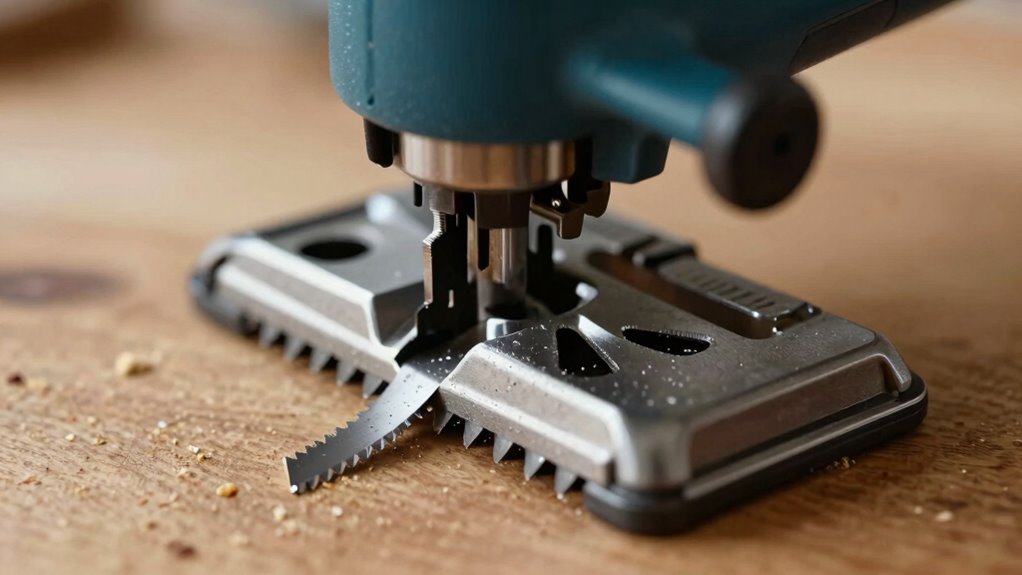
When aiming for clean, precise cuts with your jigsaw, choosing the right blade is only part of the equation—using a jigsaw blade rule can make a significant difference. This rule helps you select the best blade based on the material you’re working with, guaranteeing ideal performance and cut quality. The first factor to weigh is the blade material, which directly influences durability and cutting efficiency. For softer materials like plywood or plastic, high-speed steel (HSS) blades are often sufficient because they offer a good balance of toughness and flexibility. When working with tougher materials such as metal or dense hardwoods, you might opt for bi-metal blades, which combine the flexibility of HSS with the strength needed for demanding tasks. Carbide-grit blades are another option for specialty cutting, especially for tough, abrasive materials. Knowing the blade material helps you match it to your project, reducing wear and tear and preventing blade breakage. Additionally, considering cutting speed ensures you achieve a smooth, accurate cut while extending the lifespan of your blades. Next, you need to think about cutting speed, which is vital for achieving a smooth, accurate cut. The jigsaw’s speed setting should align with the blade material and the material you’re cutting. For delicate, detailed cuts on thin materials, a slower cutting speed allows for better control and minimizes splintering. Conversely, thicker or tougher materials benefit from a higher cutting speed, which reduces the time the blade is in contact with the material, decreasing heat buildup and wear. Proper understanding of blade performance can help you fine-tune your technique and avoid common issues like blade wobble or uneven cuts. Adjusting your technique based on blade characteristics can further improve your results and prolong blade life. The jigsaw’s adjustable speed feature makes it easier to adapt to different tasks, but understanding the relationship between speed and blade material ensures you’re not pushing the tool beyond its limits or sacrificing cut quality. Moreover, selecting the right tooth pattern for your blade further enhances cut quality and efficiency. By carefully matching the blade material, adjusting your cutting speed, and selecting the appropriate tooth pattern, you’ll make cleaner, more precise cuts every time. Recognizing the importance of proper blade selection can also help prevent unnecessary tool damage and improve overall project outcomes. This simple but effective rule transforms your approach to jigsaw work, saving time, protecting your blades, and ultimately giving you better results with less frustration.
Products Worth Considering

Bose TV Speaker Compact Soundbar with Bluetooth and HDMI-ARC, Black

Sony 65 Inch BRAVIA 5 Mini LED 4K HDR Smart Google TV (K-65XR50)

Levoit Core 300S-P Smart WiFi Air Purifier
As an affiliate, we earn on qualifying purchases.
Frequently Asked Questions
How Does Blade Tooth Count Affect Cut Quality?
A higher blade tooth count generally improves cut quality by providing smoother edges, especially on fine or detailed cuts. You should consider blade material and tooth geometry; durable materials like carbide stay sharp longer, ensuring consistent cuts. Narrower tooth geometry creates finer cuts, ideal for delicate work, while wider teeth remove material faster but may produce rougher edges. Matching tooth count with blade material and tooth geometry helps you achieve the best cut quality.
What Is the Ideal Blade Speed for Different Materials?
Ever wonder the secret to perfect cuts? The ideal blade speed varies with material—slower for hardwoods, faster for soft plastics—maximizing blade durability and noise reduction. Too fast, and you risk overheating or dulling the blade; too slow, and you lose efficiency. Adjusting your jigsaw’s speed precisely guarantees cleaner cuts, longer blade life, and a quieter operation. Master this balance, and your cuts will always impress.
How Often Should Jigsaw Blades Be Replaced for Optimal Results?
You should replace your jigsaw blades regularly to maintain guaranteed results and cutting precision. Typically, change blades after about 3-4 projects or when you notice a decline in cut quality, such as rough edges or increased effort. Proper blade maintenance, including cleaning and checking for wear, ensures cleaner cuts and prolongs blade life. Don’t wait until blades are dull; proactive replacement keeps your work smooth, accurate, and efficient.
Can Blade Type Influence the Risk of Splintering?
Yes, blade type greatly influences splintering risk, especially considering blade durability and material compatibility. Using the right blade for your material reduces splintering, as some blades are designed for precise cuts on specific surfaces. A high-quality, durable blade minimizes vibrations and provides cleaner cuts, while incompatible blades can cause splintering or rough edges. Always select a blade suited to your project to guarantee ideal cut quality and safety.
What Safety Precautions Are Recommended When Changing Blades?
When changing blades, you should always wear protective gear like gloves and safety glasses to prevent injuries. Make sure the jigsaw is unplugged before you start to avoid accidental activation. Check if the blade is sharp or needs blade sharpening; dull blades can be dangerous. Carefully remove the old blade, handle it by the shank, and insert the new one securely. These precautions keep you safe during blade replacements.
Conclusion
So, next time you pick a jigsaw blade, remember there’s a secret rule that can turn your cuts from chaos to craftsmanship. Ignore it, and you’re basically asking for a jagged mess. Follow this simple tip, and suddenly, you’re the woodworking wizard everyone envies—without the magic, just a smarter blade choice. Who knew that changing your blade rule could be the game-changer? Go ahead, cut smarter, not harder. The secret’s in your hands!