To protect your power tool cords from cuts, kinks, and early failure, fully uncoil cords before use and avoid tight loops or knots. Use cable reels or hooks to prevent tangling, and store cords loosely in a dry, cool place away from sunlight. Regularly inspect for damage, replace worn cords immediately, and keep cords off high-traffic areas with covers or mats. Taking these steps will keep your cords safe and working longer—you’ll find more helpful tips below.

Get business pricing on tools and workshop supplies
- Business-only prices and quantity discounts
- Tax-exempt purchasing
- Multiple users, one account, clear invoices
Key Takeaways
- Use cord covers or mats in high-traffic areas to prevent cuts and damage.
- Coil cords properly with figure-eight or over-under techniques to avoid kinks.
- Avoid tight wrapping or wrapping around tools to reduce stress points.
- Regularly inspect cords for signs of wear, fraying, or cuts, and replace damaged ones immediately.
- Store cords in a dry, cool place, avoiding sharp bends or pressure that can cause early failure.
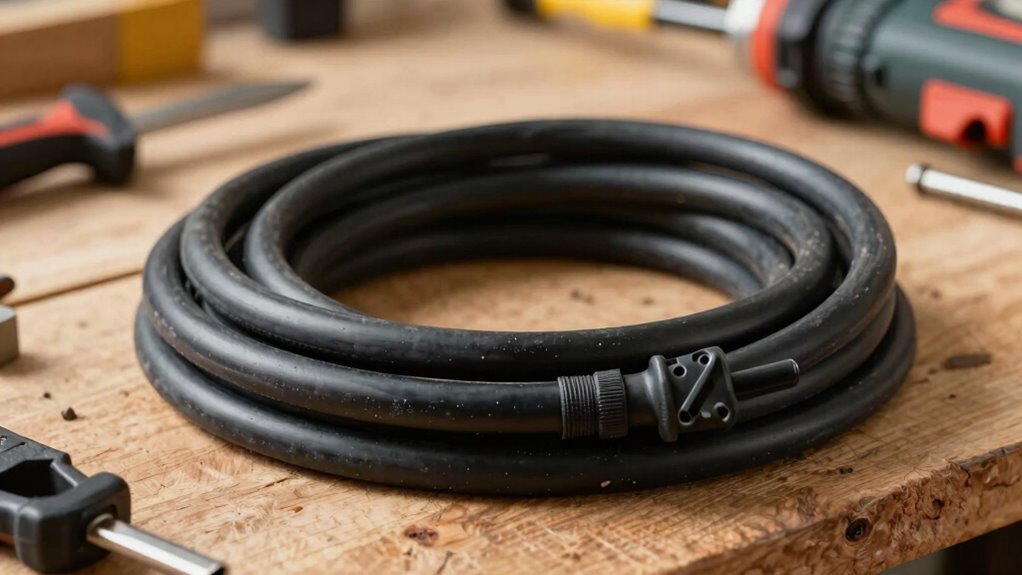
Power tool cords are essential for your projects, but they can easily become damaged if not properly protected. Damage from cuts, kinks, or fraying can lead to safety hazards and early tool failure, costing you time and money. To keep your cords in good shape, effective cord management is critical. Always uncoil cords fully before use, avoiding tight loops or knots that can cause internal wire stress. When working, keep cords off the ground whenever possible, and use cable reels or hooks to prevent tangling. This not only prolongs the life of your cords but also minimizes trip hazards, making your workspace safer.
Proper cord management extends lifespan and keeps your workspace safe and organized.
Implementing safety precautions is equally important. Use cord covers or mats over high-traffic areas to prevent accidental cuts or crushing injuries. Inspect your cords regularly for signs of wear, such as cracks, fraying, or exposed wires, and replace damaged cords immediately. Never pull a cord out of an outlet by the cord itself; instead, grip the plug firmly to avoid damaging the wiring near the plug end. When working outdoors, ensure cords are rated for outdoor use and kept away from water or moisture to prevent electrical shocks or shorts. Proper cord storage techniques can also help prevent damage caused by improper handling.
Proper storage also plays a key role in protecting your power tool cords. Coil cords loosely using figure-eight or over-under techniques to prevent kinks and internal wire damage. Store them in a dry, cool place away from direct sunlight, which can degrade insulation over time. Avoid wrapping cords tightly around tools or fixtures, as this can cause stress points that crack or fray the insulation. When unplugging, always pull from the plug and not the cord, reducing strain on the connection points.
Your awareness of cord management and adherence to safety precautions greatly extend the lifespan of your power tool cords. By keeping cords organized, inspecting them regularly, and storing them properly, you reduce the risk of damage. This proactive approach not only enhances safety during your projects but also ensures your tools perform reliably when you need them most. Remember, a well-maintained cord is a safe cord, and taking small steps now can save you from larger issues down the line. Protecting your power tool cords is simple but essential—think of it as an investment in both your safety and your project’s success.
Products Worth Considering

Dyson Big Ball Multi Floor Canister Vacuum, Yellow

Dyson Ball Animal 3 Upright Vacuum – Corded, 290 AW, De‑tangling Motorbar Cleaner Head, 3 Suction Modes

eufy Security Video Doorbell E340, Dual Cameras, 2K FHD, 8GB Local Storage
As an affiliate, we earn on qualifying purchases.
Frequently Asked Questions
Can Using Extension Cords Damage Power Tool Cords?
Yes, using extension cords can damage your power tool cords if they’re not compatible or if the extension cord isn’t rated properly. Poor cord durability or mismatched extension cord compatibility can cause excessive strain, leading to cuts, kinks, or early failure of your tool’s cord. Always choose high-quality, appropriately rated extension cords to reduce risks and guarantee safe, reliable operation of your power tools.
Are Waterproof Cords Suitable for Outdoor Use?
Yes, waterproof cords are well-suited for outdoor use. Their waterproof durability guarantees they withstand rain, splashes, and damp conditions, making your work safer and more reliable. Designed with outdoor compatibility in mind, these cords keep moisture out and maintain performance even in challenging weather. You can confidently rely on waterproof cords to protect your tools and keep your projects running smoothly, no matter the weather.
How Often Should I Inspect Power Tool Cords?
You should inspect your power tool cords before each use. Check the cord insulation for signs of damage, such as cuts, kinks, or fraying, which can compromise damage prevention. Regular inspections help catch issues early, reducing the risk of electrical hazards or equipment failure. By maintaining a routine, you guarantee your cords stay in good condition, extending their lifespan and keeping your work environment safe.
Do Cord Protectors Affect Tool Performance?
Cord protectors generally don’t affect your tool’s performance if you choose the right ones. They help maintain cord flexibility, so you can move freely without stiffening or restricting your tool’s use. Plus, quality protectors enhance insulation durability, preventing damage from cuts or kinks. As long as you select protectors compatible with your cord’s size and type, they’ll safeguard your cords without compromising performance.
What’s the Best Storage Method for Power Cords?
You should use proper storage solutions for your power cords to prevent damage and guarantee longevity. Coil cords neatly using a figure-eight or over-under method to avoid kinks. Store them in a dedicated cord organizer or hooks, keeping them off the ground and away from sharp objects. Good cord organization not only protects your cords from cuts and kinks but also makes your workspace safer and more efficient.
Conclusion
By taking simple steps to care for your power tool cords, you’re gently guiding them along a safer path, allowing their strength to shine through longer. Think of it as tending a delicate garden—protecting the roots guarantees healthy growth and vibrant blooms. With a little mindfulness and care, you’re nurturing the longevity of your tools, making sure they serve you well for many projects to come. After all, a little attention today keeps surprises at bay tomorrow.