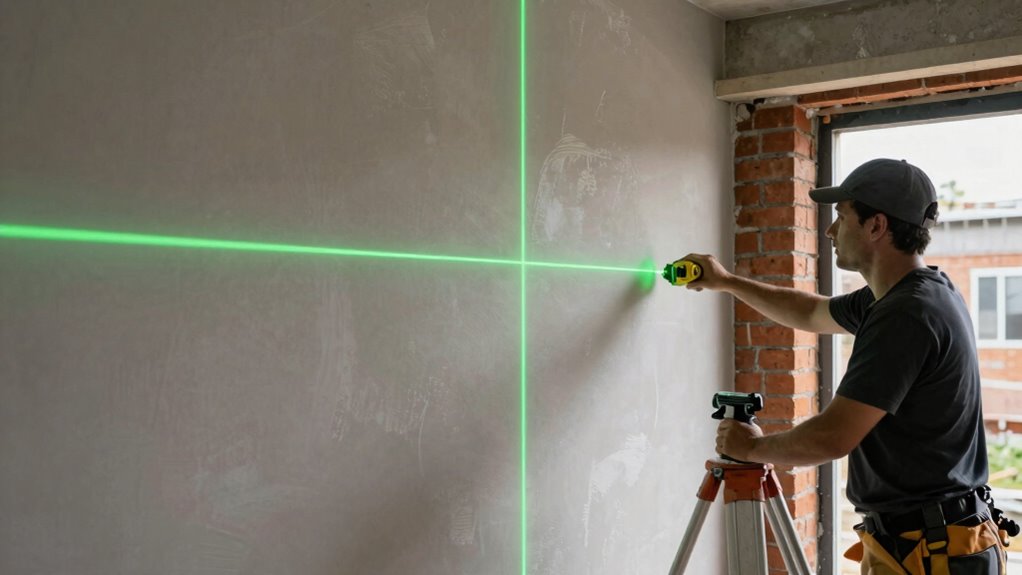

To use laser levels effectively for interior and exterior projects, always guarantee proper setup by stabilizing the device on a level surface or tripod and verifying alignment according to manufacturer instructions. Regular calibration is key, especially after bumps or drops, and use laser detectors for outdoor work or long distances. Follow safety precautions like wearing eye protection and avoiding direct laser exposure. Taking your time with setup and double-checking measurements can boost accuracy and efficiency—more tips await if you keep going.

Get business pricing on tools and workshop supplies
- Business-only prices and quantity discounts
- Tax-exempt purchasing
- Multiple users, one account, clear invoices
Key Takeaways
- Ensure proper calibration and regular maintenance to maintain accuracy and prevent costly errors.
- Set up the laser level on stable, level surfaces using tripods or mounts for consistent results.
- Use laser detectors or targets outdoors to improve visibility over long distances and challenging lighting.
- Follow safety protocols by wearing eye protection and avoiding direct laser beam exposure to eyes or others.
- Double-check measurements and setup before starting work to increase efficiency and reduce rework.
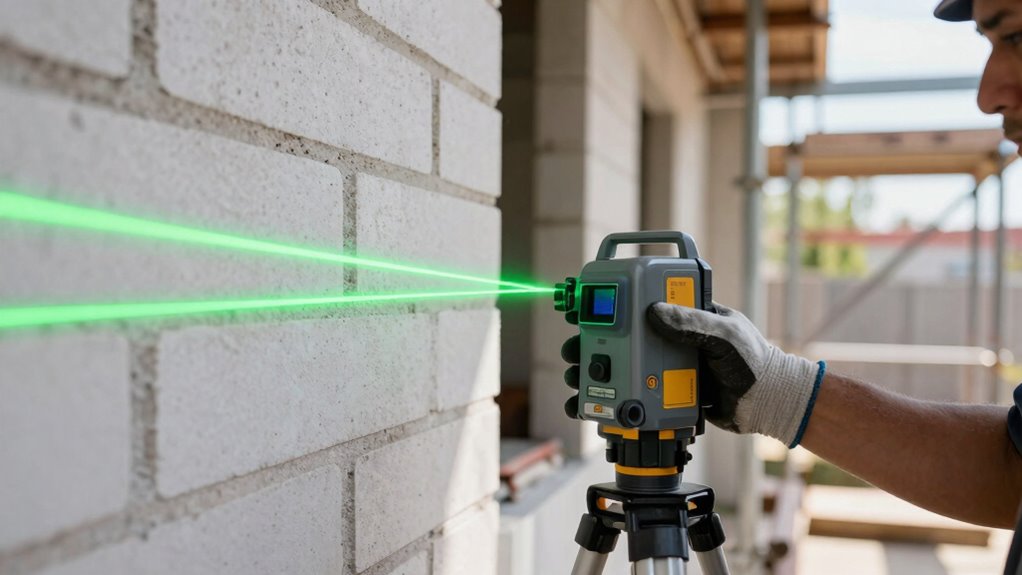
Laser levels are powerful tools that can markedly improve the accuracy and efficiency of your construction or DIY projects. To get the most out of your laser level, it’s essential to understand how to use it properly, whether you’re working indoors or outdoors. A key aspect of this is guaranteeing precision calibration. Before starting any project, always check that your laser level is properly calibrated. This involves verifying that the laser beam is straight and aligned according to the manufacturer’s instructions. Proper calibration ensures that your lines are accurate, saving you time and preventing mistakes that could compromise your work. Regularly calibrate your laser level, especially if it’s been bumped or dropped, as even minor misalignments can lead to significant errors down the line. Additionally, consider the importance of security strategies to protect your equipment from theft or damage, especially on job sites. When setting up your laser level outdoors, lighting conditions and uneven terrain can pose challenges. To improve visibility, consider using a laser detector or target, especially when working at longer distances. This will help you maintain accuracy and avoid rework. For interior work, make sure your surface is stable and level before placing the device. Use a tripod or mounting bracket to keep the laser level steady, which is vital for maintaining a consistent line. Taking the time to set up correctly can dramatically increase your efficiency and reduce frustration. Proper setup not only ensures accuracy but also minimizes the risk of measurement errors, which can be costly to correct later. Ensuring you have the right tools and accessories can further enhance your setup and results. Additionally, choosing quality laser levels designed for specific tasks can improve your overall results and reduce calibration issues. Regularly checking your equipment’s alignment can help maintain precision over time. Safety precautions should never be overlooked when working with laser levels. Always wear appropriate eye protection, especially if your laser level emits high-intensity beams. Never direct the laser beam toward your eyes or those of others. Mark the area with warning signs if you’re working in a shared space to alert others to the potential hazard. When operating outdoors, be aware of reflective surfaces like glass or water, which can redirect laser beams unexpectedly. Keep the laser level away from children and pets, and turn it off when not in use to prevent accidental exposure. Following these safety precautions guarantees your project remains safe and injury-free. Finally, practice patience and precision. Take your time to set up the device correctly and double-check your measurements before proceeding. Using your laser level effectively involves more than just turning it on; it requires attention to calibration, setup stability, and safety. As you gain experience, you’ll find that your work becomes faster, more accurate, and less stressful. Whether you’re hanging cabinets, laying tiles, or marking outdoor boundaries, mastering these fundamentals will make your projects smoother and more professional-looking.
As an affiliate, we earn on qualifying purchases.
Frequently Asked Questions
How Often Should I Calibrate My Laser Level?
You should calibrate your laser level regularly to guarantee accuracy, ideally every few months or after a drop or impact. Laser level maintenance includes checking for misalignment and recalibrating as needed. Calibration frequency depends on how often you use the tool and the work environment. For critical projects, calibrate more frequently to avoid errors. Consistent calibration keeps your laser level reliable and precise, ensuring quality results every time.
What Are the Best Batteries for Long-Term Use?
Suppose you’re working on a long outdoor project, and your laser level’s battery dies halfway through. For long-term use, lithium-ion batteries are your best choice because they offer a longer battery lifespan and reliable power sources. They last longer, hold a charge better, and recharge quickly. Avoid standard alkaline batteries—they drain fast and aren’t suitable for extended tasks. Investing in high-quality rechargeable batteries guarantees consistent, dependable performance.
Can Laser Levels Be Used in All Weather Conditions?
Yes, laser levels can be used in various weather conditions, but their effectiveness depends on weather resistance. For outdoor use, choose models with weather-resistant features to withstand rain or dust. Keep in mind, calibration frequency may increase after exposure to harsh elements, so check your laser level’s calibration regularly. Protect the device during extreme weather, and guarantee it’s properly calibrated for accurate results regardless of the conditions.
How Do I Troubleshoot if the Laser Is Not Projecting Properly?
Think of your laser level as a trusty compass on a challenging journey. If it’s not projecting properly, check the laser alignment—sometimes it’s just slightly off course. Power troubleshooting is also key—ensure batteries are fresh and properly seated. Clean the lens for clarity, and verify the device is on a stable, level surface. These steps help your laser project true, guiding your work with precision and confidence.
Are There Safety Precautions for Using Laser Levels Indoors?
Yes, you should always prioritize safety when using laser levels indoors. Wear eye protection to prevent potential damage from accidental laser beam exposure, and guarantee the laser is properly calibrated and aimed away from people’s eyes. Follow laser beam safety guidelines by avoiding direct eye contact and keeping the laser level out of reach of children. These precautions help prevent accidents and ensure safe, effective use of your laser level indoors.
outdoor laser detector for construction
As an affiliate, we earn on qualifying purchases.
As an affiliate, we earn on qualifying purchases.
Conclusion
By mastering laser levels, you turn your projects into a symphony of precision, each line and plumb point harmonizing seamlessly. Think of your laser level as a guiding star, illuminating your path with unwavering clarity. With a steady hand and keen eye, you harness its power to craft flawless interiors and exteriors. Embrace these tools like trusted companions, and watch your craftsmanship reach new heights—transforming your vision into a masterpiece etched in light and shadow.
As an affiliate, we earn on qualifying purchases.
As an affiliate, we earn on qualifying purchases.
Halloween Picks
halloween
As an affiliate, we earn on qualifying purchases.