
To make future paint spraying easier, start by disconnecting and emptying the sprayer, then rinse parts with water or mineral spirits. Run a cleaning solution through the system, disassemble the gun, and thoroughly scrub all parts. Reassemble, flush with water, and dry everything completely. Regularly inspecting for clogs and sticking to a maintenance schedule keeps your sprayer in top shape. Keep going to discover more tips for hassle-free cleanup and long-lasting gear.

Get business pricing on tools and workshop supplies
- Business-only prices and quantity discounts
- Tax-exempt purchasing
- Multiple users, one account, clear invoices
Key Takeaways
- Disassemble and thoroughly clean all parts immediately after use to prevent dried paint buildup.
- Use the recommended cleaning solution and run the sprayer briefly to ensure system-wide cleanliness.
- Dry all components completely before storage to avoid rust and mold, simplifying future setup.
- Implement a regular maintenance schedule to catch clogs early and keep the sprayer functioning smoothly.
- Store equipment in a dry, dust-free area to protect parts and reduce cleanup time before next use.

Cleaning your paint sprayer after each use is vital to guarantee it stays in top condition and performs well on future projects. Proper cleanup not only ensures your equipment lasts longer but also makes your next paint coating smoother and more consistent. Skipping this step can lead to clogged nozzles, uneven spray patterns, and even damage to internal components. When you develop a routine for equipment maintenance, you reduce the frustration and time spent troubleshooting issues later on.
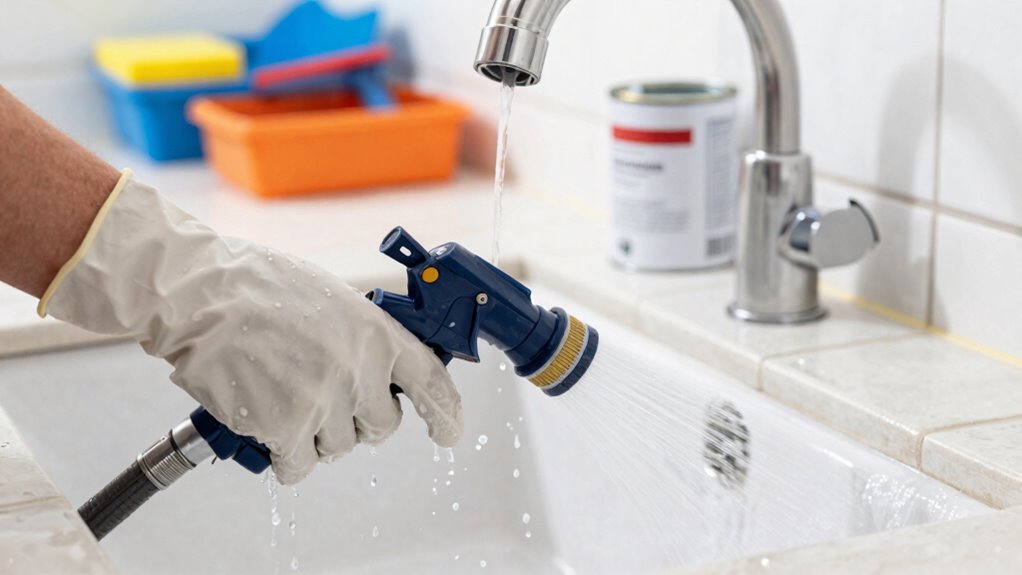
Start by disconnecting the sprayer from the power source and emptying any remaining paint into its original container or a suitable disposal method. Immediately rinsing the paint container and any removable parts with the appropriate solvent—water for latex paints or mineral spirits for oil-based coatings—keeps paint from drying and hardening inside the equipment. During this process, pay attention to the fluid passages and nozzle. Clearing clogs is vital, as dried paint can be stubborn and impair performance. Regularly inspecting your equipment for clog buildup can help catch issues early before they affect spray quality. Implementing a cleaning schedule can further streamline this process and prevent neglect.
Next, fill the sprayer’s paint reservoir with the recommended cleaning solution, then run the sprayer for a few seconds to circulate the solvent through the entire system. This step helps loosen any residual paint coating inside the hoses, valves, and nozzle. Additionally, using the correct cleaning tools can make this process more effective and prevent damage to delicate parts. Afterward, disassemble the spray gun and clean each part thoroughly with a brush or cloth, ensuring you reach all the small crevices where paint can hide. Be gentle but thorough—damaged seals or worn-out parts can lead to leaks or inconsistent spray patterns.
Once everything is clean, reassemble the sprayer and run plain water or solvent through the system to flush out any remaining residue. This step guarantees that no cleaning solution is left behind, which could interfere with your next project. After cleaning, dry the parts completely before storage to prevent rust and mold growth. Store the equipment in a dry, dust-free area, ideally covered to protect it from debris. Regularly inspecting and maintaining your sprayer can prevent buildup of dried paint, which is crucial for optimal performance.
Adhering to a consistent paint sprayer cleanup routine is a smart form of equipment maintenance. It prolongs the life of your sprayer, maintains top spray pattern quality, and reduces the hassle of troubleshooting problems caused by neglect. When you treat your equipment with care after each use, you’ll find that future projects become less of a chore and more of a smooth, enjoyable process. A little effort now saves you time and frustration later, making every paint coating application easier and more professional-looking.
Products Worth Considering

Levoit Vital 100S-P Air Purifier with Washable Pre-Filter

Roborock Q7 M5+ Robot Vacuum and Mop

Dreame L40 Ultra Gen 2 Robot Vacuum and Mop
As an affiliate, we earn on qualifying purchases.
Frequently Asked Questions
How Often Should I Deep Clean My Paint Sprayer?
You should deep clean your paint sprayer after every use to guarantee ideal Paint sprayer maintenance. Cleaning frequency depends on the type of paint you use and how often you work, but regular thorough cleaning prevents clogging and prolongs your equipment’s lifespan. Always disassemble and clean the parts carefully, especially if switching between different paints or colors. Consistent maintenance makes future projects smoother and reduces long-term repair costs.
Can I Reuse Leftover Paint in My Sprayer?
Yes, you can reuse leftover paint in your sprayer if it’s still in good condition and properly stored. First, strain the paint to remove debris, then transfer it to an airtight container for storage. When disposing of excess paint, follow local paint disposal regulations. Use storage tips like labeling containers clearly and keeping them in a cool, dry place. Reusing paint saves money and reduces waste.
What Tools Are Essential for Efficient Cleanup?
You need essential cleaning tools like a brush, rags, and a spray gun cleaner for efficient paint sprayer maintenance. A flexible brush helps clean nozzles and filters thoroughly, while rags wipe down surfaces. Additionally, using a cleaning kit with solvent reservoirs or adapters speeds up the process, ensuring all paint residue is removed. These cleaning tools make your cleanup quicker, easier, and help keep your sprayer in top condition for future projects.
How Long Does a Typical Cleanup Process Take?
Cleaning your paint sprayer after each use is like giving it a quick shower—usually taking about 15 to 30 minutes. Regular paint sprayer maintenance and sticking to a cleaning frequency prevent clogs and guarantee smooth operation. If you skip cleaning, it can take longer later. By establishing a routine, you save time and effort in the long run, making future projects much more manageable.
Are There Eco-Friendly Cleaning Solutions Available?
Yes, eco-friendly cleaning solutions are available for your paint sprayer. You can use biodegradable solvents that break down naturally without harming the environment. Natural cleaning agents like vinegar, baking soda, and plant-based solutions also work effectively and are safer for you and the planet. These options make cleanup easier and less toxic, ensuring you maintain a greener workspace while keeping your equipment in top shape.
Conclusion
By sticking to this simple cleanup routine, you’ll find future paint jobs much smoother and less stressful. Sure, it might seem like a hassle now, but investing just a few minutes today prevents hours of frustration later. Don’t let the thought of cleaning scare you away—once you get into the habit, it becomes quick and easy. Trust me, your future self will thank you for making cleanup a breeze instead of a dreaded chore.