
To better control dust during cutting, grinding, and sanding, wear high-quality masks, goggles, gloves, and long sleeves to protect your skin and lungs. Use local exhaust ventilation, attach vacuum systems to tools, and keep surfaces damp to suppress dust. Regularly clean your workspace with HEPA vacuums and maintain equipment properly. Combining protective gear, extraction methods, and good housekeeping helps reduce airborne dust effectively. Keep going to discover more ways to improve your dust control techniques.

Get business pricing on tools and workshop supplies
- Business-only prices and quantity discounts
- Tax-exempt purchasing
- Multiple users, one account, clear invoices
Key Takeaways
- Use local exhaust ventilation systems or dust extraction attachments on tools to capture dust at the source.
- Wear appropriate protective gear, including masks, goggles, and gloves, to reduce inhalation and skin contact.
- Keep surfaces damp with misting or water sprays to suppress dust generation during cutting, grinding, and sanding.
- Regularly clean work areas with HEPA-filter vacuums instead of sweeping to prevent dust dispersion.
- Maintain tools and ventilation systems properly to ensure continuous effective dust control.
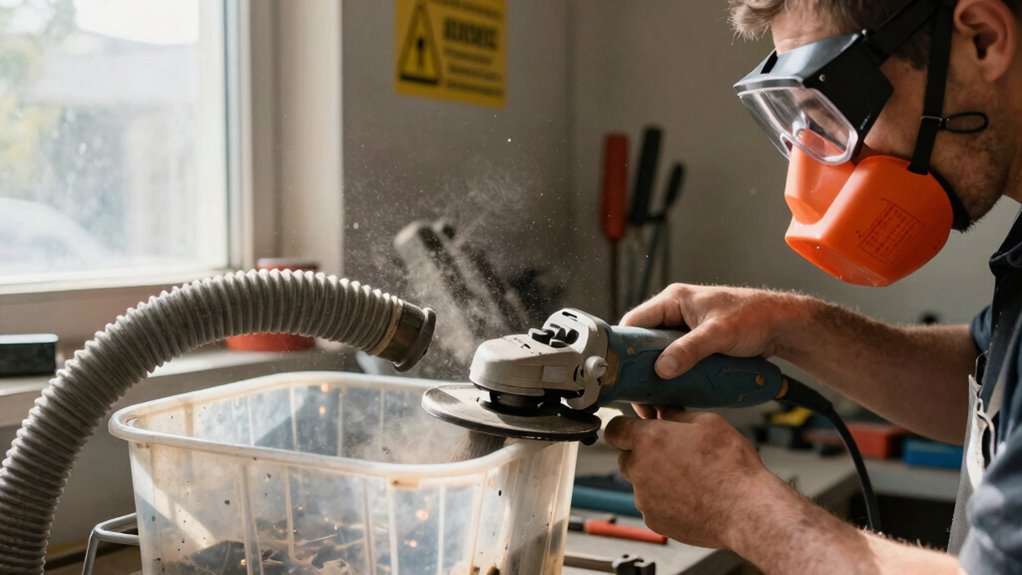
Dust can quickly become a persistent problem if you don’t take steps to control it. When you’re cutting, grinding, or sanding, tiny particles become airborne and settle everywhere—on your work surface, in the air, and even inside your lungs. To keep dust at bay, you need to be proactive. One of the best ways to protect yourself is by using proper protective equipment. A high-quality dust mask or respirator filters out harmful particles so you don’t inhale them. Safety goggles also help keep dust out of your eyes, preventing irritation. Wearing gloves and long sleeves can reduce skin contact with dust, especially if you’re working with materials that can cause irritation or allergic reactions. But protective gear alone isn’t enough.
Using protective gear like masks, goggles, and gloves is essential but not sufficient for dust control.
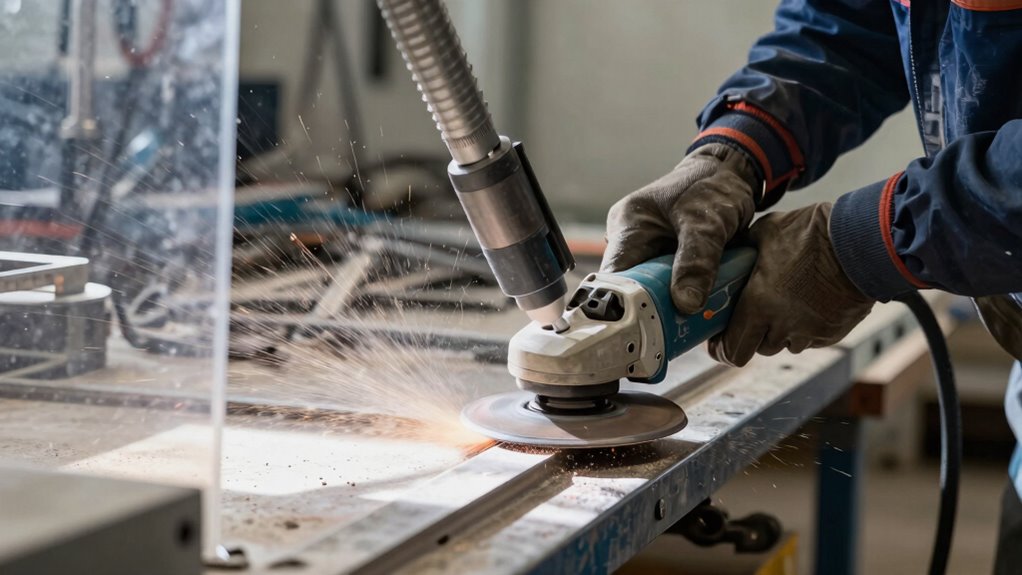
You should also implement effective ventilation techniques to manage airborne dust. Local exhaust ventilation systems are ideal because they capture dust right at the source—close to where you’re generating it. Attach a vacuum or dust collection system to your tools, and turn it on before you start working. This prevents dust from dispersing into the air and settling on surfaces. If you don’t have a dedicated system, opening windows and using fans can help improve air circulation, but they aren’t as effective at capturing dust before it becomes airborne. Combining ventilation with dust extraction tools ensures that dust doesn’t stay suspended, reducing health risks and keeping your workspace cleaner. Proper ventilation techniques are essential for maintaining a safe working environment. Additionally, using dust control methods can significantly improve overall air quality during and after your projects. Incorporating dust suppression strategies, like dampening surfaces, can further reduce airborne particles during work.
Another critical step is controlling dust after it’s been generated. Regularly clean your workspace using a vacuum fitted with a HEPA filter instead of sweeping, which can stir up settled dust. Wet methods, like misting or dampening surfaces before cleaning, also help prevent dust from becoming airborne during cleanup. When working, keep your work area organized to minimize dust accumulation and ensure tools and ventilation equipment are maintained properly. Good habits like wiping down surfaces and replacing filters periodically keep your dust control system working efficiently. Implementing these dust management practices can help maintain a healthier environment and reduce long-term health risks.
Ultimately, controlling dust during cutting, grinding, and sanding requires a combination of protective equipment and ventilation techniques. By wearing the right gear, capturing dust at the source, and maintaining a clean workspace, you create a safer environment for yourself and those around you. Dust might be unavoidable during these tasks, but with the right precautions, it won’t have to be a persistent problem.
Products Worth Considering

Dyson Ball Animal 2 Total Clean Upright Vacuum Cleaner, Blue

eufy Security SoloCam E42 4-Camera Kit, 4K Solar Security Camera System

Dyson Ball Allergy Upright Vacuum
As an affiliate, we earn on qualifying purchases.
Frequently Asked Questions
What Safety Gear Is Recommended for Dust Control?
You should wear appropriate personal protective equipment, including respiratory masks, to effectively control dust exposure. A properly fitted dust mask or respirator filters out harmful particles, protecting your lungs during cutting, grinding, or sanding. Additionally, consider eye protection and gloves to prevent debris contact. Using these safety gear items guarantees you minimize health risks associated with airborne dust, keeping you safe and protected during dusty tasks.
How Often Should Dust Collection Systems Be Maintained?
You should maintain your dust collection system regularly—ideally, monthly or as recommended by the manufacturer—to guarantee peak performance. Check and clean filters, replace worn parts, and calibrate equipment to keep air filtration effective. Consistent maintenance prevents dust buildup, improves air quality, and prolongs system life. By staying proactive with your maintenance schedule, you ensure your dust control remains efficient, safe, and compliant with health standards.
Are There Eco-Friendly Dust Suppression Options?
Yes, there are eco-friendly alternatives for dust suppression. You can use sustainable suppression methods like water mist systems that minimize water use and reduce airborne dust effectively. Additionally, organic binders or natural dust suppressants made from biodegradable materials offer eco-conscious options. These solutions help control dust while protecting the environment, ensuring safer work conditions, and promoting sustainability in your projects.
Can Dust Control Methods Be Used Indoors Safely?
Yes, dust control methods can be used safely indoors. Did you know that poor indoor ventilation can lead to dust levels exceeding safety standards by up to 50%? To keep the air clean, use proper indoor ventilation systems and air filtration units. These tools help remove airborne dust particles, guaranteeing a safer environment while you work. Always make sure your ventilation is adequate and filters are regularly maintained for peak safety.
What Are the Signs of Ineffective Dust Control?
If dust control is ineffective, you’ll notice dust particles lingering in the air despite your efforts. Poor air filtration may leave dust particles suspended, making the air feel gritty or hazy. You might also see dust settling on surfaces or experience coughing and irritation. These signs indicate your dust control methods aren’t working well enough, and you need to improve air filtration systems or implement additional dust suppression techniques to keep the air cleaner.
Conclusion
By implementing effective dust control measures during cutting, grinding, and sanding, you greatly improve your workspace safety and air quality. Remember, respiratory issues from dust exposure can develop after just a few months of unprotected work, with studies showing that workers exposed to high dust levels are 30% more likely to develop chronic lung problems. So, take proactive steps—use dust extractors, wear masks, and keep your area clean—to protect yourself and guarantee a healthier, safer environment.