To clean faster without damaging surfaces, use proper pressure washer techniques like selecting the right nozzle—wider angles for general cleaning and a narrower one for tough spots—and maintaining a safe distance of 12-18 inches. Apply smooth, overlapping strokes and keep the wand at an angle, not straight on. Adjust pressure based on the surface material to prevent erosion. Mastering these steps will boost your efficiency while protecting your surfaces—more tips await if you keep going.

Get business pricing on tools and workshop supplies
- Business-only prices and quantity discounts
- Tax-exempt purchasing
- Multiple users, one account, clear invoices
Key Takeaways
- Select the appropriate nozzle (25 or 40-degree) for wider coverage and to reduce surface impact.
- Maintain a consistent distance of 12-18 inches from the surface for controlled pressure.
- Use overlapping, smooth strokes to ensure even cleaning without over-concentrating pressure.
- Work from top to bottom and dry to wet to prevent dirt redistribution and surface damage.
- Pre-treat stubborn stains with suitable cleaners to minimize high-pressure exposure on delicate surfaces.
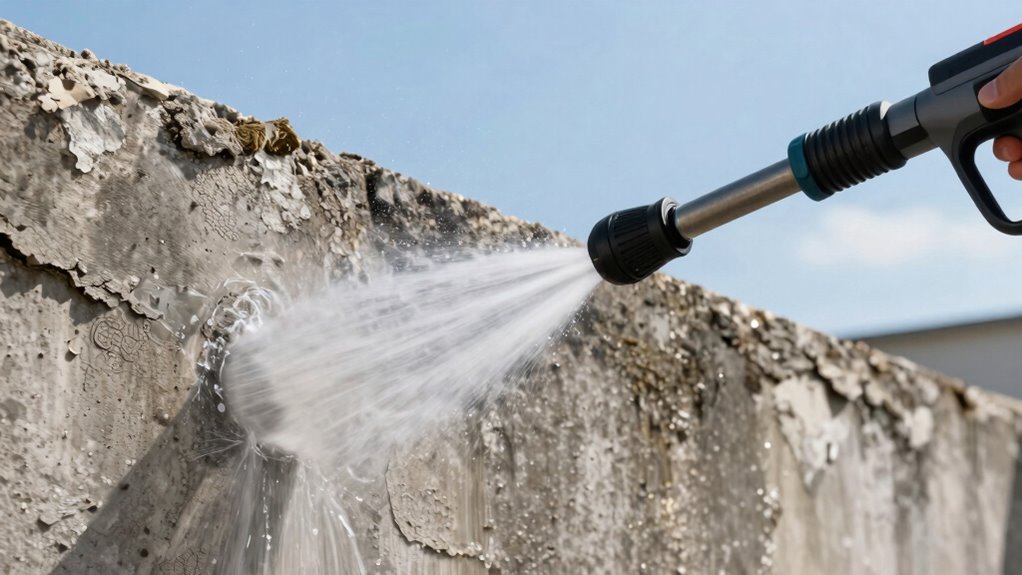
Are you making the most of your pressure washer? If you want to clean faster without risking surface damage, mastering proper technique is essential. The first step is focusing on surface preparation. Before you turn on the machine, clear away any loose debris, dirt, or objects that could interfere with an even clean. This helps prevent scratching or pushing grime deeper into the surface. Also, test your pressure washer on a small, inconspicuous area to gauge how much pressure is appropriate. Proper surface prep ensures you’re not applying unnecessary force, which can cause damage.
Start with surface prep and test on a hidden spot for safe, effective cleaning.
Next, consider nozzle selection carefully. Different nozzles emit spray patterns with varying angles and pressure levels, so choosing the right one makes a big difference. A nozzle with a narrow spray angle, like a 0-degree, delivers a concentrated jet that’s excellent for tough stains or reaching tight spots, but it can be damaging if used improperly. For general cleaning, a 25- or 40-degree nozzle spreads the pressure over a wider area, reducing the risk of surface harm while still providing effective cleaning power. Using the correct nozzle helps you work efficiently, saving you time and effort.
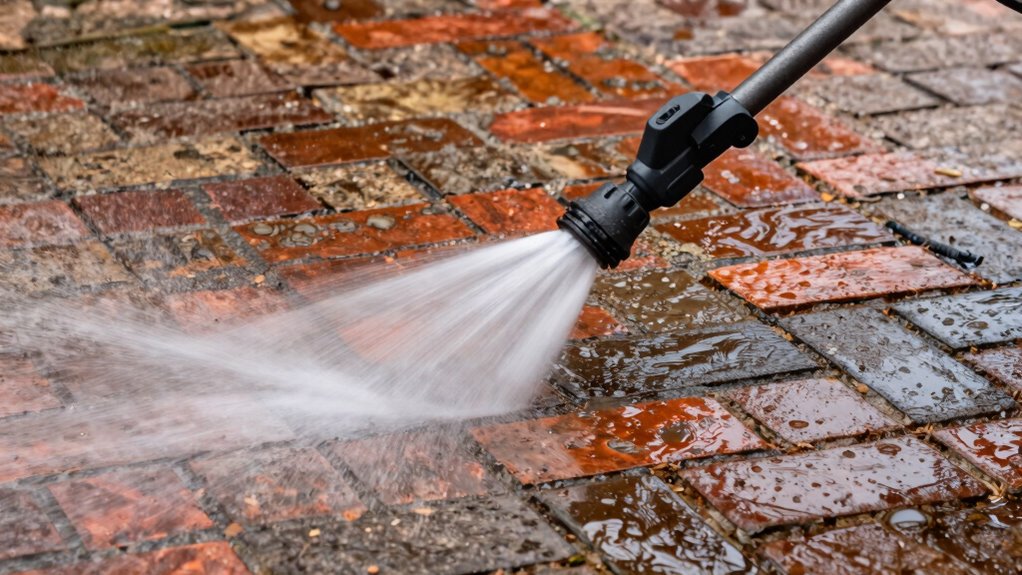
When you start cleaning, hold the wand at a consistent distance—usually 12 to 18 inches—from the surface. Moving the wand in smooth, overlapping strokes prevents uneven cleaning and minimizes the chance of leaving streaks or damage. Keep the nozzle at an angle rather than perpendicular to the surface, which helps distribute pressure evenly. Remember, high pressure isn’t always better; sometimes, a lower setting moves grime just as effectively without risking harm. Adjust your pressure and nozzle choice based on the material you’re cleaning—wood, concrete, or siding all require different approaches. Additionally, understanding pressure regulation can help optimize your cleaning process while protecting surfaces. Being aware of pressure settings allows for more precise control and safer cleaning. Proper technique also involves recognizing surface material characteristics to avoid unintended damage. Using appropriate cleaning solutions can further enhance efficiency and surface safety, especially on stubborn stains.
To increase efficiency, work from the top down and from dry to wet areas. This prevents dirty water from running over cleaned sections and keeps your workflow streamlined. Also, avoid staying in one spot too long; constant movement prevents concentrated pressure that could cause surface etching or erosion. If you encounter stubborn grime, pre-treat it with a cleaner suitable for the surface before rinsing with your pressure washer. This combination lets you work faster and safer, reducing the need for excessive pressure.
Using the right technique not only protects your surfaces but also extends the lifespan of your equipment and ensures a thorough clean every time.
pressure washer 25 degree and 40 degree nozzle tips
As an affiliate, we earn on qualifying purchases.
As an affiliate, we earn on qualifying purchases.
Frequently Asked Questions
Can Pressure Washers Damage Delicate Surfaces?
Yes, pressure washers can damage delicate surfaces if you’re not careful. To guarantee surface protection, always adjust the pressure and use the appropriate nozzle. Keep the equipment safety in mind by maintaining a safe distance and avoiding prolonged spraying in one spot. Proper technique helps prevent surface damage while still cleaning effectively. By being cautious, you protect your surfaces and extend the lifespan of your equipment.
What Nozzle Size Is Safest for Sensitive Materials?
You’ll want to use a 25-degree nozzle for delicate surfaces, like a gentle rain softly tapping the leaves. This nozzle size is compatible with most pressure washers and guarantees safe surface preparation without causing damage. Imagine the water as a fine mist, evenly cleaning without harsh force. Always check your pressure washer’s compatibility to prevent any mishaps, and test on a small area first for peace of mind.
How Do I Prevent Streaks or Uneven Cleaning?
To prevent streaks or uneven cleaning, start with proper surface preparation by removing loose debris. Use consistent cleaning patterns, such as overlapping strokes, to guarantee even coverage. Maintain a steady distance and pressure to avoid oversaturating areas. Moving the nozzle smoothly and methodically allows you to control the spray, preventing streaks and achieving a uniform clean. Regularly check your progress and adjust your technique as needed.
Is There a Recommended Distance to Maintain From Surfaces?
Did you know that maintaining the right distance improves cleaning efficiency by up to 50%? For ideal results, keep your pressure washer about 12 to 18 inches from the surface. Proper surface preparation and nozzle selection are key; using a wider spray tip reduces damage. Stay at this distance, adjust based on the surface type, and you’ll clean faster without risking surface damage or streaks.
How Often Should I Perform Maintenance on My Pressure Washer?
You should perform maintenance on your pressure washer after every few uses. Regularly check and clean the nozzle, inspect hoses, and replace worn parts. Use a cleaning solution to clear out any debris and prevent buildup. When not in use, follow storage tips like draining water and storing in a dry, sheltered area. This keeps your equipment in top shape, ensuring efficient cleaning and preventing damage.
pressure washer adjustable pressure wand
As an affiliate, we earn on qualifying purchases.
As an affiliate, we earn on qualifying purchases.
Conclusion
By mastering the pressure washer technique that cleans faster without damaging surfaces, you save time and money while maintaining your property’s appearance. Imagine a homeowner who used a gentle, targeted approach on their deck, removing years of grime without gouging the wood. They finished in half the time it usually takes, with a spotless, damage-free finish. When you apply these methods, you’ll enjoy efficient cleaning and long-lasting results, proving that careful technique truly makes all the difference.
pressure washer detergent for siding and concrete
As an affiliate, we earn on qualifying purchases.
As an affiliate, we earn on qualifying purchases.
pressure washer nozzle quick connect set
As an affiliate, we earn on qualifying purchases.
As an affiliate, we earn on qualifying purchases.
Fall yard work Picks
leaf blowers
As an affiliate, we earn on qualifying purchases.