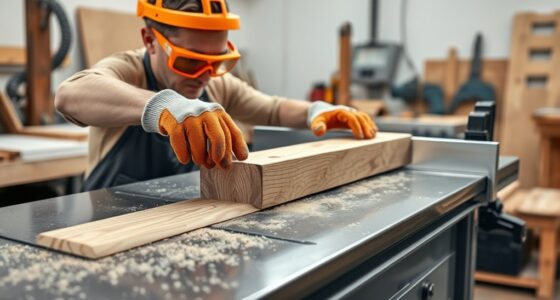
When using a reciprocating saw, always choose the right blade for your material—wood, metal, or drywall—and make certain it’s securely attached. Wear safety gear like gloves, safety glasses, hearing protection, and a dust mask to stay safe during operation. Keep your work area clear, maintain your saw properly, and use controlled, steady motions while cutting. If you follow these safety tips and blade guidelines, you’ll work more efficiently and reduce the risk of accidents. Continue exploring to master all safety practices and techniques.
Key Takeaways
- Select the appropriate blade type (wood, metal, demolition) based on your material for efficient and safe cutting.
- Wear safety gear including gloves, goggles, hearing protection, and dust masks to prevent injuries.
- Ensure the saw is properly maintained, with a secure blade attachment and a cleared work area before starting.
- Maintain a firm grip, use controlled motions, and avoid forcing the saw through tough materials for safe operation.
- Always follow manufacturer guidelines and switch blades as needed to optimize safety and project results.
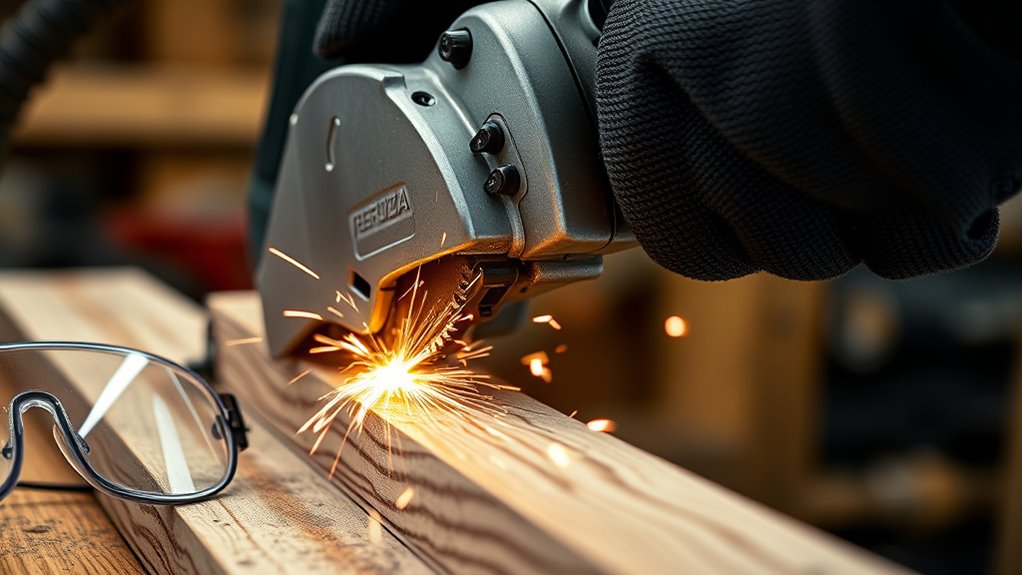
A reciprocating saw is a versatile power tool that can handle a wide range of cutting tasks, from demolition to remodeling. To make the most of its capabilities, you need to understand the different blade types available. There are blades designed for wood, metal, plastic, and even drywall. Wood-cutting blades often have large, aggressive teeth for fast, rough cuts, while metal blades are thinner with smaller teeth for more precise, cleaner cuts. Some blades are designed specifically for demolition work, with durable teeth that can handle tough materials, whereas fine-tooth blades excel at detailed, smooth cuts. Choosing the right blade type guarantees your project proceeds efficiently and safely, reducing the risk of blade breakage or accidents. Always check the manufacturer’s recommendations for your specific saw, and switch blades as needed to match the material you’re working with.
Safety gear is equally important when operating a reciprocating saw. Before you start cutting, put on sturdy gloves to protect your hands from sharp edges and debris. Safety glasses or goggles are a must to shield your eyes from flying particles, especially when cutting materials like drywall or metal that tend to produce sparks or small fragments. Hearing protection is also recommended, as reciprocating saws can be loud, and prolonged exposure can damage your hearing. A dust mask or respirator helps prevent inhalation of dust or fumes generated during cutting, particularly with materials like treated wood or plastics. Wearing appropriate clothing, such as fitted long sleeves and avoiding loose items, keeps your skin protected and reduces the chance of getting caught in the moving parts. Besides personal safety gear, ensure your work area is clear of obstacles and that the saw is properly maintained. Check the cord or battery, and ensure the blade is firmly attached before starting. Understanding exponential safety measures can further enhance your protection during operation.
While operating the saw, maintain a firm grip, keep your hands away from the blade, and cut with controlled, steady motions. Don’t force the saw through tough material; instead, let the blade do the work. If you encounter resistance, stop and reassess—forcing the tool can cause the blade to break or kick back. Regularly inspect your safety gear for wear and replace any damaged equipment. Proper safety measures and understanding blade types are key to avoiding accidents and achieving clean, accurate cuts. Remember, safety isn’t just about protecting yourself but also about ensuring your project’s success. Always take the time to prepare your tools, wear the right safety gear, and work carefully to get the best results with your reciprocating saw.
Frequently Asked Questions
Can a Reciprocating Saw Cut Through Metal Pipes?
Yes, a reciprocating saw can cut through metal pipes, making it great for metal cutting tasks like pipe demolition. You should use a bi-metal or metal-cutting blade designed for tougher materials. Make certain you secure the pipe firmly and wear proper safety gear. With the right blade and technique, you can efficiently cut through various metal pipes, speeding up your project and making pipe demolition easier.
What Is the Average Lifespan of a Reciprocating Saw Blade?
Did you know that your reciprocating saw blade typically lasts between 3 to 10 hours of cutting? The lifespan depends on blade maintenance, the material you’re cutting, and whether you’re using a corded or cordless saw. Corded models often offer more consistent power, which can extend blade life. To maximize your blade’s longevity, keep it sharp, clean, and replace it when dull. Proper maintenance guarantees safer, more efficient cutting.
How Do I Choose the Right Blade for My Project?
To choose the right blade for your project, consider the blade material and tooth configuration. If you’re cutting through wood, opt for a high-carbon steel blade with fewer teeth for fast, rough cuts. For metal, choose bi-metal blades with more teeth for cleaner cuts. For demolition or tougher materials, look for blades with reinforced blades and specific tooth patterns. Always match the blade to the material to guarantee efficiency and safety.
Is It Safe to Use a Reciprocating Saw Upside Down?
Using a reciprocating saw upside down isn’t safe, as it can compromise proper handling and control. Always follow safety precautions, like keeping a firm grip, wearing protective gear, and ensuring stability. If you need to work in an awkward position, consider using a saw with an adjustable or ergonomic design. Proper handling reduces the risk of accidents, so avoid using the saw upside down to maintain safety during your project.
Can I Use a Reciprocating Saw for Fine Woodworking?
You can use a reciprocating saw for fine woodworking, but it’s not ideal. Only about 10% of users choose it for precision cuts, which highlights its limitations. While it can handle delicate work, a fine woodworking project demands tools designed for accuracy. For the best results, opt for a jigsaw or scroll saw instead, as they offer better control and cleaner cuts for detailed, delicate tasks.
Conclusion
Now that you’ve got the scoop on reciprocating saw basics and safety, you’re ready to tackle your projects with confidence. Just remember, safety’s no time to be a knucklehead—wear your gear and stay alert. Think of it like a trusty steed in a modern-day joust; respecting its power keeps you in the saddle. With these tips, you’ll cut through tasks smoothly, making your DIY journey as legendary as a tale told around the campfire.