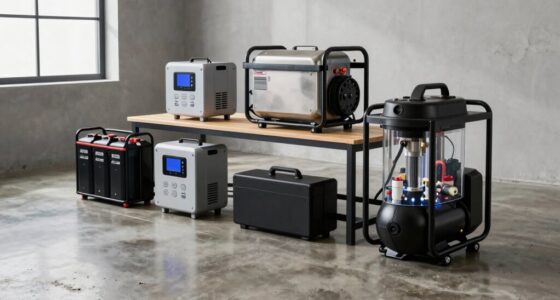
Among these cordless tool battery chargers, I rank the DEWALT DCB1104 best overall for buyers who need a straightforward charger for DEWALT 12V and 20V MAX lithium-ion batteries. The Lenoya four-port charger suits crews with several compatible batteries to manage, while the DEWALT DCB094K adds USB charging for users who want more than a wall-mounted battery charger. The main tradeoffs are brand and battery compatibility, the number of batteries charged at once, and whether extra charging features justify a more specialized unit. Several alternatives target specific ecosystems, including older DEWALT NiCd and NiMH batteries and Ryobi ONE+ packs, so the right choice depends on the batteries you own. Continue reading for the full breakdown, selection criteria, and buying advice.

Get business pricing on tools and workshop supplies
- Business-only prices and quantity discounts
- Tax-exempt purchasing
- Multiple users, one account, clear invoices
Complete the kit



Key Takeaways
Battery fit is the first filter: the lineup includes separate options for DEWALT lithium-ion, older DEWALT NiCd/NiMH, and Ryobi ONE+ batteries, plus chargers described for compatible 20V/21V tools.
The DCB1104 leads as a practical single-battery pick because it supports DEWALT 12V and 20V MAX lithium-ion packs without the added complexity of a multi-port setup.
Charging several packs changes the ranking: the Lenoya four-port and TeenPower dual charger prioritize battery throughput, but make the most sense only for buyers with compatible batteries and a need for multiple charging positions.
Extra features serve narrower needs: the DEWALT DCB094K adds USB charging, while standard replacement chargers focus on replenishing tool batteries rather than charging other devices.
Older batteries need a different match: the Lasica and ZEERISA DC9310 listings target DEWALT 7.2V–18V NiCd/NiMH packs, so buyers should not assume they replace a lithium-ion charger.
| DEWALT 12V MAX/20V MAX Lithium-Ion Battery Charger, 4 Amp (DCB1104) |  | Best Overall for DEWALT Owners | Brand and model: DEWALT DCB1104 | Compatible batteries: DEWALT 12V MAX, 20V MAX, and FLEXVOLT | Input voltage: 120 V AC | VIEW LATEST PRICE | See Our Full Breakdown |
| 21V Charger for 20V/21V Cordless Tools |  | Best Simple Replacement Adapter | Output voltage: 21V DC | Input: 100–240V AC, 50/60Hz | Connector: Round DC barrel jack | VIEW LATEST PRICE | See Our Full Breakdown |
| UORLEN 21V Lithium Battery Charger for Power Tools |  | Best for Longer-Reach Charging | Input: AC 100–240V, 50/60Hz | Output: DC 21V, 0.1–2A | Maximum power: 42W | VIEW LATEST PRICE | See Our Full Breakdown |
| DEWALT Battery Charger and USB Wall Charging Kit (DCB094K) |  | Best for Battery and Device Charging | Brand and model: DEWALT DCB094K | Compatible batteries: DEWALT 20V MAX and FLEXVOLT | USB-C output: Up to 100W | VIEW LATEST PRICE | See Our Full Breakdown |
| Lenoya DCB104 Replacement 4-Port Battery Charger for DeWalt 12V and 20V MAX Batteries |  | Best for Charging Multiple Batteries | Brand: Lenoya | Compatible batteries: DEWALT 12V MAX and 20V MAX | Compatible models: DCB120, DCB124, DCB127, DCB204, DCB205-2, DCB206, and others | VIEW LATEST PRICE | See Our Full Breakdown |
| 21V Lithium-Ion Battery Charger for Compatible 20V/21V Power Tools |  | Best for Simple Replacement Charging | Input voltage: 100–240V AC, 50/60Hz | Output: 21V DC, 1A, 21W | Battery compatibility: Compatible 20V or 21V lithium-ion batteries | VIEW LATEST PRICE | See Our Full Breakdown |
| Lasica DC9310 Fast Charger for DeWalt 7.2V–18V NiCd and NiMH Batteries |  | Best for Older DeWalt NiCd and NiMH Packs | Input voltage: 100–240V AC | Output: 18V DC, 2A | Battery compatibility: DeWalt 7.2V, 9.6V, 12V, 14.4V, and 18V NiCd and NiMH batteries | VIEW LATEST PRICE | See Our Full Breakdown |
| TeenPower DCB102 Dual Battery Charger for DeWalt 12V/20V Max Batteries |  | Best for Charging Two DeWalt Batteries at Once | Battery compatibility: DeWalt 12V/20V Max | Compatible charger models: DCB112, CB104, DCB107, DCB118, DCB115 | Input: 100–240V AC, 50–60Hz | VIEW LATEST PRICE | See Our Full Breakdown |
| P117 Replacement Fast Charger for Ryobi 12V–18V ONE+ Batteries |  | Best for Mixed-Chemistry Ryobi Batteries | Compatible charger models: P117, P118, P118B, P119, P135, P166 | Battery compatibility: 18V lithium-ion; 12V/14.4V NiCd and NiMH | Input voltage: 100–241V | VIEW LATEST PRICE | See Our Full Breakdown |
| BLACK+DECKER 12V/20V MAX Lithium-Ion Battery Charger (LCS1620B) |  | Best Compact Charger for BLACK+DECKER Owners | Model: LCS1620B | Battery compatibility: BLACK+DECKER 12V MAX and 20V MAX lithium-ion slide-pack batteries | Output voltage: 20V | VIEW LATEST PRICE | See Our Full Breakdown |
| ZEERISA DC9310 Battery Charger for DEWALT 7.2V–18V Batteries |  | Best for Older DEWALT Battery Platforms | Model: DC9310 (DEC8253) | Input: 100–240V AC, 50–60Hz | Output voltage: 7.2–18V | VIEW LATEST PRICE | See Our Full Breakdown |
| COOMYXIN DCB112 20V MAX Battery Charger for DeWalt 12V–20V Batteries |  | Best for a Simple 12V–20V Replacement | Model: DCB112 | Input voltage: 20V | Output voltage: 20V | VIEW LATEST PRICE | See Our Full Breakdown |
| cordless tool battery charger | Input voltage | Dimensions | Warranty | Compatible batteries |
|---|---|---|---|---|
| DEWALT 12V MAX/20V MAX Lithium | 120 V AC | — | — | DEWALT 12V MAX, 20V MAX, and FLEXVOLT |
| 21V Charger for 20V/21V Cordle | — | — | — | — |
| UORLEN 21V Lithium Battery Cha | — | — | — | 20V and 21V lithium batteries |
| DEWALT Battery Charger and USB | 20V | 8 × 2 × 5 in | — | DEWALT 20V MAX and FLEXVOLT |
| Lenoya DCB104 Replacement 4-Po | 100–240V AC | 7 × 17 × 3 in (D × W × H) | 1 year | DEWALT 12V MAX and 20V MAX |
| 21V Lithium-Ion Battery Charge | 100–240V AC, 50/60Hz | — | — | — |
| Lasica DC9310 Fast Charger for | 100–240V AC | 8.2 × 9.3 × 3.6 inches | 13 months | — |
| TeenPower DCB102 Dual Battery | — | 6 × 3 × 2 inches | 1 year | — |
| P117 Replacement Fast Charger | 100–241V | — | 12 months | — |
| BLACK+DECKER 12V/20V MAX Lithi | — | 1.62 × 4.81 × 8.69 inches | 2-year limited warranty | — |
| ZEERISA DC9310 Battery Charger | — | 3.93 × 5.31 × 7.6 in | 1 year | DC9071, DC9072, DC9091, DC9096, DC9098, DC9099, DE9038, DE9057, DE9095, DW9099, DW9091, DW9094, DW9071, DW9072, DE9071, DE9074, DW9061, DW9062, DW9057 |
| COOMYXIN DCB112 20V MAX Batter | 20V | 7.68 × 5.71 × 3.94 in | 3 years | DEWALT 12V–20V MAX lithium batteries |
More Details on Our Top Picks
DEWALT 12V MAX/20V MAX Lithium-Ion Battery Charger, 4 Amp (DCB1104)
I’d pick the DEWALT DCB1104 for households already using DEWALT 12V MAX, 20V MAX, and FLEXVOLT batteries. Its broad compatibility makes it more useful across a mixed DEWALT tool collection than the DEWALT DCB094K, which focuses on 20V MAX and FLEXVOLT batteries while adding USB charging. The DCB1104 keeps its job simpler: one charging port, a two-stage LED indicator, and a 15% smaller design than the DCB115 4A charger. At one pound, it’s also easy to move or mount near a work area. The tradeoff is capacity: a single port means it cannot rotate through several depleted packs at once, unlike the Lenoya four-port charger. Wall mounting is available, but screws are not included.
Pros:- Works with DEWALT 12V MAX, 20V MAX, and FLEXVOLT batteries
- Compact design is 15% smaller than the DCB115 4A charger
- Two-stage LED indicator communicates charging status
- Two-screw wall-mount option helps keep a workbench clear
Cons:- Single charging port cannot charge multiple batteries at once
- Wall-mount screws are sold separately
Best for: DEWALT owners who need one compact charger for 12V MAX, 20V MAX, and FLEXVOLT batteries.
Not ideal for: Crews with several depleted batteries to charge at once, since this model has only one port.
- Brand and model:DEWALT DCB1104
- Compatible batteries:DEWALT 12V MAX, 20V MAX, and FLEXVOLT
- Input voltage:120 V AC
- Output voltage:20 V
- Charging ports:1
- Weight:1 lb
- Indicator:Two-stage LED state-of-charge indicator
- Mounting:Two-screw wall mount; screws sold separately
Our verdict“Choose the DCB1104 for a compact, straightforward charger that covers several DEWALT battery families, but pick the Lenoya if charging multiple packs at once matters more.”
21V Charger for 20V/21V Cordless Tools
This 21V barrel-jack adapter is a practical replacement only when the battery or tool calls for 21V input and uses the specified round connector. Its 3.9-foot cord and LED status light cover the basics, while overload, short-circuit, and temperature protections add safeguards absent from the simple spec list for the DEWALT DCB1104. That comparison also marks the main limitation: this is not a universal cordless-tool charger, and it does not replace a brand-specific dock like the DCB1104. Buyers need to match both the 5.5 × 2.5 mm connector and the device’s voltage requirements; the package contains no battery or tool. I’d choose it for a compatible tool that needs a direct power-supply replacement, not for a collection of interchangeable battery packs.
Pros:- Accepts 100–240V AC input for use across common mains-voltage ranges
- 3.9-foot cord provides some flexibility around an outlet
- LED indicates charging and fully charged or standby status
- Includes overload, short-circuit, and temperature protections
Cons:- Requires a compatible round DC connector and a device that accepts 21V input
- Generic replacement adapter rather than an original tool-brand charger
- Battery and device are not included
Best for: Owners of a 20V or 21V cordless tool whose battery requires a 21V charger with a compatible round barrel connector.
Not ideal for: Buyers seeking a multi-brand charging station or a charger for DEWALT slide-on batteries, since compatibility depends on a specific connector and input requirement.
- Output voltage:21V DC
- Input:100–240V AC, 50/60Hz
- Connector:Round DC barrel jack
- DC port size:5.5 × 2.5 mm; also fits 5.5 × 2.1 mm
- Cord length:3.9 ft (1.2 m)
- Charging ports:1
- Protections:Overload, short-circuit, and temperature protection
- Package contents:1 power supply cord; battery and device not included
Our verdict“Buy this adapter only when its voltage and barrel connector match your tool; for DEWALT battery packs, the DCB1104 is the more direct fit.”
UORLEN 21V Lithium Battery Charger for Power Tools
The UORLEN 21V charger suits buyers whose compatible tool uses a round barrel connector and whose outlet is not right beside the charging spot. Its 6.6-foot cord is notably longer than the 3.9-foot lead on the other generic 21V adapter in this roundup, making placement easier without an extension cord. It also lists a broad set of electrical protections and a variable 0.1–2A output. Compared with the DEWALT DCB1104, though, it relies on connector and voltage matching rather than a clearly defined brand battery platform, and its single port limits throughput. The supplied details do not establish compatibility with every tool named; I’d verify the battery’s connector and charging requirements before buying. The flexible output and protection list are useful, but they do not remove that compatibility check.
Pros:- 6.6-foot power cord gives more placement flexibility than the 3.9-foot generic adapter
- Variable 0.1–2A output is specified for the charger
- Lists overload, overcurrent, overcharge, overheating, voltage, and surge protections
- Compact 120 g body is easy to store
Cons:- Compatibility depends on matching the battery voltage and barrel connector
- Single port charges one battery at a time
- No charging time is specified
Best for: Owners of compatible 20V or 21V tools who need a longer cord and can verify the battery’s barrel connector and charging requirements.
Not ideal for: DEWALT platform users or anyone who cannot confirm connector and voltage compatibility; a brand-specific charger such as the DCB1104 is a clearer match for DEWALT packs.
- Input:AC 100–240V, 50/60Hz
- Output:DC 21V, 0.1–2A
- Maximum power:42W
- Power cord length:6.6 ft
- Connector:5.5 × 2.5 mm; compatible with 5.5 × 2.1 mm
- Compatible batteries:20V and 21V lithium batteries
- Charging ports:1
- Weight:120 g
- Protection features:Overload, overcurrent, overcharge, overtemperature, undervoltage, overvoltage, and surge protection
Our verdict“Pick the UORLEN when a longer lead and listed electrical protections matter, but verify compatibility before choosing it over the platform-specific DEWALT DCB1104.”
DEWALT Battery Charger and USB Wall Charging Kit (DCB094K)
The DEWALT DCB094K is the most versatile choice here when a battery charger also needs to serve as a device-charging hub. It works with DEWALT 20V MAX and FLEXVOLT batteries, then adds USB-C Power Delivery up to 100W and a USB-A output up to 12W. The included power supply and 100W USB cord make it a more complete personal-device setup than the DCB1104, which focuses on charging DEWALT batteries and supports 12V MAX as well. That distinction matters: the DCB094K does not list 12V MAX compatibility, and its USB-A port is comparatively limited. I’d choose it for a workbench or field kit where a battery charger and device power source can share space, rather than for someone who only wants a simple, compact battery dock.
Pros:- Charges DEWALT 20V MAX and FLEXVOLT batteries
- USB-C Power Delivery output supports up to 100W
- USB-A output supports mobile-device charging up to 12W
- Includes a 100W USB cord, 65W power supply, and belt hook
Cons:- Compatible battery list does not include DEWALT 12V MAX
- USB-A output is limited to 12W
- Battery-powered device charging requires a compatible DEWALT battery
Best for: DEWALT 20V MAX or FLEXVOLT users who also need to power or charge USB-C devices from a workbench or jobsite kit.
Not ideal for: Owners of DEWALT 12V MAX batteries or buyers who only want a straightforward battery charger without USB charging features.
- Brand and model:DEWALT DCB094K
- Compatible batteries:DEWALT 20V MAX and FLEXVOLT
- USB-C output:Up to 100W
- USB-A output:Up to 12W
- Number of ports:2
- Input voltage:20V
- Dimensions:8 × 2 × 5 in
- Weight:0.45 kg
- Included accessories:100W USB cord, 65W power supply, and belt hook
Our verdict“Choose the DCB094K if you want DEWALT battery charging plus high-output USB-C power, but choose the DCB1104 for 12V MAX support and a simpler charger.”
Lenoya DCB104 Replacement 4-Port Battery Charger for DeWalt 12V and 20V MAX Batteries
When keeping several DEWALT packs ready matters more than a small footprint, the Lenoya four-port charger has a clear advantage: it can charge up to four compatible 12V MAX or 20V MAX batteries at the same time. That makes it a stronger bench option for a busy tool rotation than the single-port DCB1104, which is smaller and includes FLEXVOLT compatibility. Lenoya also adds two USB outputs, LED status indicators, and internal cooling fins. The tradeoff is its broad, 17-inch width, plus less clarity around charging performance: the product information gives no charging times, and its listed compatibility is limited to specified DEWALT battery types rather than FLEXVOLT. I’d favor it for a fixed charging station, not a compact kit or a buyer who needs clearly stated recharge-time expectations.
Pros:- Charges up to four compatible batteries at the same time
- Compatible with DEWALT 12V MAX and 20V MAX batteries
- Two USB output ports can charge mobile devices
- LED indicators show charging status, with internal cooling fins for heat management
Cons:- Wide 17-inch design takes substantial bench space
- Charging times are not specified
- Listed compatibility does not include FLEXVOLT batteries
Best for: DEWALT 12V MAX and 20V MAX users who keep several batteries in rotation and want a central charging station with USB outputs.
Not ideal for: Buyers with limited bench space, FLEXVOLT batteries, or a need for specified charging times; the DCB1104 is smaller and lists FLEXVOLT compatibility.
- Brand:Lenoya
- Compatible batteries:DEWALT 12V MAX and 20V MAX
- Compatible models:DCB120, DCB124, DCB127, DCB204, DCB205-2, DCB206, and others
- Charging ports:4
- Input voltage:100–240V AC
- Output current:3A per port
- USB outputs:2
- Dimensions:7 × 17 × 3 in (D × W × H)
- Warranty:1 year
Our verdict“Choose the Lenoya for a multi-battery DEWALT charging station, but pick the DCB1104 if you need a smaller charger or FLEXVOLT support.”
21V Lithium-Ion Battery Charger for Compatible 20V/21V Power Tools
I’d choose this charger when a compatible tool uses a round DC charging jack and the original charger needs replacing. Its 1A output is a straightforward fit for charging compatible 20V or 21V lithium-ion batteries, while red and green indicators make it easy to tell whether charging is underway or complete. Compared with the BLACK+DECKER LCS1620B, which fits a specific brand’s slide-pack batteries, this model is less tied to a named tool brand but depends on an exact connector and battery match. It also accepts 100–240V AC and includes overload, short-circuit, and temperature protection. The tradeoff is narrow compatibility: it won’t charge other chemistries or batteries that use USB-C, magnetic pins, or tool-body charging.
Pros:- Works with compatible 20V and 21V lithium-ion batteries across tool brands
- Red and green lights distinguish charging from a full charge
- Overload, short-circuit, and temperature protection are built in
- 100–240V AC input supports a broad range of mains voltages
Cons:- Compatibility depends on the battery voltage, chemistry, and round-jack connector all matching
- 1A output may be a slow choice for higher-capacity batteries
- Does not support USB-C, magnetic-pin, or tool-body charging
Best for: Owners of compatible 20V or 21V lithium-ion tools whose batteries charge through a 5.5 × 2.5 mm or compatible 5.5 × 2.1 mm round DC jack.
Not ideal for: Buyers who need a brand-specific slide-pack charger, faster output, or support for NiCd, NiMH, or lead-acid batteries.
- Input voltage:100–240V AC, 50/60Hz
- Output:21V DC, 1A, 21W
- Battery compatibility:Compatible 20V or 21V lithium-ion batteries
- Connector:Round DC jack, 5.5 × 2.5 mm; compatible with 5.5 × 2.1 mm
- Cable length:3.9 ft (1.2 m)
- Charging indicators:Red while charging; green when fully charged
- Protection:Overload, short circuit, and temperature control
- Power plug:Type A, 2-pin
Our verdict“Choose this as a basic replacement only when your 20V or 21V lithium-ion battery has the specified round DC charging port.”
Lasica DC9310 Fast Charger for DeWalt 7.2V–18V NiCd and NiMH Batteries
This Lasica charger serves a specific need that most current cordless-tool chargers do not: charging DeWalt XRP NiCd and NiMH batteries across several older voltage platforms. The maker states a charge time of about 60 minutes for compatible batteries, and an air-cooling fin helps manage heat during charging. Compared with the ZEERISA DC9310, which targets the same DeWalt battery family, this model lists 100–240V input and a 13-month warranty; the single red charging light, however, gives less status detail than the separate indicators on the TeenPower DCB102. Its main limitation is decisive: it does not charge lithium-ion batteries. I’d shortlist it for an older XRP tool collection, not as a flexible charger for a mixed or newer DeWalt setup.
Pros:- Supports several DeWalt XRP NiCd and NiMH battery voltages
- Manufacturer-stated charge time is about 60 minutes for compatible batteries
- Air-cooling fin helps cool the battery during charging
- 100–240V AC input accommodates different mains voltages
Cons:- Not compatible with lithium-ion batteries
- Single red light offers limited charging-status information
- Compatibility is restricted to listed DeWalt battery families and voltages
Best for: DeWalt owners maintaining older 7.2V–18V XRP tools with NiCd or NiMH batteries who want a dedicated replacement charger.
Not ideal for: Owners of DeWalt lithium-ion packs or anyone seeking one charger for both older battery chemistries and current slide-pack batteries.
- Input voltage:100–240V AC
- Output:18V DC, 2A
- Battery compatibility:DeWalt 7.2V, 9.6V, 12V, 14.4V, and 18V NiCd and NiMH batteries
- Stated charge time:About 60 minutes
- Charging indicator:Single red light
- Cooling:Air-cooling fin
- Dimensions:8.2 × 9.3 × 3.6 inches
- Warranty:13 months
Our verdict“Pick this for compatible older DeWalt XRP NiCd or NiMH packs, but skip it if your tools use lithium-ion batteries.”
TeenPower DCB102 Dual Battery Charger for DeWalt 12V/20V Max Batteries
The TeenPower DCB102 is the lineup’s practical pick for a DeWalt user who regularly needs two batteries charging at the same time. Its two ports and separate status indicators make it easier to keep a workbench rotation moving than the single-port BLACK+DECKER LCS1620B. The wall-mountable design also helps free up bench space, and the stated 3.5A output suits a shared charging station. The manufacturer says one 6.0Ah battery takes 90 minutes, but that figure does not establish how long two batteries take together, so I would not assume the same turnaround when both ports are occupied. Compatibility is limited to DeWalt 12V and 20V Max packs, and the listed 90-minute timing applies to one battery. Buyers should check their battery and charger-model compatibility before choosing it.
Pros:- Two charging ports let users charge a pair of compatible batteries at once
- Separate indicators show the status of each charging position
- Wall-mountable design can clear space from a workbench
- Lists compatibility with several DeWalt charger models and 12V/20V Max batteries
Cons:- Limited to compatible DeWalt 12V and 20V Max batteries
- The stated 90-minute charge time applies to one 6.0Ah battery, not two
- The product data does not specify a dual-port charging time
Best for: DeWalt 12V and 20V Max users who keep multiple batteries in rotation and want a wall-mounted charging spot with separate indicators.
Not ideal for: Owners of other tool brands, or buyers who need a confirmed dual-battery charge-time estimate for large packs.
- Battery compatibility:DeWalt 12V/20V Max
- Compatible charger models:DCB112, CB104, DCB107, DCB118, DCB115
- Input:100–240V AC, 50–60Hz
- Output:12–20V DC, 3.5A
- Number of ports:2
- Stated charge time:One 6.0Ah battery in 90 minutes
- Dimensions:6 × 3 × 2 inches
- Warranty:1 year
Our verdict“Choose this for a DeWalt 12V/20V Max battery rotation where two charging positions and a wall-mount option matter more than a documented two-pack turnaround.”
P117 Replacement Fast Charger for Ryobi 12V–18V ONE+ Batteries
For a Ryobi owner with older NiCd or NiMH packs alongside newer lithium-ion batteries, this P117 replacement offers broader chemistry support than the BLACK+DECKER LCS1620B, which is limited to lithium-ion packs in its own system. It accepts compatible 18V lithium-ion batteries and 12V/14.4V NiCd or NiMH batteries, with output current varying by chemistry. The added USB output can charge a device while a battery occupies the charger, and active cooling plus several listed protections add useful safeguards. Its stated 2–4-hour charge time for a 6.0Ah 18V pack is not especially quick, while the TeenPower DCB102 is the better fit for buyers who need two batteries charging at once. This Ryobi model also does not support 12V or 14.4V lithium-ion batteries, so checking the exact pack type matters.
Pros:- Supports compatible lithium-ion, NiCd, and NiMH batteries across listed Ryobi models
- USB output can charge a device while a tool battery is connected
- Automatic maintenance mode follows charging
- Active cooling and multiple listed safety protections are included
Cons:- Does not support 12V or 14.4V lithium-ion batteries
- A 6.0Ah 18V battery is listed as taking approximately 2–4 hours
- Output current differs by battery chemistry
Best for: Ryobi users who need one replacement charger for compatible 18V lithium-ion and older 12V/14.4V NiCd or NiMH packs, plus USB device charging.
Not ideal for: Owners of 12V or 14.4V lithium-ion Ryobi batteries, or users who prioritize charging two tool batteries at once.
- Compatible charger models:P117, P118, P118B, P119, P135, P166
- Battery compatibility:18V lithium-ion; 12V/14.4V NiCd and NiMH
- Input voltage:100–241V
- Output current:2A for 18V lithium-ion; 1.5A for NiCd/NiMH
- Stated charge time:Approximately 2–4 hours for a 6.0Ah 18V battery
- USB output:5V/4A
- Safety protections:Overcharge, overcurrent, overload, short circuit, and overheat
- Warranty:12 months
Our verdict“Pick this for a mixed-chemistry Ryobi collection and convenient USB charging, but verify that each battery’s voltage and chemistry are supported.”
BLACK+DECKER 12V/20V MAX Lithium-Ion Battery Charger (LCS1620B)
The LCS1620B is a straightforward choice for BLACK+DECKER owners who want a compact, single-battery charger for 12V MAX or 20V MAX lithium-ion slide packs. The stated charging time of 40 minutes or less for a 1.5Ah battery gives buyers a clear reference for smaller packs, unlike the P117’s broader chemistry support and 2–4-hour estimate for a 6.0Ah battery. That comparison also shows the limits: this is not a multi-port station, and its compatibility is brand- and battery-format-specific. A status light shows charging progress, while UL certification and a two-year limited warranty add useful product details. The charger’s simple design makes sense for a small tool collection, but the TeenPower DCB102 is a better match for DeWalt users who need two batteries charging together.
Pros:- Compatible with BLACK+DECKER 12V MAX and 20V MAX lithium-ion slide packs
- Charges a 1.5Ah battery in 40 minutes or less, according to the product data
- Indicator light displays charging status
- UL certification and a two-year limited warranty are listed
Cons:- Only one battery can be charged at a time
- Compatibility is limited to specified BLACK+DECKER lithium-ion packs
- Battery is sold separately
Best for: BLACK+DECKER 12V MAX or 20V MAX owners with lithium-ion slide-pack batteries, especially those charging smaller packs.
Not ideal for: Buyers with NiCd or NiMH batteries, non-BLACK+DECKER packs, or a need to charge multiple batteries at once.
- Model:LCS1620B
- Battery compatibility:BLACK+DECKER 12V MAX and 20V MAX lithium-ion slide-pack batteries
- Output voltage:20V
- Charge time:40 minutes or less for a 1.5Ah battery
- Number of ports:1
- Dimensions:1.62 × 4.81 × 8.69 inches
- Weight:3.84 oz
- Warranty:2-year limited warranty
Our verdict“Choose this compact, single-port option for compatible BLACK+DECKER 12V or 20V batteries, but look elsewhere if you need multi-battery charging.”
ZEERISA DC9310 Battery Charger for DEWALT 7.2V–18V Batteries
The ZEERISA DC9310 suits owners maintaining older DEWALT tools, especially when their battery collection includes more than one chemistry. Its compatibility with select 7.2V–18V lithium-ion, NiCd, and NiMH batteries gives it a broader chemistry range than the COOMYXIN DCB112, which is specified for 12V–20V MAX lithium batteries. The 2A output is a basic charging rate, not a fast-charging choice for busy crews cycling batteries throughout the day. An LED indicator and listed protections against electrical faults and temperature extremes add useful status and safety information, but the model-number compatibility list is the deciding detail: voltage alone does not confirm a fit. I’d choose it for a legacy battery shelf, not for users seeking a current high-voltage platform or rapid turnaround.
Pros:- Supports select lithium-ion, NiCd, and NiMH batteries
- Covers a range of 7.2V–18V batteries
- LED status indicator reports charging and battery or power-line conditions
- Listed protections cover overcharge, over-discharge, overvoltage, overcurrent, short circuits, and temperature extremes
Cons:- Compatibility is limited to the listed battery models, so buyers need to check their pack number
- 2A output may be slow for frequent battery changes or larger packs
- Does not cover the 20V MAX batteries supported by the COOMYXIN DCB112
Best for: DEWALT owners keeping select older 7.2V–18V tools in service, particularly those with compatible NiCd or NiMH packs alongside lithium-ion batteries
Not ideal for: Users with 20V MAX batteries, unlisted DEWALT battery models, or a need for faster charging than a 2A output provides
- Model:DC9310 (DEC8253)
- Input:100–240V AC, 50–60Hz
- Output voltage:7.2–18V
- Output current:2A
- Battery types:Lithium-ion, NiCd, NiMH
- Compatible batteries:DC9071, DC9072, DC9091, DC9096, DC9098, DC9099, DE9038, DE9057, DE9095, DW9099, DW9091, DW9094, DW9071, DW9072, DE9071, DE9074, DW9061, DW9062, DW9057
- Dimensions:3.93 × 5.31 × 7.6 in
- Certifications:CE, FCC, RoHS
- Warranty:1 year
Our verdict“Choose the ZEERISA if you need one charger for listed older DEWALT batteries across multiple chemistries, but skip it for 20V MAX packs or faster charging.”
COOMYXIN DCB112 20V MAX Battery Charger for DeWalt 12V–20V Batteries
The COOMYXIN DCB112 is a straightforward replacement for DEWALT owners using 12V–20V MAX lithium batteries who need a single-port charger for a workshop or jobsite bag. Its 2A output favors simple, steady charging over speed; the DEWALT DCB1104 4 Amp charger is a better fit for buyers who want a higher stated charging current. Compared with the ZEERISA DC9310, this model covers newer 20V MAX packs but does not list NiCd or NiMH support. The LED fault and charging indicators and protections against overcharging, overheating, and short circuits provide useful basic safeguards. Its main limitation is compatibility: the broad charger-model list does not make it universal, so I’d verify the battery platform and pack before buying.
Pros:- Compatible with specified DEWALT 12V–20V MAX lithium batteries
- LED indicator communicates charging status and faults
- Protection against overcharging, overheating, and short circuits
- Three-year warranty
Cons:- 2A output may charge more slowly than the DEWALT DCB1104 4 Amp charger
- Single port cannot charge multiple batteries at once
- Compatibility is limited to the specified DEWALT battery range
Best for: DEWALT 12V–20V MAX lithium-battery owners seeking a single-port replacement charger for occasional workshop or jobsite charging
Not ideal for: Crews that need faster battery turnaround, multi-pack charging, or support for older NiCd and NiMH batteries
- Model:DCB112
- Input voltage:20V
- Output voltage:20V
- Amperage:2A
- Compatible batteries:DEWALT 12V–20V MAX lithium batteries
- Compatible charger models:DCB112, DCB115, DCB118, DCB107, DCB119, DCB102, DCB101, DCB105, DCB100
- Charging ports:1
- Dimensions:7.68 × 5.71 × 3.94 in
- Warranty:3 years
Our verdict“Pick the COOMYXIN for basic single-battery charging on a compatible 12V–20V MAX lithium platform, but choose a higher-output or multi-port model for a busy crew.”
How We Picked
I compared these chargers by the questions that most affect a purchase: which battery family each supports, whether it handles one or multiple packs, and how clearly its intended use is defined. I gave preference to options with a recognizable fit for a named battery platform, since a charger that does not match a pack’s voltage, chemistry, or connection is not a useful bargain. I also weighed convenience features—such as multiple charging positions or USB output—against the extra compatibility checks those features can bring.
The order reflects breadth of practical use and clarity of purpose, not a claim that one charger is universally faster or better built. The DEWALT DCB1104 ranks first as a direct-fit choice for a widely used 12V/20V MAX lithium-ion system; multi-battery models follow for users who need greater throughput. Platform-specific replacements, older-chemistry chargers, and generically described 20V/21V models rank lower because they serve narrower needs or require more careful verification before purchase. I would confirm the exact battery model and chemistry against the manufacturer’s compatibility information before choosing any replacement charger.
Factors to Consider When Choosing Cordless Tool Battery Chargers
Before choosing a charger, I would start with the battery label, not the tool’s appearance. These listings cover different platforms and battery chemistries, and similar voltage numbers do not prove that a pack will fit or charge safely. The following checks help avoid a mismatched purchase and clarify when extra charging capacity is worth the added specialization.
Match the Charger to the Exact Battery Platform
Tool brands often use distinct battery rails, contacts, and charging controls, even when two batteries carry similar voltage labels. Check the pack’s brand, model family, and the charger’s supported battery list before ordering. A listing that says “20V/21V compatible” may refer to a particular group of tools rather than every battery marked 20V or 21V. Do not rely on a similar shape or voltage alone to establish compatibility. When buying a replacement, compare the old charger’s model number and the battery label with the new unit’s documentation. This extra check matters most for generic chargers, where the product title may describe compatibility less precisely than a brand’s official charger listing.
Check Battery Chemistry, Not Just Voltage
Voltage is only part of the match: lithium-ion, NiCd, and NiMH packs use different charging requirements. An older DEWALT 7.2V–18V NiCd/NiMH charger should not be treated as an interchangeable option for a 12V or 20V MAX lithium-ion battery. Look for the chemistry printed on the battery and a charger specification that explicitly supports it. A tool platform can also change chemistry across generations, so a familiar brand name does not settle the question. If the battery label is worn or unclear, find its model number in the tool or battery manual before buying. Choosing by voltage alone risks buying a charger that cannot serve the pack you already own.
Decide How Many Batteries Need Charging at Once
A single-port charger is often the simpler choice for home use when one battery can recharge while another is in the tool. A dual- or four-port unit can reduce charger swapping for people who maintain several compatible packs, but multiple ports do not automatically mean every battery charges simultaneously at full speed. Check the product details for how charging is distributed across ports and whether the unit charges in sequence. Also account for bench space, storage, and the number of batteries you actually own. If you have only one or two packs, a multi-port charger may add bulk without changing your routine. For a shared workshop, matching port count to the battery inventory can make more difference than adding another single charger.
Treat Charging-Speed Claims as a Comparison, Not a Promise
Charging time depends on the charger’s output and the battery’s capacity, condition, and temperature, so a “fast” label does not give a complete picture. Compare the charger’s stated current with the batteries you plan to use, then check whether the manufacturer provides charge-time guidance for those pack sizes. A higher-output charger may be useful when a large battery needs to return to work quickly, but it may bring extra cost or size. For occasional household projects, a modest charger can be adequate if packs can recharge between tasks. Avoid comparing time claims made with different battery capacities as though they describe the same workload. The practical question is how soon your own batteries need to be back in rotation.
Separate Battery Charging from USB Device Charging
Some chargers add USB output, but that feature serves a different job from charging a tool battery. It can be handy when a workbench or jobsite has limited outlets and a phone or small device needs power. Check the USB output type and rating if device charging is a deciding feature; the presence of a port alone does not tell you how quickly it can charge. If you only need to replenish tool packs, a standard charger may be simpler and easier to store. Buyers should also check whether the USB function requires a battery to be installed or a separate power connection. Pay for this added flexibility only when it fits the way you work.
Weigh Replacement-Charger Support and Safety Details
Third-party replacement chargers can serve a useful role, but a low price or familiar model number is not proof of a complete match. Verify the exact battery models supported, the charger’s input requirements, and any listed protection features or certifications. Keep the original charger model number as a reference when replacing a lost or damaged unit. If a manufacturer’s documentation is sparse, contact the seller or choose a charger with a clearer compatibility list instead of guessing. Also consider how easily you can store the charger and route its cord without strain. A well-matched, clearly documented charger is a safer long-term choice than a more versatile-looking unit with uncertain support.
Frequently Asked Questions
Can I use a 20V charger with any 20V cordless tool battery?
No. The voltage label alone does not establish a match, since brands and battery families can use different connectors and charging controls. Check the charger documentation for the exact battery platform or model family it supports. Also verify battery chemistry, particularly when comparing older NiCd or NiMH packs with lithium-ion packs. If the charger listing names only a broad voltage range, confirm compatibility with the battery manufacturer before purchase. Matching the model number is more reliable than judging by appearance.
Will a charger for older NiCd batteries charge a lithium-ion pack from the same brand?
Do not assume that it will. Battery chemistry affects the charging method, and chargers intended for NiCd or NiMH packs may not support lithium-ion batteries even when the brand and some voltage figures overlap. Read the charger’s supported chemistry and battery-family details, then compare them with the label on your pack. This roundup includes separate listings for older DEWALT NiCd/NiMH batteries and newer lithium-ion systems, which should not be treated as interchangeable. If the pack’s chemistry is unclear, check its manual or model number before connecting it to a charger.
Is a multi-port charger worth choosing over a single-battery charger?
It depends on how many compatible batteries you need ready during the same work period. A multi-port unit can reduce the need to swap batteries onto one charger, which helps when a crew shares packs or a tool runs for long stretches. Check whether the ports charge at the same time or take turns, since that affects the benefit. For occasional DIY use with only a couple of batteries, a single-port model may take up less space and be easier to manage. Compare the charging workflow, not just the number of ports printed in the product name.
Should I replace a lost charger with the same model number?
Using the same model number can simplify compatibility checks, but an equivalent charger may work if its documentation explicitly supports your battery model and chemistry. Record the battery model number as well as the old charger number, since a tool kit may include batteries from a particular platform family. Check the input requirements and any manufacturer guidance for replacement units. Be especially careful with third-party listings that use similar model codes but do not name the supported packs. If the match remains uncertain, choose a charger with a clear compatibility list or ask the battery manufacturer for guidance.
Do USB-equipped chargers replace a regular phone charger?
Not automatically. A USB port may add a convenient way to power a phone or small device near a work area, but its output rating and charging behavior vary by charger. Check the port specifications and whether a compatible tool battery must be attached for USB power. A dedicated wall adapter may remain the better choice if you need predictable device charging or higher output. USB functionality is most useful as an extra feature for a workbench or jobsite, rather than the main reason to buy a tool-battery charger. Compare that convenience with the simpler role of a standard battery-only model.
Conclusion
For most buyers with compatible DEWALT lithium-ion packs, I would choose the DEWALT DCB1104 as the best overall because its intended battery family is clearly defined and its single-battery setup stays straightforward. The best value for multiple packs is the Lenoya four-port option when you can confirm your DEWALT batteries are supported; otherwise, the simpler 21V replacement listings may suit a buyer who has verified an exact match. For a premium-style feature set, the DEWALT DCB094K is the pick for buyers who will use its USB charging as well as its battery-charging function. Beginners should favor the DCB1104 or a charger made for their exact tool platform, rather than guessing from a generic voltage claim. For specific needs, choose the Lasica or ZEERISA only for supported older NiCd/NiMH packs, the P117 for compatible Ryobi ONE+ batteries, and the TeenPower dual charger when two compatible DEWALT packs need attention. My final check would be the battery model and chemistry: that match matters more than extra ports or a broad compatibility claim.