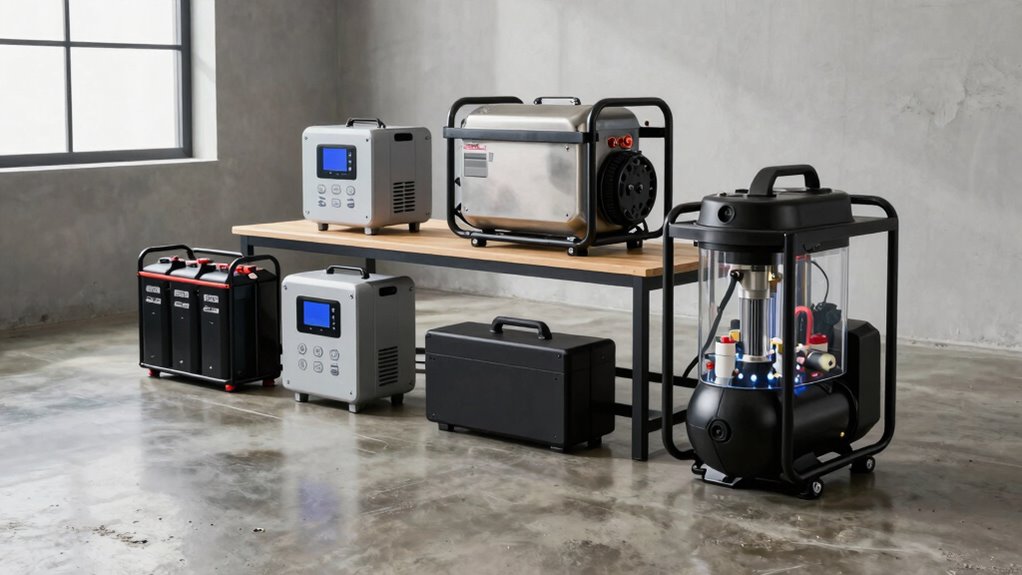

A sump pump backup system is what stands between your basement and a flood when the power goes out or your primary pump fails — usually during the same storm that caused the problem. After comparing 12 of the leading options, my best overall pick is the Wayne WSS30VN, because its preassembled primary-plus-backup combo, 1/2 HP primary pump, and included battery handle the whole job out of the box with no separate inverter to wire. If you already own a good primary pump and just need emergency power, the PumpSpy 2000W system adds remote monitoring that alerts you before water reaches the floor, while the budget-friendly 1500W pure sine wave systems cover the basics for smaller pumps. The main tradeoff in this category is watts versus runtime: bigger inverters run more powerful pumps but drain batteries faster, and full combo systems cost more up front but replace aging primaries at the same time. Keep reading for the full breakdown, including which systems actually fit the pump you already own.

Get business pricing on tools and workshop supplies
- Business-only prices and quantity discounts
- Tax-exempt purchasing
- Multiple users, one account, clear invoices
Complete the kit



Key Takeaways
- Inverter-style systems dominated the lineup, and the dividing line was clearly wattage tier: 1500W units handle most 1/3 HP pumps, while 2500W models like the VEVOR and Viopumpo exist mainly for 1/2 HP and cast-iron pumps with high startup draw.
- Pure sine wave output appeared in 8 of 12 products — a pattern that matters because modified sine wave can overheat pump motors; every top-ranked pick here outputs pure sine wave.
- Switching speed separated the serious systems from the cheap ones: the 2500W system with a 10ms auto-transfer switch and PumpSpy‘s controller cut over fast enough to avoid overflow, while slower units can spill water during the gap.
- The Wayne WSS30VN and Basement Watchdog CITS-50 were the only two true combo systems — both replace your primary pump too, which makes them better value for owners of pumps older than 7 years, but overkill for new primaries.
- Monitoring was the most underappreciated differentiator: Briidea‘s WiFi alerts and PumpSpy’s remote status checks tell you the backup actually works before you need it, while the generic 1500W systems leave you guessing unless you test manually.
| Cantonape 2000W Sump Pump Backup Battery System with Pure Sine Wave Output |  | Best Overall | Power Output: 2000W | Output Type: Pure sine wave | AC Outlets: 3 | VIEW ON AMAZON | See Our Full Breakdown |
| PumpSpy 2000W Sump Pump Battery Backup System |  | Best for Dual-Pump Setups | Output Wattage: 2000W | Output Voltage: 120 VAC (pure sine wave) | Output Current: 16.6 Amps max | VIEW ON AMAZON | See Our Full Breakdown |
| 1500W Sump Pump Battery Backup System with Pure Sine Wave Inverter |  | Best Monitoring Features | Output Power: 1500W | Waveform: Pure sine wave, 120 VAC | Max Combined Current: 16.6 Amps | VIEW ON AMAZON | See Our Full Breakdown |
| VEVOR 2500W Sump Pump Battery Backup System with LCD Display |  | Best for High-Horsepower Pumps | Power Output: 2500W | Waveform: Pure sine wave | Pump Support: 1 HP main + 1/3 HP backup | VIEW ON AMAZON | See Our Full Breakdown |
| VEVOR 1500W Sump Pump Battery Backup System with LCD Display |  | Best Value Pick | Output: 1500W pure sine wave | Compatible Sump Pumps: Up to 3/4 HP | Outlets and Ports: AC outlet, USB port | VIEW ON AMAZON | See Our Full Breakdown |
| Basement Watchdog CITS-50 Primary and Battery Backup Sump Pump System |  | Best Complete Two-Pump System | Primary pump motor: ½ HP copper-wound PSC | Primary flow rate: 73 GPM at 0 ft; 59 GPM at 10 ft | Backup flow rate: 48 GPM at 0 ft; 35 GPM at 10 ft | VIEW ON AMAZON | See Our Full Breakdown |
| Briidea 12V Battery Backup Sump Pump System with WiFi Monitoring |  | Best Smart Monitoring on a Budget | Voltage: 12V DC | Battery: 12V deep cycle, 80AH lead-acid recommended (not included) | Flow rate: 2,700 GPH at 0 ft; 1,900 GPH at 10 ft | VIEW ON AMAZON | See Our Full Breakdown |
| InsensVert 2500W Sump Pump Battery Backup with Pure Sine Wave Inverter |  | Best Premium Inverter Backup | Continuous power: 2500W (5000W peak) | Waveform: Pure sine wave, <6% THD | Transfer time: <10ms | VIEW ON AMAZON | See Our Full Breakdown |
| Viopumpo 2500W Sump Pump Backup Battery System with Pure Sine Wave Output |  | Best for Simple Plug-In Setup | Power output: 2500W | Output type: Pure sine wave AC | Input voltage: 12V | VIEW ON AMAZON | See Our Full Breakdown |
| 1500W Sump Pump Battery Backup System with Pure Sine Wave Inverter and LCD Display |  | Best Value for Single-Pump Homes | Continuous power: 1500W (3000W peak) | Waveform: Pure sine wave | Display: LCD — voltage, output power, battery level, status | VIEW ON AMAZON | See Our Full Breakdown |
| 1500W Sump Pump Battery Backup System with Pure Sine Wave Inverter Charger, LCD Remote, and Auto Transfer Switch |  | Best for Dual-Purpose Backup Power | Power Output: 1500W pure sine wave | Charger: 25A multi-stage smart charger | Battery Compatibility: LiFePO4, AGM, GEL, Flooded deep-cycle (12V) | VIEW ON AMAZON | See Our Full Breakdown |
| Wayne WSS30VN Preassembled 1/2 HP Primary & Battery Backup Sump Pump Combo System |  | Best Complete Replacement System | Horsepower: 1/2 HP primary | Flow Rate: 5,100 GPH (85 GPM) | Max Lift Height: 20 feet | VIEW ON AMAZON | See Our Full Breakdown |
| sump pump backup system | Battery Compatibility |
|---|---|
| Cantonape 2000W Sump Pump Back | 12V GEL, AGM/SLA, Flooded/Wet (not included) |
| PumpSpy 2000W Sump Pump Batter | — |
| 1500W Sump Pump Battery Backup | — |
| VEVOR 2500W Sump Pump Battery | 12V lead-acid, AGM, Gel, LiFePO4 |
| VEVOR 1500W Sump Pump Battery | 12V lead-acid, AGM, Gel, LiFePO4 |
| Basement Watchdog CITS-50 Prim | AGM or wet-cell; two in parallel supported |
| Briidea 12V Battery Backup Sum | — |
| InsensVert 2500W Sump Pump Bat | GEL, AGM, SLA, flooded, WET, EFB, LiFePO4 |
| Viopumpo 2500W Sump Pump Backu | — |
| 1500W Sump Pump Battery Backup | — |
| 1500W Sump Pump Battery Backup | LiFePO4, AGM, GEL, Flooded deep-cycle (12V) |
| Wayne WSS30VN Preassembled 1/2 | — |
More Details on Our Top Picks
Cantonape 2000W Sump Pump Backup Battery System with Pure Sine Wave Output
This option stands out for balancing 2000W of pure sine wave power with a fast built-in 20A charger and straightforward plug-in installation. The pure sine wave output means it runs both resistive and inductive loads cleanly, which matters if your sump pump has a sensitive motor. Compared with the 1500W model from VEVOR, the extra headroom makes it a safer match for 3/4 HP or larger pumps that spike on startup. Compared with the PumpSpy 2000W, it offers a third AC outlet and a stronger onboard charger, though PumpSpy counters with dual-pump support and US-based tech help. The tradeoff is real: the battery is not included, so budget for a 12V AGM or gel battery before the system is functional.
Pros:- Pure sine wave output safe for both resistive and inductive loads
- Built-in 20A fast charger recharges batteries quickly after an outage
- Automatic switchover with no additional wiring required
- Overload, overheat, short circuit, and low voltage protections
Cons:- Battery not included — must be purchased separately
- 2000W ceiling may be tight for very large or dual-pump setups
Best for: Homeowners with a single larger sump pump who want strong charging capacity and multiple outlets without complex wiring
Not ideal for: Buyers wanting a complete out-of-the-box kit — the missing battery means an extra purchase and setup step
- Power Output:2000W
- Output Type:Pure sine wave
- AC Outlets:3
- Built-in Charger:20A fast charger
- Battery Compatibility:12V GEL, AGM/SLA, Flooded/Wet (not included)
- Display:LED
- Safety Features:Overload, overheat, short circuit, low voltage, overcharge protection
- Warranty:12 months
Our verdict“The most balanced pick for a single-pump household that wants fast recharging and clean power in one plug-in unit.”
PumpSpy 2000W Sump Pump Battery Backup System
The PumpSpy earns its spot by doing something the Cantonape 2000W doesn’t: it can run two primary sump pumps simultaneously up to 16.6 Amps combined. For homeowners who run a main pump plus a second pump in a second pit or a high-water redundancy setup, that dual-outlet capacity is the whole point. The stable pure sine wave 120VAC output keeps pump motors running cool, and smart cooling plus overcharge prevention extend the unit’s lifespan. It also doubles as a general-purpose inverter with a USB charge port, similar to the 1500W pure sine wave system but with more wattage behind it. The catch is that a 12V deep cycle battery is sold separately, and exceeding the 16.6 Amp combined ceiling will trip the unit.
Pros:- Runs two primary sump pumps simultaneously up to 16.6 Amps combined
- Automatic transfer to battery and automatic recharge when power returns
- Smart cooling and overcharge prevention extend product life
- US-based technical support team in Kalamazoo, MI
Cons:- 12V deep cycle battery sold separately, adding to total cost
- Combined pump draw must stay under 16.6 Amps
Best for: Homeowners running two sump pumps who need both powered through a single outage
Not ideal for: High-draw pump pairs — if your two pumps together pull over 16.6 Amps, this system will shut down
- Output Wattage:2000W
- Output Voltage:120 VAC (pure sine wave)
- Output Current:16.6 Amps max
- Outlets:2 grounded outlets plus USB charge port
- Battery Requirement:12V deep cycle battery (sold separately)
- Dimensions:17.5 x 6.75 x 4 inches
- Weight:10.5 pounds
- Certification:CE
Our verdict“The clear choice if two pumps need to keep running through an outage, provided their combined draw fits under the amp ceiling.”
1500W Sump Pump Battery Backup System with Pure Sine Wave Inverter
What separates this 1500W system from the otherwise similar VEVOR 1500W is monitoring. The 15ft wired LCD remote lets you check voltage, power draw, and battery level from the top of the stairs instead of crouching next to the pit — a genuine quality-of-life difference in a finished basement. Its 12ms automatic switchover is fast enough that a running pump barely notices the outage, and the 25A quick charger outpaces the Cantonape’s 20A for faster post-storm recovery. With three AC outlets, a 36W Type-C port, and a USB port, it’s also the most versatile unit here for keeping phones and lights alive. The limitations mirror its class: 1500W and a 16.6 Amp combined cap mean it’s best for modest single-pump setups, and the battery is not included.
Pros:- 15ft wired LCD remote shows voltage, power, and battery level in real time
- Fast 12ms automatic switchover prevents flooding mid-cycle
- 25A quick charger recharges faster than many rivals
- Three AC outlets plus 36W Type-C and USB ports for other devices
Cons:- 12V deep cycle battery required but not included
- Limited to 16.6 Amps combined current draw
Best for: Owners of smaller sump pumps who want at-a-glance status monitoring without walking down to the pit
Not ideal for: Dual-pump or high-horsepower setups that need more than 1500W of continuous output
- Output Power:1500W
- Waveform:Pure sine wave, 120 VAC
- Max Combined Current:16.6 Amps
- Charger:Built-in 25A quick charger
- Auto Switch Time:12ms
- AC Outputs:3 outlets
- USB Outputs:36W Type-C, 5V/3.1A USB
- Remote Controller:15ft wired LCD screen
- Battery Requirement:12V deep cycle battery (not included)
Our verdict“The pick for buyers who value monitoring visibility and fast transfer speed over raw wattage.”
VEVOR 2500W Sump Pump Battery Backup System with LCD Display
This is the heavy lifter of the lineup. Rated at 2500W with support for a 1 HP main pump plus a 1/3 HP backup, it handles motor combinations that would stall the 1500W systems here. The three-stage charging (bulk, absorption, float) is smarter than single-stage units and helps lead-acid batteries last longer, and its compatibility list is the widest in this batch — lead-acid, AGM, Gel, and LiFePO4 — so buyers can pair it with modern lithium batteries if they prefer. Like the VEVOR 1500W sibling, setup is a plug-in affair with no risky wiring. The obvious drawback: the battery is not included, and at this power level you’ll want a substantial battery bank, which pushes the real cost of ownership up considerably.
Pros:- Supports dual-pump operation (1 HP main + 1/3 HP backup)
- Three-stage charging extends battery life
- Widest battery compatibility including LiFePO4
- Plug-in setup avoids risky hardwiring
Cons:- Battery not included
- Higher capacity only pays off with a larger, costlier battery bank
Best for: Homeowners with a 1 HP main pump and dedicated backup pump who need serious wattage
Not ideal for: Budget-conscious buyers — the higher capacity invites a larger, pricier battery purchase to actually exploit it
- Power Output:2500W
- Waveform:Pure sine wave
- Pump Support:1 HP main + 1/3 HP backup
- Battery Compatibility:12V lead-acid, AGM, Gel, LiFePO4
- Charging:3-stage (Bulk, Absorption, Float)
- Display:LCD screen and LED indicators
- Connections:3-prong plug, USB port, AC outlet
- Protections:Overcurrent, overvoltage, short circuit, reverse polarity, high temperature, circuit breaker
- Battery Included:No
Our verdict“The right call when your pump horsepower outgrows 1500W–2000W systems and you’re willing to invest in a matching battery.”
VEVOR 1500W Sump Pump Battery Backup System with LCD Display
For straightforward single-pump protection, this 1500W VEVOR covers the fundamentals without paying for capacity you won’t use. It handles sump pumps up to 3/4 HP, delivers clean pure sine wave power, and includes three-stage charging — the same battery-friendly charging scheme as its bigger 2500W sibling — plus an LCD display showing voltage, battery level, and status. Compared with the 1500W system with the LCD remote, you give up the remote monitoring and USB-C flexibility, but you keep the core protections: overcurrent, overvoltage, short circuit, reverse polarity, and high-temperature cutoffs. Installation is a standard 3-prong plug, so there’s no electrician visit. The honest tradeoff is the 3/4 HP ceiling — pair it with a 1 HP pump and it simply won’t keep up, and the battery is sold separately like every inverter in this group.
Pros:- Pure sine wave output up to 3/4 HP pumps
- Three-stage charging protects battery longevity
- LCD and LED indicators for at-a-unit status checks
- Full protection suite including reverse polarity and high temperature
Cons:- Capped at sump pumps up to 3/4 HP
- Battery must be purchased separately
Best for: Budget-minded homeowners with a modest sump pump who want core backup functionality at a lower tier
Not ideal for: Houses with 1 HP or dual pumps — the 3/4 HP limit and 1500W output rule it out
- Output:1500W pure sine wave
- Compatible Sump Pumps:Up to 3/4 HP
- Outlets and Ports:AC outlet, USB port
- Charging:Three-stage: Bulk, Absorption, Float
- Battery Compatibility:12V lead-acid, AGM, Gel, LiFePO4
- Display:LCD screen and LED indicators
- Protections:Overcurrent, overvoltage, short circuit, reverse polarity, high temperature
- Installation:Standard 3-prong plug
- Battery:Not included
Our verdict“A sensible, no-frills choice for smaller pumps where reliable automatic backup matters more than extra wattage or remote monitoring.”
Basement Watchdog CITS-50 Primary and Battery Backup Sump Pump System
This option stands out for buyers who want a full replacement of both pumps rather than just a backup add-on. The preassembled, preplumbed design pairs a ½ HP cast iron primary pump with a battery-driven backup, so you get a new primary pump and backup protection in one drop-in unit. Compared with inverter-style systems like the InsensVert 2500W, this setup protects against pump failure as well as power failure — the inverter boxes only solve the power problem. The monitoring controller is the real differentiator: it tracks pump, power, and battery conditions and walks you through maintenance. Tradeoffs are real, though. The backup pump itself is plastic rather than cast iron, Wi-Fi alerts require a separately purchased module, and the battery is not included, so the total investment climbs quickly.
Pros:- Preassembled and preplumbed, cutting installation complexity dramatically
- Protects against both power failure and primary pump failure
- Monitoring controller provides alarms and maintenance guidance
- Supports two batteries in parallel for extended runtime
Cons:- Wi-Fi alerts require a separately purchased CONNECT module
- Battery not included, adding a substantial hidden cost
- Backup pump housing is plastic while the primary is cast iron
Best for: Homeowners replacing an aging primary pump who also want integrated battery backup and diagnostic monitoring
Not ideal for: Buyers who already have a healthy primary pump and just need outage protection — duplicating the primary pump is wasted money
- Primary pump motor:½ HP copper-wound PSC
- Primary flow rate:73 GPM at 0 ft; 59 GPM at 10 ft
- Backup flow rate:48 GPM at 0 ft; 35 GPM at 10 ft
- Maximum lift:25 feet
- Power source:AC primary / 12V DC battery backup
- Battery compatibility:AGM or wet-cell; two in parallel supported
- Wi-Fi alerts:Requires separately purchased BW-WiFi2 module
- Dimensions:8.75 × 11.75 × 18 inches, 27 lbs
Our verdict“The right pick if you want an all-in-one pump replacement with built-in redundancy, provided you budget for the battery and optional Wi-Fi module.”
Briidea 12V Battery Backup Sump Pump System with WiFi Monitoring
This pick makes the most sense for buyers whose priority is knowing what’s happening from their phone. Unlike the Basement Watchdog CITS-50, which locks remote alerts behind a separately purchased module, the Briidea includes dual-band 2.4G/5G Wi-Fi through the GeniLife app out of the box, plus integration with smart home and security systems. The control box with nine LED indicators and dual electronic water level sensors gives you granular status at a glance — more diagnostic detail than most inverter boxes like the Viopumpo 2500W offer, since those only report electrical metrics, not water level. Flow is respectable at 2,700 GPH at zero lift, though it drops sharply to 1,900 GPH at 10 feet. The tradeoff: this is a backup pump only, so a failed primary pump with power still on is a scenario it handles — but only if water rises to its sensor, and you’ll need to supply your own deep cycle battery.
Pros:- Built-in dual-band Wi-Fi with app monitoring included at no extra cost
- Dual electronic water level sensors detect both pump failure and power failure
- Dry-run protection and multiple alert types guard the hardware
- Integrates with smart home and security systems
Cons:- 12V deep cycle battery not included
- Flow rate drops noticeably at higher lift heights
- Remote features are useless without reliable basement Wi-Fi coverage
Best for: Tech-savvy homeowners who want app-based flood alerts and smart home integration without paying extra for a connectivity module
Not ideal for: Buyers in areas with weak Wi-Fi in the basement, since remote monitoring depends entirely on a live connection
- Voltage:12V DC
- Battery:12V deep cycle, 80AH lead-acid recommended (not included)
- Flow rate:2,700 GPH at 0 ft; 1,900 GPH at 10 ft
- Wi-Fi:2.4G and 5G via GeniLife app
- Sensors:Dual electronic water level sensors
- Control box:9 LED indicators, silence/reset, dry contact interface
- Protection:Dry-run, low battery, fault, and power outage alerts
Our verdict“The strongest choice for remote visibility and smart home integration, as long as your basement Wi-Fi signal reaches the sump pit.”
InsensVert 2500W Sump Pump Battery Backup with Pure Sine Wave Inverter
For buyers who want to keep their existing primary pump running untouched, this is the most capable inverter in the lineup. The sub-10ms transfer time means your pump barely notices the outage, and the pure sine wave output under 6% THD is gentle on pump motors in a way cheaper modified-sine units are not. Compared with the Viopumpo 2500W, it matches the power class but pulls ahead on charging — the 25A three-stage smart charger refills a 100Ah battery in roughly four hours, so you recover fast after an extended outage. Its widest strength is battery flexibility, spanning everything from flooded lead-acid to LiFePO4 lithium. The drawbacks mirror the category: the battery is almost certainly a separate purchase, and while 2500W continuous sounds generous, running multiple high-draw pumps simultaneously could push past its ceiling. You also lose the water-level intelligence that a dedicated backup pump like the Briidea provides.
Pros:- Pure sine wave under 6% THD protects pump motors and sensitive electronics
- Sub-10ms automatic transfer prevents pumping interruptions
- 25A smart charger recovers a 100Ah battery in about 4 hours
- Supports nearly every battery chemistry from flooded lead-acid to LiFePO4
Cons:- Battery likely sold separately, inflating total system cost
- 2500W continuous may be insufficient for multiple high-draw pumps
- No water-level sensing — it only addresses power loss, not pump failure
Best for: Homeowners with a healthy primary pump who want clean, fast-switching battery power and broad battery chemistry flexibility
Not ideal for: Households running multiple pumps or high-draw equipment simultaneously, where 2500W continuous may not be enough headroom
- Continuous power:2500W (5000W peak)
- Waveform:Pure sine wave, <6% THD
- Transfer time:<10ms
- AC outlets:3
- Charger:25A three-stage smart charger
- Recharge time:About 4 hours for a 100Ah battery
- Battery compatibility:GEL, AGM, SLA, flooded, WET, EFB, LiFePO4
- Battery cables:3AWG pure copper, 2 ft
Our verdict“The premium pick for clean power and rapid recovery, best suited to protecting a single quality pump through long outages.”
Viopumpo 2500W Sump Pump Backup Battery System with Pure Sine Wave Output
Compared with the InsensVert 2500W, this system takes a simpler path to the same power class: plug-in installation with no additional wiring, flat or wall mounting, and an LCD remote control that lets you check voltage, power draw, and charge status without crouching beside the pit. That remote readout is a genuinely practical touch the InsensVert’s built-in display doesn’t replicate. The 25A charger with fast and trickle modes keeps a deep-cycle battery healthy between outages, and pure sine wave output means no worries about load type. The meaningful limitation is battery pickiness — unlike the InsensVert’s near-universal chemistry support, this unit only works with deep-cycle lithium and AGM batteries, so anyone hoping to reuse an older starter battery is out of luck. As with its rivals, the battery is typically a separate purchase, so price the full system before committing.
Pros:- Plug-in installation with no additional wiring required
- LCD remote control shows voltage, power, and charge status at a glance
- 25A charger with fast and trickle modes plus overcharge protection
- Flexible flat or wall mounting options
Cons:- Only compatible with deep-cycle lithium and AGM batteries
- Battery likely sold separately
- No water-level or pump-failure detection, only power backup
Best for: DIY-averse homeowners who want wall-mounted, plug-in backup power with convenient remote status monitoring
Not ideal for: Buyers wanting to pair it with a non-deep-cycle or unusual battery chemistry, which it does not support
- Power output:2500W
- Output type:Pure sine wave AC
- Input voltage:12V
- Built-in charger:25A fast and trickle charging
- Compatible batteries:Deep-cycle lithium, AGM, and other deep-cycle types
- Mounting:Flat or wall mount
- Warranty:12 months
Our verdict“A straightforward, wall-mountable 2500W backup for anyone who values easy setup and remote readouts over battery flexibility.”
1500W Sump Pump Battery Backup System with Pure Sine Wave Inverter and LCD Display
This model makes the most sense for the typical single-pump household that doesn’t need the 2500W headroom of the InsensVert or Viopumpo systems. A standard ½ HP sump pump draws far less than 1500W continuous, so paying for double that capacity is often wasted money. You still get the features that matter: pure sine wave output, automatic outage switchover, a real-time LCD, and 7-layer protection with a built-in circuit breaker. The 20A charger is slightly slower than the 25A units in the premium picks but still respectable. Two tradeoffs stand out. The 1.75-foot battery cables are shorter than the InsensVert’s 2-foot cables and can force awkward placement decisions in tight mechanical spaces. And with 1500W continuous (3000W peak), there’s no room to back up additional equipment alongside the pump. The battery, as usual in this category, is not included.
Pros:- Pure sine wave output at a lower price point than 2500W rivals
- 7-layer protection including a built-in circuit breaker
- Plug-and-play 3-pin installation with no wiring
- Real-time LCD shows voltage, output power, battery level, and status
Cons:- Battery not included, requiring a separate purchase
- Short 1.75 ft connection cables limit placement flexibility
- 20A charger is slower than the 25A units on premium picks
Best for: Budget-conscious homeowners backing up one standard sump pump who don’t need inverter capacity for other devices
Not ideal for: Buyers wanting to also power a second pump, furnace fan, or other appliances during an outage — 1500W leaves no spare capacity
- Continuous power:1500W (3000W peak)
- Waveform:Pure sine wave
- Display:LCD — voltage, output power, battery level, status
- Charging current:20A max
- Plug type:Standard 3-pin
- Battery cables:1.75 ft
- Protection:Low/high voltage, over-current, short circuit, reverse polarity, high-temperature, soft-start, circuit breaker
Our verdict“A sensible, lower-cost pure sine wave backup for one pump, as long as your layout tolerates short battery cables and modest capacity.”
1500W Sump Pump Battery Backup System with Pure Sine Wave Inverter Charger, LCD Remote, and Auto Transfer Switch
This unit stands out for doing double duty: it keeps a sump pump running through an outage while its 3 AC outlets, USB, and Type-C ports power phones, routers, or a fridge during the same blackout. Compared with the single-purpose Briidea 12V backup system, this model trades simplicity for versatility, and its 25A multi-stage charger with overcharge, overload, and thermal protection does a better job of stretching battery life across years of standby. The LCD remote makes it easy to confirm the system is armed before storm season without crawling behind the pit. The tradeoff is real, though — the battery is not included, and the AC/DC wiring means this is a project for a confident DIYer or an electrician, not a plug-and-play afternoon.
Pros:- Automatic transfer switch keeps the pump running with no manual intervention during outages
- Pure sine wave output is gentle on sensitive pump motors and electronics
- 25A multi-stage charger with layered protection helps batteries last longer in standby
- Bonus AC, USB, and Type-C outlets power other household essentials during a blackout
Cons:- Battery sold separately, adding real cost and a sizing decision
- Requires AC/DC wiring and installation knowledge to set up safely
Best for: Homeowners who want their sump pump backup to double as a general emergency power station for essentials during outages
Not ideal for: Anyone wanting a complete, install-today package — the separate battery purchase and wiring work add cost and complexity
- Power Output:1500W pure sine wave
- Charger:25A multi-stage smart charger
- Battery Compatibility:LiFePO4, AGM, GEL, Flooded deep-cycle (12V)
- Battery Included:No
- Outlets:3 AC outlets, USB, Type-C
- Transfer Switch:Automatic
- Warranty:12 months
Our verdict“A smart buy if you want one backup box that protects the basement and keeps a few essentials alive during a blackout — provided you’re comfortable sourcing a battery and wiring it in.”
Wayne WSS30VN Preassembled 1/2 HP Primary & Battery Backup Sump Pump Combo System
Most entries in this roundup, like the Cantonape 2000W inverter system, assume you already have a primary pump worth protecting. The Wayne WSS30VN takes a different path: it replaces the primary and adds backup in one drop-in unit, preassembled for a claimed 15-minute install. That makes it the easiest choice for anyone with an aging pump rather than just an aging power situation. Its 1/2 HP primary moves 5,100 GPH, and the 12V backup can evacuate up to 10,000 gallons per charge — enough to ride out most storm outages. The top-suction design minimizes clogging and skips the weep hole entirely. The catch: it demands a 16-inch or larger basin, the 75 AH battery costs extra, and it’s rated for indoor use only.
Pros:- Fully preassembled for installation in roughly 15 minutes
- Backup moves up to 10,000 gallons per charge during power outages
- Top suction design resists clogging and eliminates the weep hole
- Tested to 1 million cycles and backed by a 3-year warranty
Cons:- Required Wayne WSB1275 75 AH battery sold separately
- Needs a 16-inch diameter or larger sump basin
- Indoor-rated only, limiting placement flexibility
Best for: Homeowners replacing a worn-out primary pump who want primary and battery backup coverage in a single weekend install
Not ideal for: Anyone with a narrow sump basin under 16 inches, or who already owns a healthy newer primary pump — the overlap wastes money
- Horsepower:1/2 HP primary
- Flow Rate:5,100 GPH (85 GPM)
- Max Lift Height:20 feet
- Backup Capacity:Up to 10,000 gallons per charge
- Battery Requirement:Wayne WSB1275 75 AH deep cycle (not included)
- Sump Basin Fit:16″ diameter or larger
- Dimensions:13.5″L x 9″W x 15.5″H, 44 lbs
- Warranty:3 years
Our verdict“If your existing pump is on its last legs, this combo is the most economical path to an entirely refreshed, outage-proof setup — as long as your basin is wide enough.”

How We Picked
I ranked these systems on five buyer-relevant factors. Power delivery came first: continuous wattage, pure sine wave output, and whether the system could handle the startup surge of a typical 1/3 or 1/2 HP pump. Switching speed mattered next — a backup that takes seconds to engage can still let water over the pit edge, so the 10ms auto-transfer units scored ahead of slower designs. Runtime and charging were judged on battery compatibility, charger speed, and how many hours of pumping a realistic setup delivers during an extended outage.
Beyond raw performance, I weighed monitoring and alerts, since a backup that fails silently is worse than none at all, and ease of installation, including whether the system arrives preassembled with a battery like the Wayne or requires you to source and wire your own. Combo systems earned a ranking bump for buyers with aging primaries, while inverter-only systems were judged strictly as add-ons. Products with unclear surge ratings or no alarm functionality landed lower regardless of wattage.
Factors to Consider When Choosing Sump Pump Backup System
Choosing a backup system is less about finding the most powerful unit and more about matching the system to your existing pump, your outage risk, and how much attention you want to give it. These are the factors that actually change what you should buy.Match the Inverter to Your Pump’s Startup Draw, Not Its Running Watts
The most common mistake buyers make is sizing the backup to the pump’s running wattage. Motors draw two to three times their running power at startup, so a 1/3 HP pump that runs at 600W can briefly demand 1,800W or more. A 1500W inverter that looks adequate on paper may fail to start the pump at all, which is a failure you’ll only discover during an outage. If you run a 1/2 HP or cast-iron pump, a 2500W system is the safer floor. Check your pump’s label for amps and multiply by 120 to estimate startup needs before buying anything in this category.
Pure Sine Wave Is Non-Negotiable for Motor Health
Cheap inverters output a rougher electrical signal called modified sine wave, and AC pump motors run hotter, louder, and shorter-lived on it. Since your backup may run for hours across multiple outages, that extra heat compounds over the motor’s life. Nearly every system in this roundup uses pure sine wave output, which is one reason they cost more than generic power inverters. If you find a backup system noticeably cheaper than the field, the electrical output quality is the first thing to verify. Saving money here risks the very pump you’re trying to protect.
Combo System or Add-On: It Depends on Your Primary’s Age
If your primary pump is more than seven years old, a combo system like the Wayne WSS30VN or Basement Watchdog CITS-50 usually makes more financial sense — you’re replacing a pump that’s nearing end of life and adding backup in one project. If your primary is newer, an inverter-based add-on system avoids paying for hardware you don’t need. A often-overlooked middle path: buy a combo system anyway and keep the old primary as a spare. What I’d caution against is installing a backup behind a failing primary — the backup will activate more often, drain batteries faster, and mask the real problem until the backup fails too.
Runtime Math: What the Marketing Doesn’t Tell You
Runtime claims usually assume an infrequently cycling pump and a fully charged, oversized battery. In real storm conditions, a pump cycling every few minutes can drain a typical deep-cycle battery in four to eight hours, not the overnight-and-beyond figures in listings. Two things extend that: battery capacity (measured in amp-hours — bigger is genuinely better here) and cycle frequency, which depends on how much water your pit collects. Buyers in high-water-table areas or regions with multi-day outages should budget for the largest compatible battery, or two batteries in parallel where the system allows it. Fast-charging inverters also matter, since they restore capacity between storms.
Monitoring: The Feature You’ll Wish You Had
A backup system is a device you never think about until it fails — and it can fail silently, whether from a dead battery, tripped charger, or blown fuse. Systems with WiFi monitoring, audible alarms, or remote status displays (like the Briidea or PumpSpy) tell you something is wrong while you can still fix it. At minimum, look for a unit that beeps when the battery drops or the charger loses power. If you travel frequently or own a rental property, remote monitoring isn’t a luxury — it’s the difference between a five-minute battery swap and an insurance claim. Budget units without any alarm put the burden of monthly manual testing on you.
Installation Reality Check
Inverter systems require connecting a battery, wiring into your pump circuit, and often mounting hardware — a job well within reach of a comfortable DIYer but intimidating for beginners. Preassembled combos like the Wayne are simpler because everything arrives matched and connected, though you still need to plumb a second discharge line or a Y-connector with check valves. One plumbing detail that trips people up: each pump needs its own check valve, or water flows backward through the idle pump and the backup runs constantly. If you’re not confident with basic electrical connections under your basement stairs, factor a plumber or electrician visit into the total cost of an inverter system.
Frequently Asked Questions
Can a battery backup system run my existing primary pump, or do I need a special backup pump?
Most inverter-based systems in this roundup, including the Cantonape, PumpSpy, and VEVOR models, are designed to power your existing primary AC pump during an outage, so no separate backup pump is needed. The catch is sizing: your pump’s startup draw must fall under the inverter’s continuous and surge ratings, which is why 1/2 HP pumps generally require the 2500W tier. Combo systems like the Wayne WSS30VN take the opposite approach and include a dedicated DC backup pump alongside a new primary, which sidesteps the sizing question entirely. If you want to keep your current pump, check its amp rating before choosing a wattage class. If your pump is old anyway, the combo route replaces two problems with one purchase.
How long will a battery backup actually keep my sump pump running during an outage?
Honest runtime depends on three variables: battery capacity in amp-hours, how often your pump cycles, and how long each cycle runs. A typical 100Ah deep-cycle battery powering a 1/3 HP pump that cycles every five minutes might last six to ten hours; the same setup in a house with light water infiltration could stretch past a day. Manufacturer figures often assume gentle cycling, so treat them as best-case. If your area experiences multi-day outages, prioritize systems with fast charging between events, larger battery compatibility, or parallel battery connections. Heavy-water homes should also consider a water-powered backup as a third layer, since it runs indefinitely on municipal water pressure.
Are the cheap generic 1500W systems on Amazon safe to trust for flood protection?
They can be, with caveats. The generic 1500W pure sine wave systems in this lineup deliver the core functions — inverter, charger, and automatic transfer — at a lower price largely by skipping brand support, monitoring features, and polished documentation. That tradeoff works if you’re comfortable verifying your own wiring, testing the system quarterly, and accepting no app or alerts. Where I’d draw the line: confirm pure sine wave output and a real auto-transfer switch, since some budget listings imply features they don’t include. For homeowners who can’t or won’t test manually, spending more on a PumpSpy or Briidea with monitoring is the safer bet, because an untested cheap system can fail without any warning sign.
Is a bigger inverter always better?
No, and oversizing has real downsides. A 2500W inverter running a small 1/3 HP pump wastes battery capacity on idle draw and costs more upfront without adding protection, because your pump will never use the extra headroom. The right approach is to size to your pump’s startup surge with about 20% margin — a 1500W system covers most 1/3 HP pumps comfortably, while 1/2 HP and cast-iron pumps justify the 2500W tier. Larger inverters also draw slightly more power just being on, which shortens runtime marginally. Buy the wattage your pump needs, and put the savings into a bigger battery, which extends runtime far more than extra inverter capacity will.
Do I still need a backup if I have a generator for outages?
A generator helps, but it doesn’t fully replace a battery backup for three reasons. First, a generator only works if you’re home to start it and connect the pump — an outage while you’re at work or on vacation leaves the basement unprotected. Second, sump pump failure isn’t always a power problem; a jammed float switch or worn impeller will stop a pump even with electricity flowing, and only a second pump (like the Wayne or Basement Watchdog combos provide) covers that failure mode. Third, battery systems switch over in milliseconds, while even an automatic standby generator takes seconds to spin up. If you own a generator, a battery backup is a complementary layer rather than redundant — it covers the gaps generators can’t.
Conclusion
For most homeowners, the Wayne WSS30VN is my best overall pick: it’s a preassembled primary-plus-backup system with the battery included, which eliminates sizing guesswork and replaces an aging primary in the same project. The Basement Watchdog CITS-50 is the stronger premium choice if you want a higher-capacity combo with more built-in monitoring, while the generic 1500W pure sine wave systems take the value crown for anyone with a healthy 1/3 HP primary pump and a modest budget.
If you already own a newer 1/2 HP pump, the Viopumpo 2500W or VEVOR 2500W systems are the right fit for the higher startup draw. For beginners who want the simplest install, the Wayne’s preassembled design wins — no separate inverter wiring required. And for specific needs, the PumpSpy 2000W is the pick for travelers and rental owners who need remote alerts, the Briidea covers WiFi monitoring at a lower price, and the Cantonape 2000W strikes a strong middle ground on power and value. Whatever you choose, test the system the day you install it — the best backup is the one you’ve confirmed actually runs.
Evergreen bestsellers Picks

Ninja Foodi Smart 6-in-1 Indoor Grill and Air Fryer, 4 Qt, FG551

Samsung 85-Inch M80H Series 4K Mini LED Smart TV (2026)

Ninja Creami Scoop & Swirl Ice Cream Maker – Bone & Champagne (Amazon Exclusive)
As an affiliate, we earn on qualifying purchases.