For the best Florida roofing materials in this lineup, I put FT Synthetics Platinum HT-B first for its self-adhering, high-temperature underlayment format, a useful fit for hot roof decks when the assembly calls for it. Firestone RubberGard 60 Mil EPDM stands out for buyers seeking a thicker membrane, while ArmorLay 25 is a practical synthetic-underlayment option for broader roof coverage. The central tradeoff is between underlayments for sloped roofs and EPDM membranes commonly used on low-slope applications; they are not interchangeable. Florida heat, wind-driven rain, roof design, code requirements, and installation details all affect the right choice. Continue reading for the full breakdown and guidance on matching material to roof and project.

Get business pricing on tools and workshop supplies
- Business-only prices and quantity discounts
- Tax-exempt purchasing
- Multiple users, one account, clear invoices
Complete the kit



Key Takeaways
- Roof type separates the field: synthetic and self-adhering underlayments serve as layers in a roof assembly, while EPDM membranes are roofing surfaces suited to compatible low-slope designs.
- Heat-focused adhesion is a distinct advantage, not a universal upgrade: FT Synthetics Platinum HT-B is the standout for projects calling for a self-adhering, high-temperature underlayment, but installation must match the roof system.
- Thickness changes the membrane tradeoff: Firestone RubberGard and RoofShield‘s 60 mil option offer thicker EPDM choices than the 45 mil membranes, with added material that may not suit every scope or budget.
- Roll dimensions affect labor and waste: wide, long underlayment rolls can cover larger areas with fewer seams, while smaller EPDM sheets may be easier to handle in limited areas but create more joints.
- Product labels alone cannot establish Florida suitability: confirm local code acceptance, wind requirements, roof-deck compatibility, exposure limits, and system details before choosing any item.
| ArmorLay 25 Synthetic Roof Underlayment 4′ x 250′ |  | Best for Safer Installation on Steep Slopes | Brand: Garden Armor | Material: Polyvinyl chloride (PVC) | Roll dimensions: 4 ft x 250 ft | VIEW LATEST PRICE | See Our Full Breakdown |
| RoofShield EPDM Rubber Roofing Membrane 45 Mil, 15 ft x 30 ft |  | Best for Large Low-Slope Roof Areas | Material: EPDM rubber | Thickness: 45 mil | Coverage dimensions: 15 ft x 30 ft | VIEW LATEST PRICE | See Our Full Breakdown |
| FT Synthetics Platinum HT-B Self-Adhering Roofing Underlayment, 41 mil, 36 in. x 67 ft. |  | Best for High-Heat Roof Details | Material: 100% butyl | Thickness: 41 mil | Roll dimensions: 36 in x 67 ft | VIEW LATEST PRICE | See Our Full Breakdown |
| Prismique Self-Adhesive EPDM Rubber Roofing Membrane, 62 mil, 39 in x 32.8 ft |  | Best for Compact Repairs and Irregular Details | Material: Self-adhesive vulcanized EPDM rubber | Thickness: 62 mil | Dimensions: 39 in x 32.8 ft | VIEW LATEST PRICE | See Our Full Breakdown |
| ApxRoufin Synthetic Roofing Underlayment Roll, 48 in x 250 ft |  | Best Value for Broad-Slope Coverage | Material: Polypropylene | Dimensions: 48 in x 250 ft | Coverage area: 1,000 sq ft | VIEW LATEST PRICE | See Our Full Breakdown |
| Chonway 45mil EPDM Rubber Roofing Membrane (6.6ft x 16.4ft) |  | Best for Small Low-Slope Projects | Material: EPDM rubber | Thickness: 45 mil | Dimensions: 6.6 ft x 16.4 ft | VIEW LATEST PRICE | See Our Full Breakdown |
| Grip-Rite ShingleLayment HT Synthetic Roofing Underlayment Roll |  | Best Self-Adhering Underlayment | Brand: Grip-Rite | Model: SL2SQHT | Material: Polypropylene | VIEW LATEST PRICE | See Our Full Breakdown |
| MYOYAY Self-Adhesive Waterproof Roofing Membrane, 39 in x 16.4 ft, Gray |  | Best for Small Repairs and Custom Strips | Material: Rubber with aluminum foil layer | Roll size: 39 in x 16.4 ft | Overall dimensions: 196.8 x 39 x 0.06 in | VIEW LATEST PRICE | See Our Full Breakdown |
| SIPA 100 GSM Synthetic Waterproof Roof Underlayment, 48 in x 250 ft |  | Best Coverage for New Roof Builds | Material: Non-woven PP laminated with PE and water-resistant adhesive | Weight: 100 GSM; 21.1 lb per roll | Dimensions: 48 in x 250 ft | VIEW LATEST PRICE | See Our Full Breakdown |
| Firestone RubberGard EPDM Roofing Membrane, 60 Mil, 10 ft x 15 ft |  | Best Heavy-Duty EPDM Option | Manufacturer: Firestone | Material: EPDM rubber | Thickness: 60 mil | VIEW LATEST PRICE | See Our Full Breakdown |
| Zeluga 32-390 Synthetic Roofing Underlayment, 48 in. x 250 ft., 95 GSM, Gray |  | Best for Large Shingle Roof Projects | Material: Woven polypropylene | Dimensions: 48 in. x 250 ft. | Coverage: 1,000 sq. ft. (10 squares) | VIEW LATEST PRICE | See Our Full Breakdown |
| RoofShield EPDM Rubber Roofing Membrane 60 Mil, 15 ft x 20 ft | | Best Heavy-Duty EPDM for Low-Slope Roofs | Material: EPDM rubber | Thickness: 60 mil | Dimensions: 15 ft x 20 ft | VIEW LATEST PRICE | See Our Full Breakdown |
| Florida roofing material | Material | Dimensions | Weight | Color |
|---|---|---|---|---|
| ArmorLay 25 Synthetic Roof Und | Polyvinyl chloride (PVC) | — | — | Gray |
| RoofShield EPDM Rubber Roofing | EPDM rubber | — | — | Black |
| FT Synthetics Platinum HT-B Se | 100% butyl | — | — | — |
| Prismique Self-Adhesive EPDM R | Self-adhesive vulcanized EPDM rubber | 39 in x 32.8 ft | — | Black |
| ApxRoufin Synthetic Roofing Un | Polypropylene | 48 in x 250 ft | 18.36 lb | — |
| Chonway 45mil EPDM Rubber Roof | EPDM rubber | 6.6 ft x 16.4 ft | 25.6 lb | — |
| Grip-Rite ShingleLayment HT Sy | Polypropylene | 36 in x 67 ft | 28 lb | — |
| MYOYAY Self-Adhesive Waterproo | Rubber with aluminum foil layer | — | 6.98 lb | Gray |
| SIPA 100 GSM Synthetic Waterpr | Non-woven PP laminated with PE and water-resistant adhesive | 48 in x 250 ft | 100 GSM; 21.1 lb per roll | Gray |
| Firestone RubberGard EPDM Roof | EPDM rubber | 10 ft x 15 ft | 60 lb | Black |
| Zeluga 32-390 Synthetic Roofin | Woven polypropylene | 48 in. x 250 ft. | 18.41 lb | — |
| RoofShield EPDM Rubber Roofing | EPDM rubber | 15 ft x 20 ft | 120 lb | Black |
More Details on Our Top Picks
ArmorLay 25 Synthetic Roof Underlayment 4′ x 250′
For a Florida shingle or tile roof, ArmorLay 25’s strongest distinction is its textured, slip-resistant surface, which can give installers more secure footing while roofing work is underway. Its 1,000-square-foot roll is comparable in coverage to the ApxRoufin underlayment, but ArmorLay lists ASTM D4869 and D226 compliance rather than ApxRoufin’s stated Class A fire resistance and 90-day UV exposure allowance. Here, the documented UV window is 60 days, so the finished roofing should go on promptly. It is water-resistant, not a substitute for a finished roof or a self-adhering leak barrier. I’d favor it when walkability and familiar underlayment standards matter more than a longer exposure window; buyers should also confirm the fastening method suits their roofing system.
Pros:- Textured fabric and a slip-resistant polymer bottom support footing during installation.
- Covers 1,000 square feet per roll.
- Meets ASTM D4869 and ASTM D226 standards.
- Designed to resist buckling, warping, and cracking.
Cons:- The 60-day UV exposure limit leaves less scheduling flexibility than ApxRoufin’s stated 90 days.
- Synthetic underlayment may call for fastening methods different from traditional felt.
- Water-resistant underlayment is not a standalone finished roof or a self-adhering flashing membrane.
Best for: Roofing crews or homeowners overseeing steep-slope shingle projects who value a textured walking surface and can install the finish roof within 60 days.
Not ideal for: Projects likely to remain uncovered for more than 60 days, or buyers seeking a self-adhering membrane for low-slope areas and leak-prone details.
- Brand:Garden Armor
- Material:Polyvinyl chloride (PVC)
- Roll dimensions:4 ft x 250 ft
- Coverage:1,000 sq ft
- Color:Gray
- Standards:ASTM D4869 and ASTM D226
- UV exposure resistance:60 days
- Water resistance:Water resistant
Our verdict“Choose ArmorLay 25 for a steep-slope roofing job where footing and standard compliance matter more than a long uncovered installation window.”
RoofShield EPDM Rubber Roofing Membrane 45 Mil, 15 ft x 30 ft
RoofShield’s 15-by-30-foot sheet gives it a different job from the narrower peel-and-stick Prismique membrane: it is suited to covering a broad flat or low-slope area with fewer field seams. The 45-mil EPDM is listed as meeting ASTM D4637 and remaining flexible down to -62°F, though Florida buyers are more likely to value the stated resistance to UV, rain, and heat aging than its cold-weather range. At 135 pounds, the roll is a serious handling task, and its size makes careful measurement and extra help sensible before installation. This is a better fit for a substantial roof surface than small repairs or narrow details. I would verify substrate preparation, drainage, and installation requirements before treating any membrane as a watertight system.
Pros:- Large 15 ft x 30 ft coverage can reduce seams across a broad roof area.
- 45-mil EPDM is stated to resist UV rays, ozone, heat aging, and weather.
- Listed as flexible down to -62°F and compliant with ASTM D4637.
- Flexible material can conform to complex shapes and curves.
Cons:- The 135-pound weight makes moving and positioning the roll difficult without assistance.
- Large dimensions require accurate measuring and planning for fit.
- A membrane alone does not resolve drainage, edge detailing, or substrate-preparation needs.
Best for: Owners or contractors covering a large flat or low-slope residential, commercial, or RV roof who can arrange help to handle a heavy membrane.
Not ideal for: DIYers handling a small repair alone, steep-slope shingle projects, or buyers who need a lightweight membrane for narrow roof details.
- Material:EPDM rubber
- Thickness:45 mil
- Coverage dimensions:15 ft x 30 ft
- Color:Black
- Item weight:135 lb
- Temperature flexibility:Down to -62°F
- Standard:ASTM D4637
- Fire classification:Low Slope Fire Retardant (LSFR)
Our verdict“Pick RoofShield 45-mil for a large low-slope roof when broad coverage matters and you have a crew to handle the heavy roll.”
FT Synthetics Platinum HT-B Self-Adhering Roofing Underlayment, 41 mil, 36 in. x 67 ft.
FT Synthetics Platinum HT-B is the most targeted choice here for high-temperature secondary protection, rather than a full-roof field membrane. Its butyl backing bonds to plywood and OSB, while the nail-sealable construction and stated stability up to 265°F suit locations that need extra protection beneath metal, asphalt shingles, EPDM, or TPO. Compared with ArmorLay 25, it adheres to the deck instead of relying on mechanical fastening, making it more appropriate for vulnerable roof sections than broad, economical underlayment coverage. The tradeoff is scale: one roll covers 200 square feet, far less than ArmorLay or ApxRoufin. It also needs an application temperature of at least 32°F and is intended as a secondary layer, not the exposed finished roof.
Pros:- Butyl adhesive bonds to plywood and OSB roof decks.
- Temperature stability is listed up to 265°F.
- Nail-sealable construction supports watertight laps.
- Textured anti-slip surface and split-release liner aid placement.
Cons:- Coverage is 200 square feet per roll, far below the 1,000-square-foot rolls from ArmorLay and ApxRoufin.
- Designed as secondary protection beneath roofing, not as the finished roof surface.
- Minimum application temperature is 32°F, and UV exposure resistance is limited to 180 days.
Best for: Florida roofers or homeowners adding self-adhering secondary protection around vulnerable details or under compatible roofing materials on a heat-exposed roof.
Not ideal for: Buyers seeking a full-roof, low-cost field underlayment, or anyone needing a membrane that can remain exposed indefinitely.
- Material:100% butyl
- Thickness:41 mil
- Roll dimensions:36 in x 67 ft
- Coverage per roll:200 sq ft
- Roll weight:40 lb
- Temperature stability:Up to 265°F
- Minimum application temperature:32°F
- UV resistance:180 days
- Nail sealable:Yes
Our verdict“Choose Platinum HT-B for targeted, heat-resistant secondary protection rather than covering an entire roof with one economical underlayment.”
Prismique Self-Adhesive EPDM Rubber Roofing Membrane, 62 mil, 39 in x 32.8 ft
Prismique is the compact, detail-oriented EPDM option in this group: its peel-and-stick butyl backing and flexible rubber are aimed at corners, penetrations, and smaller roof sections, not rapid coverage of a whole roof. At 62 mil, it is thicker than the 45-mil RoofShield sheet, while its 39-inch width is easier to position around confined areas. The narrow roll also means more seams when covering a broad surface, so RoofShield is the more practical direction for large low-slope coverage. Prismique lists uses on flat and metal roofs, RV roofs, patios, and waterproofing projects, but its stated substrate compatibility is limited to wood, metal, and concrete. I would confirm adhesion and system compatibility before applying it to any other surface.
Pros:- 62-mil vulcanized EPDM is thicker than the 45-mil RoofShield membrane.
- Butyl adhesive backing and peel-and-stick installation simplify positioning on compatible surfaces.
- Flexible material can fit corners, pipes, and other roof penetrations.
- Described for roof, RV, patio, gutter, basement, and under-deck waterproofing uses.
Cons:- The 39-inch width creates more seams across large roof areas than RoofShield’s 15-foot-wide sheet.
- Substrate compatibility is specified for wood, metal, and concrete; other surfaces are not confirmed.
- The supplied data does not state roll coverage in square feet or a quantified UV exposure duration.
Best for: DIYers or repair crews sealing compact roof sections, penetrations, corners, or compatible RV and metal-roof details.
Not ideal for: Owners covering a large roof area who want fewer seams, or buyers applying it to substrates beyond wood, metal, and concrete without confirmed compatibility.
- Material:Self-adhesive vulcanized EPDM rubber
- Thickness:62 mil
- Dimensions:39 in x 32.8 ft
- Color:Black
- Adhesive:Butyl rubber backing
- Quantity:1 roll
- Model number:FS-E-003
- Recommended uses:Flat and metal roofs, RV roofs, garage roofs, patios, basement waterproofing, and under-deck rain isolation
Our verdict“Choose Prismique for compact repairs and compatible tricky details, but use a wider membrane for broad roof coverage.”
ApxRoufin Synthetic Roofing Underlayment Roll, 48 in x 250 ft
ApxRoufin makes the strongest case for covering a broad Florida shingle, metal, or tile roof with a lightweight 1,000-square-foot roll. Compared with ArmorLay 25, it lists a longer 90-day UV exposure period, plus printed guide lines and nail-fixing marks that can help crews keep courses aligned. Its stated ASTM E108 Class A fire resistance and 0.12-perm rating add useful performance details, though buyers should confirm the full roofing assembly meets local requirements. The main limit is slope: it is specified for roofs at 2:12 or steeper, so it is not the choice for flatter surfaces where EPDM membranes such as RoofShield are more fitting. The product data also calls for professional installation techniques, so ease-of-handling should not be mistaken for a no-skill installation.
Pros:- Covers 1,000 square feet and weighs 18.36 pounds.
- Listed for up to 90 days of UV exposure, compared with ArmorLay 25’s 60 days.
- Printed guide lines and nail-fixing signs support more consistent placement.
- Polypropylene membrane is listed with ASTM E108 Class A fire resistance and 0.12-perm permeability.
Cons:- Not specified for roof slopes flatter than 2:12.
- Proper sealing and installation require professional techniques.
- The 90-day exposure limit still calls for timely installation of the finished roofing.
Best for: Homeowners or contractors covering a large roof at 2:12 slope or steeper who want lightweight synthetic underlayment with installation guide marks.
Not ideal for: Owners of roofs flatter than 2:12, or DIYers seeking a self-adhering membrane that requires less fastening and sealing know-how.
- Material:Polypropylene
- Dimensions:48 in x 250 ft
- Coverage area:1,000 sq ft
- Weight:18.36 lb
- UV resistance:90 days
- Minimum roof slope:2:12 (17%)
- Permeability:0.12 perms
- Fire resistance:ASTM E108 Class A
- Model number:RU4-250
Our verdict“Choose ApxRoufin for wide coverage on steeper roofs when guide marks, light handling, and a longer stated UV window outweigh the need for professional installation.”
Chonway 45mil EPDM Rubber Roofing Membrane (6.6ft x 16.4ft)
For a shed, garage, or similarly modest low-slope roof, the Chonway 45-mil EPDM membrane offers a flexible waterproof covering in a manageable roll size. Its stated resistance to UV exposure and temperature swings suits Florida conditions, while the thickness and tear resistance provide more substance than a thin patching film. Compared with the larger Firestone RubberGard 60-mil, Chonway is lighter and easier to handle, but gives up thickness and Firestone’s range of attachment methods. It also requires adhesive or hot glue, so this is not a peel-and-stick shortcut. The roll can serve non-roof projects such as RVs or outdoor structures, but its dimensions may still be awkward around numerous roof penetrations or tight details. I would confirm compatibility with the roof system and installation method before buying.
Pros:- 45-mil EPDM offers a substantial, tear-resistant sheet for small roofing jobs.
- Flexible material is described as resisting UV exposure and broad temperature extremes.
- Can be cut for roofs, RVs, garages, sheds, and other outdoor uses.
- Smaller coverage format is easier to handle than a large commercial membrane roll.
Cons:- Requires adhesive or hot glue for secure attachment.
- A single 6.6 ft x 16.4 ft roll may not cover larger roofs.
- The roll can be cumbersome to position on intricate projects.
Best for: DIY owners covering a small shed, garage, or other uncomplicated low-slope roof who can handle adhesive installation.
Not ideal for: Owners of large or highly detailed roofs, or buyers seeking a self-adhering membrane that avoids separate adhesive.
- Material:EPDM rubber
- Thickness:45 mil
- Dimensions:6.6 ft x 16.4 ft
- Weight:25.6 lb
- Manufacturer:Chonway
- Model:CH26326001
- Included components:1 roll
Our verdict“Choose Chonway for a straightforward small low-slope roof when you want a durable EPDM sheet and are prepared to supply the adhesive.”
Grip-Rite ShingleLayment HT Synthetic Roofing Underlayment Roll
Grip-Rite ShingleLayment HT is the pick here for roofers who want a self-adhering underlayment rather than a loose-laid sheet fastened with nails. Its self-sealing design can simplify placement and help seal around fasteners, while the non-skid surface gives installers more traction during roof work. The high-temperature rating is a useful match for hot roof decks, and its UV treatment allows up to 180 days of temporary exposure—longer than the SIPA 100 GSM underlayment’s stated 60-day window. That convenience comes with tradeoffs: Grip-Rite weighs 28 pounds per roll and covers 201 square feet, so larger projects may call for several heavy rolls. It is an underlayment beneath the finished roof, not a finished waterproof roofing surface. I’d choose it when adhesion and a longer exposure window matter more than lightweight handling.
Pros:- Self-adhering, self-sealing design can simplify placement and fastening details.
- High-temperature resistance is suited to hot roof-deck conditions.
- Non-skid surface supports traction during installation.
- UV-treated for up to 180 days of temporary exposure.
Cons:- At 28 pounds, the roll is heavier to carry and position than a lightweight sheet.
- 201 square feet of coverage per roll may mean frequent roll changes on larger roofs.
- Functions as underlayment and still needs a finished roof covering above it.
Best for: Roofers working on hot-climate shingle or metal roof assemblies who want self-adhering application and more scheduling flexibility.
Not ideal for: DIYers prioritizing easy lifting or large-roof coverage per roll, and anyone needing a finished roof membrane rather than underlayment.
- Brand:Grip-Rite
- Model:SL2SQHT
- Material:Polypropylene
- Dimensions:36 in x 67 ft
- Coverage area:201 sq. ft.
- Weight:28 lb
- Type:Self-adhering synthetic underlayment
- UV exposure protection:Up to 180 days
Our verdict“Pick Grip-Rite when self-adhesion, installer traction, and a long temporary-exposure window matter more than low roll weight.”
MYOYAY Self-Adhesive Waterproof Roofing Membrane, 39 in x 16.4 ft, Gray
The MYOYAY self-adhesive membrane is aimed at smaller sealing jobs where a narrow roll that can be cut to size is more useful than a full roof underlayment roll. Its rubber-and-aluminum-foil construction is intended to resist weather and reflect heat, and the peel-and-stick format avoids the separate adhesive required by the Chonway 45-mil EPDM membrane. The tradeoff is scale and installation sensitivity: at 39 inches by 16.4 feet, it is better suited to limited areas than broad roof coverage, and the surface must be clean with firm pressure applied. Seams need overlap to help limit water entry, so careful layout matters. Unlike Grip-Rite’s underlayment, this is positioned as a self-adhesive membrane for different roof surfaces, but the provided specifications do not state a thickness or coverage rating beyond its roll dimensions.
Pros:- Self-adhesive backing avoids separately sourced adhesive or specialized installation tools.
- 39-inch width and cuttable material suit custom patches and narrow sections.
- Designed for use on metal, wood, concrete, and tile.
- Aluminum foil layer is intended to reflect heat and resist weather.
Cons:- Limited roll length makes it impractical for covering a large roof.
- Adhesion depends on a clean surface and firm, even pressing.
- Overlapping seams are needed to help prevent water penetration.
Best for: DIY homeowners making small, cut-to-fit waterproofing repairs on clean metal, wood, concrete, or tile surfaces.
Not ideal for: Roofers covering broad areas or buyers who need documented thickness, standardized underlayment coverage, or a large continuous membrane.
- Material:Rubber with aluminum foil layer
- Roll size:39 in x 16.4 ft
- Overall dimensions:196.8 x 39 x 0.06 in
- Weight:6.98 lb
- Color:Gray
- Installation:Self-adhesive
- Manufacturer:MYOYAY
- Model:USY7-40893
Our verdict“Choose MYOYAY for small, custom waterproofing sections where a peel-and-stick format is more useful than full-roof coverage.”
SIPA 100 GSM Synthetic Waterproof Roof Underlayment, 48 in x 250 ft
For a new roof where broad deck coverage matters, the SIPA 100 GSM synthetic underlayment supplies 1,000 square feet in a single roll and is compatible with asphalt shingles and metal roofing. Its 48-inch width and 250-foot length mean fewer roll changes than the smaller Grip-Rite ShingleLayment HT, though SIPA is fastened mechanically rather than self-adhered. That makes it a practical choice for crews comfortable with roofing nails or a nailer, but it will not offer Grip-Rite’s self-sealing application. SIPA provides up to 60 days of UV exposure protection, which gives a build some scheduling room but is shorter than Grip-Rite’s stated 180 days. It remains a temporary layer beneath the finished roof, not a standalone surface for Florida rain or sun. Its stated ASTM standards add useful product data, but installation still needs to follow the roof-system requirements.
Pros:- 1,000-square-foot coverage reduces roll changes on larger projects.
- Compatible with asphalt shingles and metal roofing.
- UV protection is stated for up to 60 days during installation.
- Lightweight synthetic construction weighs 21.1 pounds per roll.
Cons:- Requires separate fasteners and a hammer or roofing nailer.
- Provides a shorter stated UV exposure window than Grip-Rite’s 180 days.
- Must be covered by the finished roofing material.
Best for: Roofing crews and experienced DIY builders covering a new shingle or metal roof deck who want high coverage per roll.
Not ideal for: Installers seeking peel-and-stick application, a self-sealing layer, or an extended period of uncovered exposure.
- Material:Non-woven PP laminated with PE and water-resistant adhesive
- Weight:100 GSM; 21.1 lb per roll
- Dimensions:48 in x 250 ft
- Coverage:1,000 sq. ft.
- Color:Gray
- UV resistance:Up to 60 days
- Compatible roofing:Asphalt shingles and metal roofing
- Standards:ASTM D4869, ASTM D226, ASTM D4533
Our verdict“Choose SIPA for broad roof-deck coverage when mechanical fastening is acceptable and the roof covering will follow within its 60-day exposure window.”
Firestone RubberGard EPDM Roofing Membrane, 60 Mil, 10 ft x 15 ft
When a low-slope roof calls for a heavier EPDM sheet, the Firestone RubberGard 60-mil membrane stands apart from the thinner Chonway 45-mil roll. Its greater stated thickness and resistance to UV radiation, ozone, and weathering suit exposed, demanding roof assemblies, while its flexibility helps it conform to unusual shapes. Buyers also have a choice of fully adhered, ballasted, or mechanically attached installation, unlike Chonway, which requires adhesive or hot glue. That versatility does not make this an easy small-project purchase: the 60-pound sheet covers 150 square feet, and the product is specified for low-slope applications. Exact-size ordering may leave too little material for edges, overlaps, or roof details, so coverage needs careful planning. I’d shortlist it for a defined low-slope project where a thick EPDM membrane is appropriate and the installer can select a compatible attachment method.
Pros:- 60-mil EPDM is thicker than the 45-mil Chonway membrane.
- Resists UV radiation, ozone, and weathering.
- Flexible sheet can contour to unusual roof shapes.
- Offers fully adhered, ballasted, and mechanically attached installation options.
Cons:- The 60-pound roll can be difficult to move and position.
- 150 square feet may not allow enough material for overlaps and detailed edges.
- Designed for low-slope roofing rather than steep-slope applications.
Best for: Property owners and roofing contractors specifying a thick EPDM membrane for a low-slope roof with a planned attachment system.
Not ideal for: Steep-slope roof projects, small DIY jobs without lifting help, or buyers who need generous extra material for complex edges and details.
- Manufacturer:Firestone
- Material:EPDM rubber
- Thickness:60 mil
- Dimensions:10 ft x 15 ft
- Coverage:150 sq. ft.
- Weight:60 lb
- Color:Black
- Installation methods:Fully adhered, ballasted, or mechanically attached
Our verdict“Choose RubberGard for a planned low-slope project that calls for a thicker, flexible EPDM membrane and a choice of attachment methods.”
Zeluga 32-390 Synthetic Roofing Underlayment, 48 in. x 250 ft., 95 GSM, Gray
For Florida homes getting a shingle roof, I’d choose the Zeluga 32-390 when broad coverage and installation guidance matter. Each roll covers 1,000 square feet, while printed nailing and overlap lines help crews keep placement consistent across a large roof. Its textured, slip-resistant coating offers added traction during installation, and the stated 180-day UV exposure window allows time for work that cannot be covered immediately. Compared with ArmorLay 25, Zeluga specifies its density, standards, and exposure limit, giving buyers more detail to check against project requirements. The tradeoff is that this is a mechanically attached underlayment, not a self-adhering layer, so it won’t serve buyers seeking peel-and-stick installation. Its exposure limit also calls for scheduling the roofing work rather than leaving it uncovered indefinitely.
Pros:- Covers 1,000 square feet per roll, reducing the number of roll changes on larger projects.
- Textured, slip-resistant surface adds traction during installation.
- Printed nailing and overlap guides support consistent placement.
- UV-treated construction is specified for up to 180 days of exposure.
Cons:- Designed for mechanically attached applications, so it does not provide peel-and-stick installation.
- The 180-day exposure limit requires the roofing schedule to account for covering the underlayment.
- A 95 GSM specification may not suit buyers seeking a heavier underlayment.
Best for: Roofing contractors and homeowners installing shingles on larger Florida roofs who want a high-coverage roll with printed placement guides.
Not ideal for: Buyers who need a self-adhering underlayment or expect the roof to remain exposed beyond the stated 180-day protection period.
- Material:Woven polypropylene
- Dimensions:48 in. x 250 ft.
- Coverage:1,000 sq. ft. (10 squares)
- Density:95 GSM
- UV exposure protection:Up to 180 days
- Surface:Textured, slip-resistant TPO coating
- Standards:ICC-ES ESR-5197, AC188, ASTM D8257, CAN/CSA A123.3
- Weight:18.41 lb
Our verdict“Choose Zeluga for a large mechanically attached shingle-roof project where printed guides, broad coverage, and a defined exposure window fit the installation plan.”
RoofShield EPDM Rubber Roofing Membrane 60 Mil, 15 ft x 20 ft
For a flat or low-slope Florida roof where a robust single-ply membrane is the priority, I’d put this 60-mil EPDM ahead of the lighter-duty options. Its stated resistance to punctures, shrinkage, and weather damage suits buyers seeking a substantial membrane, while ASTM D4637 compliance provides a relevant performance reference. The low-slope fire-retardant design is another differentiator. Compared with RoofShield’s 45-mil membrane, this version offers a thicker profile, but that added material comes with a practical cost: the roll weighs 120 pounds and may need extra help to move and position. The product is also a large sheet rather than a narrow self-adhesive strip, so it makes more sense for planned roof installations than small repairs or tight, intricate areas. Its flexibility down to -49°F is a cold-weather property, not a substitute for choosing Florida-appropriate installation details.
Pros:- 60-mil thickness is specified for resistance to punctures and shrinkage.
- 15 ft x 20 ft sheet provides broad coverage for larger roof areas.
- Meets ASTM D4637 and has a Low Slope Fire Retardant design.
- Retains flexibility down to -49°F, supporting handling in very cold conditions.
Cons:- At 120 pounds, the membrane may require additional labor and careful handling.
- A thick, large sheet can be awkward around tight spaces and complex roof shapes.
- Its low-slope EPDM format is not a direct replacement for shingle underlayment.
Best for: Property owners and roofing crews installing or replacing a flat or low-slope roof who want a thick EPDM sheet and can manage a heavy roll.
Not ideal for: DIY repairers working alone, buyers covering a small patch, or installers dealing with tight, complex roof geometry where a heavy 15-by-20-foot sheet is cumbersome.
- Material:EPDM rubber
- Thickness:60 mil
- Dimensions:15 ft x 20 ft
- Weight:120 lb
- Color:Black
- Standard:ASTM D4637
- Temperature flexibility:Down to -49°F (-45°C)
- Fire-retardant design:Low Slope Fire Retardant (LSFR)
Our verdict“Pick this 60-mil EPDM for a sizable flat or low-slope roof when durability matters more than easy solo handling or fitting around intricate details.”
How We Picked
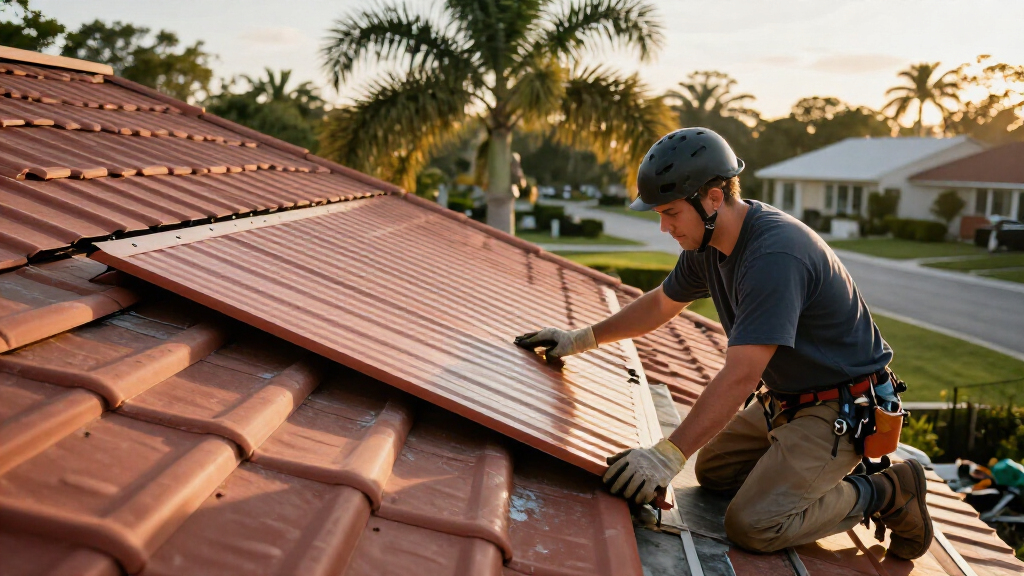
I compared the 12 listed products by their intended role, material type, stated thickness or weight where supplied, roll dimensions, and likely fit for Florida roof assemblies. I gave more weight to clear use-case distinctions than to claims that a product is simply waterproof: an underlayment beneath a roof covering has a different job from an exposed or low-slope EPDM membrane. High-temperature, self-adhering formats earned attention for hot-deck applications, while EPDM options were separated by thickness and sheet size. I also considered handling implications, seam count, and whether the listed information gives a buyer enough detail to verify compatibility.
The order favors products with a clearly differentiated role and useful stated specifications, not a blanket claim that one material suits every Florida home. FT Synthetics Platinum HT-B leads for its specific high-temperature, self-adhering underlayment role; Firestone RubberGard 60 Mil is a stronger fit for buyers prioritizing a thicker EPDM membrane. Broad-coverage synthetic rolls such as ArmorLay 25 remain practical alternatives, while lesser-specified or smaller-format options rank lower because buyers may need more diligence around product documentation, coverage, and system compatibility. I would verify current Florida and local code requirements and the manufacturer’s installation instructions before purchase; the product names and dimensions alone do not establish code approval or wind performance.
Factors to Consider When Choosing Best Florida Roofing Materials
Before choosing from this list, I would start with the roof assembly rather than the product label. Florida weather puts pressure on every layer, but the right material depends on slope, roof covering, deck, exposure, and the approved installation method. These checks help prevent buying a product that performs well in one role but does not belong in your roof system.
Match the Material to Roof Slope and System
First identify whether the product is an underlayment or the roof membrane itself. Synthetic rolls such as ArmorLay 25 and SIPA are generally considered as layers beneath another roof covering, while EPDM products are membrane materials for compatible low-slope assemblies. A common mistake is assuming that any waterproof roll can serve as the finished roof. Ask the roofer to name every layer in the proposed assembly and explain how water drains at edges, penetrations, and transitions. If your roof has a low slope, confirm that the chosen system is rated and detailed for that slope rather than relying on a product’s broad waterproofing language. The correct system fit matters more than choosing the thickest material on the list.
Check Local Code and Wind-Uplift Requirements
Florida requirements can vary by location, building type, roof covering, and exposure, so a product name or a general claim of storm resistance is not enough. Ask for the documentation that applies to your exact product and proposed assembly, including applicable approvals and installation instructions. Wind performance often depends on fastening patterns, adhesive, deck condition, edge details, and the covering above the underlayment. A roll that fits the project dimensions may still be unsuitable if its installation does not meet the required assembly. Have the contractor identify who will verify local code compliance before materials are ordered. This is especially useful when comparing products whose listings provide limited technical documentation.
Treat Heat Resistance and Adhesion as System Choices
High-temperature and self-adhering underlayments can suit roof assemblies exposed to substantial heat, but they are not automatically the best pick for every roof. The deck surface, ventilation, roof covering, and manufacturer’s temperature limits all affect suitability. Self-adhering material can reduce reliance on mechanical fastening in some applications, yet it demands careful surface preparation and placement because repositioning may be difficult. Buyers should ask whether the entire roof needs this layer or only specific areas, as the scope can change material use and labor. Compare that approach with a conventional synthetic underlayment when the roof design and local requirements permit either option. Do not infer performance from the word “HT” alone; check the product documentation.
Plan Coverage, Seams, and Handling Before Ordering
Roll dimensions affect more than how much material arrives: they shape carrying, cutting, overlap, and seam frequency. Long, wide underlayment rolls can cover broad roof areas efficiently, but they may be awkward on a small or steep roof. Smaller EPDM sheets can be more manageable for limited sections, though added seams require careful detailing and create more places where installation quality matters. Measure the roof’s actual surface area, account for required overlaps and waste, and ask the installer to calculate coverage from the manufacturer’s instructions. Avoid ordering based only on the nominal roll dimensions. For a large low-slope area, compare sheet layout and seam placement before settling on a membrane size.
Choose EPDM Thickness for the Project, Not by Number Alone
This selection includes 45 mil EPDM options and thicker 60 mil choices, but thickness alone does not decide which membrane is right. A thicker sheet may be appropriate when the specified system calls for it, while added material can affect handling and project requirements. Confirm the membrane’s compatibility with adhesives, seams, penetrations, and any roof components in the planned assembly. Compare Firestone RubberGard 60 Mil with RoofShield 60 Mil only after checking their documentation, dimensions, and installation requirements; their stated thickness does not prove the products are interchangeable. Also confirm the exact coverage needed, since sheet size can influence seam layout. Ask the roofer to explain the basis for the selected thickness rather than treating a larger number as an automatic upgrade.
Compare Total Project Cost and Installer Familiarity
The product cost is only one part of a Florida roofing decision: labor, substrate preparation, fasteners or adhesive, flashing, waste, and future repair access also affect the project. A less familiar material may require an installer to learn a new system, while a familiar product can make details and repairs easier to manage. Request a written scope that names the material, installation method, accessories, and warranty conditions instead of comparing product labels alone. Pay more when the assembly calls for a documented feature or the specified membrane, not just for a premium-sounding description. For buyers new to roofing materials, a clearly documented system installed by a qualified contractor may be a safer choice than piecing together separate products. Check that the warranty terms align with the actual installation and roof assembly.
Frequently Asked Questions
Can I use a synthetic roofing underlayment as the finished roof on a Florida home?
Usually, a synthetic underlayment is a layer beneath a roof covering, not the finished weather-exposed roof. Products such as ArmorLay 25, ApxRoufin, SIPA, and Zeluga should be evaluated for the role described in their documentation and the proposed assembly. Leaving an underlayment exposed may exceed its allowed exposure period or fall outside its intended use. Ask the contractor to identify the finished roof covering and how the underlayment will be protected during construction. If you need a membrane roof, compare products designed for that role, such as the EPDM options, and verify their system requirements.
Should I choose 60 mil EPDM instead of a 45 mil membrane?
Not solely because the thickness number is larger. A 60 mil membrane may fit a project whose specification calls for a thicker sheet, while a 45 mil option may be appropriate for another compatible assembly. The roof’s slope, size, expected use, substrate, seam method, and local requirements all affect the choice. Compare the manufacturer’s installation details and warranty conditions, and have the roofer explain why a particular thickness is specified. In this lineup, Firestone RubberGard and RoofShield offer 60 mil options, while RoofShield, Chonway, and other listed EPDM selections include 45 mil formats; their stated thicknesses do not establish equal performance or approval.
Is a self-adhering underlayment the right choice for a hot Florida roof?
It can be a good fit when the roof assembly calls for a self-adhering, high-temperature layer, which is the role that makes FT Synthetics Platinum HT-B stand out here. That does not mean it belongs on every roof or should cover every area. The deck must be prepared as directed, and temperature limits, compatibility, and application conditions matter. Ask whether the roof covering and assembly are approved for the product and whether the installer has planned for difficult details such as valleys and penetrations. Compare it with a synthetic underlayment when both options are permitted, weighing application needs and system documentation rather than assuming adhesion alone settles the choice.
How do I know whether a roofing product meets requirements for my Florida location?
Ask for documentation tied to the exact product and proposed roof assembly, then have the contractor or local building official confirm that it applies to your project. Requirements can depend on jurisdiction, wind exposure, building details, roof covering, and installation method. A product’s material type, thickness, or waterproofing claim does not prove code acceptance. Check that the specified fasteners, adhesives, overlaps, edge details, and substrate match the documented assembly. If a listing lacks enough technical information, pause the purchase until the manufacturer or installer supplies the relevant documentation.
What should I compare when choosing between large rolls and smaller roofing sheets?
Compare usable coverage after overlaps, roof geometry, access, seam layout, and the crew’s handling plan. Large rolls such as the 48-inch by 250-foot underlayment formats can reduce the number of roll changes across broad areas, but may be harder to move or position on a steep roof. Smaller membrane sheets can suit limited areas or constrained access, yet may add seams that require careful installation. Have the installer calculate material needs from the roof dimensions and manufacturer’s overlap rules rather than ordering by nominal area alone. The best format is the one that fits the roof and can be installed correctly, not automatically the largest sheet.
Conclusion
For a broadly useful starting point, I rank FT Synthetics Platinum HT-B as best overall among these selections when the roof assembly calls for a self-adhering, high-temperature underlayment. ArmorLay 25 is my best value-style pick for buyers seeking a large synthetic underlayment roll, though suitability still depends on the roof system and local requirements. Firestone RubberGard 60 Mil is the premium-oriented EPDM choice for projects specifying a thicker membrane, while ArmorLay 25 is the simplest starting point for beginners comparing broad-coverage underlayments. For a specific low-slope membrane need, compare the 45 mil and 60 mil EPDM options by system documentation, dimensions, and seam plan rather than thickness alone. My final recommendation is to have a qualified roofer verify code fit and the complete assembly before ordering; these products serve different roles and are not direct substitutes.