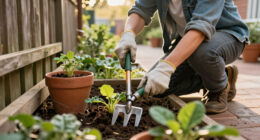
The best garden tools for dividing perennials balance cutting power, control, and comfort in the soil you work with. I rank the Root Slayer Perennial Garden Shovel as the best overall for tackling established clumps, while the Kent & Stowe Stainless Steel Perennial Spade suits gardeners who want a dedicated spade and the Fiskars Hori Hori is a versatile choice for smaller divisions. The main tradeoff is reach and leverage versus precision and easy handling: large spades move more soil, while knives work neatly around smaller roots. Handle design, blade shape, and soil conditions can change which option makes sense for your garden. Read on for the full comparison, selection criteria, and guidance for choosing by task.

Get business pricing on tools and workshop supplies
- Business-only prices and quantity discounts
- Tax-exempt purchasing
- Multiple users, one account, clear invoices
Complete the kit


Key Takeaways
- For dense, established clumps, leverage matters: the Root Slayer shovel and perennial spades are better suited to forcing through a large root mass than short knives.
- Hori hori knives fill a different role from spades: their narrow blades offer more control for smaller clumps, edging, and dividing plants in tighter spaces, but less leverage in heavy soil.
- Tool names alone do not settle the choice: serrated edges, dual-edge blades, blade length, and handle shape affect how a knife cuts and how confidently it can be controlled.
- Dedicated perennial forks and sporks favor lifting and loosening: DeWit’s longer-handled spork and short T-handle fork suit different working postures and access needs.
- Material and size involve practical tradeoffs: stainless steel can be easier to maintain, while compact tools are easier to store and maneuver but may demand more effort on mature root systems.
| Root Slayer 23311 Perennial Garden Shovel with Fiberglass Shaft |  | Best for Root-Heavy Divisions | Brand: Root Slayer | Model: 23311 | Blade material: Powder-coated carbon steel | VIEW LATEST PRICE | See Our Full Breakdown |
| Keyfit Tools Spartan Serrated Garden Knife |  | Best Lightweight Knife for Small Divisions | Brand: Keyfit Tools | Blade material: Stainless steel | Blade length: 8 inches | VIEW LATEST PRICE | See Our Full Breakdown |
| Kent & Stowe Stainless Steel Perennial Spade |  | Best for Kneeling Gardeners | Brand: Kent & Stowe | Item type: Spade | Head material: Stainless steel | VIEW LATEST PRICE | See Our Full Breakdown |
| Kanzuro Hori Hori Garden Knife with Stainless Steel Blade, Depth Markings, Wooden Handle, and Sheath |  | Best for Measured, Multi-Task Dividing | Manufacturer: KANZURO | Model: KT-HORI-BLK | Blade material: Stainless steel | VIEW LATEST PRICE | See Our Full Breakdown |
| Fiskars Hori Hori Garden Knife with Sheath |  | Best All-Purpose Hori Hori | Brand: Fiskars | Model: Hori Hori Garden Knife | Blade material: Corrosion-resistant stainless steel | VIEW LATEST PRICE | See Our Full Breakdown |
| Hori Hori Garden Knife with Sheath, 7-Inch Stainless Steel Blade |  | Best All-Purpose Hori Hori | Blade length: 7 inches | Blade material: Stainless steel | Blade construction: Full tang | VIEW LATEST PRICE | See Our Full Breakdown |
| Hori Hori Garden Knife with 7-Inch Dual-Edge Stainless Steel Blade |  | Best for Measured Planting Depth | Blade length: 7 inches | Blade thickness: 4 mm | Blade material: Stainless steel | VIEW LATEST PRICE | See Our Full Breakdown |
| Fiskars Big Grip Garden Knife and Multi-Purpose Planting Tool |  | Best for Comfortable Hand Work | Brand: Fiskars | Model: Big Grip Garden Knife | Head material: Rust-resistant steel | VIEW LATEST PRICE | See Our Full Breakdown |
| DeWit Perennial Spork Garden Tool with T-Handle |  | Best for Tight-Space Crown Splitting | Blade material: Tempered Swedish boron steel | Blade feature: Slotted blade with cutting edge | Handle: European ash hardwood T-handle | VIEW LATEST PRICE | See Our Full Breakdown |
| DeWit Perennial Fork with Short T-Handle |  | Best for Beds, Containers, and Bulb Clumps | Manufacturer: DeWit | Model: No. 3094 | Materials: Ash hardwood and boron steel | VIEW LATEST PRICE | See Our Full Breakdown |
| Nisaku NJP650 Hori Hori Stainless Steel Weeding Knife, 7.25-Inch Blade |  | Best Hori Hori for Depth-Controlled Dividing | Blade material: Stainless steel | Blade length: 7.25 inches | Handle material: Wood | VIEW LATEST PRICE | See Our Full Breakdown |
| PERWIN Hori Hori Garden Knife with Sheath, 7-Inch Stainless Steel Blade and Wood Handle |  | Best for Belt-Carried Border Work | Blade material: Stainless steel | Blade length: 7 inches | Item length: 12.1 inches | VIEW LATEST PRICE | See Our Full Breakdown |
| Berry&Bird Perennial Spade with Stainless Steel Blade and Wooden Handle |  | Best Short-Handled Spade for Root Cutting | Length: 21.6 inches | Weight: 1.23 lbs (0.56 kg) | Blade material: Stainless steel | VIEW LATEST PRICE | See Our Full Breakdown |
| garden tools for dividing perennial | Blade material | Weight | Handle | Warranty |
|---|---|---|---|---|
| Root Slayer 23311 Perennial Ga | Powder-coated carbon steel | 3.5 pounds | Ergonomic O-handle | Lifetime |
| Keyfit Tools Spartan Serrated | Stainless steel | — | — | — |
| Kent & Stowe Stainless Steel P | — | — | — | — |
| Kanzuro Hori Hori Garden Knife | Stainless steel | 13.1 ounces | — | — |
| Fiskars Hori Hori Garden Knife | Corrosion-resistant stainless steel | — | SoftGrip | Full lifetime warranty |
| Hori Hori Garden Knife with Sh | Stainless steel | 1.01 pounds | Ergonomic plastic with rubber coating | — |
| Hori Hori Garden Knife with 7- | Stainless steel | 1.04 pounds | Soft, non-slip TRP | — |
| Fiskars Big Grip Garden Knife | — | — | Oversized Softgrip with hang hole | Full lifetime warranty |
| DeWit Perennial Spork Garden T | Tempered Swedish boron steel | 1.35 pounds | European ash hardwood T-handle | Lifetime guarantee |
| DeWit Perennial Fork with Shor | — | 1.46 pounds | Short T-handle | Lifetime guarantee |
| Nisaku NJP650 Hori Hori Stainl | Stainless steel | 10 oz (300 g) | — | 2 years |
| PERWIN Hori Hori Garden Knife | Stainless steel | — | — | — |
| Berry&Bird Perennial Spade wit | Stainless steel | 1.23 lbs (0.56 kg) | — | 2 years |
More Details on Our Top Picks
Root Slayer 23311 Perennial Garden Shovel with Fiberglass Shaft
The Root Slayer 23311 is the strongest choice here when a perennial clump is held together by stubborn roots or compact soil. Its serrated, inverted V-shaped carbon steel blade is built to bite through resistance, while the compact blade gives you more control in crowded beds than a full-size digging shovel. The O-handle and fiberglass shaft add leverage without making this a long-handled spade. Compared with the Kent & Stowe Stainless Steel Perennial Spade, it puts more emphasis on cutting roots than on a pointed stainless head and kneeling-friendly reach. That focus has a limit: its smaller blade is less suited to lifting large, heavy clumps in one pass, and at 3.5 pounds it is not the lightest option for prolonged work. I’d choose it for tough, localized splits rather than broad excavation.
Pros:- Serrated V-shaped tip is designed to cut roots and enter compact soil
- Compact blade supports precise work in crowded garden beds
- O-handle offers a secure grip and leverage
- Fiberglass shaft paired with a powder-coated carbon steel blade
Cons:- Smaller blade is less efficient for lifting broad, heavy root balls
- At 3.5 pounds, it may feel substantial during extended digging
Best for: Gardeners dividing established, root-dense perennials in compact soil or tight planting beds
Not ideal for: Anyone who regularly lifts large clumps or wants a lightweight tool for long digging sessions
- Brand:Root Slayer
- Model:23311
- Blade material:Powder-coated carbon steel
- Shaft material:Fiberglass
- Blade length:9 inches
- Dimensions:44.88 x 9.88 x 5.51 inches
- Weight:3.5 pounds
- Handle:Ergonomic O-handle
- Warranty:Lifetime
Our verdict“Choose the Root Slayer for controlled cuts through stubborn roots, but pick a larger spade for moving big perennial clumps.”
Keyfit Tools Spartan Serrated Garden Knife
For smaller perennial crowns and careful work near neighboring plants, the Keyfit Tools Spartan Serrated Garden Knife is the lightest, simplest option in this group. Its 8-inch double-sided serrated stainless steel blade can cut from either direction, while the round point and 4-ounce weight suit controlled hand work rather than forceful prying. The rubber handle is designed to resist rotting, and the included sheath makes it easier to store the blade safely. Compared with the Fiskars Hori Hori Garden Knife, this knife has a straightforward serrated cutting profile instead of a precision-ground edge and forked tip, so it is less specialized for scooping or varied digging tasks. It also cannot match the leverage of the Root Slayer shovel or a spade when a mature clump needs substantial force. I’d reserve it for modest splits and light garden chores.
Pros:- Double-sided serrations allow cuts from either side of the blade
- Stainless steel blade suits routine garden cutting tasks
- Light 4-ounce weight favors controlled hand work
- Includes a sheath for blade storage
Cons:- Knife format offers little leverage for prying apart dense root systems
- Lacks the Fiskars Hori Hori’s forked tip and precision-ground edge
Best for: Gardeners dividing smaller perennials by hand and wanting one lightweight knife for pruning and harvesting too
Not ideal for: Gardeners tackling mature, tightly packed root balls that need leverage or a tool for lifting soil
- Brand:Keyfit Tools
- Blade material:Stainless steel
- Blade length:8 inches
- Blade edge:Double-sided serrated
- Point style:Round point
- Handle material:Rubber
- Handle length:5 inches
- Item weight:4 ounces
- Included component:Sheath
Our verdict“Pick this knife for light, precise divisions and multitasking, not for splitting large or woody perennial clumps.”
Kent & Stowe Stainless Steel Perennial Spade
The Kent & Stowe Stainless Steel Perennial Spade suits gardeners who divide plants while kneeling and want a spade-like tool with enough reach to dig and lift. Its 54 cm ash handle offers more leverage than either the Keyfit Spartan or the Fiskars Hori Hori, while the pointed stainless steel head is intended to slice roots and open small planting holes. That makes it a more natural pick for lifting a divided section than a hand knife, though it is still midi-sized rather than a full garden spade. Unlike the Root Slayer, it does not have a serrated V-shaped cutting tip for especially resistant roots. The stainless head also needs dry storage, and the product data warns that fertilisers or other chemicals may corrode the metal. I’d choose it for routine dividing in tended beds, not neglected, root-bound ground.
Pros:- Pointed stainless steel head is designed to slice roots
- 54 cm handle provides more leverage than a hand knife
- Midi size suits work while kneeling and small planting holes
- Ash wood handle paired with a stainless steel head
Cons:- No serrated edge for cutting especially tough roots
- Requires dry storage, and exposure to fertilisers or chemicals may corrode the head
Best for: Kneeling gardeners who want a compact spade for splitting ordinary perennial clumps and digging planting holes
Not ideal for: Gardeners working in highly compacted, root-heavy ground or those unable to store tools dry and away from chemicals
- Brand:Kent & Stowe
- Item type:Spade
- Head material:Stainless steel
- Handle material:Ash wood
- Length:54 cm
- Color:Ash/silver
- Model number:70100546
- Number of items:1
Our verdict“Choose this spade for kneeling-height dividing and moderate root cutting, but favor the Root Slayer for especially resistant ground.”
Kanzuro Hori Hori Garden Knife with Stainless Steel Blade, Depth Markings, Wooden Handle, and Sheath
The Kanzuro Hori Hori is a good fit for gardeners who want a hand tool that can cut roots and handle the planting that follows. Its straight and serrated edges provide different cutting options, while depth markings help keep replacement plants at a consistent depth. Against the Keyfit Tools Spartan, Kanzuro adds depth markings and a straight edge, making it more useful for planting and transplanting as well as dividing. Its wooden handle and sheath add a traditional feel and protected storage, but the listed 13.1-ounce weight is noticeably more substantial than the Spartan’s 4 ounces; extended hand work may feel tiring. The handle may also need care to maintain. Like the Fiskars Hori Hori, it remains a hand knife, so it cannot supply the leverage of the Kent & Stowe spade when separating a large root mass.
Pros:- Straight and serrated edges cover different cutting tasks
- Depth markings help with consistent planting depth
- Sheath supports safer storage and carrying
- Combines dividing, weeding, planting, and transplanting functions
Cons:- At 13.1 ounces, it is heavier than the Keyfit Spartan for extended hand use
- Wooden handle may need care to maintain
- Hand-knife design offers less leverage than a spade for large root balls
Best for: Gardeners who divide small-to-medium perennials and want depth-marked cutting and planting in one hand tool
Not ideal for: Anyone prioritizing low weight for lengthy hand work or needing leverage to split large, dense clumps
- Manufacturer:KANZURO
- Model:KT-HORI-BLK
- Blade material:Stainless steel
- Blade edges:Straight and serrated
- Handle material:Wood
- Depth markings:Yes
- Included accessory:Synthetic leather sheath
- Dimensions:13 x 3 x 1.5 inches
- Weight:13.1 ounces
Our verdict“Choose Kanzuro if depth-marked planting and a dual-edge blade matter more than low weight or spade-like leverage.”
Fiskars Hori Hori Garden Knife with Sheath
The Fiskars Hori Hori Garden Knife earns its place as the most adaptable hand knife here for gardeners who divide plants and also weed, dig, or transplant. Its precision-ground and serrated edges give it more range than the Keyfit Spartan’s double-sided serrated blade, and the forked tip adds another way to work into soil around roots. English and metric depth measurements support repeatable planting, while the SoftGrip handle and belt-loop sheath address handling and storage. Compared with the Kent & Stowe Stainless Steel Perennial Spade, Fiskars is easier to carry and use in close quarters, but it cannot provide the same leverage for lifting a heavy division. The product data does not list blade length or weight, so buyers cannot compare those dimensions directly with the other knives. I’d choose it for varied hand-tool work, not as a replacement for a spade in large clumps.
Pros:- Precision-ground edge, serrated edge, and forked tip support varied tasks
- Corrosion-resistant stainless steel blade
- English and metric depth measurements aid consistent planting
- SoftGrip handle and belt-loop sheath support handling and storage
Cons:- Hand-knife format provides less leverage than the Kent & Stowe spade
- Blade length and product weight are not provided in the supplied specifications
Best for: Gardeners who want one hand knife for dividing smaller perennials, weeding, planting, and transplanting
Not ideal for: Gardeners splitting large, heavy clumps who need a long handle and leverage to lift or separate roots
- Brand:Fiskars
- Model:Hori Hori Garden Knife
- Blade material:Corrosion-resistant stainless steel
- Blade features:Precision-ground edge, serrated edge, forked tip
- Handle:SoftGrip
- Included component:Sheath with belt loop
- Recommended uses:Weeding, planting, digging, splitting, transplanting
- Warranty:Full lifetime warranty
- Model number:340130-1001
Our verdict“Choose the Fiskars for versatile, close-range dividing and planting, but add a spade for large root-bound clumps.”
Hori Hori Garden Knife with Sheath, 7-Inch Stainless Steel Blade
For dividing smaller, loosely rooted perennials, this knife gives me a useful mix of digging and root-cutting in one hand tool. Its 7-inch curved, full-tang stainless steel blade has a straight edge for slicing and a serrated edge for sawing through tougher roots, so it can also handle planting and weeding between divisions. Compared with the Fiskars Big Grip Garden Knife, this model includes a sheath and is better specified for wet-grip control, while Fiskars adds a forked tip and lifetime warranty. The tradeoff is that this knife’s listed 1.01-pound weight may feel substantial for prolonged fine work, and the product information gives no warranty details. I’d choose it for gardeners who want one versatile knife, not a dedicated tool for splitting dense crowns.
Pros:- Straight and serrated edges support slicing and sawing through roots.
- Full-tang, 7-inch stainless steel blade combines digging with cutting.
- Rubber-coated handle is designed to improve grip in wet or muddy conditions.
- Included sheath supports safer storage.
Cons:- At 1.01 pounds, it may feel heavy during extended hand work.
- No warranty details are provided in the product information.
Best for: Gardeners dividing small to medium perennials who also want one sheathed tool for planting, weeding, and cutting roots.
Not ideal for: Gardeners tackling dense, woody crowns or seeking a lightweight knife for long sessions; a specialized fork or spade is better suited to forceful splitting.
- Blade length:7 inches
- Blade material:Stainless steel
- Blade construction:Full tang
- Blade edges:Straight and serrated
- Handle:Ergonomic plastic with rubber coating
- Included:Sheath
- Weight:1.01 pounds
Our verdict“Choose this for an adaptable, sheathed garden knife for smaller divisions and routine planting, but pick a dedicated fork or spade for tough crowns.”
Hori Hori Garden Knife with 7-Inch Dual-Edge Stainless Steel Blade
This hori hori makes the most sense when dividing perennials involves repeat planting at a consistent depth. Inch and millimeter markings on its 7-inch blade give me a quick reference when setting divisions back into the bed, while the serrated edge can help cut roots and the straight edge handles cleaner slices. Its 4 mm full-tang blade, hand guard, non-slip TRP handle, and belt-loop sheath give it a more controlled setup than the simpler GRAND WAY Hori Hori Garden Knife. That added structure comes with a meaningful tradeoff: at 1.04 pounds, it is not a light choice for extended fine work, and the product details provide no blade warranty information. I’d favor it over the DeWit Perennial Spork when measuring planting depth matters more than applying leverage to a crowded clump.
Pros:- Depth markings in inches and millimeters help set planting depth.
- 4 mm full-tang stainless steel blade is designed for digging and prying.
- Straight and serrated edges cover slicing and root sawing.
- Hand guard, non-slip handle, and belt-loop sheath support controlled handling and storage.
Cons:- The 1.04-pound weight may tire the hand during extended use.
- No blade warranty details are listed.
Best for: Gardeners who divide and replant several perennials at measured depths and want a hand knife with a guard and belt-loop sheath.
Not ideal for: Gardeners who need a long-handled tool for dense, established clumps or want a lighter knife for prolonged trimming.
- Blade length:7 inches
- Blade thickness:4 mm
- Blade material:Stainless steel
- Blade type:Straight and serrated edges
- Handle:Soft, non-slip TRP
- Features:Inch and millimeter depth markings; hand guard
- Included accessory:Sheath with belt loop
- Weight:1.04 pounds
Our verdict“Pick this hori hori when measured planting depth and handling features matter more than low weight or the leverage of a dedicated perennial fork.”
Fiskars Big Grip Garden Knife and Multi-Purpose Planting Tool
The oversized Softgrip handle gives this Fiskars a distinct role for gardeners who want a broad, comfortable hold while making smaller divisions. Its rust-resistant steel head pairs sharpened and serrated edges with a forked tip, which can help loosen soil and pick at roots around a plant without changing tools. Compared with the GRAND WAY Hori Hori, it emphasizes handle comfort and root removal rather than a stated full-tang construction or included sheath. It also lacks the depth markings offered by the Jawanfu Hori Hori, so I would not make it my pick for repeated depth-sensitive replanting. The product data lists a lifetime warranty, but gives no blade length or weight, making size and heft harder to judge before buying. It suits routine bed work better than forceful crown splitting.
Pros:- Oversized Softgrip handle offers a broad grip for hand work.
- Sharpened and serrated edges handle different cutting tasks.
- Forked tip helps remove roots and loosen soil around divisions.
- Rust-resistant steel head and full lifetime warranty are specified.
Cons:- No blade length or tool weight is provided in the product data.
- No sheath is listed, unlike the GRAND WAY and Jawanfu hori hori knives.
- No depth markings are specified for consistent replanting.
Best for: Gardeners who divide smaller plants and prioritize a roomy grip for digging, weeding, and teasing roots from soil.
Not ideal for: Gardeners who need a specified blade length, depth markings, or a sheathed knife for measuring and carrying between beds.
- Brand:Fiskars
- Model:Big Grip Garden Knife
- Head material:Rust-resistant steel
- Blade edges:Sharpened and serrated
- Tip:Forked
- Handle:Oversized Softgrip with hang hole
- Warranty:Full lifetime warranty
Our verdict“Choose the Fiskars for comfortable, general hand work around smaller divisions, but select a marked, sheathed hori hori if measured planting depth is a priority.”
DeWit Perennial Spork Garden Tool with T-Handle
When a perennial is wedged into a narrow bed or surrounded by plants I want to keep, the DeWit Perennial Spork’s compact, specialized shape is more relevant than a general-purpose knife. Its hand-forged tempered boron steel blade has slots that add flexibility and a cutting edge for working through soil and lawn, giving it a different approach from the DeWit Perennial Fork, whose simpler fork form is aimed at loosening soil and separating bulbs. The 25-inch length offers more reach than either hori hori knife here, but this is still a focused perennial tool rather than a broad utility implement. At 1.35 pounds, it also weighs more than the listed GRAND WAY knife. I’d pick it for confined-space divisions, not for gardeners who need one tool for everyday digging, weeding, and planting.
Pros:- Designed specifically for splitting perennials in tight spaces.
- Hand-forged tempered boron steel blade is built for demanding garden work.
- Slotted blade offers flexibility and a cutting edge for working through soil and lawn.
- Lifetime guarantee is included.
Cons:- Specialized shape is less suited to general digging and everyday garden tasks.
- At 1.35 pounds, it is heavier than the listed GRAND WAY hori hori.
- A 25-inch tool is less compact to store than a hand knife.
Best for: Experienced gardeners splitting established perennials in crowded beds or other confined spaces.
Not ideal for: Gardeners seeking a general-purpose hand tool for planting and weeding, or a long-handled implement for broad areas.
- Blade material:Tempered Swedish boron steel
- Blade feature:Slotted blade with cutting edge
- Handle:European ash hardwood T-handle
- Dimensions:25 x 2.5 x 6 inches
- Weight:1.35 pounds
- Model:31-0815
- Warranty:Lifetime guarantee
Our verdict“Choose this spork for targeted perennial splitting in tight beds; choose a hori hori instead for broader everyday use.”
DeWit Perennial Fork with Short T-Handle
The DeWit Perennial Fork is a focused choice for loosening soil and separating bulbs where a full-size spade would be cumbersome. Its 24-inch form and short T-handle suit raised beds, containers, and tight garden spaces; the forged tempered boron steel head gives it a more dedicated digging role than the Fiskars Big Grip Garden Knife, which is better suited to small-scale cutting and root picking. Compared with the slotted DeWit Perennial Spork, this fork is described for broader loosening and separating tasks rather than specifically splitting large perennials. That difference makes the spork the more targeted choice for crown division, while this fork may be the more adaptable of the two for bulbs and soil work. Its short handle limits reach, and its 1.46-pound weight may feel substantial in repeated hand use.
Pros:- Compact 24-inch length suits containers, raised beds, and confined spaces.
- Designed for loosening soil, dividing plants, and separating bulbs.
- Forged tempered boron steel head and ash hardwood T-handle.
- Lifetime guarantee is included.
Cons:- Short handle offers less reach than a long-handled garden fork or spade.
- At 1.46 pounds, it may feel heavy during repeated hand work.
- Less specifically described for splitting large crowns than the DeWit Perennial Spork.
Best for: Gardeners working in raised beds, containers, or tight borders who regularly loosen soil and divide plants or bulbs.
Not ideal for: Gardeners who need long reach, work across broad beds, or want a blade specifically designed to cut through large perennial crowns.
- Manufacturer:DeWit
- Model:No. 3094
- Materials:Ash hardwood and boron steel
- Handle:Short T-handle
- Dimensions:24 x 4.25 x 1.25 inches
- Weight:1.46 pounds
- Package quantity:1
- Warranty:Lifetime guarantee
Our verdict“Choose this fork for compact-bed soil work and bulb separation, but favor the DeWit Perennial Spork when splitting large perennial clumps is the main task.”
Nisaku NJP650 Hori Hori Stainless Steel Weeding Knife, 7.25-Inch Blade
For dividing smaller perennials or trimming exposed roots, the Nisaku NJP650 combines a 7.25-inch stainless steel blade with plain and serrated edges. The straight edge suits controlled cuts, while the serrations can help work through tougher roots; inch markings make it easier to judge planting depth or keep cuts consistent. Compared with the Berry&Bird Perennial Spade, this knife is more precise in tight spaces but is not designed to lever apart a large, dense root ball. Its 5.25-inch wooden handle offers a compact grip, and the included sheath helps protect the blade between jobs. The tradeoff is upkeep: it is hand wash only, and its short handle calls for close-to-the-ground work rather than standing leverage.
Pros:- Plain and serrated edges offer options for slicing and working through roots.
- Blade inch markings help control planting depth and repeat cut placement.
- Compact wooden handle supports close, controlled work.
- Includes a sheath for blade storage and transport.
Cons:- Short handle limits leverage on dense or oversized root balls.
- Hand-wash-only care takes more attention after muddy work.
Best for: Gardeners dividing small to medium perennials in crowded borders who want a compact blade with depth markings for precise cuts.
Not ideal for: Anyone splitting large, heavily rooted clumps or avoiding kneeling; a longer-handled spade provides more leverage and reach.
- Blade material:Stainless steel
- Blade length:7.25 inches
- Handle material:Wood
- Handle length:5.25 inches
- Blade edges:Plain and serrated
- Weight:10 oz (300 g)
- Included component:Faux leather sheath
- Origin:Japan
- Warranty:2 years
Our verdict“Choose the Nisaku for precise, close-range division of smaller clumps; pick the Berry&Bird spade when root-ball leverage matters more.”
PERWIN Hori Hori Garden Knife with Sheath, 7-Inch Stainless Steel Blade and Wood Handle
The PERWIN Hori Hori suits gardeners who move between plants and want a root-cutting tool close at hand. Its 7-inch curved stainless steel blade has sharp and serrated edges for digging and cutting, and the full-tang construction runs through the walnut handle for a solid connection under hand pressure. The sheath’s belt loop is a practical difference from the Nisaku NJP650’s included sheath, especially when working along a long border. Its shorter blade is also more maneuverable than the Berry&Bird perennial spade, but it offers less reach and leverage when a mature clump needs to be split. This is a hand tool, not a substitute for a spade on stubborn root masses, and the blade requires hand washing after use.
Pros:- Curved blade with sharp and serrated edges handles varied digging and cutting tasks.
- Full-tang construction connects the blade through the walnut handle.
- Sheath belt loop keeps the knife accessible during bed work.
- Blade can be used for soil-depth measurement.
Cons:- Seven-inch blade and hand-held format provide limited leverage on large clumps.
- Hand-wash-only care adds cleanup work after muddy jobs.
Best for: Border gardeners who divide modest-sized perennials and want a sheathed knife they can carry on a belt while moving between beds.
Not ideal for: Gardeners tackling large, compacted root balls or seeking a long-handled tool that reduces kneeling and increases leverage.
- Blade material:Stainless steel
- Blade length:7 inches
- Item length:12.1 inches
- Handle material:Walnut wood
- Blade edges:Sharp and serrated
- Construction:Full tang with riveted wood handle
- Special feature:Rust resistant
- Included component:Sheath with belt loop
Our verdict“Pick the PERWIN for portable, close-range work in borders; choose the Berry&Bird spade for more reach and leverage when splitting bigger perennials.”
Berry&Bird Perennial Spade with Stainless Steel Blade and Wooden Handle
Unlike the Nisaku NJP650 and PERWIN Hori Hori, the Berry&Bird Perennial Spade is built around a pointed spade blade rather than a compact knife. That broader, pointed blade gives gardeners more purchase for cutting roots and lifting divided sections, making it the stronger fit for established clumps in borders or raised beds. Its 21.6-inch length and 1.23-pound weight keep it more manageable in confined planting areas than a full-size spade, while the contoured T-shaped ash handle offers control during digging. The compromise is reach: the relatively short handle may mean kneeling, and it will not provide the leverage of a longer shovel for very dense root systems. It is a focused digging tool, not a pocketable knife for fine cuts.
Pros:- Pointed stainless steel blade is suited to cutting roots and lifting divisions.
- T-shaped ash handle supports control during digging.
- Compact 21.6-inch length suits raised beds and tight borders.
- Stainless steel blade is described as rust- and corrosion-resistant.
Cons:- Short handle may require kneeling for some tasks.
- Less suited than a hori hori knife to fine, close-up cutting or portable work.
- May lack the leverage needed for very dense, oversized root systems.
Best for: Gardeners dividing established perennials in raised beds or borders who want a pointed spade blade and can work comfortably at a shorter handle height.
Not ideal for: People who need a belt-carried tool for precise cuts or want standing leverage to split large, deeply rooted clumps.
- Length:21.6 inches
- Weight:1.23 lbs (0.56 kg)
- Blade material:Stainless steel
- Handle material:Ash wood
- Grip type:Contoured T-shaped grip
- Pack quantity:1
- Warranty:2 years
Our verdict“Choose this spade for digging and lifting established divisions in confined beds, but opt for a hori hori if precision and portability matter more.”

How We Picked
I ranked the 13 tools by how well their design matches the actual demands of dividing perennials: cutting or separating roots, getting leverage beneath a clump, and controlling the tool near plants worth keeping. I compared blade form and length, handle shape and working reach, and whether each tool is a dedicated spade, fork, spork, or multipurpose knife. I also considered likely ease of care and how useful each design is beyond a single division task.
The order reflects role and capability, not a claim that one tool suits every garden. Full-size digging tools place higher for established clumps because leverage can reduce the effort of separating dense roots; knives rank well for precision, smaller plants, and restricted spaces. Within each type, the ranking favors clear task fit and useful design distinctions, while accounting for tradeoffs such as limited leverage, short reach, or a less specialized shape. I do not treat similar-looking knives as interchangeable: edge style, handle construction, and included sheath affect the choice.
| garden tools for dividing perennial | Blade material |
|---|---|
| Root Slayer 23311 Perennial Ga | Powder-coated carbon steel |
| Keyfit Tools Spartan Serrated | Stainless steel |
| Kent & Stowe Stainless Steel P | — |
| Kanzuro Hori Hori Garden Knife | Stainless steel |
| Fiskars Hori Hori Garden Knife | Corrosion-resistant stainless steel |
| Hori Hori Garden Knife with Sh | Stainless steel |
| Hori Hori Garden Knife with 7- | Stainless steel |
| Fiskars Big Grip Garden Knife | — |
| DeWit Perennial Spork Garden T | Tempered Swedish boron steel |
| DeWit Perennial Fork with Shor | — |
| Nisaku NJP650 Hori Hori Stainl | Stainless steel |
| PERWIN Hori Hori Garden Knife | Stainless steel |
| Berry&Bird Perennial Spade wit | Stainless steel |
Factors to Consider When Choosing Best Garden Tools For Dividing Perennials
Before choosing a tool, match it to the size of the root mass and the way you plan to divide it. A compact knife can be more useful than a spade in a crowded border, while a dedicated digging tool can save effort when a mature clump must be lifted or split. These broader checks help prevent choosing by appearance or feature count alone.
Match leverage to the size of the clump
Think about the largest plant you expect to divide, not just the easiest one in your garden. A broad, established root ball usually calls for a tool with enough reach and handle leverage to loosen and lift soil around it. A short knife may cut smaller roots, but forcing it through a thick clump can put extra strain on your hand and wrist. Conversely, a large spade can feel awkward when working between neighboring plants or in a raised bed. If your garden includes both mature and young perennials, choose a primary tool for the hardest regular job and treat a knife as a companion rather than a substitute.
Read the soil before choosing a blade
Soil texture changes how a tool performs. Heavy or compacted ground rewards a sturdy blade and a handle that lets you apply controlled pressure; loose soil makes a narrow knife more practical for tracing and separating roots. Stones, woody roots, and dry ground can also make thin or narrowly focused tools harder to use. A serrated edge may help cut through fibrous roots, but it will not create the same lifting leverage as a spade or fork. If conditions vary across your beds, favor a tool that handles your toughest patch safely, then use finer tools where they provide better control.
Choose between cutting, prying, and lifting
Dividing a perennial is not one motion: you may need to loosen soil, lift the root mass, and separate the crown. Spades are suited to digging and slicing, forks and sporks can loosen or lift with less tendency to cut through every root, and knives offer close control for smaller separations. A common mistake is expecting one narrow blade to do all three jobs efficiently. Consider the plant’s root structure as well: a tightly packed clump may need a clean cut, while a loose mass may separate more readily after careful lifting. Paying for a second tool makes sense when it gives you a genuinely different action, not simply another blade with a similar reach.
Prioritize a handle you can control
Handle shape affects grip, leverage, and working posture, so it deserves as much attention as the blade. A longer shaft can help with standing work and force, while a short T-handle is easier to guide close to the ground but requires more bending. Wooden handles may appeal to gardeners who prefer a traditional feel, while molded or fiberglass designs have different care and handling characteristics. Check that the grip looks manageable for your hand size and that the tool’s balance will not make precise cuts awkward. If you have limited wrist strength or often work in tight beds, control may matter more than maximum reach.
Treat maintenance and storage as part of the choice
Soil and plant residue left on a blade can make any garden tool harder to maintain, so plan to clean and dry it after use. Stainless steel is often chosen for its resistance to rust, but it still benefits from prompt cleaning and sensible storage. Knives with sheaths are easier to store and carry safely; a sheath also helps keep the blade protected between jobs. For spades and forks, inspect the handle-to-head connection and store the tool where moisture will not remain trapped. If your tools live outdoors or travel between beds, protective storage and simple cleanup habits may matter more than a small difference in blade features.
Frequently Asked Questions
Is a hori hori knife enough to divide established perennials?
It can be enough for smaller plants and root masses that are not too dense, especially when you need careful cuts in a crowded bed. For large, compact clumps, a knife offers less leverage than a spade or fork, so the work may take more effort. A practical approach is to loosen the soil and expose the crown before deciding whether the knife can finish the division. If mature clumps are a regular task, make a digging tool your main choice and keep the knife for precise follow-up work.
Should I choose a serrated or smooth blade for dividing roots?
Blade edge is only one part of the decision: reach, thickness, handle control, and root density matter too. Serrations can help a narrow blade bite into fibrous roots, while a smoother edge may feel more predictable for controlled slicing. Neither edge gives a compact knife the lifting power of a spade. Think about whether your usual work involves cutting through tangled roots or making careful divisions in smaller crowns, then choose the edge that suits that task and keep it clean and sharp.
Do I need both a spade and a garden knife?
Not every gardener needs both, but they serve different roles. A spade is more suitable for opening the ground and working around a larger root ball; a knife gives finer control for smaller divisions and close work. If you divide only small plants, one well-chosen knife may cover most of your needs. If you regularly handle mature clumps, pairing a digging tool with a knife can reduce the temptation to force a small blade beyond its comfortable job.
Is a perennial fork or spork better than a spade?
It depends on whether loosening and lifting or cutting and digging are your main needs. Forks and sporks can help raise a root mass and work soil around it, while a spade gives a more direct blade for slicing into the ground. A fork may be a better fit when preserving more of the root structure matters, but it may not divide a dense crown cleanly on its own. For stubborn plants, gardeners may use a fork to loosen the clump and a spade or knife to make the actual split.
What should I prioritize if I have limited strength or work in raised beds?
Prioritize control, manageable reach, and a grip that feels secure rather than choosing the largest tool available. In a raised bed or crowded border, a compact knife can reach places where a full-length spade is cumbersome. For heavier root masses, however, a short tool may demand more force, so loosening soil around the plant first can make the task easier. If you divide large clumps often, a longer-handled digging tool may reduce bending and provide useful leverage, provided you have room to maneuver it.
Conclusion
For most gardeners who divide a mix of established perennials, I would start with the Root Slayer Perennial Garden Shovel as the best overall because its digging-tool format is suited to clumps that need leverage. The Fiskars Big Grip Garden Knife is my best-value direction for gardeners who want a compact, multipurpose option, while the Kent & Stowe Stainless Steel Perennial Spade is the best premium-style pick for someone seeking a dedicated spade. Beginners with smaller plants may prefer a manageable hori hori such as the Fiskars Hori Hori, which offers more control than a full-size spade. For loosening and lifting, look at the DeWit Perennial Spork; for cramped beds and precise cuts, choose among the hori hori knives based on edge, handle, and sheath. Match the tool to your most demanding regular task, and add a second tool only when it brings a clearly different kind of leverage or control.
Fall yard work Picks
leaf blowers
As an affiliate, we earn on qualifying purchases.