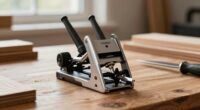
A belt sander can remove material quickly, but the right choice depends on whether you need a handheld tool for broad surfaces, a bench machine for shaping, or a compact sander for detail work. My best overall pick is the Makita 9903, a 3-by-21-inch model that balances useful sanding capacity with variable speed. The Makita 9404 stands out for buyers who want a wider belt and speed control, while the WEN 6307 suits narrow, hard-to-reach areas. The main tradeoffs are belt size, dust handling, control, and whether you need a stationary or portable setup. Read on for the full comparison and guidance on choosing a belt sander that fits your projects.

Get business pricing on tools and workshop supplies
- Business-only prices and quantity discounts
- Tax-exempt purchasing
- Multiple users, one account, clear invoices
Complete the kit


Key Takeaways
- Handheld 3-by-21-inch sanders are the most flexible group here: models such as the Makita 9903, SKIL, CRAFTSMAN, and WEN HB321V suit general surface sanding better than a dedicated bench sander.
- Variable speed is most useful when the work changes: it helps tailor belt movement for different materials and tasks, but it does not replace steady handling or suitable abrasive grit.
- Bench machines and handheld sanders solve different problems: the WEN and Woodskil 4-by-36-inch combos support stationary shaping, while handheld models cover larger workpieces and on-site jobs.
- Large belt size favors stock removal, not fine access: the Makita 9403 and 9404 offer a 4-by-24-inch sanding area, while the WEN 6307’s narrow belt reaches details a full-size sander cannot.
- Specialized options have clear limits: the DEWALT cordless model adds freedom from a cord, and the VEVOR grinder targets metalwork, but neither is the default choice for every woodworking shop.
| WEN 4.3-Amp Benchtop Belt and Disc Sander, 4 x 36-Inch Belt and 6-Inch Disc (6502T) |  | Best Benchtop Value | Motor: 4.3 A, 1/2 HP | Power source: Corded electric, 120 V | Belt size: 4 x 36 inches | VIEW ON AMAZON | See Our Full Breakdown |
| CRAFTSMAN 7 Amp Corded Belt Sander, 3 x 21 in. (CMEW213) |  | Best for Tight-to-Edge Sanding | Motor: 7 amp | Belt size: 3 x 21 inches | Maximum belt speed: 800 feet per minute | VIEW ON AMAZON | See Our Full Breakdown |
| Makita 9903 3″ x 21″ Belt Sander |  | Best for Controlled Handheld Sanding | Motor: 8.8 AMP | Speed range: 690–1,440 feet per minute | Belt size: 3 x 21 inches | VIEW ON AMAZON | See Our Full Breakdown |
| Woodskil 4.5A Belt and Disc Sander Combo, 4 x 36-Inch Belt and 6-Inch Disc |  | Best for Angled Bench Work | Motor: 3/4 HP direct drive | Amperage: 4.5 A | Power source: Corded electric, 110 V | VIEW ON AMAZON | See Our Full Breakdown |
| Makita 9404 Variable-Speed Belt Sander, 4 x 24 Inches |  | Best for Broad Sanding Coverage | Belt size: 4 x 24 inches | Belt speed: 690–1,440 FPM | Motor: 8.8 A | VIEW ON AMAZON | See Our Full Breakdown |
| WEN 7.5-Amp 3-by-21-Inch Variable-Speed Belt Sander (HB321V) |  | Best for Variable-Speed Handheld Sanding | Motor: 7.5 amp | Belt size: 3 x 21 inches | Belt speed: 620–1,200 feet per minute | VIEW ON AMAZON | See Our Full Breakdown |
| WEN 6307 Variable Speed Detailing File Sander with 1/2 x 18-Inch Belt |  | Best for Tight Corners and Contours | Motor: 2 amp | Belt size: 1/2 x 18 inches | Belt speed: 1,080–1,800 feet per minute | VIEW ON AMAZON | See Our Full Breakdown |
| SKIL 6 Amp 3-Inch x 18-Inch Belt Sander with Pressure Control |  | Best for Guided Pressure and Dust Control | Motor: 6 amp | Belt size: 3 x 18 inches | Voltage: 120 V | VIEW ON AMAZON | See Our Full Breakdown |
| WEN 1 x 30-Inch Belt and 5-Inch Disc Sander (6515T) |  | Best Benchtop Belt-and-Disc Combo | Belt size: 1 x 30 inches | Disc size: 5 inches | Motor: 2.3 amp | VIEW ON AMAZON | See Our Full Breakdown |
| VEVOR 30 x 1-Inch Variable Speed Belt Grinder with VFD and 550W Motor |  | Best for Small-Scale Multi-Material Grinding | Power: 550 W | Motor speed: 5,500 rpm | Belt size: 30 x 1 inch | VIEW ON AMAZON | See Our Full Breakdown |
| WEN HB424V 10-Amp Variable-Speed Handheld and Benchtop Belt Sander |  | Best Convertible Pick | Belt size: 4 by 24 inches | Motor: 10 amps | Belt speed: 660–1,310 feet per minute | VIEW ON AMAZON | See Our Full Breakdown |
| Makita 9403 4 x 24 Inch Belt Sander |  | Best for Fast Stock Removal | Belt size: 4 x 24 inches | Belt speed: 1,640 feet per minute | Motor: 11 amps | VIEW ON AMAZON | See Our Full Breakdown |
| DEWALT 20V MAX XR Brushless Cordless Belt Sander, Tool Only (DCW220B) |  | Best Cordless Pick | Model: DCW220B | Belt size: 3 x 21 inches | Voltage: 20 volts | VIEW ON AMAZON | See Our Full Breakdown |
| Jellas 7-Amp Variable-Speed Belt Sander, 3 × 21-Inch |  | Best Included Belt Selection | Model: S1T-SW02A-76 | Belt size: 3 x 21 inches | Motor: 7 amps, 120 volts | VIEW ON AMAZON | See Our Full Breakdown |
| belt sander | Belt size | Motor | Power source | Weight |
|---|---|---|---|---|
| WEN 4.3-Amp Benchtop Belt and | 4 x 36 inches | 4.3 A, 1/2 HP | Corded electric, 120 V | — |
| CRAFTSMAN 7 Amp Corded Belt Sa | 3 x 21 inches | 7 amp | — | — |
| Makita 9903 3" x 21" Belt Sand | 3 x 21 inches | 8.8 AMP | — | 9.5 lbs |
| Woodskil 4.5A Belt and Disc Sa | 4 x 36 inches | 3/4 HP direct drive | Corded electric, 110 V | 39.6 lb |
| Makita 9404 Variable-Speed Bel | 4 x 24 inches | 8.8 A | Corded electric, 127 V | 10.3 lbs |
| WEN 7.5-Amp 3-by-21-Inch Varia | 3 x 21 inches | 7.5 amp | Corded electric, 120 volts | 6.4 lbs |
| WEN 6307 Variable Speed Detail | 1/2 x 18 inches | 2 amp | Corded electric | 2.4 pounds |
| SKIL 6 Amp 3-Inch x 18-Inch Be | 3 x 18 inches | 6 amp | Corded electric | 5.5 pounds |
| WEN 1 x 30-Inch Belt and 5-Inc | 1 x 30 inches | 2.3 amp | Corded electric, 120 V | 16 lbs |
| VEVOR 30 x 1-Inch Variable Spe | 30 x 1 inch | — | Corded electric | 17.4 lbs |
| WEN HB424V 10-Amp Variable-Spe | 4 by 24 inches | 10 amps | Corded electric | — |
| Makita 9403 4 x 24 Inch Belt S | 4 x 24 inches | 11 amps | Corded electric | — |
| DEWALT 20V MAX XR Brushless Co | 3 x 21 inches | Brushless | Battery powered | — |
| Jellas 7-Amp Variable-Speed Be | 3 x 21 inches | 7 amps, 120 volts | Corded electric | — |
More Details on Our Top Picks
WEN 4.3-Amp Benchtop Belt and Disc Sander, 4 x 36-Inch Belt and 6-Inch Disc (6502T)
The WEN 6502T is a space-conscious way to get both a long belt and a disc sander in one stationary machine. Its 4 x 36-inch belt tilts from horizontal to vertical, making it more adaptable for edge work and taller pieces than the fixed-format handheld CRAFTSMAN CMEW213. The cast-iron base helps limit vibration, while the included miter gauge and stop bar give you practical support for repeatable work. The tradeoff is that this is a benchtop tool, not a portable belt sander: it needs a dedicated spot and a nearby outlet. Its 4.3-amp motor also makes it a less compelling choice for heavy stock removal than the 8.8-amp Makita 9903. Choose it for mixed light-duty shaping and sanding, rather than fast, demanding production work.
Pros:- Combines a 4 x 36-inch belt and 6-inch disc in one machine
- Belt tilts from 0 to 90 degrees for varied workpiece positions
- Cast-iron base helps reduce vibration during sanding
- Includes a miter gauge, stop bar, and dust port
Cons:- Stationary, corded design requires bench space and access to an outlet
- The 4.3-amp motor is less suited to demanding stock removal than higher-powered handheld options
Best for: Home woodworkers who want a stationary belt-and-disc setup for smoothing edges, small parts, and angled work.
Not ideal for: Buyers who need a handheld sander for large panels or frequent work away from a bench, or who expect rapid heavy stock removal.
- Motor:4.3 A, 1/2 HP
- Power source:Corded electric, 120 V
- Belt size:4 x 36 inches
- Belt tilt:0–90 degrees
- Disc diameter:6 inches
- Base:Cast iron
- Dimensions:22 x 11 x 12.5 inches
- Included components:Miter gauge, stop bar, 2.25-inch dust port
- Warranty:2 years
Our verdict“Choose the WEN 6502T if you want a versatile benchtop belt-and-disc sander for home projects, not a portable or heavy-duty handheld machine.”
CRAFTSMAN 7 Amp Corded Belt Sander, 3 x 21 in. (CMEW213)
The CRAFTSMAN CMEW213 earns its place for jobs where sanding close to an adjoining surface matters. Its angled belt design helps reach areas that a conventional belt sander may leave behind, while the three-position handle gives you options for grip and control. At 800 feet per minute, it offers a defined single-speed approach to material removal; unlike the variable-speed Makita 9903, it does not let you slow down for delicate sanding or adjust speed across different materials. Tool-free belt release makes abrasive changes simpler, and the onboard dust bag keeps collection attached to the tool, though it is not a substitute for a larger dust-extraction setup. Compared with the stationary WEN 6502T, this is the more mobile choice, but it gives up the disc-sanding and workpiece-support features of a bench machine.
Pros:- Angled belt design helps sand close to adjoining surfaces
- 7-amp motor and 800-feet-per-minute maximum belt speed support material removal
- Tool-free belt release simplifies abrasive changes
- Three-position overmolded handle and onboard dust bag are built into the tool
Cons:- Single listed maximum speed offers less adjustment than the variable-speed Makita 9903
- Onboard dust bag provides less collection capacity than a dedicated dust-extraction setup
Best for: DIY renovators and woodworkers who need a portable corded sander for edges and work near adjoining surfaces.
Not ideal for: Buyers who need variable speed, a stationary disc-sanding option, or more detailed control over material removal.
- Motor:7 amp
- Belt size:3 x 21 inches
- Maximum belt speed:800 feet per minute
- Power:Corded electric
- Belt changes:Tool-free release
- Dust collection:Onboard dust bag
- Handle:Three-position overmolded handle
Our verdict“Pick the CRAFTSMAN CMEW213 for portable sanding close to edges when you value straightforward belt changes over variable-speed control.”
Makita 9903 3″ x 21″ Belt Sander
The Makita 9903 stands apart from the CRAFTSMAN CMEW213 through its variable belt speed: the 690–1,440-feet-per-minute range lets you tailor the pace for different materials and sanding tasks instead of working at one listed maximum speed. Its 8.8-amp motor is suited to stock removal, while the auto-tracking belt system avoids routine manual centering. The low-profile design and extended base also help when sanding flush near walls, a useful capability the stationary WEN 6502T cannot offer on installed work. This flexibility comes with a 9.5-pound weight, which can feel like a lot to guide during extended handheld sanding. It is also corded, so it lacks the freedom of a cordless model. I’d favor it for controlled, general-purpose work over a simpler fixed-speed sander, but not for buyers who prioritize low weight.
Pros:- Variable speed from 690 to 1,440 feet per minute supports different sanding tasks
- 8.8-amp motor is suited to stock removal
- Auto-tracking belt system reduces manual belt-centering adjustments
- Low-profile design and extended base support flush sanding near walls
Cons:- At 9.5 pounds, it is heavier than compact handheld alternatives
- Corded operation limits mobility compared with cordless sanders
Best for: Woodworkers and contractors who want a variable-speed, corded handheld sander for stock removal and flush sanding near walls.
Not ideal for: Users who need a lightweight tool for prolonged overhead work or cordless mobility.
- Motor:8.8 AMP
- Speed range:690–1,440 feet per minute
- Belt size:3 x 21 inches
- Voltage:120 V
- Weight:9.5 lbs
- Noise level:84–85 dB
- Power cord length:16.4 ft
- Included accessories:#80 abrasive belt, dust bag
Our verdict“Choose the Makita 9903 if variable speed, auto-tracking, and flush-wall access matter more than keeping handheld weight low.”
Woodskil 4.5A Belt and Disc Sander Combo, 4 x 36-Inch Belt and 6-Inch Disc
The Woodskil belt-and-disc combo is the more workpiece-adjustable alternative to the WEN 6502T. Both pair a 4 x 36-inch belt with a 6-inch disc, but Woodskil adds a work table that tilts up to 45 degrees, useful for bevels and shaped pieces, along with a miter gauge. Its belt table also moves from horizontal to vertical, widening the range of bench tasks it can handle. The 3/4 HP direct-drive motor and listed 1,900-FPM belt speed give buyers concrete performance details, while the tension lever speeds belt replacement. The tradeoff is a 39.6-pound stationary machine that needs room on a bench, and the belt must be tracked to keep it centered. Choose it over the WEN when table-angle flexibility is the priority; skip it if portability or low-maintenance belt tracking matters more.
Pros:- Combines a 4 x 36-inch belt and 6-inch disc
- Belt table adjusts from horizontal to vertical
- Work table tilts up to 45 degrees and includes a miter gauge
- Tension lever allows quick belt replacement
Cons:- At 39.6 pounds, it is a stationary machine rather than a portable option
- Belt tracking requires adjustment to keep the abrasive centered
Best for: Bench-based hobbyists who regularly sand bevels, shaped pieces, and edges using both belt and disc surfaces.
Not ideal for: Woodworkers with limited bench space or anyone seeking a portable sander or belt system that needs no tracking adjustment.
- Motor:3/4 HP direct drive
- Amperage:4.5 A
- Power source:Corded electric, 110 V
- Belt size:4 x 36 inches
- Belt speed:1,900 FPM
- Disc size and speed:6 inches; 3,590 RPM
- Adjustments:Belt table 0°–90°; work table 0°–45°
- Weight:39.6 lb
- Grit:80
Our verdict“Choose Woodskil over the WEN 6502T if adjustable table angles for bevel and shape work matter more than avoiding belt-tracking adjustments.”
Makita 9404 Variable-Speed Belt Sander, 4 x 24 Inches
With a 4 x 24-inch belt, the Makita 9404 covers a wider sanding path than the 3-inch Makita 9903, making it a better fit for broad surfaces where fewer side-to-side passes are welcome. Both Makita models share an 8.8-amp motor, variable speed from 690 to 1,440 feet per minute, auto-tracking, and a flush-wall sanding design. The 9404’s longer, wider belt favors coverage, while the 9903 is the narrower option for buyers who want a smaller sanding width. A 16.4-foot cord provides useful reach, and the included dust bag handles basic collection. At 10.3 pounds, this model is heavier than the 9903, and the sanding shoe for precise depth control is optional. I’d choose it for wide, controlled sanding—not for extended work where minimizing tool weight is the main goal.
Pros:- 4-inch-wide belt covers more surface per pass than the 3-inch Makita 9903
- Variable speed from 690 to 1,440 feet per minute supports controlled sanding
- Auto-tracking belt and flush-wall sanding design simplify use near walls
- Includes a dust bag and a 16.4-foot power cord
Cons:- At 10.3 pounds, it is heavier than the Makita 9903
- Sanding shoe for precise depth control is optional
- Corded operation limits freedom of movement
Best for: Woodworkers sanding wide boards, doors, or panels who want variable speed and a broad belt in a corded handheld tool.
Not ideal for: Buyers who prioritize a lighter sander, cordless operation, or precise depth control without an optional accessory.
- Belt size:4 x 24 inches
- Belt speed:690–1,440 FPM
- Motor:8.8 A
- Power source:Corded electric, 127 V
- Noise level:84 dB
- Power cord length:16.4 ft
- Weight:10.3 lbs
- Overall length:13-1/8 inches
- Included accessories:Abrasive belt, dust bag
Our verdict“Choose the Makita 9404 for broad, variable-speed sanding coverage if you can manage its weight and do not need cordless operation.”
WEN 7.5-Amp 3-by-21-Inch Variable-Speed Belt Sander (HB321V)
The WEN HB321V suits woodworkers who want a conventional 3-by-21-inch handheld belt sander with speed control. Its 620–1,200 FPM range lets you adjust belt pace for different stages of sanding, while the extended front roller helps reach tighter corners than a standard roller profile. A lock-on switch and included dust bag support longer sessions without adding much setup. Compared with the SKIL 7510-01, this WEN gives you stated variable speed, while SKIL emphasizes a pressure indicator and micro-filtration. The tradeoff is a corded 6.4-pound body and an included 80-grit belt that may be too coarse for finishing; plan on changing belts for finer work. It is a flexible general-purpose option, not a replacement for a narrow file sander in detail work.
Pros:- Variable belt speed supports different sanding tasks
- Extended front roller helps reach tight corners
- Lock-on switch supports continuous sanding
- Includes a dust bag and quick-release belt lever
Cons:- Corded operation limits where it can be used
- The included 80-grit belt is coarse for finishing
- At 6.4 pounds, it is heavier than the WEN 6307 detail sander
Best for: Woodworkers who want adjustable belt speed for general handheld sanding and can work near an outlet
Not ideal for: Users sanding away from outlets, seeking a lightweight detail tool, or expecting a fine finishing belt in the box
- Motor:7.5 amp
- Belt size:3 x 21 inches
- Belt speed:620–1,200 feet per minute
- Power source:Corded electric, 120 volts
- Weight:6.4 lbs
- Dust port:1-1/4 inch
- Included belt:80 grit
- Warranty:2 years
Our verdict“Choose the HB321V for adjustable-speed, full-width handheld sanding, but pick the WEN 6307 for narrow contours or the SKIL for pressure guidance.”
WEN 6307 Variable Speed Detailing File Sander with 1/2 x 18-Inch Belt
The WEN 6307 fills a different role from the wider handheld sanders: its half-inch belt and pivoting head are made for narrow slots, edges, and shaped workpieces. The belt angles up to 55 degrees, helping reach awkward spots that a 3-inch belt, such as the one on the WEN HB321V, cannot enter. Variable speed and included 80-, 120-, and 320-grit belts give it more range for detail work than a single-belt starter setup, while auto-tracking reduces the need for manual belt alignment. At 2.4 pounds, it is also easier to maneuver in confined areas. Its limitation is just as clear: the narrow belt covers broad boards slowly, so it should complement, not replace, a full-size belt sander.
Pros:- Pivoting belt reaches tight corners and contours
- Variable speed adjusts belt pace for detail tasks
- Auto-tracking belt system needs no adjustments
- Includes three grits and a dust port attachment
Cons:- Half-inch belt is inefficient on broad surfaces
- Corded operation requires access to an outlet
- Its detail-focused format is not suited to fast stock removal over large areas
Best for: Woodworkers, metalworkers, and hobbyists who need to sand narrow slots, contours, or hard-to-reach edges
Not ideal for: Anyone flattening large boards or removing material across broad surfaces, where the half-inch belt will be slow
- Motor:2 amp
- Belt size:1/2 x 18 inches
- Belt speed:1,080–1,800 feet per minute
- Belt pivot:Up to 55 degrees
- Weight:2.4 pounds
- Power source:Corded electric
- Included belts:80, 120, and 320 grit
- Warranty:Two years
Our verdict“Pick the WEN 6307 for narrow, shaped work that the HB321V cannot reach, and pair it with a wider sander for large surfaces.”
SKIL 6 Amp 3-Inch x 18-Inch Belt Sander with Pressure Control
The SKIL 7510-01 is a practical pick for people who want help keeping sanding pressure consistent. Its pressure control indicator signals when you are pressing too hard, which can reduce the chance of uneven removal or gouging—useful for less experienced users and repeat work. The auto-track system keeps the belt centered, and micro-filtration plus vacuum compatibility give it a more dust-conscious setup than the basic dust-bag arrangement on the WEN HB321V. Its 3-by-18-inch belt is shorter than the WEN’s 3-by-21-inch belt, so it offers less sanding length per pass. Speed is not specified as adjustable, either, making this a simpler choice than the variable-speed WEN. Choose it for guidance and dust handling, not for speed customization.
Pros:- Pressure indicator helps guide sanding force
- Auto-track system keeps the belt centered
- Micro-filtration and vacuum compatibility support dust collection
- Flush-edge sanding helps reach workpiece edges
Cons:- Variable speed is not specified
- The 3-by-18-inch belt is shorter than the WEN HB321V’s 3-by-21-inch belt
- Corded design requires access to a power outlet
Best for: DIY woodworkers who value a pressure cue, centered belt tracking, and options for vacuum-connected dust collection
Not ideal for: Users who need adjustable belt speed or prefer a longer 3-by-21-inch belt for extended passes
- Motor:6 amp
- Belt size:3 x 18 inches
- Voltage:120 V
- Power source:Corded electric
- Weight:5.5 pounds
- Dust collection:Micro-filtration; compatible with standard 1-1/4-inch vacuum hoses
- Belt alignment:Auto-track system
- Sanding feature:Pressure control indicator and flush-edge sanding
Our verdict“Choose the SKIL for pressure guidance and dust-management options; choose the WEN HB321V instead if adjustable speed matters more.”
WEN 1 x 30-Inch Belt and 5-Inch Disc Sander (6515T)
The WEN 6515T is a stationary sanding station rather than a handheld belt sander. Its 1-by-30-inch belt and 5-inch disc let you switch between edge work on the belt and small shaping or deburring tasks on the disc without changing machines. A sturdy base and beveling work tables help support workpieces, while the included miter gauge can guide angled work. Compared with the handheld WEN HB321V, this combo is better suited to controlled bench work but cannot travel to a large panel or jobsite. The belt is only one inch wide, so broad-surface sanding is not its strength, and the 2.3-amp motor points to smaller workshop tasks rather than heavy stock removal. It makes sense when bench versatility matters more than belt width.
Pros:- Combines belt and disc sanding in one benchtop machine
- Sturdy base helps support stable work
- Beveling work tables and miter gauge support guided sanding
- Includes an 80-grit disc and 100-grit belt
Cons:- One-inch belt and five-inch disc limit workpiece coverage
- Stationary design cannot be carried to large or installed surfaces
- 2.3-amp motor is aimed at smaller workshop tasks
Best for: Hobbyists with a fixed workshop who shape small wood pieces, smooth edges, and want belt and disc functions in one machine
Not ideal for: Users sanding large panels, needing a portable tool, or seeking a wide belt for broad, fast material removal
- Belt size:1 x 30 inches
- Disc size:5 inches
- Motor:2.3 amp
- Belt speed:Up to 3,160 FPM
- Disc speed:3,450 RPM
- Power source:Corded electric, 120 V
- Weight:16 lbs
- Included accessories:Miter gauge, 80-grit sanding disc, and 100-grit sanding belt
- Warranty:2 years
Our verdict“Choose the WEN 6515T for compact bench shaping with both belt and disc sanding, not for portable or broad-surface belt work.”
VEVOR 30 x 1-Inch Variable Speed Belt Grinder with VFD and 550W Motor
The VEVOR JLD10-8 is a compact benchtop belt grinder for buyers who want speed adjustment and multiple belt grits for varied small-part work. Its VFD control provides stepless speed adjustment, while the reinforced steel body can be set up vertically or horizontally and includes a detachable workbench. Three included belts—100, 180, and 240 grit—offer a broader starting range than the single 100-grit belt supplied with the WEN 6515T. The VEVOR also lists uses across metal, wood, plastic, and glass, giving it a wider material brief than that wood-focused combo. But its 1-inch belt remains narrow, and at 17.4 pounds it is a bench tool to position, not a portable handheld sander. It is best for small parts, not large boards.
Pros:- VFD provides stepless speed control
- Includes 100-, 180-, and 240-grit belts
- Steel body supports vertical and horizontal use
- Detachable workbench allows flexible positioning
Cons:- One-inch belt is too narrow for efficient broad-surface sanding
- At 17.4 pounds, it is less portable than handheld options
- Benchtop grinder format is not a substitute for a 3-inch handheld belt sander
Best for: Makers and small-shop users grinding or sanding small parts in different materials who want adjustable speed and flexible machine orientation
Not ideal for: Woodworkers handling large surfaces or anyone seeking a lightweight handheld belt sander with a wide sanding belt
- Power:550 W
- Motor speed:5,500 rpm
- Belt size:30 x 1 inch
- Belt speed:26 m/min
- Voltage:120 V
- Amperage:5 A
- Weight:17.4 lbs
- Included belts:100, 180, and 240 grit
- Power source:Corded electric
Our verdict“Choose the VEVOR for adjustable, small-part grinding across materials, while the WEN 6515T is the more straightforward choice for belt-and-disc bench sanding.”
WEN HB424V 10-Amp Variable-Speed Handheld and Benchtop Belt Sander
The WEN HB424V earns its place for buyers who want one belt sander to handle both handheld stock removal and stationary work. Its 4-by-24-inch belt gives it a broader sanding area than the 3-inch DEWALT DCW220B, while the variable range of 660–1,310 feet per minute offers more speed adjustment than a fixed-speed option such as the Makita 9403. That slower range can help when a task calls for a lighter touch, and the included clamps and rubber pad make bench mounting practical without sourcing separate hardware. The tradeoff is a corded setup, so it lacks the DEWALT’s freedom to move around a jobsite. It also ships with only two belts, fewer abrasives than the Jellas S1T-SW02A-76. I’d choose it for flexibility, not maximum speed or out-of-box grit variety.
Pros:- Converts between handheld and bench-mounted use with included clamps and rubber pad
- Variable speed spans 660–1,310 feet per minute
- Wide 4-by-24-inch belt covers more area than the 3-inch DEWALT DCW220B
- Includes a dust bag and a two-year warranty
Cons:- Corded power limits movement away from an outlet
- Only two 80-grit belts are included, limiting immediate grit choices
Best for: Woodworkers who want a wide-belt sander for both handheld work and occasional bench-mounted sanding.
Not ideal for: Jobsite users who need cordless mobility, or frequent sanders who want a larger assortment of included belts.
- Belt size:4 by 24 inches
- Motor:10 amps
- Belt speed:660–1,310 feet per minute
- Power source:Corded electric
- Voltage:120 volts
- Dust port:1.2 inches
- Included accessories:Dust bag, two 80-grit belts, rubber mounting pad, and two mounting clamps
- Warranty:Two years
Our verdict“Choose the WEN HB424V if you want a wide-belt sander that can also serve as a compact benchtop station.”
Makita 9403 4 x 24 Inch Belt Sander
For sanding large, flat surfaces quickly, the Makita 9403 is the speed-focused choice here. Its 1,640-feet-per-minute belt speed and 11-amp motor favor brisk material removal, unlike the variable-speed WEN HB424V, which gives up top speed for more control over pace. The 4-inch-wide belt helps cover boards efficiently, and the design allows sanding flush against walls—useful when a workpiece cannot be moved easily. A swiveling dust bag adds flexibility around the sander, while the stated 84 dB noise level is useful context for buyers comparing shop tools. The compromises are a fixed belt speed and a 13-pound body that can become tiring during extended handheld passes. I’d skip this over the cordless DEWALT DCW220B if worksite mobility matters more than sustained, fast sanding.
Pros:- 1,640-feet-per-minute belt speed supports rapid stock removal
- 4-inch belt covers broad surfaces efficiently
- Designed to sand flush against walls
- Swiveling dust bag and stated 84 dB noise level
Cons:- Fixed belt speed offers less control than the WEN HB424V
- At 13 pounds, it may fatigue users during long handheld sessions
- Corded power restricts movement around a worksite
Best for: Woodworkers who regularly flatten or strip large boards and value fast removal over adjustable speed.
Not ideal for: Users who need a lighter handheld tool, variable speed for delicate work, or cordless mobility.
- Belt size:4 x 24 inches
- Belt speed:1,640 feet per minute
- Motor:11 amps
- Voltage:230 volts
- Power source:Corded electric
- Noise level:84 dB
- Item weight:13 pounds
- Included accessories:80-grit abrasive belt and dust bag
Our verdict“Pick the Makita 9403 for fast sanding on broad surfaces when its weight and fixed speed are acceptable.”
DEWALT 20V MAX XR Brushless Cordless Belt Sander, Tool Only (DCW220B)
The DEWALT DCW220B is the mobility choice: its battery-powered design avoids the cord that tethers the Makita 9403 and both WEN sanders to an outlet. A brushless motor and 25-position speed dial give carpenters control across different sanding tasks, while tool-free belt changes reduce fuss when replacing an abrasive. Its 3-by-21-inch belt is narrower and shorter than the 4-by-24-inch belts on the Makita 9403 and WEN HB424V, so it suits maneuverability better than covering wide boards in fewer passes. The AirLock-compatible dust system is rated up to 95% collection efficiency, but the system is sold separately. Most important, this is a tool-only listing: buyers need a compatible battery and charger, neither of which is listed as included. I’d choose it for cordless work, not as a complete starter package.
Pros:- Cordless brushless design supports mobile woodworking
- Variable trigger and 25-position dial provide speed adjustment
- Tool-free belt changes simplify abrasive replacement
- AirLock-compatible dust collection is rated up to 95% efficiency
Cons:- Battery and charger are not listed as included
- AirLock dust collection equipment is sold separately
- 3-by-21-inch belt is narrower than the 4-by-24-inch WEN HB424V and Makita 9403 belts
Best for: Carpenters who already own compatible DEWALT 20V MAX batteries and need to sand away from fixed outlets.
Not ideal for: First-time buyers without compatible batteries and a charger, or woodworkers who prioritize a wider sanding belt.
- Model:DCW220B
- Belt size:3 x 21 inches
- Voltage:20 volts
- Power source:Battery powered
- Motor:Brushless
- Speed control:Variable-speed trigger with 25-position selection dial
- Dust collection efficiency:Up to 95%
- Included components:DEWALT 20V MAX XR belt sander; battery and charger are not listed as included
Our verdict“Choose the DEWALT DCW220B if you have compatible batteries and want cordless control more than a wide belt.”
Jellas 7-Amp Variable-Speed Belt Sander, 3 × 21-Inch
The Jellas S1T-SW02A-76 stands out for buyers who want a useful range of abrasives in the box: its 10 aluminum oxide belts span five grits, from 40 to 180. That gives it a more ready-to-go spread than the WEN HB424V, which includes two 80-grit belts, and suits projects that move from heavier sanding toward finer surface prep. Variable speed has six settings, and two C clamps let the sander work upside down as a basic bench unit. Its 3-by-21-inch belt is easier to handle than the wider 4-inch belts on the Makita 9403 and WEN HB424V, though it covers less surface per pass. Dust collection relies on the detachable bag or a connected vacuum, and the 10-foot cord still limits reach. I’d favor it for a varied home-shop workload, not cordless or dust-free operation.
Pros:- Includes 10 belts across five grits from 40 to 180
- Six variable-speed settings suit different sanding tasks
- C clamps allow upside-down bench sanding
- Dust bag and 32 mm/35 mm vacuum adapter provide collection options
Cons:- Corded design and 10-foot cord limit placement and mobility
- 3-by-21-inch belt covers less area than the 4-by-24-inch Makita 9403
- Dust collection requires the supplied bag or a connected vacuum
Best for: Home woodworkers who want multiple grits included and plan to switch between handheld and clamped bench sanding.
Not ideal for: Users who need cordless mobility, broad 4-inch sanding coverage, or dust collection without a bag or vacuum connection.
- Model:S1T-SW02A-76
- Belt size:3 x 21 inches
- Motor:7 amps, 120 volts
- Speed control:Variable speed with six settings
- Power source:Corded electric
- Power cord length:10 feet
- Included sanding belts:10 aluminum oxide belts: two each of 40, 60, 80, 120, and 180 grit
- Dust collection:Detachable dust bag and 32 mm/35 mm vacuum adapter
- Included accessories:Two C clamps
Our verdict“Pick the Jellas if a wide range of included grits and bench-clamping flexibility matter more than cordless freedom.”

How We Picked
I compared these 14 tools by how well their format and features match common sanding jobs: flattening or smoothing broad surfaces, removing material, shaping smaller parts, and working at a fixed bench. I weighed belt dimensions, motor and speed-control details, handling features, power source, and whether a model combines belt sanding with a disc or grinder function. Those differences affect how much control a buyer gets, the size of the work each tool can handle, and how much shop space it needs.
The ranking favors versatility for typical woodworking tasks, followed by control, practical usability, and build-oriented features. Handheld variable-speed models rise when they offer a useful balance of capacity and adjustability; bench and detail machines rank for their narrower jobs rather than being treated as direct substitutes. Specialty cordless and metal-grinding options are included for buyers with those needs, but their more focused use keeps them from leading a general belt-sander roundup. Since the products span different formats, I treat each by its intended role instead of comparing motor figures alone.
| belt sander | Power source |
|---|---|
| WEN 4.3-Amp Benchtop Belt and | Corded electric, 120 V |
| CRAFTSMAN 7 Amp Corded Belt Sa | — |
| Makita 9903 3" x 21" Belt Sand | — |
| Woodskil 4.5A Belt and Disc Sa | Corded electric, 110 V |
| Makita 9404 Variable-Speed Bel | Corded electric, 127 V |
| WEN 7.5-Amp 3-by-21-Inch Varia | Corded electric, 120 volts |
| WEN 6307 Variable Speed Detail | Corded electric |
| SKIL 6 Amp 3-Inch x 18-Inch Be | Corded electric |
| WEN 1 x 30-Inch Belt and 5-Inc | Corded electric, 120 V |
| VEVOR 30 x 1-Inch Variable Spe | Corded electric |
| WEN HB424V 10-Amp Variable-Spe | Corded electric |
| Makita 9403 4 x 24 Inch Belt S | Corded electric |
| DEWALT 20V MAX XR Brushless Co | Battery powered |
| Jellas 7-Amp Variable-Speed Be | Corded electric |
Factors to Consider When Choosing Belt Sander
Before choosing a belt sander, start with the shape of your work and where you plan to sand. A tool that removes material quickly on a wide board may feel awkward on a narrow edge, while a compact detail sander cannot efficiently flatten a large panel. These broader buying factors can help narrow the field before you compare individual models.
Match the Sander Format to Your Work
Handheld belt sanders move across a workpiece, making them useful for doors, boards, and larger surfaces that cannot sit at a machine. A benchtop belt-and-disc sander keeps the abrasive stationary, which can make repeated edge shaping and small-part work easier to control. A narrow file sander is designed for tight spaces and contours, not broad stock removal. One common mistake is buying a bench machine because it looks more stable, then discovering that most workpieces are too large to bring to it comfortably. Choose by the size and shape of the material you sand most often, and treat a combination tool’s extra function as a bonus rather than a substitute for a dedicated machine.
Choose Belt Dimensions for Coverage and Control
A wider or longer belt gives more abrasive area in contact with the work, which can speed up material removal and help cover broad surfaces. Smaller belts are easier to guide in confined areas and may suit edge work or smaller parts better. Belt dimensions also affect how easy it is to find replacement abrasives, so check availability in the grit types you expect to use. A common buying error is choosing the largest belt available without accounting for tool weight, workpiece size, or the space needed to maneuver. If your projects vary, a common handheld belt size may offer a practical balance between capacity and access.
Decide Whether Variable Speed Is Worth It
Variable speed gives you more control over how aggressively the abrasive cuts, which can help when switching between materials, grits, or delicate work. A fixed-speed model can be a simpler choice for repeated, straightforward stock removal where the same pace works well. Speed adjustment does not prevent gouges on its own; pressure, sanding direction, grit choice, and keeping the tool moving still matter. Buyers sometimes pay extra for an adjustment dial they rarely use, so think through whether your projects truly call for a range of sanding speeds. If you work with varied materials or need finer control, adjustable speed is more likely to earn its place.
Plan for Dust, Abrasive Changes, and Shop Space
Sanding creates fine dust, so compare dust-collection provisions and consider how the tool will connect to your existing extractor or shop vacuum. A dust port can help manage debris, but it is not a replacement for suitable respiratory protection and general dust control. Belt tracking and abrasive replacement also affect day-to-day usability; awkward adjustments can interrupt work and make a tool less pleasant to maintain. Benchtop combinations take up permanent work-surface space, while handheld models need room for safe movement and cord management. Before buying, check the tool’s footprint, storage plan, and the abrasive sizes you can readily replenish.
Balance Power, Weight, and Portability
Motor power is only one part of performance: belt size, speed, handling, and the resistance of the material all shape how quickly a sander works. A heavier tool may feel planted on a broad surface but become tiring during extended overhead or vertical sanding. Corded models suit longer sessions near an outlet, while cordless tools can be easier to move around a site but depend on compatible batteries and charging. Avoid comparing amp or watt figures across different designs as if they predict sanding results by themselves. Consider how long you work at a stretch and whether you value steady bench use, cord-free movement, or reduced fatigue more.
Pay for Features That Fit Your Projects
Spending more can make sense when it buys a feature you will use regularly, such as variable speed, a larger sanding area, cordless operation, or a format suited to repeated shop work. A premium handheld tool is less useful if your main need is controlled shaping of small parts at a fixed bench. Conversely, a basic model may frustrate a buyer who sands varied materials and needs finer speed control. Check the complete setup, including abrasives, dust extraction, batteries for cordless tools, and any stable work surface a handheld sander may require. The best value is the model that handles your recurring jobs without leaving you paying for capacity or features that stay unused.
Frequently Asked Questions
Should I choose a handheld belt sander or a benchtop belt-and-disc sander?
Choose a handheld model if you need to sand large boards, doors, or workpieces that cannot be brought to a fixed machine. A benchtop belt-and-disc sander is a better fit for small parts, repeatable edge shaping, and shop tasks where you can guide the material against a stationary abrasive. The bench format needs dedicated space and is less convenient for work on installed surfaces. The handheld format is more portable, but steady control and secure workholding matter. If your projects include both large panels and frequent small-part shaping, consider which task happens more often before buying two specialized tools.
Is variable speed worth choosing over a fixed-speed belt sander?
Variable speed is useful when you regularly change materials, abrasive grits, or the delicacy of the task. It gives you another way to moderate sanding action, though it cannot compensate for excessive pressure or leaving the tool in one place. Fixed-speed models can be a sensible choice for routine, robust stock removal where you know the pace you need. Think about your actual project mix rather than assuming more settings always mean better results. If most of your work is similar, simpler operation may matter more than adjustability.
What belt size should I choose for general woodworking?
For general handheld woodworking, a widely used mid-size belt can balance surface coverage with manageable handling. Larger belts suit broad areas and faster stock removal but can feel cumbersome on narrow parts; smaller belts offer better access at the cost of coverage. Check the replacement-abrasive supply before settling on an unusual size, especially if you rely on specific grits. Also account for the tool’s weight and your ability to control it on the workpieces you own. The right size is the one that fits your recurring jobs, not simply the one with the most sanding area.
Can I use a belt sander for metal, or should I choose a belt grinder?
A belt sander may handle some metal-sanding tasks when its design and abrasive are appropriate, but a dedicated belt grinder is aimed more directly at metal shaping and grinding. The VEVOR grinder in this roundup is a specialist option, not a general replacement for a woodworking belt sander. Check the manufacturer’s guidance for compatible materials, abrasives, and operating conditions before using any tool on metal. Metal work also brings different heat, spark, and dust concerns than sanding wood. If metal shaping is a regular job, prioritize a machine designed for that work and plan suitable safety measures.
Is a cordless belt sander a good choice for a workshop?
A cordless model can be useful when you move between work areas, sand outdoors, or cannot conveniently reach an outlet. For a fixed workshop with long sanding sessions, a corded tool may be simpler because you do not need to plan around battery charge and compatible packs. Check whether a cordless listing includes the battery and charger or specifies tool-only, since that changes the equipment you need to operate it. Also weigh battery availability against the freedom from a cord. If most work stays at one bench, portability may not be worth giving up the convenience of continuous corded power.
Conclusion
For most buyers seeking one versatile handheld tool, my best overall recommendation is the Makita 9903, while the SKIL 6 Amp is a strong beginner-friendly option for straightforward sanding with pressure-control features. Buyers looking for a more accessible general-purpose choice can compare the CRAFTSMAN CMEW213 and WEN HB321V as value-focused alternatives, with the WEN offering variable speed. For a premium pick with a wider belt and speed adjustment, consider the Makita 9404; the Makita 9403 suits buyers who prioritize a large sanding area over speed adjustment. Choose the WEN 6307 for narrow detail work, a WEN or Woodskil bench combo for stationary shaping, the DEWALT DCW220B for cordless mobility, or the VEVOR grinder for metal-focused work. Match the format to your main job, then weigh speed control, space, and portability to make the final choice.