
Choosing a DIY concrete countertop kit starts with deciding whether you want a ready-to-mix countertop concrete or an additive that modifies a separate concrete mix. I’d put TechMix Premium Concrete Countertop Mix first for its stated strength and support for both cast-in-place and reverse-cast work. CX Pro-Formula is the more customizable choice, with 16 colors and a finish that can be polished to expose aggregates, but it requires compatible concrete and careful batching. The tradeoff is straightforward: TechMix keeps the ingredient list simpler, while CX gives you more control over color and surface character.

Get business pricing on tools and workshop supplies
- Business-only prices and quantity discounts
- Tax-exempt purchasing
- Multiple users, one account, clear invoices
Complete the kit


Key Takeaways
- TechMix is the more direct choice: add water, mix, and use it for cast-in-place or reverse-cast countertops.
- CX Pro-Formula is an additive, not a standalone countertop mix; it is specified for combination with 120 lb of 5,000 PSI concrete.
- Choose TechMix for published strength figures: over 3,000 PSI within 24 hours and over 10,000 PSI after 28 days.
- Choose CX for color and aggregate exposure: it is available in 16 colors and can be polished, though the final shade may vary.
- Check mix compatibility before choosing CX: it is not intended for bagged concrete containing air-entrainment admixtures or water reducers.
| TechMix Premium Concrete Countertop Mix, 50 lb, Gray |  | Best Overall for Straightforward Casting | Brand: TechMix | Weight: 50 lb | Color: Gray | VIEW ON AMAZON | See Our Full Breakdown |
| CX Pro-Formula Precast Concrete Countertop Mix | 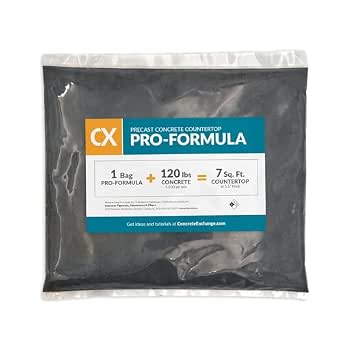 | Best for Color and Polished Aggregate Customization | Product type: Precast concrete countertop mix additive | Batch recipe: One bag combined with 120 lb of 5,000 PSI concrete | Approximate yield: Roughly 1 cubic foot | VIEW ON AMAZON | See Our Full Breakdown |
| diy concrete countertop kit | Brand | Weight | Color | Pack count |
|---|---|---|---|---|
| TechMix Premium Concrete Count | TechMix | 50 lb | Gray | 1 |
| CX Pro-Formula Precast Concret | — | — | — | — |
More Details on Our Top Picks
TechMix Premium Concrete Countertop Mix, 50 lb, Gray
TechMix is the clearer pick when I want a countertop-focused mix without sourcing a second concrete product. The listed process is to add water, mix, and pour, and the mix is described for both cast-in-place and reverse-cast applications. That flexibility lets a DIY builder choose a method based on the project setup rather than the limits of this product’s stated use. Compared with CX Pro-Formula, TechMix asks for fewer separately specified ingredients.
The strength figures give this option a useful planning reference: it is stated to reach over 3,000 PSI within 24 hours and over 10,000 PSI after 28 days. Those figures describe compressive strength, not every aspect of countertop performance, so they should not be read as a guarantee against cracking or as a substitute for proper reinforcement, curing, or support. Still, CX’s supplied description gives no comparable strength timeline, which makes TechMix easier to evaluate on that point.
The compromise is less finish guidance. It is listed in gray, and the supplied details do not give color choices, yield, coverage, or polishing instructions. CX is the stronger candidate if a custom color or exposed aggregate finish is central to the design. I’d choose TechMix for a simpler mix plan and broader stated casting use, while checking the form, reinforcement, curing, and finishing requirements separately.
Pros:- Supports both cast-in-place and reverse-cast applications.
- Preparation is described as adding water, mixing, and pouring.
- Lists compressive strength above 3,000 PSI within 24 hours and above 10,000 PSI after 28 days.
- Designed for countertops and other custom surfaces such as bars and workbenches.
Cons:- Requires measuring and mixing water before use.
- The supplied details list gray only and do not state yield or coverage.
- The description does not specify included forms, reinforcement, or sealer.
Best for: DIY builders who want a countertop-specific mix with water-only preparation and the option to cast in place or reverse-cast.
Not ideal for: Buyers who need multiple color choices, stated coverage, or a described polished-aggregate finish.
- Brand:TechMix
- Weight:50 lb
- Color:Gray
- Pack count:1
- Casting methods:Cast-in-place and reverse-cast
- Compressive strength at 24 hours:Over 3,000 PSI
- Compressive strength at 28 days:Over 10,000 PSI
- Manufacturer:TCC Materials
Our verdict“I’d choose TechMix when a direct countertop mix and flexible casting methods matter more than color customization.”
CX Pro-Formula Precast Concrete Countertop Mix
CX Pro-Formula suits a builder who wants to shape the look of the finished surface. It is offered in 16 colors and can be polished to expose aggregates, giving it a more design-led role than TechMix’s listed gray mix. The choice is appealing when the countertop is meant to show color or aggregate rather than read as a plain concrete slab. Compared with TechMix, however, this is less of a one-bag mix plan: CX is described as an additive to combine with a separate concrete mix.
The supplied batch guidance helps with estimating materials: one bag combined with 120 lb of 5,000 PSI concrete makes roughly one cubic foot, or about seven square feet at 1½ inches thick. That is more project-planning information than TechMix provides, but it also creates more room for sourcing and measuring errors. CX excludes bagged mixes that contain air-entrainment admixtures or water reducers, so the buyer needs to verify the concrete ingredients before starting. TechMix is the less complicated choice if that compatibility check feels like unnecessary friction.
Color is a strength with a caveat: the final shade can shift with materials and conditions. The description also does not provide a compressive-strength timeline for the combined batch, unlike TechMix’s stated figures. I’d favor CX when color and polishing are worth the added batching decisions, and skip it if I cannot confirm the concrete mix is compatible or want a simpler preparation path.
Pros:- Available in 16 colors.
- Can be polished to expose aggregates.
- Provides a stated yield of roughly one cubic foot per specified batch.
- Suitable for countertops, furniture, and tabletops.
Cons:- Must be combined with a separate concrete mix rather than used alone.
- Not compatible with bagged concrete containing air-entrainment admixtures or water reducers.
- Final color may vary with materials and working conditions.
Best for: DIY countertop makers who can source compatible concrete and want color options or the ability to polish and expose aggregates.
Not ideal for: Beginners looking for a standalone mix, anyone unable to verify admixtures in their concrete, or buyers who need a predictable final shade.
- Product type:Precast concrete countertop mix additive
- Batch recipe:One bag combined with 120 lb of 5,000 PSI concrete
- Approximate yield:Roughly 1 cubic foot
- Approximate coverage:About 7 square feet at 1½-inch thickness
- Available colors:16
- Finish option:Can be polished to expose aggregates
- Compatibility restriction:Do not use with bagged concrete mixes containing air-entrainment admixtures or water reducers
- Color variation:Final color may vary with materials and conditions
Our verdict“I’d choose CX Pro-Formula for a customized polished look when I can control the concrete ingredients and batch accurately.”

How We Picked
I ranked these two options by how well their stated properties support a DIY countertop project, then by the decisions and extra work each places on the buyer. I looked at what goes into the mix, the casting methods described, available finish choices, yield information, strength figures, and compatibility limits. Those differences matter more here than broad claims about making concrete surfaces: one product is described as a countertop mix that needs water, while the other is an additive that needs a separate concrete mix.
TechMix takes the top spot because its instructions are simpler to interpret from the supplied details, it supports two casting approaches, and it provides strength figures at both 24 hours and 28 days. That does not make it a complete countertop system: the supplied information does not specify pigment choices, coverage, or a sealer. I give CX a distinct role for finish customization. Its 16 color options, polishing potential, and stated yield are useful planning details, but the buyer must source compatible concrete and account for color variation.
I have not treated missing details as proof of poor performance. The available information does not establish which product is easier to finish, what tools are included, or whether either product comes with forms, reinforcement, or sealer. I recommend checking those project needs before buying. The ranking reflects the concrete attributes provided here, especially mix simplicity versus customization and the requirements each product places on a DIY builder.
Factors to Consider When Choosing Diy Concrete Countertop Kit
I’d make the choice by matching the mix to the way you plan to cast and finish the countertop. These products differ in what you buy alongside them and how much control you have over appearance.
Decide whether you want a mix or an additive
TechMix is the more direct material choice in the supplied descriptions: add water, mix, and pour. CX Pro-Formula is an additive, so its batch also depends on a separate 5,000 PSI concrete mix. That distinction affects shopping, storage, measuring, and troubleshooting. If you want fewer ingredients to coordinate, TechMix is the simpler starting point. If you are comfortable checking the ingredients in your concrete and measuring a combined batch, CX offers more ways to tailor the finish.
Match the product to your casting method
TechMix is explicitly described for cast-in-place and reverse-cast applications, making it the more flexible pick when you have not settled on a casting approach. CX is presented as a precast formula, with yield and coverage figures tied to a batch recipe. I would settle the form and casting plan before purchase, then make sure the product description fits that setup. The supplied details do not establish which method produces a better surface or includes the accessories needed for a full project.
Choose the finish you can reproduce
CX gives the broader appearance choices: it comes in 16 colors and can be polished to expose aggregate. That gives a design-focused builder more room to plan a distinctive slab, but the stated color variation means samples and consistent materials matter. TechMix is listed in gray, with no finish options specified here. Pick CX if color and exposed aggregate justify the extra planning; choose TechMix if gray works and mix simplicity ranks higher.
Plan quantities and strength carefully
CX gives a concrete estimating reference: roughly one cubic foot from one bag plus 120 lb of 5,000 PSI concrete, and about seven square feet at 1½ inches thick. These are useful planning figures, but actual needs depend on the form dimensions and project details. TechMix instead provides stated compressive-strength milestones: over 3,000 PSI at 24 hours and over 10,000 PSI at 28 days. Strength numbers do not specify cure time for every task, so follow the manufacturer’s directions for demolding, handling, and use.
Check what the product information leaves open
Neither description says that the bag includes forms, reinforcement, polishing equipment, or sealer. CX has a specific compatibility restriction, so inspect the concrete mix label for air-entrainment admixtures and water reducers before combining materials. For either option, I’d also confirm preparation and curing instructions, coverage for the planned slab thickness, and whether a separate sealer is appropriate for the intended kitchen or bath use. Those checks help turn a countertop mix into a workable project plan.
Frequently Asked Questions
Is TechMix or CX Pro-Formula the more straightforward DIY countertop choice?
TechMix has the simpler stated preparation: add water, mix, and pour. CX Pro-Formula must be combined with a separate concrete mix, and its compatibility restrictions need checking. That makes CX better suited to buyers who are comfortable coordinating materials and batches.
Can CX Pro-Formula be mixed with any bagged concrete?
No. The supplied product information says not to use it with bagged concrete mixes that contain air-entrainment admixtures or water reducers. I’d check the concrete mix label before buying or batching CX, since the additive depends on a compatible base mix.
Which option has more color and finish flexibility?
CX Pro-Formula offers more stated finish flexibility, with 16 colors and the ability to polish the surface to expose aggregates. The final color can vary with materials and conditions. TechMix is listed as gray, and the supplied details do not describe color variations or aggregate polishing.
How much countertop can one CX batch cover?
The listed estimate is roughly one cubic foot when one bag is combined with 120 lb of 5,000 PSI concrete. That is about seven square feet at 1½ inches thick. Treat it as a planning figure, then calculate the actual form volume and allow for the project’s specific requirements.
Do either of these products include everything needed to build a countertop?
The supplied descriptions cover the mixes and their use, but do not state that forms, reinforcement, sealer, or finishing tools are included. I’d plan for those items separately and check each manufacturer’s instructions for mixing, curing, demolding, and finishing before starting the project.
Conclusion
For most DIY builders choosing between these two, I’d start with TechMix because its countertop use, two casting methods, and water-mix preparation are clearly stated. Choose CX Pro-Formula if color selection and polished aggregate are central to your design and you can verify a compatible concrete base. If you need a guaranteed final shade, stated coverage for TechMix, or a complete kit with forms and sealer, the supplied details do not settle those needs; check product documentation before committing.
Fall Picks
fall essentials
As an affiliate, we earn on qualifying purchases.