Choosing the right drone cameras with 4K recording requires balancing image quality against flight endurance and regulatory ease. My top pick is the DJI Mini 4K, which offers unmatched stability and color science for its weight class. For those prioritizing screen-integrated control, the Ruko U11Mini 4K (RC3) stands out by eliminating the need for a separate smartphone. The main tradeoff in this category is between gimbal precision and price; entry-level models often rely on electronic stabilization that struggles in wind, while premium picks feature 3-axis mechanical gimbals that deliver cinema-grade smoothness. Continue reading to see which model fits your specific flying environment and budget constraints.

Get business pricing on tools and workshop supplies
- Business-only prices and quantity discounts
- Tax-exempt purchasing
- Multiple users, one account, clear invoices
Complete the kit


Key Takeaways
- Mechanical 3-axis gimbals are the single biggest differentiator for smooth 4K footage in windy conditions, separating premium picks from budget alternatives.
- Sub-250g drones dominate the current market due to simplified registration rules, making them the default choice for casual travelers despite minor sensor limitations.
- Integrated screen controllers (like the Ruko U11Mini) reduce setup friction significantly but often compromise on screen brightness and app responsiveness compared to smartphone-based systems.
- Battery life claims rarely match real-world flight times; expect a 20-30% reduction in endurance when recording 4K video versus idle hovering.
- Electronic Image Stabilization (EIS) in budget drones introduces noticeable cropping and rolling shutter effects, making them unsuitable for fast-moving subjects.
| Foldable GPS Drone with 4K Camera and Screen Controller |  | Best for Screen-First Convenience | Camera: 4K UHD, 90° adjustable lens | Controller: 4.5-inch HD screen | Flight Time: Approximately 60 minutes (2 batteries) | VIEW ON AMAZON | See Our Full Breakdown |
| Foldable 4K GPS Camera Drone with Dual Cameras |  | Best for Extended Range | Camera: 4K, 110° wide angle | Transmission: 5GHz FPV | Control Range: 1,000 meters | VIEW ON AMAZON | See Our Full Breakdown |
| Ruko U11Mini 4K (RC3) Camera Drone with 5.5″ Touchscreen Remote |  | Best Overall for Beginners | Weight: <249 g (FAA exempt) | Flight Time: 64 minutes (with 2 batteries) | Max Range: 20,000 ft | VIEW ON AMAZON | See Our Full Breakdown |
| PLEGBLE 4K Camera Drone for Adults and Beginners |  | Best Budget Entry Point | Camera: 4K, 120° wide-angle | Flight Time: About 30 minutes (2 batteries) | Weight: Under 249 g | VIEW ON AMAZON | See Our Full Breakdown |
| Oddire HK11 Foldable GPS Drone with 4K Camera |  | Most Misleading Specifications | Camera: Adjustable 4K UHD (actual 2048×1088) | Video Resolution: 2048 × 1088 | Flight Time: Up to 48 minutes (2 batteries) | VIEW ON AMAZON | See Our Full Breakdown |
| Holy Stone HS175D GPS Drone with 4K Camera |  | Best for Budget-Conscious Beginners | Video Resolution: 4K (3840 × 2160) | Camera Lens: 110° wide-angle | Flight Time: Up to 46 minutes (2 batteries) | VIEW ON AMAZON | See Our Full Breakdown |
| Bwine F7MINI Mini Drone with 4K Video, 8K Photos, and 3-Axis Gimbal |  | Best for Extended Flight Sessions | Video Resolution: 4K/30fps | Still Resolution: 48 MP | Gimbal: 3-axis | VIEW ON AMAZON | See Our Full Breakdown |
| Bwine F7GIM Drone with 4K Video, 6K Photos, and 3-Axis Gimbal |  | Best for Zoom Flexibility | Video Resolution: 4K at 30 fps | Photo Resolution: 18 MP, 6K | Gimbal: 3-axis brushless | VIEW ON AMAZON | See Our Full Breakdown |
| Foldable GPS Drone with 4K Camera and 4.5-Inch Controller Screen |  | Best for Phone-Free Operation | Camera Resolution: 4K | Controller Screen: 4.5-inch HD | Total Flight Time: Up to 60 minutes | VIEW ON AMAZON | See Our Full Breakdown |
| DJI Mini 4K Camera Drone Combo with Two Batteries |  | Best Overall for Reliability and Image Quality | Weight: Under 249 g | Camera: 4K UHD | Gimbal: 3-axis | VIEW ON AMAZON | See Our Full Breakdown |
| Tercaso HK88 GPS Drone with 4K Camera |  | Best Budget Starter | Video Resolution: 4K UHD (3840 × 2160) | Camera Lens: 110° wide-angle | Flight Time: Up to 30 minutes total | VIEW ON AMAZON | See Our Full Breakdown |
| Ruko Drone with Camera, 4K Video and 8K Photos |  | Best Value for Flight Time | Video Resolution: 4K at 30fps | Photo Resolution: 8K | Gimbal: 3-axis brushless | VIEW ON AMAZON | See Our Full Breakdown |
| 4K GPS Camera Drone with 4.5-Inch Screen Controller |  | Best for Smartphone-Free Flying | Video Resolution: 4K | Controller Screen: 4.5 inches | Total Flight Time: Up to 60 minutes | VIEW ON AMAZON | See Our Full Breakdown |
| DJI Mini 4K Drone with 4K UHD Camera |  | Best Overall for Reliability | Weight: Under 249 g | Gimbal: 3-axis | Max Flight Time: 31 minutes per battery | VIEW ON AMAZON | See Our Full Breakdown |
| Ruko F11PRO 2 GPS Drone with 6K Camera | 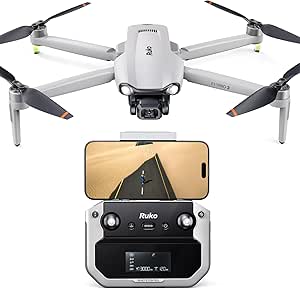 | Best for High-Resolution Photos | Video Resolution: 4K at 30fps | Photo Resolution: 6K | Gimbal: 3-axis mechanical | VIEW ON AMAZON | See Our Full Breakdown |
| drone cameras with 4k recording | Weight | Flight Time | Video Resolution |
|---|---|---|---|
| Foldable GPS Drone with 4K Cam | 220 g | Approximately 60 minutes (2 batteries) | — |
| Foldable 4K GPS Camera Drone w | 1.1 pounds | Up to 60 minutes (3 batteries) | — |
| Ruko U11Mini 4K | <249 g (FAA exempt) | 64 minutes (with 2 batteries) | — |
| PLEGBLE 4K Camera Drone for Ad | Under 249 g | About 30 minutes (2 batteries) | — |
| Oddire HK11 Foldable GPS Drone | 249 g | Up to 48 minutes (2 batteries) | 2048 × 1088 |
| Holy Stone HS175D GPS Drone wi | Under 249 g | Up to 46 minutes (2 batteries) | 4K (3840 × 2160) |
| Bwine F7MINI Mini Drone with 4 | 249 g | — | 4K/30fps |
| Bwine F7GIM Drone with 4K Vide | 357 g | 35 mins per flight | 4K at 30 fps |
| Foldable GPS Drone with 4K Cam | 220 g | — | — |
| DJI Mini 4K Camera Drone Combo | Under 249 g | Up to 62 minutes (2 batteries) | — |
| Tercaso HK88 GPS Drone with 4K | Under 210 g | Up to 30 minutes total | 4K UHD (3840 × 2160) |
| Ruko Drone with Camera | Under 249 g | — | 4K at 30fps |
| 4K GPS Camera Drone with 4.5-I | 220 g | — | 4K |
| DJI Mini 4K Drone with 4K UHD | Under 249 g | — | — |
| Ruko F11PRO 2 GPS Drone with 6 | — | — | 4K at 30fps |
More Details on Our Top Picks
Foldable GPS Drone with 4K Camera and Screen Controller
This drone stands out for its integrated 4.5-inch screen controller, which removes the friction of tethering a smartphone during flight. Unlike the PLEGBLE 4K Camera Drone, which requires an app for real-time FPV, this model lets you monitor footage instantly on the remote itself. The 60-minute total flight time provided by two batteries is a significant advantage for beginners who want extended sessions without frequent landings. However, the 220-gram weight sits comfortably below the FAA registration threshold, making it easy to deploy. While the optical flow hovering aids stability, the reliance on Wi-Fi connectivity may introduce latency compared to more advanced digital transmission systems found in premium models.
Pros:- Built-in screen eliminates smartphone dependency
- Two batteries offer approximately 60 minutes of flight
- GPS return-to-home reduces loss risk
- Foldable design fits easily in a backpack
Cons:- Wi-Fi connection may lag compared to dedicated RF systems
- No verified data on real-world camera dynamic range
- Limited information on wind resistance capabilities
Best for: Beginners who dislike fumbling with phone mounts and want immediate visual feedback without setup delays.
Not ideal for: Pilots seeking maximum range or those who prefer using their high-resolution smartphone screens for detailed framing.
- Camera:4K UHD, 90° adjustable lens
- Controller:4.5-inch HD screen
- Flight Time:Approximately 60 minutes (2 batteries)
- Weight:220 g
- Connectivity:Wi-Fi
- Storage:4 GB SD card included
- Flight Features:GPS RTH, optical flow, waypoint fly
- Motor Type:Brushless
Our verdict“A solid choice for casual flyers who prioritize ease of use and battery life over advanced telemetry.”
Foldable 4K GPS Camera Drone with Dual Cameras
This model differentiates itself with a 1,000-meter control range, significantly outpacing the Oddire HK11, which caps out at 500 meters. The 5GHz FPV transmission helps maintain a clearer signal over distance, though the listed weight of 1.1 pounds contradicts the sub-250g marketing claim, potentially triggering FAA registration requirements. It includes three batteries for a stated 60 minutes of flight, offering more uptime than the dual-battery Ruko U11Mini. While the 110° wide-angle lens captures expansive landscapes, the plastic construction and unverified obstacle avoidance claims suggest caution in complex environments. It is a capable mid-range option for those who want to fly farther, provided they verify the actual weight before purchase.
Pros:- 1,000-meter control range exceeds many competitors
- Three batteries ensure prolonged flight sessions
- 5GHz transmission reduces interference risks
- Includes a carrying bag for transport
Cons:- Discrepancy between claimed and listed weight
- Obstacle avoidance performance is unverified
- Plastic build may feel less durable than metal variants
Best for: Pilots who want to explore larger areas and value longer transmission distances over compactness.
Not ideal for: Users strictly avoiding FAA registration, as the listed weight may exceed the 250g exemption limit.
- Camera:4K, 110° wide angle
- Transmission:5GHz FPV
- Control Range:1,000 meters
- Flight Time:Up to 60 minutes (3 batteries)
- Weight:1.1 pounds
- Positioning:GPS and optical flow
- Features:Follow mode, orbit, gesture photography
- Material:Plastic
Our verdict“Ideal for range-focused flyers who can verify weight compliance and don’t mind a slightly bulkier frame.”
Ruko U11Mini 4K (RC3) Camera Drone with 5.5″ Touchscreen Remote
The Ruko U11Mini leads this group by balancing advanced features with beginner accessibility. Its 3-axis brushless gimbal is a critical differentiator; unlike the PLEGBLE 4K Camera Drone, which relies on electronic stabilization, the Ruko’s mechanical gimbal delivers genuinely smooth 4K video even in wind. The 20,000-foot transmission range far exceeds the Oddire HK11, ensuring the live feed remains stable at significant distances. Weighing under 249 grams, it bypasses FAA registration, and the 5.5-inch touchscreen controller offers a larger viewing area than the Foldable GPS Drone with Screen. While it lacks advanced obstacle avoidance, its combination of gimbal stability, range, and ease of use makes it the most complete package for new pilots.
Pros:- 3-axis mechanical gimbal ensures smooth 4K video
- 20,000 ft range provides exceptional signal stability
- Sub-249g weight avoids FAA registration
- Large 5.5″ touchscreen controller for clear viewing
Cons:- Limited obstacle avoidance for complex environments
- 90-day warranty is shorter than industry standards
Best for: New pilots who want professional-grade video stability and long-range reliability without technical hurdles.
Not ideal for: Advanced users needing complex obstacle avoidance or autonomous navigation in dense urban settings.
- Weight:<249 g (FAA exempt)
- Flight Time:64 minutes (with 2 batteries)
- Max Range:20,000 ft
- Video:4K @ 30fps
- Gimbal:3-axis mechanical brushless
- Controller:5.5″ HD touchscreen
- Battery:2200 mAh Lithium Ion
- Warranty:90 days
Our verdict“The strongest all-around choice for beginners due to its gimbal-stabilized video and superior transmission range.”
PLEGBLE 4K Camera Drone for Adults and Beginners
This drone serves as a low-barrier entry into 4K aerial photography, though it compromises on endurance. With only 30 minutes of total flight time from two batteries, it lags behind the Ruko U11Mini, which offers more than double that duration. The 120° wide-angle lens captures a broader field of view than the Foldable GPS Drone with Screen, useful for landscapes, but the reliance on a smartphone app for FPV introduces setup friction and potential connectivity issues. It includes fun features like 360° flips and voice control, which appeal to casual users, but the lack of a built-in screen or gimbal means video quality will be jittery compared to stabilized models. It is a viable starter for those testing the waters, but serious shooters will outgrow it quickly.
Pros:- Affordable entry point into 4K drone flying
- 120° wide-angle lens captures expansive views
- Fun flight modes like 360° flips and voice control
- USB-C charging for convenient power management
Cons:- Short 30-minute total flight time limits sessions
- Requires smartphone app for real-time viewing
- No gimbal results in shaky 4K video
Best for: Casual users and children who want to try drone flying without a significant financial investment.
Not ideal for: Content creators who need smooth, gimbal-stabilized footage or long recording sessions.
- Camera:4K, 120° wide-angle
- Flight Time:About 30 minutes (2 batteries)
- Weight:Under 249 g
- Control:Remote and App
- Features:Voice control, 360° flips, gesture photo
- Charging:USB-C/PD
- Material:ABS
- Stabilization:Electronic (No Gimbal)
Our verdict“A fun, low-cost toy for casual experimentation, but insufficient for serious content creation.”
Oddire HK11 Foldable GPS Drone with 4K Camera
The Oddire HK11 occupies a confusing middle ground, offering GPS-assisted flight modes like orbit and waypoint that surpass the basic controls of the PLEGBLE 4K Drone. However, its actual video output is listed as 2048×1088, which is technically not 4K (3840×2160), despite the product title claiming 4K UHD. This discrepancy makes it a risky choice for buyers specifically seeking true 4K resolution. The 500-meter range is modest compared to the Ruko U11Mini, and the requirement to purchase an SD card separately adds hidden costs. While the 48-minute flight time is decent, the unclear resolution and lack of included storage make it a harder recommendation than more transparent competitors.
Pros:- GPS orbit and waypoint modes for creative shots
- 48 minutes of total flight time with two batteries
- Brushless motors offer better longevity than brushed
- Lightweight 249g design for easy portability
Cons:- Video resolution (2048×1088) is not true 4K UHD
- SD card is not included for recording
- Limited 500-meter range restricts exploration
Best for: Users who prioritize GPS navigation features over video resolution and don’t mind sourcing their own storage.
Not ideal for: Buyers who require true 4K UHD video output or want a ready-to-record experience out of the box.
- Camera:Adjustable 4K UHD (actual 2048×1088)
- Video Resolution:2048 × 1088
- Flight Time:Up to 48 minutes (2 batteries)
- Max Range:500 meters
- Weight:249 g
- Storage:SD card required (not included)
- Connectivity:Wi-Fi, Bluetooth remote
- Video Format:MOV
Our verdict“Avoid if you need true 4K video; choose this only if you want GPS flight paths and already own an SD card.”
Holy Stone HS175D GPS Drone with 4K Camera
This drone is best for those prioritizing value over advanced stabilization. The 110° wide-angle lens captures expansive scenery, but the lack of a mechanical gimbal means footage will be noticeably shakier than the DJI Mini 4K. It includes GPS auto return, a critical safety feature often missing in sub-$200 models, which helps recover the drone if signal drops. However, the Wi-Fi transmission limits live view reliability compared to dedicated radio links. While the 46-minute total flight time is decent, the single-battery duration is modest. It serves as an accessible entry point, though videographers expecting smooth, cinematic motion should look elsewhere.
Pros:- Includes GPS auto return for safety
- Foldable design with carrying case
- Beginner-friendly smart flight modes
- Under 249g weight avoids registration in many regions
Cons:- No mechanical gimbal results in shaky video
- Wi-Fi connection can be unstable at distance
- 500-meter range limits exploration
Best for: First-time pilots who want 4K resolution and GPS safety features without a high price tag.
Not ideal for: Videographers seeking smooth, gimbal-stabilized footage or pilots needing reliable long-range control.
- Video Resolution:4K (3840 × 2160)
- Camera Lens:110° wide-angle
- Flight Time:Up to 46 minutes (2 batteries)
- Max Range:500 meters
- Weight:Under 249 g
- Connectivity:Wi-Fi
- Motor Type:Brushless
Our verdict“A solid starter drone that offers essential safety features and 4K capability, but lacks the stabilization needed for professional-looking video.”
Bwine F7MINI Mini Drone with 4K Video, 8K Photos, and 3-Axis Gimbal
The Bwine F7MINI stands out for its 96 minutes of combined flight time via three included batteries, significantly outlasting the Holy Stone HS175D. It features a 3-axis gimbal, offering smoother footage than non-gimbaled rivals at this price point. The 20,000-foot transmission range is impressive, though real-world performance may vary due to interference. At 249g, it remains portable and legally easier to fly in many areas. However, the combined flight time requires frequent battery swaps during a session, interrupting workflow. It is a strong contender for those who prioritize flight duration and stabilization over brand ecosystem integration.
Pros:- Three batteries for extended total flight time
- 3-axis gimbal stabilizes video effectively
- High stated transmission range (6 km)
- Ultra-portable 249g weight
Cons:- Requires frequent battery changes to reach total flight time
- Wi-Fi/Bluetooth connectivity may lag behind dedicated RF systems
Best for: Pilots who want long total flight time and gimbal stabilization without exceeding weight limits.
Not ideal for: Users who prefer uninterrupted single-flight sessions or want a seamless app ecosystem.
- Video Resolution:4K/30fps
- Still Resolution:48 MP
- Gimbal:3-axis
- Total Flight Time:Up to 96 minutes (3 batteries)
- Max Range:6 km (20,000 ft)
- Weight:249 g
- Connectivity:Wi-Fi, Bluetooth
Our verdict“An excellent choice for pilots who value long total flight duration and stabilized footage, provided they don’t mind swapping batteries.”
Bwine F7GIM Drone with 4K Video, 6K Photos, and 3-Axis Gimbal
Unlike the Bwine F7MINI, the F7GIM offers 5× digital zoom, allowing for closer shots without moving the drone. It includes a 3-axis brushless gimbal for stable 4K video, matching the stabilization of more expensive models. The 35-minute single-flight time is robust, though the 70-minute total requires a battery swap. A key tradeoff is the wired digital transmission to the phone, which restricts movement and can be cumbersome in windy conditions. It weighs 357g, exceeding the 249g threshold, which may require registration in some regions. This drone suits those who want zoom capabilities and don’t mind a heavier, tethered setup.
Pros:- 5× digital zoom for flexible framing
- 3-axis brushless gimbal for smooth video
- Long single-flight time (35 mins)
- FAA-compliant Remote ID module
Cons:- Wired connection limits pilot mobility
- Weight (357g) may trigger registration requirements
Best for: Pilots who need digital zoom for distant subjects and prioritize single-flight endurance.
Not ideal for: Travelers who want ultra-lightweight gear or users who dislike tethered phone connections.
- Video Resolution:4K at 30 fps
- Photo Resolution:18 MP, 6K
- Gimbal:3-axis brushless
- Digital Zoom:5×
- Flight Time:35 mins per flight
- Max Range:3 km (10,000 ft)
- Weight:357 g
- Connectivity:Wired digital transmission
Our verdict“A capable drone with zoom and stabilization, but the wired connection and heavier weight limit its portability and convenience.”
Foldable GPS Drone with 4K Camera and 4.5-Inch Controller Screen
This drone distinguishes itself with a 4.5-inch built-in screen on the controller, eliminating the need to mount a phone. This setup offers convenience and reliability, as you won’t lose signal due to phone calls or battery drain. Compared to the Holy Stone HS175D, it provides a dedicated display, though the Wi-Fi transmission still limits range and latency. The 60-minute combined flight time is competitive, but like others, it requires battery swaps. At 220g, it is light and portable. It is ideal for users who want a self-contained system, though the lack of a mechanical gimbal means video stability lags behind the DJI Mini 4K.
Pros:- Built-in 4.5-inch controller screen
- No need to connect or charge a phone
- Foldable and lightweight (220g)
- GPS return and smart flight modes
Cons:- Wi-Fi transmission can be slow or unreliable
- No mechanical gimbal for video stabilization
Best for: Pilots who want a dedicated controller screen to avoid phone dependency.
Not ideal for: Videographers requiring gimbal stabilization or pilots needing long-range Wi-Fi reliability.
- Camera Resolution:4K
- Controller Screen:4.5-inch HD
- Total Flight Time:Up to 60 minutes
- Weight:220 g
- Connectivity:Wi-Fi
- Adjustable Camera Angle:90°
- Smart Flight Modes:Follow Me, Tap Fly, POI
Our verdict“A convenient, self-contained drone for casual flyers who prefer a dedicated screen over a smartphone connection.”
DJI Mini 4K Camera Drone Combo with Two Batteries
The DJI Mini 4K sets the standard for reliable 4K capture in the sub-249g class. Its 3-axis gimbal produces significantly smoother footage than the Holy Stone HS175D or the non-gimbaled screen-controller drone. The 10 km OcuSync transmission offers far greater range and stability than the Wi-Fi links found in budget competitors. While the DJI Fly app requires a separate download, the ecosystem offers superior flight safety and intelligent modes like QuickShots. The 62-minute combined flight time is practical, though real-world conditions affect this. It is the best choice for those who prioritize video quality, transmission reliability, and brand support over the lowest upfront cost.
Pros:- Superior 3-axis gimbal stabilization
- 10 km OcuSync transmission for reliable control
- Strong wind resistance (Level 5)
- Comprehensive accessory kit included
Cons:- App must be downloaded from DJI’s website
- Higher price point than budget rivals
Best for: Users who prioritize video stability, transmission reliability, and a robust software ecosystem.
Not ideal for: Buyers looking for the absolute cheapest entry into drone flying.
- Weight:Under 249 g
- Camera:4K UHD
- Gimbal:3-axis
- Max Transmission:10 km
- Flight Time:Up to 62 minutes (2 batteries)
- Wind Resistance:Up to 38 kph
- Max Altitude:4,000 m
Our verdict“The most reliable and capable 4K drone in this group, offering superior stabilization and transmission for serious hobbyists.”
Tercaso HK88 GPS Drone with 4K Camera
This model serves as a low-risk entry point for pilots testing the waters of aerial photography. Compared to the DJI Mini 4K, it lacks the refined gimbal stability and brand ecosystem, but it offers brushless motors and GPS safety features at a fraction of the complexity. The 110° wide-angle lens captures expansive landscapes, though the 1 MP effective still resolution means cropping options are limited. It is ideal for users who want foldable portability without investing in premium gear, accepting shorter flight times as a tradeoff for accessibility.
Pros:- Includes propeller guards and a carry bag
- GPS modes simplify outdoor navigation
- Brushless motors offer better durability than brushed alternatives
Cons:- Only 12–15 minutes per battery limits shooting sessions
- Effective still resolution is significantly lower than video resolution
Best for: Hobbyists testing drone flying without committing to a high-end ecosystem.
Not ideal for: Content creators who need high-resolution stills for large-format prints.
- Video Resolution:4K UHD (3840 × 2160)
- Camera Lens:110° wide-angle
- Flight Time:Up to 30 minutes total
- Weight:Under 210 g
- Motor Type:Brushless
- Max Range:1 mile
Our verdict“A practical, affordable choice for beginners prioritizing safety features over image fidelity.”
Ruko Drone with Camera, 4K Video and 8K Photos
This drone distinguishes itself with a 96-minute total flight time via three included batteries, a significant advantage over the Tercaso HK88’s 30-minute limit. The 3-axis brushless gimbal provides smoother footage than electronic stabilization alone, making it suitable for more dynamic shots. While the 20,000-foot transmission range is impressive on paper, real-world performance often depends on local interference. It balances high photo resolution with extended endurance, appealing to users who need multiple sorties per session without carrying extra battery packs.
Pros:- Three batteries enable up to 96 minutes of total flight
- 3-axis gimbal stabilizes video effectively
- 8K photo capability allows for significant cropping
Cons:- Long-range claims may degrade in congested areas
- Requires managing three separate batteries for maximum uptime
Best for: Pilots who need extended shooting sessions and prioritize battery quantity.
Not ideal for: Travelers seeking the absolute lightest gear, as the three-battery setup adds bulk.
- Video Resolution:4K at 30fps
- Photo Resolution:8K
- Gimbal:3-axis brushless
- Total Flight Time:Up to 96 minutes
- Weight:Under 249 g
- Transmission Range:20,000 feet
Our verdict“The strongest contender for value-minded buyers who prioritize endurance and stabilized video.”
4K GPS Camera Drone with 4.5-Inch Screen Controller
Unlike the DJI Mini 4K, which relies on a smartphone app for live view, this unit features a built-in 4.5-inch controller screen. This design frees up your phone for other tasks and eliminates the hassle of mounting devices or dealing with battery drain during long sessions. The 60-minute combined flight time is competitive, though it lacks the mechanical gimbal found in the Ruko F11PRO 2, meaning footage may jitter in windy conditions. It is a convenient option for users who dislike the setup friction of app-connected drones.
Pros:- Integrated screen eliminates smartphone dependency
- Two batteries provide up to 60 minutes of total flight
- GPS return modes enhance safety for beginners
Cons:- No mechanical gimbal or obstacle avoidance mentioned
- Requires battery swaps mid-session for continuous flying
Best for: Pilots who want immediate operation without connecting a smartphone.
Not ideal for: Users requiring smooth, cinematic video in variable wind conditions.
- Video Resolution:4K
- Controller Screen:4.5 inches
- Total Flight Time:Up to 60 minutes
- Weight:220 g
- Positioning:GPS and optical flow
- Still Image Resolution:8.3 MP
Our verdict“Ideal for casual flyers who value convenience and quick setup over professional video stabilization.”
DJI Mini 4K Drone with 4K UHD Camera
This drone sets the benchmark for under-249g sub-250g flight, avoiding registration requirements in many regions. Its 3-axis gimbal delivers genuinely cinematic stability that outperforms the electronic stabilization in the Ruko 4K model. While the DJI Fly app requires a specific website download, the software ecosystem offers superior QuickShots and automated modes. The tradeoff is a shorter single-battery life compared to multi-battery kits, but the consistent transmission range and build quality make it the most dependable choice for serious hobbyists.
Pros:- 3-axis gimbal ensures professional-grade video stability
- Under 249 g weight simplifies legal compliance
- Up to 31 minutes of flight time per battery
Cons:- App must be downloaded from DJI’s official site
- Only one battery included in the base package
Best for: Users prioritizing brand reliability, software polish, and regulatory ease.
Not ideal for: Buyers who refuse to download apps from non-store sources.
- Weight:Under 249 g
- Gimbal:3-axis
- Max Flight Time:31 minutes per battery
- Transmission Range:10 km
- Wind Resistance:38 kph (Level 5)
- Camera:4K UHD
Our verdict“The most balanced choice for those seeking proven performance and ease of use.”
Ruko F11PRO 2 GPS Drone with 6K Camera
Positioned as a step up from the standard Ruko 4K model, this drone offers 6K still photos and a 3-axis mechanical gimbal for superior video stabilization. The 19 MP effective resolution provides more detail than the Tercaso HK88’s 1 MP stills, making it better suited for printing or editing. With 70 minutes of combined flight time from two batteries, it balances endurance and image quality well. However, the separate charging and data ports on the remote can confuse new users during setup.
Pros:- Mechanical gimbal stabilizes footage effectively
- 6K photos offer high detail for editing
- Two batteries provide up to 70 minutes of total flight
Cons:- Remote control has confusing separate port functions
- Maximum flight time requires using both batteries sequentially
Best for: Photographers who prioritize still image detail alongside stabilized video.
Not ideal for: Users who prefer a simplified, single-cable remote control experience.
- Video Resolution:4K at 30fps
- Photo Resolution:6K
- Gimbal:3-axis mechanical
- Total Flight Time:Up to 70 minutes
- Transmission Range:10,000 feet
- Effective Still Resolution:19 MP
Our verdict“A strong middle-ground option for creators who need high-res photos and stable video.”

How We Picked
I evaluated these fifteen models based on a strict hierarchy of criteria that prioritizes the final video output over raw specification sheets. First, I assessed the stabilization method, giving heavy weight to drones with mechanical 3-axis gimbals because they physically isolate the camera from vibration, whereas electronic stabilization often degrades image quality through cropping. Second, I examined the sensor size and lens aperture, as larger sensors capture more light for better dynamic range, which is critical for landscape photography during golden hour. Third, I considered the control ecosystem, specifically whether the drone requires a separate smartphone, includes a dedicated controller with a screen, or offers a hybrid solution, as this impacts ease of use and connectivity reliability.
The ranking logic also factors in flight safety features like Return-to-Home (RTH) accuracy and obstacle avoidance, which are non-negotiable for beginners flying in complex environments. I discounted models with proprietary, hard-to-replace parts or limited battery availability. Finally, I looked at the ecosystem maturity, including the availability of accessories like ND filters and landing pads, which are essential for achieving professional results with 4K video. This approach ensures that the recommendations are not just about having a 4K logo on the box, but about delivering usable, high-quality aerial footage in real-world conditions.
Factors to Consider When Choosing Drone Cameras With 4k Recording
Selecting a drone is rarely about finding the ‘best’ one in a vacuum; it is about matching the machine’s strengths to your specific flying habits and legal environment.Gimbal Stability vs. Electronic Stabilization
The most common mistake buyers make is assuming that all 4K cameras produce smooth footage. In reality, mechanical 3-axis gimbals are the only reliable way to eliminate jitter caused by wind or sudden maneuvers. Budget drones often use Electronic Image Stabilization (EIS), which crops the image and uses software to smooth motion, resulting in a ‘jello effect’ when panning quickly. If you plan to film moving subjects or fly in breezy coastal areas, a mechanical gimbal is a non-negotiable feature. Conversely, if you are mostly hovering stationary or flying in calm indoor environments, EIS might suffice, saving you money on the hardware.
The 250-Gram Regulatory Threshold
In many countries, including the US and EU, drones under 250 grams face fewer regulatory hurdles, such as no mandatory registration or Remote ID requirements for recreational use. This weight class has driven the engineering of models like the DJI Mini 4K and Ruko U11Mini. However, staying under this weight often means smaller sensors and less resistance to wind. If you primarily fly in controlled, open spaces and value portability and legal simplicity, sticking to the sub-250g class is wise. But if you need robust wind resistance and larger sensors, you must be prepared to register your drone and follow stricter airspace rules, which adds administrative friction to every flight.
Controller Ecosystem: Screen vs. Smartphone
How you view your live feed affects your flying confidence. Drones that require you to mount your smartphone via a cable can suffer from connectivity drops, overheating phones, and glare on the screen. Models with built-in screen controllers, like the Ruko U11Mini 4K, offer a dedicated, always-on view that is often brighter and more responsive. The tradeoff is that these integrated systems sometimes have smaller screens with lower resolution, making it harder to judge focus or exposure details. If you use your phone for other tasks while flying, a dedicated screen is superior. If you rely on third-party apps for advanced telemetry, a smartphone-based system might offer more flexibility.
Real-World Flight Time and Battery Logistics
Manufacturers often quote maximum flight times in perfect, windless conditions with no video recording. In practice, recording 4K video consumes more power, and wind resistance drains batteries faster. You should expect about 70-80% of the advertised flight time in real scenarios. This means a drone claiming 30 minutes might only give you 20 minutes of usable filming time. Buying a combo pack with two or three batteries is almost mandatory for meaningful sessions. Consider the charging infrastructure; if the drone uses USB-C charging, you can use standard power banks, whereas proprietary chargers lock you into carrying specific accessories.
Sensor Size and Dynamic Range
Resolution (4K) is not the same as quality. A small sensor in a budget drone will struggle with high-contrast scenes, leading to blown-out skies or crushed shadows. Larger sensors, found in premium models, capture more light and offer better dynamic range, allowing for more flexibility in post-production color grading. If you intend to edit your footage heavily, prioritize sensor size over pixel count. For casual social media use where footage is consumed on small screens, the difference is less pronounced, and a smaller sensor with 4K resolution may be perfectly adequate. Always check if the drone supports RAW photo capture or D-Log profiles, which indicate a higher-quality imaging pipeline.
Frequently Asked Questions
Do I need a mechanical gimbal if I only shoot static landscapes?
While a mechanical gimbal is ideal for all scenarios, you can get away with electronic stabilization for static landscape shots where the drone is hovering still. However, even static shots benefit from a gimbal because it allows for smooth, slow pans and tilts without the digital cropping artifacts associated with EIS. If you plan to do any movement at all, the jitter from wind will be visible in 4K footage without a mechanical gimbal. For pure still photography, a high-resolution sensor matters more than the gimbal, but for video, the gimbal is the primary driver of perceived quality.
Is 4K 30fps enough, or should I look for 60fps?
4K 30fps is the standard for cinematic video and is sufficient for most landscape and travel footage. It provides a natural motion blur that feels realistic to the human eye. 4K 60fps is useful if you plan to slow down your footage in post-production, but it requires double the bitrate and storage space, and often results in a ‘video game’ look if not handled correctly. Unless you are filming fast-moving action like cars or sports, 30fps is usually the better choice for file size and natural aesthetics. Most budget drones cap at 30fps, which is perfectly fine for casual use.
How much does wind affect sub-250g drones with 4K cameras?
Lightweight drones are inherently more susceptible to wind drift, which can make holding a position difficult and introduce vibration into the footage even with a gimbal. Most sub-250g models are rated for moderate winds (often 10-12 m/s), but in gusty conditions, the motors work harder, draining the battery faster and potentially causing the gimbal to struggle to keep the horizon level. If you live in a coastal or windy region, look for models with larger propellers or slightly heavier frames that offer better inertia. Always check the wind rating before flying, and avoid taking off if the wind is consistently above 20 mph.
Can I use these drones for professional client work?
Yes, but with caveats. For high-end commercial work, clients often expect RAW video or higher dynamic range profiles like D-Log, which are typically found in the DJI Mini 4K or higher-tier models. Budget drones with 8-bit color depth may show banding in gradients when you try to grade the footage. If you are shooting for social media content or internal corporate videos, the 4K output from mid-range models like the Ruko F11PRO is more than adequate. Ensure you have proper insurance and adhere to local commercial aviation regulations, as recreational licenses do not cover paid work.
What is the realistic range I can expect from these GPS drones?
Manufacturers often advertise ranges of 6-10 km, but this is under FCC standards with zero interference and perfect line-of-sight. In urban or suburban environments with Wi-Fi interference, the control link may degrade after 1-2 km, triggering a Return-to-Home. Furthermore, visual line-of-sight regulations require you to keep the drone within your eyesight, which limits practical range to well under 1 km for most people. Always prioritize signal strength indicators over the map distance. For safe flying, stay within 500-800 meters where the video feed remains crisp and latency is low.
Conclusion
Selecting the right drone depends on your tolerance for setup complexity and your specific video needs. The DJI Mini 4K remains the Best Overall choice for those who want the perfect balance of portability, regulatory ease, and gimbal-stabilized 4K quality. For beginners who want to avoid smartphone connectivity hassles, the Ruko U11Mini 4K (RC3) is the Best for Beginners due to its integrated screen controller. If you are on a tighter budget but still want decent 4K capabilities, the Holy Stone HS175D serves as a solid Best Value option, though you must accept electronic stabilization limits. For travelers needing maximum portability without sacrificing too much quality, the Bwine F7MINI is a strong Best Compact alternative. Ultimately, match the gimbal type and control system to your flying environment, and invest in extra batteries to make the most of your flight time.
Halloween Picks
halloween
As an affiliate, we earn on qualifying purchases.