When the power goes out, a standard space heater becomes dead weight — every option in this roundup runs entirely without electricity, using either propane or kerosene to keep a room warm. The Mr. Heater 9,000 BTU Portable Buddy stands out as the best overall pick because it balances enough output for a medium room with built-in tip-over and low-oxygen shutoffs, the two safety features that matter most indoors. If you need to heat a larger space for hours, the Comfort Glow 23,800 BTU kerosene convection heater offers far more runtime per fill, while the Little Buddy is the cheapest, simplest way to warm a small room or bathroom. The core tradeoff you’ll face in this category is heat output versus fuel complexity: propane units are cleaner and easier to start, but kerosene models deliver more BTUs and longer burn times at the cost of odor, wick maintenance, and more careful ventilation. Read on for the full breakdown of which heater fits your space, budget, and comfort with each fuel type.

Get business pricing on tools and workshop supplies
- Business-only prices and quantity discounts
- Tax-exempt purchasing
- Multiple users, one account, clear invoices
Complete the kit


Key Takeaways
- Every heater here is non-electric, but ‘indoor safe’ means different things: propane models in this lineup carry built-in tip-over and oxygen-depletion sensors, while the kerosene units rely more on correct user operation, ventilation, and placement.
- The Mr. Heater 9,000 BTU Portable Buddy earned best overall status because it’s the only option that combines meaningful room heating, dual safety shutoffs, and a one-pound-cylinder fuel option small enough to store several of.
- Kerosene heaters dominated on raw output and runtime — the Comfort Glow’s 23,800 BTUs roughly double the Big Buddy’s output — but they demand wick maintenance, kerosene storage discipline, and tolerance for faint odor during startup.
- The Little Buddy has no fan, no controls beyond a single setting, and no thermostat, which is exactly why it’s the best pick for small rooms and beginners: fewer things to operate incorrectly during a stressful outage.
- The two 9,000 BTU kerosene stove-heater hybrids (VEVOR and the Army Green model) trade pure heating performance for cooking capability — a smart choice for extended outages where hot food matters as much as warmth.
| Comfort Glow Indoor Kerosene Convection Heater, 23,800 BTUs, Grey – KW-24J |  | Best for Whole-Floor Emergency Heating | BTU Output: 23,800 BTUs | Coverage Area: Up to 1,000 sq ft | Fuel Capacity: 1.9 gallons | VIEW ON AMAZON | See Our Full Breakdown |
| Mr. Heater 18,000 BTU Big Buddy PRO Series Heater |  | Best Overall for Extended Outages | Heat Output: 4,000 / 9,000 / 18,000 BTU | Coverage Area: Up to 450 sq ft | Fuel Type: Propane (1-lb cylinders or 20-lb tanks with hose) | VIEW ON AMAZON | See Our Full Breakdown |
| Mr. Heater 9,000 BTU Portable Buddy Radiant Propane Heater |  | Best Value for Room-Sized Warmth | Heat Output: 4,000 / 9,000 BTU/hr | Coverage Area: Up to 225 sq ft | Fuel Type: Propane (1-lb cylinder; 20-lb tank with accessory hose) | VIEW ON AMAZON | See Our Full Breakdown |
| Mr. Heater 3,800 BTU Little Buddy Portable Radiant Propane Heater | 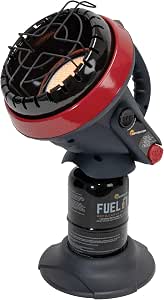 | Best Compact Personal Heater | Heat Output: 3,800 BTU/hr | Coverage Area: Up to 95 sq ft | Fuel Type: Propane (1-lb cylinder) | VIEW ON AMAZON | See Our Full Breakdown |
| VEVOR 9000 BTU Portable Kerosene Heater & Stove, 2-in-1 Indoor/Outdoor Use, Adjustable Height, Black |  | Best Dual-Purpose Heater and Cooker | Heating Output: 9,000 BTU, 360-degree radiant | Fuel Tank Capacity: 1.3 gal / 5L kerosene | Runtime: Up to 20 hours | VIEW ON AMAZON | See Our Full Breakdown |
| Kerosene Heater for Indoor Use – Non-Electric 9000 BTU Kerosene Stove with Radiant Heat, Portable Emergency Heater, Dual Purpose Cooking & Heating (Army Green) |  | Best for Cooking While You Heat | Heat Output: 9000 BTU (approx. 2600W) | Fuel Type: Kerosene (non-electric) | Fuel Capacity: 4.5L | VIEW ON AMAZON | See Our Full Breakdown |
| indoor safe heater for power outage | Coverage Area | Heat Output | Fuel Type | Ignition |
|---|---|---|---|---|
| Comfort Glow Indoor Kerosene C | Up to 1,000 sq ft | — | — | Battery-powered |
| Mr. Heater 18,000 BTU Big Budd | Up to 450 sq ft | 4,000 / 9,000 / 18,000 BTU | Propane (1-lb cylinders or 20-lb tanks with hose) | — |
| Mr. Heater 9,000 BTU Portable | Up to 225 sq ft | 4,000 / 9,000 BTU/hr | Propane (1-lb cylinder; 20-lb tank with accessory hose) | Piezo push-button |
| Mr. Heater 3,800 BTU Little Bu | Up to 95 sq ft | 3,800 BTU/hr | Propane (1-lb cylinder) | One-button start |
| VEVOR 9000 BTU Portable Kerose | — | — | — | — |
| Kerosene Heater for Indoor Use | Up to 15m² (~160 sq ft) | 9000 BTU (approx. 2600W) | Kerosene (non-electric) | — |
More Details on Our Top Picks
Comfort Glow Indoor Kerosene Convection Heater, 23,800 BTUs, Grey – KW-24J
When the power is out and the goal shifts from warming one room to keeping an entire floor livable, this is the heater I would point to first. At 23,800 BTUs it covers up to 1,000 square feet — more than double the footprint of the Mr. Heater Big Buddy — and its 1.9-gallon tank runs up to 12 hours without a refill, so nobody has to fumble with fuel canisters in the dark at 2 a.m. The battery-powered ignition means no matches and no electricity, which is exactly what an outage demands.
The tradeoff is fuel logistics. Kerosene needs to be stored safely, and the no-lift burner reduces but does not eliminate odor, so a cracked window is still wise. Compared with propane options like the Portable Buddy, refueling is messier and there is more routine maintenance around the wick.
Pros:- 23,800 BTUs heats up to 1,000 sq ft — far beyond any other pick here
- Up to 12 hours of runtime on a single 1.9-gallon tank
- Battery ignition works with zero electricity
- Tip-over emergency shut-off and UL listing for safer indoor use
Cons:- Kerosene requires safe storage, careful refueling, and ventilation
- Pin-type wick needs periodic maintenance and eventual replacement
Best for: Homeowners in cold climates who need to keep a large open living area warm through multi-hour or overnight outages
Not ideal for: Small apartments or bedrooms — its output and footprint overwhelm tight spaces, and kerosene fumes need ventilation
- BTU Output:23,800 BTUs
- Coverage Area:Up to 1,000 sq ft
- Fuel Capacity:1.9 gallons
- Run Time:Up to 12 hours
- Ignition:Battery-powered
- Safety Features:Tip-over emergency shut-off, no-lift burner
- Certification:UL Listed
Our verdict“This model makes the most sense for households that need serious whole-room or whole-floor heat during extended outages and are comfortable managing kerosene.”
Mr. Heater 18,000 BTU Big Buddy PRO Series Heater
This is the pick I would build an outage kit around, because it solves the two problems that sink most emergency heaters: coverage and runtime. Three heat settings (4,000 / 9,000 / 18,000 BTU) let you dial output to the room, and with two 20-lb propane tanks and an optional hose it can run up to 216 hours on low — a different category of endurance than the Portable Buddy, which drains a 1-lb cylinder in under three hours on high.
It heats up to 450 square feet, roughly matching the Comfort Glow for mid-size spaces while burning cleaner-burning propane instead of kerosene. The catch: the built-in fan that boosts convection heat requires batteries, so plan on spares. It is also the heaviest and bulkiest of the Buddy line, and pairing with big tanks means buying a certified hose separately.
Pros:- Three heat settings from 4,000 to 18,000 BTU for flexible coverage up to 450 sq ft
- Up to 216 hours of runtime on two 20-lb tanks (low setting)
- Radiant and convection combination with a built-in fan
- Runs on widely available propane with clean combustion
Cons:- Fan requires batteries, adding another dependency during an outage
- Bulkier and heavier than smaller Buddy models; large-tank hookup needs an optional hose
Best for: Rural households or cabin owners preparing for multi-day outages who want adjustable output and very long runtime
Not ideal for: Apartment dwellers — the size, the 20-lb tank setup, and storage demands are overkill for small spaces
- Heat Output:4,000 / 9,000 / 18,000 BTU
- Coverage Area:Up to 450 sq ft
- Fuel Type:Propane (1-lb cylinders or 20-lb tanks with hose)
- Max Runtime:Up to 216 hours on two 20-lb tanks (low)
- Heat Settings:Low / Medium / High
- Fan:Built-in high-powered fan (battery operated)
Our verdict“For buyers who treat an outage heater as long-duration insurance rather than an occasional convenience, this is the most complete package in the lineup.”
Mr. Heater 9,000 BTU Portable Buddy Radiant Propane Heater
Compared with the Little Buddy, this model earns its spot by being genuinely useful for a full room rather than a single seating spot. The jump from 3,800 to 9,000 BTUs covers about 225 square feet — a bedroom or living room zone — and the two-setting switch lets you throttle back to extend fuel. That flexibility is what makes it a better middle-ground buy than either smaller or larger siblings.
The Life Safety System bundles an oxygen depletion sensor, thermal shut-down, and a tip-over switch, which matters more here than on electric heaters because you are burning fuel indoors. The limitation is runtime: roughly 2.4 hours on high from a 1-lb cylinder, so for outages longer than an evening you will want spare cylinders or the hose-and-20-lb-tank route — at which point the Big Buddy starts making more sense.
Pros:- Two settings (4,000 / 9,000 BTU) balance warmth against fuel burn
- Heats up to 225 sq ft — real room coverage, not personal heating
- ODS, thermal shut-down, and tip-over switch for indoor safety
- Lightweight, simple propane connection, and easy to store
Cons:- Short runtime on 1-lb cylinders; long outages require spare fuel or a tank hose
- Single-room output — it will not stretch to large open spaces
Best for: Budget-minded buyers who want to keep one bedroom or living area warm during short-to-moderate outages
Not ideal for: Anyone expecting overnight heat — a 1-lb cylinder on high lasts under three hours
- Heat Output:4,000 / 9,000 BTU/hr
- Coverage Area:Up to 225 sq ft
- Fuel Type:Propane (1-lb cylinder; 20-lb tank with accessory hose)
- Run Time:5.4 hrs low / 2.4 hrs high per 1-lb cylinder
- Safety Features:Oxygen depletion sensor, thermal shut-down, tip-over switch
- Ignition:Piezo push-button
Our verdict“This is the smart default for most households: enough power for a real room, a strong safety suite, and a price that leaves budget for spare propane.”
Mr. Heater 3,800 BTU Little Buddy Portable Radiant Propane Heater
Where every other heater in this lineup tries to warm a room, the Little Buddy warms a person. At 3,800 BTUs it covers just 95 square feet, but its 8-inch round footprint and grab-and-go weight mean it can live in a closet, a car trunk, or an emergency bin and be running within a minute of the lights going out. One-button ignition means no fumbling — a genuine advantage over the VEVOR kerosene stove, which involves fuel handling and wick management.
It carries the same indoor-safe credentials as its bigger siblings: oxygen depletion sensor and tip-over shut-off. But there is no low/high choice, no fan, and no runtime flexibility beyond swapping cylinders, so think of it as spot heat for a bathroom, a reading chair, or one kid’s room — not a household solution. The Portable Buddy is worth the upgrade if you can spare the space.
Pros:- Extremely compact 8-inch footprint stores anywhere
- One-button ignition with no matches or batteries
- ODS low-oxygen shut-off and tip-over protection
- Quiet, clean, odor-free radiant heat on standard 1-lb cylinders
Cons:- Single heat setting with no output adjustment
- Only warms about 95 sq ft — personal heating, not room heating
Best for: Renters and minimalists who want a stowable spot heater for one small room or one person during brief outages
Not ideal for: Families trying to heat a shared living space — 95 sq ft of coverage leaves most of the room cold
- Heat Output:3,800 BTU/hr
- Coverage Area:Up to 95 sq ft
- Fuel Type:Propane (1-lb cylinder)
- Ignition:One-button start
- Safety Features:Oxygen depletion sensor, tip-over shut-off
- Footprint:8-inch round base
Our verdict“This pick makes sense as a personal-size backup for tight spaces and short outages, but skip it if you need whole-room warmth.”
VEVOR 9000 BTU Portable Kerosene Heater & Stove, 2-in-1 Indoor/Outdoor Use, Adjustable Height, Black
Every other product here does one job; this one does two, and that changes its value in a real outage. The cooktop surface holds up to 33 lbs, so you can boil water or heat soup on the same unit warming the room — something no propane Buddy model offers. Output matches the Portable Buddy at 9,000 BTU with 360-degree radiant heat, and the 5-liter tank runs up to 20 hours, roughly four times the Buddy’s runtime on a 1-lb cylinder.
The collapsible design drops from 17 to 13.4 inches, making storage easier than the fixed-frame Comfort Glow. But it is kerosene, so fuel handling, odor, and ventilation all apply, and the 33-lb cooktop limit rules out heavy cast iron loads. During an outage you are also lighting and adjusting a wick rather than pushing a button.
Pros:- 2-in-1 heating and cooking surface supports up to 33 lbs of cookware
- Up to 20 hours of runtime on a 5-liter tank
- Warms a large room in roughly 10 minutes with 360-degree heat
- Collapses from 17 to 13.4 inches for compact storage
Cons:- Kerosene requires safe handling, ventilation, and wick maintenance
- 33-lb cooktop capacity limits use with heavier cookware
Best for: Campers and emergency preppers who want one non-electric device that heats a room and cooks a meal
Not ideal for: Buyers who want push-button simplicity — kerosene fueling, wick care, and ventilation are all ongoing responsibilities
- Heating Output:9,000 BTU, 360-degree radiant
- Fuel Tank Capacity:1.3 gal / 5L kerosene
- Runtime:Up to 20 hours
- Fuel Consumption:0.24–0.28 gallons per hour
- Cooktop Load Capacity:33 lbs / 15 kg
- Height:13.4–17 inches adjustable
Our verdict“Choose this if boiling water and staying warm from one fuel source matters more to you than the propane convenience of the Buddy heaters.”
Kerosene Heater for Indoor Use – Non-Electric 9000 BTU Kerosene Stove with Radiant Heat, Portable Emergency Heater, Dual Purpose Cooking & Heating (Army Green)
Among every heater in this lineup, this is the only one — aside from the nearly identical VEVOR 9000 BTU 2-in-1 — that lets you boil water or heat food on its flat top while it warms the room. That matters during a power outage, when your stove and microwave are dead and hot food becomes a genuine problem. The 4.5L tank delivers 16–21 hours of burn time, beating the Mr. Heater Buddy propane units on runtime per fill and rivaling the larger Comfort Glow KW-24J for endurance without needing a separate fuel cylinder.
The tradeoffs are real. At 9000 BTU it heats a much smaller area than the Mr. Heater Big Buddy PRO (18,000 BTU) or the Comfort Glow, so it suits one room, not a whole floor. It also burns kerosene, which means fuel storage, odor during lighting, and stricter ventilation habits than the cleaner-burning propane options.
Pros:- 2-in-1 flat cooktop lets you boil water and heat meals during an outage
- 16–21 hour burn time on a single 4.5L fill outlasts most portable propane heaters
- Fully non-electric radiant heat with a simple rotary flame control
- Adjustable height and carry handle make it easy to reposition room to room
- Stainless steel build tolerates garage, cabin, and campsite abuse
Cons:- Kerosene requires fuel storage, odor management, and more careful ventilation than propane rivals like the Mr. Heater Buddy series
- 9000 BTU output limits it to roughly one small room, far below the Big Buddy PRO or Comfort Glow KW-24J
- Open-flame radiant design demands clear surroundings and constant supervision, unlike ceramic-heater safety profiles
Best for: Households prepping for multi-day outages who want a single device that keeps a room warm and lets them cook or boil water when the kitchen is dead
Not ideal for: Anyone heating large or poorly insulated spaces — the 15m² coverage falls well short of the 18,000–23,800 BTU alternatives, and it’s a poor fit for people unwilling to store and handle kerosene
- Heat Output:9000 BTU (approx. 2600W)
- Fuel Type:Kerosene (non-electric)
- Fuel Capacity:4.5L
- Burn Time:16–21 hours per fill
- Heating Method:Radiant
- Coverage Area:Up to 15m² (~160 sq ft)
- Dimensions:13″ D x 13″ W x 18″ H (adjustable height)
- Material:Stainless steel
- Extras:Cooktop surface, carry handle, rotary flame control
Our verdict“Buy this if a prolonged outage means you need heat and hot food from one fuel-efficient device in a single room; skip it if you’re warming a large space or want the cleaner convenience of propane.”

How We Picked
Because these heaters are bought for an emergency that hasn’t happened yet, I evaluated them on the conditions of a real power outage: no electricity, limited light, cold hands, and often improvised placement. Safety engineering came first — I prioritized models with automatic tip-over shutoff and low-oxygen (oxygen depletion) sensors, and I weighed how forgiving each heater is of operator error. A heater that requires perfect ventilation and precise fuel handling scores lower for indoor use than one that shuts itself down when conditions go wrong.
From there, I compared heat output against room size, runtime per tank or cylinder, startup reliability in cold conditions, fuel storage practicality, and total cost of ownership including fuel and consumables like kerosene wicks. Portability and the ability to cook or boil water were treated as bonus capabilities that break ties. The ranking favors heaters that deliver dependable warmth with the fewest ways to fail, which is why the mid-size propane models sit above both the smallest and the most powerful options.
| indoor safe heater for power outage | Coverage Area | Ignition | Safety Features | Fuel Type |
|---|---|---|---|---|
| Comfort Glow Indoor Kerosene C | Up to 1,000 sq ft | Battery-powered | Tip-over emergency shut-off, no-lift burner | — |
| Mr. Heater 18,000 BTU Big Budd | Up to 450 sq ft | — | — | Propane (1-lb cylinders or 20-lb tanks with hose) |
| Mr. Heater 9,000 BTU Portable | Up to 225 sq ft | Piezo push-button | Oxygen depletion sensor, thermal shut-down, tip-over switch | Propane (1-lb cylinder; 20-lb tank with accessory hose) |
| Mr. Heater 3,800 BTU Little Bu | Up to 95 sq ft | One-button start | Oxygen depletion sensor, tip-over shut-off | Propane (1-lb cylinder) |
| VEVOR 9000 BTU Portable Kerose | — | — | — | — |
| Kerosene Heater for Indoor Use | Up to 15m² (~160 sq ft) | — | — | Kerosene (non-electric) |
Factors to Consider When Choosing Indoor Safe Heater For Power Outage
Choosing an outage heater isn’t just about BTUs. The factors below shape whether a heater actually keeps you safe and warm at 2 a.m. during a storm — and they’re where most buyers make expensive mistakes.Safety Shutoffs Are Non-Negotiable Indoors
The single biggest differentiator in this category is whether the heater can protect you when you make a mistake. Look for tip-over automatic shutoff, which cuts the flame if the unit gets knocked over by a pet, child, or bump in the dark, and a low-oxygen shutoff (ODS), which extinguishes the heater before carbon monoxide becomes dangerous in a tight room. Most quality propane radiant heaters include both; many kerosene convection heaters do not, relying instead on correct sizing of the room and manual operation. That doesn’t make kerosene unsafe — millions are used safely worldwide — but it shifts responsibility from the machine to you. If you’ll be sleeping while the heater runs, or if children are in the house, lean toward models with automatic sensors. A common and dangerous mistake is assuming ‘indoor rated’ means ‘safe in any room’ — even the safest heater here needs a window cracked for fresh air during extended use.
Match BTUs to the Room, Not to Your Ambitions
More heat is not automatically better. As a rough rule, 5,000 BTUs warms a small bedroom or bathroom, 9,000–10,000 BTUs handles a living room or open kitchen area, and 18,000+ BTUs is meant for large open spaces, garages, or whole-floor heating in a drafty house. Oversizing a radiant heater for a small room wastes fuel, creates hot spots near the unit, and pushes you to open windows to compensate — which defeats the purpose. Undersizing means running the heater at maximum continuously, shortening component life and draining fuel faster than expected. Measure the room you’d actually shelter in during an outage (usually not the whole house) and buy for that space. The mistake I see most often is buyers purchasing a 23,000 BTU kerosene unit for a single bedroom, then discovering they can’t stand being in the same room with it at full output.
Fuel Type, Storage, and Availability During Emergencies
Your heater is only as useful as your fuel supply, and the two fuel types behave very differently in an emergency. One-pound propane cylinders are sold everywhere, store indefinitely, and never spill — but a 9,000 BTU heater burns through one in roughly three to four hours, so a two-day outage can consume a dozen cylinders unless you use a hose connection to a 20-pound tank. Kerosene stores in larger quantities for less money per hour of heat, and a filled kerosene heater can run 10–12 hours straight — but it degrades over time, absorbs water, needs proper containers, and can be hard to find locally mid-storm. Propane start instantly with a push-button igniter; kerosene requires wick conditioning and a warm-up period with some odor. Buy your fuel before the emergency, rotate kerosene stock annually, and never store either fuel inside the room where the heater operates.
Runtime Per Fill and Overnight Use
Outages don’t respect your sleep schedule, so runtime matters as much as output. Kerosene convection heaters are the clear winners here — most run 10–12 hours on a single tank, which covers a full night without refueling in the dark. Propane heaters running on one-pound cylinders offer two to six hours depending on output, which means either waking up to swap cylinders or investing in a bulk-tank hose connection. Think honestly about whether you’d refuel a hot heater at 3 a.m., and if the answer is no, prioritize tank capacity over raw BTUs. Also check whether the heater can operate at reduced output — a low setting effectively doubles runtime and often heats a sleeping room adequately. A related mistake: buyers test their heater at high setting once, then discover during the actual emergency that the fuel math doesn’t work for the duration they need.
Radiant Versus Convection: How the Heat Reaches You
These heaters warm you in two different ways, and the difference shapes where you place them. Radiant heaters (all three Mr. Heater propane models) work like the sun — they heat people and objects directly in front of them, warming a seating area quickly even in a larger cold room. They’re directional, so position them toward where people will actually be, and don’t expect much effect behind the unit. Convection kerosene heaters heat the air itself, circulating warmth around the whole room more evenly, which makes them better for keeping an entire space above freezing rather than warming one couch. Radiant heat feels faster; convection heat feels more even. If your outage plan is ‘family huddled in the living room,’ either works — if it’s ‘keep the pipes from freezing across the whole floor,’ convection has the advantage.
Maintenance You Must Do Before the Emergency
Every heater in this category needs some preparation while it’s easy to do, and this is where kerosene ownership demands the most discipline. Kerosene wicks must be burned dry after each heating season and replaced every one to two seasons of regular use — a neglected wick causes hard starting, odor, and poor output exactly when you need the heater most. Batteries in electronic igniters (on both propane and kerosene models) die quietly in storage, so check them twice a year alongside your smoke detector batteries. Propane heaters need little maintenance but their regulators and hose connections should be leak-checked with soapy water annually. Run every new heater once outdoors or in a ventilated garage before storing it — kerosene heaters especially emit a burn-off smell on first use that you don’t want to discover during a blackout. The buyers who fare worst in outages are those whose heaters sat untested for three years.
Frequently Asked Questions
Can I safely sleep with one of these heaters running in my bedroom?
Sleeping with any non-electric heater running carries real risk, but it’s manageable with the right unit and precautions. The propane models with tip-over and low-oxygen shutoffs — the Little Buddy, Portable Buddy, and Big Buddy — are the safest choices for overnight use because they extinguish themselves if knocked over or if room oxygen drops. Even so, keep a window cracked an inch, place the heater at least three feet from bedding and curtains, and never run it on a carpeted surface. Kerosene convection heaters are riskier for sleeping because most lack automatic oxygen sensors and their flame can be disturbed by drafts or movement. A safer strategy many households use: heat the bedroom before sleep, turn the heater off overnight, and run it again in the morning.
Is propane or kerosene cheaper to run during a long outage?
On a cost-per-hour basis, kerosene usually wins, but the gap depends on how you buy propane. A one-pound propane cylinder costs far more per BTU than an equivalent volume of kerosene, so running a Portable Buddy on disposable cylinders is the most expensive way to stay warm. If you connect a 20-pound bulk tank with a hose and filter, propane closes much of the gap and becomes competitive again. Kerosene’s hidden costs include wick replacements every season or two, proper storage containers, and the tendency to buy more than you use before it degrades. For an outage under 24 hours, the fuel cost difference barely matters — for a multi-day event, the kerosene heaters’ 10–12 hour tank runtime plus cheaper fuel makes them substantially more economical.
Do these heaters really not smell or produce fumes indoors?
Neither fuel burns perfectly, and any claim of zero fumes should be treated with skepticism. Propane radiant heaters burn very cleanly once running — you may notice a faint odor at ignition and shutoff, but nothing during steady operation. Kerosene heaters are the bigger compromise: expect noticeable odor during the first few minutes of startup and the last minutes before the flame dies, plus a faint kerosene smell during operation that most people tolerate but some can’t. Using water-clear K-1 kerosene rather than cheaper dyed fuel reduces odor dramatically, and a well-maintained wick burns cleaner than a neglected one. All of these heaters consume oxygen and release combustion byproducts, which is exactly why a small ventilation opening is recommended regardless of fuel type.
Can I use a bigger propane tank instead of disposable 1-pound cylinders?
Yes, and for outages longer than a day it’s the smarter setup, but you need the right accessories. Mr. Heater’s larger Buddy models accept a hose and filter connection to a 20-pound tank, which multiplies your runtime roughly fivefold per refill and cuts fuel cost per hour dramatically. Two cautions: the hose must be rated for your heater, and an inline filter is required because the bulk tank fitting can release trace oils that clog the heater’s control valve over time. Keep the bulk tank itself outdoors or in a ventilated area — never inside the heated room. The smallest unit in this lineup, the Little Buddy, uses a fixed one-pound cylinder mount and cannot take a hose, which is one reason it’s better suited to short outages and small spaces.
Are the kerosene stove-heater hybrids worth it, or should I buy a dedicated heater and a camp stove?
The hybrid models make sense for a specific scenario: an extended outage where you want to boil water and heat food without owning and fueling a separate camp stove. The tradeoff is that a 2-in-1 unit does neither job quite as well as a dedicated tool — its cooking surface is small and its heating pattern is compromised by the stove design. If you already own a camping stove or a grill, a dedicated heater like the Portable Buddy or the Comfort Glow is the better investment because it heats more effectively per dollar of fuel. If you’re building an emergency kit from scratch and storage space is limited, the hybrid’s dual-purpose footprint is genuinely valuable — one fuel, one device, two survival functions. Just practice cooking on it before an emergency, since regulating flame for simmering takes some getting used to.
Conclusion
The right pick here depends less on specs and more on how you’ll actually ride out an outage. For most households, the Mr. Heater 9,000 BTU Portable Buddy is the best overall choice — enough output for a main living space, dual automatic safety shutoffs, and flexible fueling from one-pound cylinders or a bulk tank. Budget-conscious buyers and anyone heating just a bathroom or small bedroom should grab the Little Buddy, the simplest and cheapest insurance in the lineup. For premium, whole-floor heating during multi-day outages, the Comfort Glow 23,800 BTU kerosene heater delivers unmatched runtime and output, provided you’re willing to handle kerosene properly and maintain the wick. Beginners and people nervous about fuel-burning appliances should start with the Little Buddy or Portable Buddy, since propane’s push-button start and automatic shutoffs leave the least room for error. And for the specific need of combined heating and cooking in one device — extended outages, cabins, hunting camps — the VEVOR or Army Green kerosene stove-heaters earn their spot. Whatever you choose, buy the fuel now, test the heater before storm season, and always leave a window cracked when it’s running.