

Get business pricing on tools and workshop supplies
- Business-only prices and quantity discounts
- Tax-exempt purchasing
- Multiple users, one account, clear invoices
Complete the kit


Key Takeaways
- The FoodCycler Eco 5 and its white variant offer the same listed 5L capacity, so color and availability can decide between them; neither is a distinct capacity upgrade over the other.
- The Reencle Prime’s 14L capacity sets it apart for households that want to process more scraps per batch, but its larger size needs more room than countertop units.
- The FoodCycler Eco 3 models suit buyers prioritizing a compact appliance, while the 5L Eco 5 models provide more batch capacity at the cost of a larger footprint.
- The Airthereal R500 color variants share a 2.5L capacity, making them compact choices rather than alternatives for high-volume food waste.
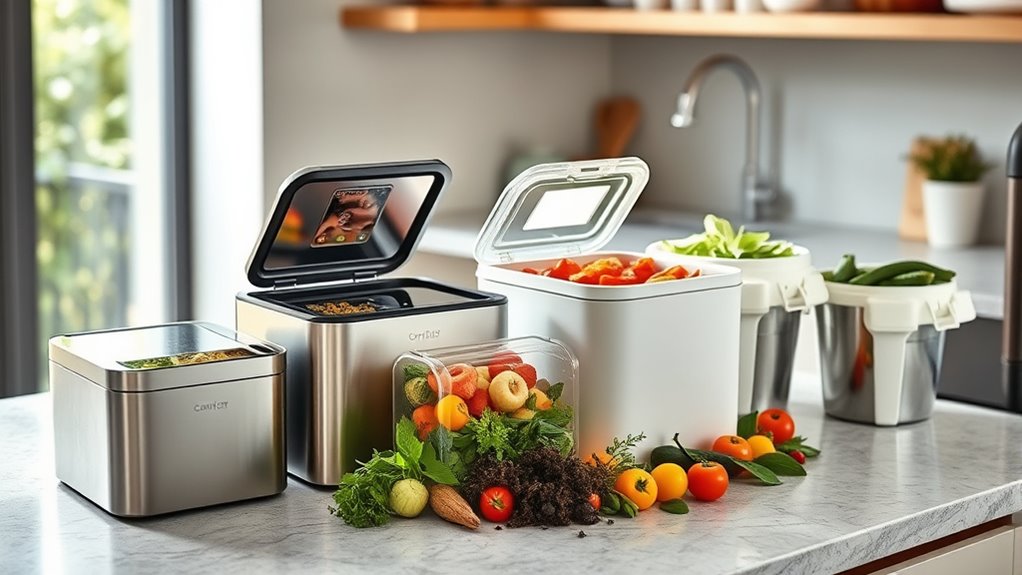
- The lineup’s listed capacities range from 2.5L to 14L, and features such as auto-cleaning, LED displays, and carbon filters distinguish some smaller brands; buyers should weigh these against capacity and upkeep.
| Airthereal Revive R500 Electric Kitchen Composter, 2.5L, Gray |  | Best for Simple Daily Use | Capacity: 2.5 liters | Cycle time: About 4 hours | Waste volume reduction: Up to 90% | VIEW ON AMAZON | See Our Full Breakdown |
| FoodCycler Eco 5 Electric Food Recycler, 5L, Grey |  | Best for Larger Batches | Capacity: 5 liters | Grinding system: Vortech patented grinding system | Processing time: A few hours | VIEW ON AMAZON | See Our Full Breakdown |
| Ouaken 4L Smart Electric Countertop Composter for Kitchen |  | Best for Quiet Operation | Capacity: 4 liters | Waste volume reduction: Up to 90% | Noise level: Below 40 dB | VIEW ON AMAZON | See Our Full Breakdown |
| Airthereal R500 Electric Kitchen Composter, 2.5L, Pearl White |  | Best Warranty Coverage | Capacity: 2.5 liters | Cycle time: 4 hours | Waste volume reduction: Up to 90% | VIEW ON AMAZON | See Our Full Breakdown |
| COSTWAY 4L Electric Kitchen Composter with Auto-Cleaning and LED Display |  | Best for Guided Maintenance | Capacity: 4 liters / 1 gallon | Waste volume reduction: 90% | Auto timing: 4, 5, or 6 hours | VIEW ON AMAZON | See Our Full Breakdown |
| FoodCycler Eco 5 Electric Kitchen Food Recycler, 5L, White |  | Best for Larger FoodCycler Batches | Type: Electric kitchen food recycler | Capacity: 5 L | Operation: One-touch | VIEW ON AMAZON | See Our Full Breakdown |
| Ouaken 4L Smart Electric Kitchen Composter – Countertop Compost Bin, Black |  | Best for Quiet, Flexible Cycles | Capacity: 4 L | Waste reduction: Up to 90% in about 3 hours | Noise level: Below 40dB | VIEW ON AMAZON | See Our Full Breakdown |
| Ouaken 2.5L Indoor Electric Composter, Food Waste Recycler |  | Best Compact Pick for Small Households | Capacity: 2.5 L | Waste volume reduction: Up to 90% | Noise level: Below 40dB | VIEW ON AMAZON | See Our Full Breakdown |
| OK-255 Electric Kitchen Composter, 5.5L |  | Best for Maximum Countertop Capacity | Capacity: 5.5 L | Modes: Standard, Quick, Crush, Clean, Store | Waste volume reduction: Up to 90% | VIEW ON AMAZON | See Our Full Breakdown |
| FoodCycler Eco 3 Compact Kitchen Food Recycler, White |  | Best Compact FoodCycler | Model: FC-200-2 | Capacity: 3.5 L | Dimensions: 11 in H × 9 in W × 13 in D | VIEW ON AMAZON | See Our Full Breakdown |
| Reencle Prime 14L Electric Kitchen Composter, Silver |  | Best for Quiet, Microbial Processing | Capacity: 14 L | Daily processing capacity: Up to 2.2 lb of food waste | Processing time: 2–24 hours | VIEW ON AMAZON | See Our Full Breakdown |
| Assark 3L Electric Kitchen Composter with Carbon Filter |  | Best for Easy-Cleaning Small Kitchens | Capacity: 3 L | Model: HQD-260C | Processing time: 4–6 hours | VIEW ON AMAZON | See Our Full Breakdown |
| FoodCycler Eco 3 Compact Electric Food Recycler |  | Best Compact Food Recycler | Capacity: 3.5 L | Dimensions: 11 × 9 × 13 in (H × W × D) | Operation: One-touch button with progress LEDs | VIEW ON AMAZON | See Our Full Breakdown |
| NutriChef 4-Quart Electric Kitchen Composter |  | Best for Flexible Batch Sizes | Capacity: 4 quarts | Processing time: 2–6 hours | Waste reduction: Up to 90% | VIEW ON AMAZON | See Our Full Breakdown |
| kitchen composters and food cycler | Capacity | Waste volume reduction |
|---|---|---|
| Airthereal Revive R500 Electri | 2.5 liters | Up to 90% |
| FoodCycler Eco 5 Electric Food | 5 liters | Almost 90% |
| Ouaken 4L Smart Electric Count | 4 liters | Up to 90% |
| Airthereal R500 Electric Kitch | 2.5 liters | Up to 90% |
| COSTWAY 4L Electric Kitchen Co | 4 liters / 1 gallon | 90% |
| FoodCycler Eco 5 Electric Kitc | 5 L | Almost 90% |
| Ouaken 4L Smart Electric Kitch | 4 L | — |
| Ouaken 2.5L Indoor Electric Co | 2.5 L | Up to 90% |
| OK-255 Electric Kitchen Compos | 5.5 L | Up to 90% |
| FoodCycler Eco 3 Compact Kitch | 3.5 L | — |
| Reencle Prime 14L Electric Kit | 14 L | — |
| Assark 3L Electric Kitchen Com | 3 L | Up to 90% (manufacturer claim) |
| FoodCycler Eco 3 Compact Elect | 3.5 L | — |
| NutriChef 4-Quart Electric Kit | 4 quarts | — |
More Details on Our Top Picks
Airthereal Revive R500 Electric Kitchen Composter, 2.5L, Gray
The Airthereal Revive R500 suits buyers who want a straightforward way to shrink everyday scraps without managing extra settings. Its one-button, four-hour cycle dries and grinds waste into powder, reducing its volume by up to 90%; that output is easier to store or discard, though it is not finished, ready-to-use compost. Compared with the larger FoodCycler Eco 5, the R500’s 2.5-liter bucket calls for more frequent batches, so it fits smaller households better. The dishwasher-safe cast aluminum bucket makes cleanup less of a chore, and biodegradable carbon filters help with odors between cycles. The tradeoffs are the smaller capacity, the need to replace filters, and a one-year warranty. I’d choose it for simple controls and easy bucket cleaning, not batch size or minimal upkeep.
Pros:- One-button operation keeps the process simple.
- Four-hour cycles reduce waste volume by up to 90%.
- Cast aluminum bucket is dishwasher safe.
- Carbon filters help limit odors between cycles.
Cons:- The 2.5-liter capacity may require frequent batches.
- The powder is not finished compost.
- Replacement carbon filters add ongoing maintenance.
Best for: One- or two-person households that want simple controls, smaller batches, and a removable bucket they can put in the dishwasher.
Not ideal for: Larger households that fill a 2.5-liter bucket quickly or buyers who want finished compost instead of dried, ground scraps.
- Capacity:2.5 liters
- Cycle time:About 4 hours
- Waste volume reduction:Up to 90%
- Blade system:SHARKSDEN Trinity Blade
- Bucket:Dishwasher-safe cast aluminum
- Operation:One button
- Odor control:Biodegradable carbon filters
- Warranty:1 year
Our verdict“Choose the gray R500 for uncomplicated small-batch scrap processing and easy bucket cleanup.”
FoodCycler Eco 5 Electric Food Recycler, 5L, Grey
With a 5-liter removable bucket, the FoodCycler Eco 5 is the capacity pick in this group. It can hold more scraps before a cycle than the 2.5-liter Airthereal R500, which may mean fewer batches for households that cook often. Its Vortech grinding system reduces food waste by almost 90% in a few hours, but the result is reduced-volume material rather than finished compost. One-touch operation keeps the routine uncomplicated, while a refillable carbon filter helps manage odors. The larger bucket makes this a more practical fit for busy kitchens, but the added capacity does not remove the need to run cycles, use electricity, and maintain the filter. Choose it when batch size matters more than a compact footprint or an especially simple maintenance routine.
Pros:- 5-liter removable bucket holds larger batches than the 2.5-liter Airthereal R500.
- One-touch operation makes cycling straightforward.
- Refillable carbon filter helps absorb odors.
- Processes a range of scraps, including pits, peels, and bones.
Cons:- Requires electricity for each cycle.
- Carbon filter needs refills.
- Produces reduced-volume ground material rather than finished compost.
Best for: Households that cook frequently and want to collect more scraps before running a processing cycle.
Not ideal for: Buyers with little counter space, those seeking a passive composting method, or anyone who wants to avoid electricity and filter upkeep.
- Capacity:5 liters
- Grinding system:Vortech patented grinding system
- Processing time:A few hours
- Waste volume reduction:Almost 90%
- Operation:One-touch button
- Bucket:Removable
- Odor control:Refillable carbon filter
- Color:Grey
Our verdict“Pick the Eco 5 if your kitchen generates enough scraps to make a larger batch capacity useful.”
Ouaken 4L Smart Electric Countertop Composter for Kitchen
The Ouaken makes a strong case for kitchens where appliance noise matters: its stated operating level is below 40 dB, and its 4-liter capacity is larger than the Airthereal R500’s 2.5 liters. Three modes—Crush, Ferment, and Clean—offer more ways to handle use and upkeep than the R500’s one-button approach. The detachable bucket is dishwasher safe, while the carbon filter is rated for up to five months of odor control. Those features suit buyers who want flexibility and less frequent filter changes, but they also come with a specific routine: the bucket should be emptied after each cycle. Leaving material inside can cause clumping, lengthen processing, and increase power use. I’d favor it over the simpler Airthereal for a quieter, more adjustable setup, provided regular emptying fits your habits.
Pros:- Operating noise is specified below 40 dB.
- 4-liter capacity exceeds the Airthereal R500’s 2.5 liters.
- Three modes provide Crush, Ferment, and Clean options.
- Detachable bucket is dishwasher safe and the filter is rated for up to five months.
Cons:- Bucket should be emptied after every cycle to prevent clumping and possible fan or blade problems.
- Leaving material in the bucket can extend cycles and increase power use.
- The resulting material is described as fertilizer, but the data does not specify a curing process.
Best for: Light sleepers and households that want a quieter countertop unit with multiple modes and a mid-size bucket.
Not ideal for: People who prefer to leave processed material in the unit or want a low-intervention routine between cycles.
- Capacity:4 liters
- Waste volume reduction:Up to 90%
- Noise level:Below 40 dB
- Modes:Crush, Ferment, Clean
- Carbon filter life:Up to 5 months
- Bucket:Detachable and dishwasher safe
- Processing method:High-temperature drying, grinding, and cooling
Our verdict“Choose the Ouaken if quiet operation and multiple modes matter more to you than leaving a batch in the bucket.”
Airthereal R500 Electric Kitchen Composter, 2.5L, Pearl White
The pearl white Airthereal R500 shares the gray model’s 2.5-liter capacity, four-hour cycle, and simple one-button controls, so its place here rests on the listed warranty rather than a different processing experience. The supplied product data states three years of coverage, compared with one year for the gray R500. That makes this version a more appealing choice for buyers who value longer stated coverage while wanting the same compact footprint. The tradeoff is that 2.5 liters can be limiting for larger households, especially beside the FoodCycler Eco 5 and its 5-liter bucket. Like the gray version, it turns scraps into dry powder rather than finished compost and relies on replacement carbon filters. I’d pick this model for its coverage and white finish, while checking that its smaller batch size suits your kitchen.
Pros:- Listed three-year warranty is longer than the gray R500’s one-year warranty.
- Four-hour cycle reduces waste volume by up to 90%.
- One-button operation is easy to use.
- Cast aluminum bucket is dishwasher safe.
Cons:- The 2.5-liter capacity is smaller than the FoodCycler Eco 5’s 5 liters.
- Four-hour cycles may feel slow when scraps accumulate quickly.
- Requires replacement carbon filters and produces powder rather than finished compost.
Best for: Small households who want the R500’s simple operation and bucket design with the longer warranty listed for this version.
Not ideal for: Frequent cooks who need larger batches, or buyers who want to avoid replacement filters and handle fewer processing cycles.
- Capacity:2.5 liters
- Cycle time:4 hours
- Waste volume reduction:Up to 90%
- Blade system:SHARKSDEN Trinity Blade
- Bucket:Cast aluminum
- Odor control:Biodegradable carbon filters
- Operation:One button
- Warranty:3 years (1.5-year manufacturer plus 1.5-year Amazon buyer protection)
Our verdict“Choose the pearl white R500 if you want a small, simple electric recycler and value its listed three-year warranty.”
COSTWAY 4L Electric Kitchen Composter with Auto-Cleaning and LED Display
The COSTWAY stands apart through its maintenance and timing controls, rather than raw capacity: its 4-liter bucket is smaller than the FoodCycler Eco 5’s 5 liters but larger than either R500’s 2.5 liters. A filter replacement indicator and self-weighing function give buyers more feedback, while auto-cleaning and a dishwasher-safe non-stick bucket address cleanup. The dual activated carbon filters help control odors, though the supplied guidance calls for replacing them about every three months. Auto settings run four to six hours; manual settings allow one to three hours, giving more control than the fixed four-hour R500 cycle. That flexibility may appeal to people who like adjusting routines, but the self-cleaning mode requires water, and the shorter manual settings are not stated to produce the same result as a full cycle.
Pros:- 4-liter capacity sits between the two R500 models and the 5-liter FoodCycler Eco 5.
- Filter replacement indicator helps track maintenance.
- Auto and manual timing modes offer more cycle control than the R500.
- One-click cleaning mode and dishwasher-safe non-stick bucket ease cleanup.
Cons:- Activated carbon filters need replacement about every three months.
- Self-cleaning mode requires water in the bucket beforehand.
- The listed 1–3 hour manual settings do not specify their processing result.
Best for: Households that want maintenance reminders, adjustable cycle timing, and a self-cleaning mode in a 4-liter unit.
Not ideal for: Buyers who want the fewest upkeep tasks, since its filters need replacing about every three months and cleaning requires adding water.
- Capacity:4 liters / 1 gallon
- Waste volume reduction:90%
- Auto timing:4, 5, or 6 hours
- Manual timing:1, 2, or 3 hours
- Filters:2 activated carbon filters; replace about every 3 months
- Bucket:Dishwasher-safe cast aluminum with non-stick coating
- Cleaning:One-click self-cleaning mode; add water beforehand
- Additional controls:Self-weighing function and filter replacement indicator
Our verdict“Pick the COSTWAY if you want more controls and cleaning support and are comfortable maintaining its filters.”
FoodCycler Eco 5 Electric Kitchen Food Recycler, 5L, White
I’d choose the FoodCycler Eco 5 when a larger removable bucket matters more than having lots of cycle settings. Its 5L capacity and one-touch operation make it a straightforward fit for households that collect scraps throughout the day, while the Vortech system is described as handling pits, peels, and bones. Compared with the FoodCycler Eco 3, it offers more room but gives up the smaller model’s compact footprint. The refillable carbon filter is designed to reduce odors, though it still needs upkeep, and processing takes several hours. This is an electric recycler that reduces scrap volume by almost 90%; buyers seeking finished, garden-ready compost should check what material the process actually produces before treating it as a substitute for traditional composting.
Pros:- Removable 5L bucket holds more scraps than the FoodCycler Eco 3’s 3.5L bucket
- One-touch operation keeps daily use simple
- Refillable carbon filter is designed to reduce odors
- Vortech grinding system is described as handling pits, peels, and bones
Cons:- Requires electricity to process scraps
- Processing takes several hours
- The carbon filter requires maintenance
Best for: Households that want a roomy removable bucket and simple operation for mixed kitchen scraps
Not ideal for: Buyers with little counter or storage space, or anyone who wants a non-electric process
- Type:Electric kitchen food recycler
- Capacity:5 L
- Operation:One-touch
- Odor control:Refillable carbon filter
- Grinding system:Vortech
- Color:White
- Waste volume reduction:Almost 90%
Our verdict“Pick the Eco 5 if you want FoodCycler simplicity with more batch capacity than the compact Eco 3.”
Ouaken 4L Smart Electric Kitchen Composter – Countertop Compost Bin, Black
The Ouaken 4L suits buyers who want more cycle choices than the straightforward one-touch FoodCycler Eco 5. Its Crush, Ferment, and Clean modes let users choose different functions, and the detachable bucket is dishwasher safe, which can simplify cleanup. The stated noise level below 40dB may also suit kitchens where a running appliance would otherwise be distracting. At 4L, it holds less than the Eco 5 and the 5.5L OK-255, so larger households may need to run it more often. The product describes its output as fertilizer, but the Ferment mode may produce material that needs further composting; I’d verify how the output fits your gardening plans. Its carbon filter is listed for up to five months, then needs attention.
Pros:- Three modes: Crush, Ferment, and Clean
- Dishwasher-safe detachable bucket eases cleanup
- Specified noise level is below 40dB
- Carbon filter life is listed as up to five months
Cons:- 4L capacity is smaller than the FoodCycler Eco 5 and OK-255
- Carbon filter requires periodic replacement
- Ferment mode may produce pre-compost that needs further composting
Best for: Small households that want quiet operation, multiple modes, and a dishwasher-safe removable bucket
Not ideal for: Large households looking to process a full day’s scraps in fewer, larger batches
- Capacity:4 L
- Waste reduction:Up to 90% in about 3 hours
- Noise level:Below 40dB
- Modes:Crush, Ferment, Clean
- Carbon filter life:Up to 5 months
- Removable bucket:Dishwasher safe
- Color:Black
- Model number:JF6001A
Our verdict“Choose the Ouaken 4L if quiet operation and cycle flexibility matter more to you than maximum batch size.”
Ouaken 2.5L Indoor Electric Composter, Food Waste Recycler
For a small kitchen or a household that produces modest amounts of scraps, the Ouaken 2.5L takes up less capacity than the 4L Ouaken and 5L FoodCycler Eco 5, which can make it a better match when counter space and batch size are limited. Its Crush, Ferment, and Clean modes, quiet operation below 40dB, and detachable blade assembly offer practical flexibility for routine use and cleaning. The tradeoff is frequent emptying if scraps accumulate quickly. The description says Ferment mode creates pre-compost that needs further composting, so this appliance does not remove every step between food scraps and garden use. The carbon filter is listed for up to five months, but it still requires eventual replacement.
Pros:- Compact 2.5L capacity suits smaller kitchens and households
- Three one-touch modes: Crush, Ferment, and Clean
- Specified noise level is below 40dB
- Detachable blade assembly and removable bucket support cleaning
Cons:- Small capacity may require frequent emptying
- Ferment mode produces pre-compost that needs further composting
- Carbon filter requires periodic replacement
Best for: One- or two-person households with limited counter space and a small, steady amount of food scraps
Not ideal for: Families or frequent cooks who need to process larger batches without frequent emptying
- Capacity:2.5 L
- Waste volume reduction:Up to 90%
- Noise level:Below 40dB
- Modes:Crush, Ferment, Clean
- Carbon filter lifespan:Up to 5 months
- Blade:Detachable, low-speed high-torque
- Lid:Transparent
Our verdict“Choose this Ouaken if a compact footprint and small batches matter more than the larger capacity of the 4L or 5L options.”
OK-255 Electric Kitchen Composter, 5.5L
The OK-255 has the largest stated capacity in this batch at 5.5L, giving households that collect a lot of scraps more room per batch than the FoodCycler Eco 5 or either Ouaken model here. It also has five modes, including Quick, Store, and Clean, so it offers more task-specific choices than the Eco 5’s one-touch operation. Its stated noise level below 45dB and activated carbon filter with a moisture collection tray add practical odor and moisture management. That added capacity and flexibility come with a larger-batch appliance to maintain: the detachable fan module needs upkeep, and the filter is recommended for replacement about every five months. The cycle still takes several hours, so Quick mode’s name shouldn’t be taken as a promise of instant processing.
Pros:- 5.5L capacity exceeds the FoodCycler Eco 5 and 4L Ouaken
- Five modes include Quick, Crush, Clean, and Store
- Activated carbon odor control is paired with a moisture collection tray
- Detachable fan module supports maintenance access
Cons:- Filter replacement is recommended about every five months
- Processing takes several hours
- Stated noise level is below 45dB, higher than the Ouaken models’ below-40dB specification
Best for: Larger households that want a high-capacity countertop unit with several operating modes
Not ideal for: Buyers who prioritize the smallest footprint, minimal maintenance, or the quieter stated operation of the Ouaken models
- Capacity:5.5 L
- Modes:Standard, Quick, Crush, Clean, Store
- Waste volume reduction:Up to 90%
- Noise level:Below 45dB
- Filter type:High iodine value activated carbon
- Recommended filter replacement:Approximately every 5 months
- Coating:9H hardness non-stick
- Lid:Flip-top transparent
- Fan module:Detachable
Our verdict“Pick the OK-255 if your main priority is processing more scraps per batch and you can accommodate its maintenance needs.”
FoodCycler Eco 3 Compact Kitchen Food Recycler, White
The FoodCycler Eco 3 is the space-saving FoodCycler choice: its listed dimensions of 11 × 9 × 13 inches and 3.5L removable bucket make it easier to fit on a countertop or in a cupboard than the 5L Eco 5. One-touch controls and progress LEDs keep operation straightforward, while the reusable carbon filter is designed to reduce odors. Compared with the 2.5L Ouaken, it holds more, though it has fewer described cycle options than Ouaken’s three modes. Its Vortech grinding system is identified as patented, but the provided product details do not specify which scraps it handles, unlike the Eco 5 description. It needs electricity to run, and the reusable filter still requires maintenance.
Pros:- Compact listed dimensions fit countertops or cupboards
- 3.5L removable bucket is larger than the 2.5L Ouaken’s
- One-touch controls and progress LEDs make operation easy to follow
- Reusable carbon filter is designed to reduce odors
Cons:- Requires electricity to process food waste
- Carbon filter needs maintenance
- Smaller capacity than the FoodCycler Eco 5
Best for: Buyers who want a compact electric recycler with a removable bucket and simple controls
Not ideal for: Households that need the larger 5L Eco 5 bucket or want multiple processing modes
- Model:FC-200-2
- Capacity:3.5 L
- Dimensions:11 in H × 9 in W × 13 in D
- Color:White
- Operation:One-touch electric
- Filter:Reusable carbon filter
- Grinding system:Vortech patented grinding system
- Progress indicator:Progress LEDs
Our verdict“Choose the Eco 3 if you want FoodCycler operation in a smaller unit and can work with a 3.5L bucket.”
Reencle Prime 14L Electric Kitchen Composter, Silver
The Reencle Prime suits households that want a larger indoor composter and a process designed to make compost, rather than simply dry and grind scraps. Its 14 L capacity exceeds the compact FoodCycler Eco 3, while its microbial processing takes anywhere from 2 to 24 hours. That range makes timing less predictable than a set 4–6-hour cycle, but the 28 dB operation may matter more in an open kitchen or small home. A three-layer filter, starter pack, and shovel give new owners useful setup pieces. The tradeoff is a stated daily limit of 2.2 lb; buyers with heavier daily scraps may need to run another system or manage overflow. Energy use is not specified, which makes ongoing consumption harder to estimate.
Pros:- 14 L capacity is larger than the FoodCycler Eco 3’s 3.5 L bucket
- Microbial processing is designed to produce nutrient-rich compost
- Three-layer filter and 28 dB operation suit indoor placement
- Includes a carbon filter, starter pack, and shovel
Cons:- Daily processing is limited to 2.2 lb of food waste
- Processing time varies from 2 to 24 hours
- Energy consumption is not specified
Best for: Households seeking a larger-capacity indoor unit with quiet microbial processing and included starter supplies
Not ideal for: High-waste households that regularly exceed 2.2 lb of scraps per day or buyers who need a predictable cycle time
- Capacity:14 L
- Daily processing capacity:Up to 2.2 lb of food waste
- Processing time:2–24 hours
- Noise level:As low as 28 dB
- Odor control:Three-layer filter system
- Included accessories:Carbon filter, compost starter pack, and shovel
- Color:Silver
Our verdict“Choose the Reencle Prime if quiet operation and a larger microbial composter matter more than a fixed cycle time or higher daily throughput.”
Assark 3L Electric Kitchen Composter with Carbon Filter
The Assark 3L is a compact choice for buyers who value simple countertop routines: it dries and crushes scraps automatically, and its removable non-stick bucket and auto-clean mode reduce hands-on cleanup. Compared with the Reencle Prime, it has much less capacity and uses a drying-and-crushing process rather than microbial composting. Its 4–6-hour cycle is more predictable than the Reencle’s 2–24-hour range, though the result is described as reduced waste volume, not finished compost. A 12-hour storage mode gives scraps a holding period between cycles, and the lid pause adds a useful safety feature. The 3 L size can fill quickly for a family, and the activated carbon filter needs periodic replacement, listed at up to three months between changes.
Pros:- Automatic drying and crushing with a defined 4–6-hour cycle
- Removable non-stick bucket and auto-clean mode simplify cleanup
- Storage mode holds scraps for up to 12 hours
- Lid pause and operation under 40 dB support everyday countertop use
Cons:- 3 L capacity may require frequent cycles in larger households
- Activated carbon filter needs periodic replacement
- Drying and crushing reduces waste volume but is not described as finished compost
Best for: Apartment cooks or one- to two-person households who want an automated, easy-to-clean countertop scrap dryer
Not ideal for: Families generating large volumes of scraps or buyers who specifically want microbial processing that produces compost
- Capacity:3 L
- Model:HQD-260C
- Processing time:4–6 hours
- Storage mode:12 hours
- Waste volume reduction:Up to 90% (manufacturer claim)
- Noise level:Under 40 dB
- Filter:Activated carbon; up to 3 months between replacements
- Warranty:12-month limited warranty
Our verdict“Pick the Assark for a small kitchen where cleanup and a predictable cycle matter more than capacity or making finished compost.”
FoodCycler Eco 3 Compact Electric Food Recycler
The FoodCycler Eco 3 is the space-conscious pick for buyers who want one-touch food scrap processing without giving up much counter area. Its 3.5 L removable bucket is slightly larger than the Assark 3L, and progress LEDs make the cycle status easy to check. The reusable, refillable carbon filter is a practical distinction from the Assark’s filter, which is listed for replacement every few months. Its Vortech grinding system handles a range of scraps, including pits, peels, bones, and leftovers, but the output is plant food rather than finished compost. That makes this a better fit for convenient waste reduction than for anyone seeking a direct substitute for composting. It also needs a power outlet, and the supplied details do not give a cycle time or noise figure.
Pros:- Compact 11 × 9 × 13 in countertop footprint
- 3.5 L removable bucket supports convenient loading
- One-touch control and progress LEDs keep operation simple
- Reusable, refillable carbon filter is designed to reduce odors
Cons:- Produces plant food rather than finished compost
- Requires a power outlet near the counter
- Cycle time and noise level are not specified
Best for: Space-limited cooks who want a simple electric recycler and can use the processed material as plant food
Not ideal for: Buyers seeking finished compost, cordless placement, or clearly specified cycle and noise performance
- Capacity:3.5 L
- Dimensions:11 × 9 × 13 in (H × W × D)
- Operation:One-touch button with progress LEDs
- Filter:Reusable, refillable carbon filter
- Grinding system:Vortech
- Output:Plant food
Our verdict“Choose the Eco 3 for compact, straightforward scrap recycling if plant food output meets your needs.”
NutriChef 4-Quart Electric Kitchen Composter
The NutriChef 4-Quart makes sense for kitchens that want to match a cycle to the amount of scraps on hand. Its Small, Medium, and Large modes distinguish it from the FoodCycler Eco 3, whose supplied details describe one-touch operation but no volume-based settings. NutriChef dries, grinds, and cools scraps in 2–6 hours, with a listed reduction of up to 90%; like other electric recyclers here, that does not establish that the output is finished compost. Cleanup is a strong point: the ceramic-coated bucket is dishwasher-safe. Dual carbon filters and a replacement alert add odor-management support, while overheat and overload protection cover basic operating safeguards. The unit is rated below 48 dB, louder on paper than the Reencle Prime’s 28 dB. The listing also gives inconsistent household capacity claims.
Pros:- Three modes adapt processing to different waste volumes
- Ceramic-coated inner bucket is dishwasher-safe
- Dual carbon filters include a replacement alert
- Overheat and overload protection are included
Cons:- Listed operating noise is under 48 dB, higher than the Reencle Prime’s stated 28 dB
- Carbon filters require replacement after 600 hours
- Household capacity claims conflict, and the output is not specified as finished compost
Best for: Households with changing amounts of daily scraps that want selectable batch modes and a dishwasher-safe bucket
Not ideal for: Noise-sensitive kitchens or buyers who need clear, consistent capacity guidance or finished compost output
- Capacity:4 quarts
- Processing time:2–6 hours
- Waste reduction:Up to 90%
- Operating noise:Less than 48 dB
- Modes:Small, Medium, Large
- Carbon filters:Dual filters; replacement alert after 600 hours
- Inner bucket:Ceramic-coated and dishwasher-safe
- Safety features:Overheat and overload protection
Our verdict“Choose NutriChef if adjustable batch modes and easy bucket cleaning outweigh noise and unclear capacity guidance.”

How We Picked
I compared the 14 listed models on the details provided: capacity, countertop footprint, and convenience features. The ranking gives more weight to how clearly a model suits a buyer need than to cosmetic differences: for example, the two FoodCycler Eco 5 color options share a 5L capacity, while the Reencle Prime is much larger at 14L. I also separated compact choices from larger batch options so readers can match the appliance to their kitchen and household volume.
Features such as auto-cleaning, an LED display, and a carbon filter count as practical differentiators, but they do not establish processing quality or operating costs on their own. The supplied product details do not provide comparable data on cycle time, noise, energy use, odor control performance, or the end use of processed material, so I do not treat those as proven advantages. Models with limited listed details rank around the capacity and features that are stated, and buyers should confirm maintenance needs and intended output use before choosing.
Factors to Consider When Choosing Kitchen Composters And Food Cyclers
Choose a kitchen composter or food cycler by matching its workload to your home, then check what the appliance actually requires after each cycle. A larger capacity can reduce how often you run batches, but it also takes up more space. These factors help make the choice beyond any one model’s feature list.
Match capacity to your scrap routine
Capacity describes how much material the appliance can take at once; it does not tell you how often your household will need to run it. Think about the volume of scraps you produce between the times you want to operate the machine, rather than choosing the largest number by default. A smaller household with limited counter space may be better served by a compact unit, even if it means processing more often. A larger family may value the 14L class more if there is room for it. Check whether the stated capacity refers to the container’s full volume or a recommended working load, since those figures can differ. Avoid treating capacity as a direct measure of finished compost output.
Decide where the appliance will live
Measure the intended spot, including the clearance needed to open a lid, remove a bucket, or reach a filter. A model that fits on the counter can still crowd food preparation space or sit too close to a wall or cabinet. Compact capacity models generally make more sense in small kitchens, while larger units may need a dedicated utility area. Also check the appliance’s height if it will sit beneath upper cabinets. Consider where the unit will be emptied and cleaned; an awkward route to a sink can turn routine upkeep into friction. Choose for the kitchen you have, not an imagined storage location.
Check what “composting” means for the output
Kitchen machines use the word compost in different ways, and processed scraps are not automatically ready for garden beds. Before buying, read the manufacturer’s explanation of what comes out and whether it needs curing, mixing, or further processing. If your goal is to feed a home garden, confirm that the output is suitable for your plants and local guidance. If your aim is to reduce the volume of scraps before disposal, a food recycler may still fit even when its output is not finished compost. Do not assume every model accepts the same ingredients. A clear match between your intended use and the machine’s output prevents disappointment after purchase.
Budget time for cleaning and filters
Look beyond claims such as auto-cleaning or a carbon filter and find the actual upkeep instructions. Check how often the bucket, lid, and blades need attention, whether parts are removable, and how replacement filters are obtained. A self-clean feature may reduce some manual work without removing the need to empty or wipe the appliance. Carbon filters also have a replacement schedule that affects ongoing effort. Buyers who dislike frequent maintenance should favor straightforward access to washable parts over a long feature list. Treat upkeep as part of the appliance’s daily footprint, alongside its physical size.
Compare operating needs before committing
Capacity and smart features say little about how long a cycle takes, how much electricity it uses, or how much sound it makes. Look for manufacturer specifications on these points and compare them with when you can run the appliance at home. A longer cycle may be acceptable if the unit can operate overnight without disturbing anyone, while noise-sensitive households may need more specific sound information. Confirm the power requirements and any ventilation or placement instructions. If these details are missing, seek them before purchase rather than assuming models in the same capacity range behave alike. Small differences in routine can matter more than an extra display or color choice.
Pay for the feature you will use
A larger machine makes sense when it saves repeated batches and fits the room you have; unused capacity is just space taken on the counter or floor. Convenience features matter when they remove a task you would otherwise avoid, but a display alone does not establish better processing. Compare the included parts, filter availability, warranty terms, and cleaning procedure along with headline specifications. For a first machine, a manageable capacity and simple maintenance can be a better fit than a complex feature set. Buyers with a clear garden plan should prioritize output guidance over aesthetics. Match the appliance’s ongoing demands to your habits, not just its feature checklist.
Frequently Asked Questions
Does a larger capacity mean I will get more usable compost?
Not necessarily. Capacity tells you how much the container can hold, while the amount and condition of the output depend on the machine’s process and what you put in it. The 14L Reencle Prime is the largest listed option here, but that alone does not confirm how much finished material it produces. Check the maker’s instructions for output, curing, and garden use before comparing models by liters. If your main goal is reducing scraps for disposal, usable garden output may be less important than batch size and upkeep.
Should I choose a food cycler if I want to use the output in my garden?
Only after checking how the manufacturer describes the processed material and what additional steps it needs. Some appliances reduce or dry scraps without producing finished compost, so putting the output directly around plants may not be appropriate. Look for guidance on curing, mixing, and acceptable ingredients, then compare it with local gardening advice. If the instructions are vague, ask the manufacturer before buying. The appliance’s name alone does not establish how its output should be used.
How much counter space should I plan for?
Measure the appliance’s full footprint and height, then add room to open it and remove its container. A 2.5L model may be easier to place than a 5L unit, but listed capacity does not provide exact dimensions. Larger options such as the 14L Reencle Prime may call for a dedicated spot rather than a crowded worktop. Check the maker’s placement instructions, including clearance and ventilation needs. Also make sure you can carry the container to wherever you plan to empty it.
Are two models with the same capacity likely to work the same way?
No. Capacity is only one specification; cycle duration, noise, energy use, accepted scraps, cleaning, and output instructions can differ. In this roundup, the two FoodCycler Eco 5 versions both list 5L, and the Airthereal R500 colors both list 2.5L, so their color differences do not indicate a capacity change. Compare the full manufacturer specifications and care instructions for the exact version you plan to buy. If a feature is not listed, do not assume it matches another model’s.
What should I check if odor is my main concern?
Look for specific odor-control instructions, filter type, replacement frequency, and guidance on keeping the lid and container clean. A carbon filter is a relevant feature, as listed for the Assark 3L, but its presence by itself does not establish how well odors are controlled. Check whether the maker specifies which scraps to avoid and how quickly the unit should be emptied. Placement and cleaning habits can also affect odors. If the manufacturer provides no performance details, treat odor control as an open question and seek clarification before choosing.
Conclusion
For most buyers seeking a higher-capacity countertop option, I’d start with the FoodCycler Eco 5; its white and grey listings share the same 5L capacity, so choose by finish and exact model details. For a larger household with room for a bigger unit, the Reencle Prime is the premium capacity pick at 14L. The roundup does not establish a clear best-value model because comparable operating costs and performance details are missing; buyers seeking value should compare upkeep, warranty, and cycle specifications before deciding. For beginners, I’d favor a compact model such as the FoodCycler Eco 3 or Airthereal R500 if its smaller batch size fits their routine. For the tightest kitchens, consider the 2.5L Airthereal R500 or Ouaken; for a stated convenience feature, the COSTWAY adds auto-cleaning and an LED display. Match capacity and upkeep to your habits, then confirm output guidance before buying.
Fall yard work Picks
leaf blowers
As an affiliate, we earn on qualifying purchases.