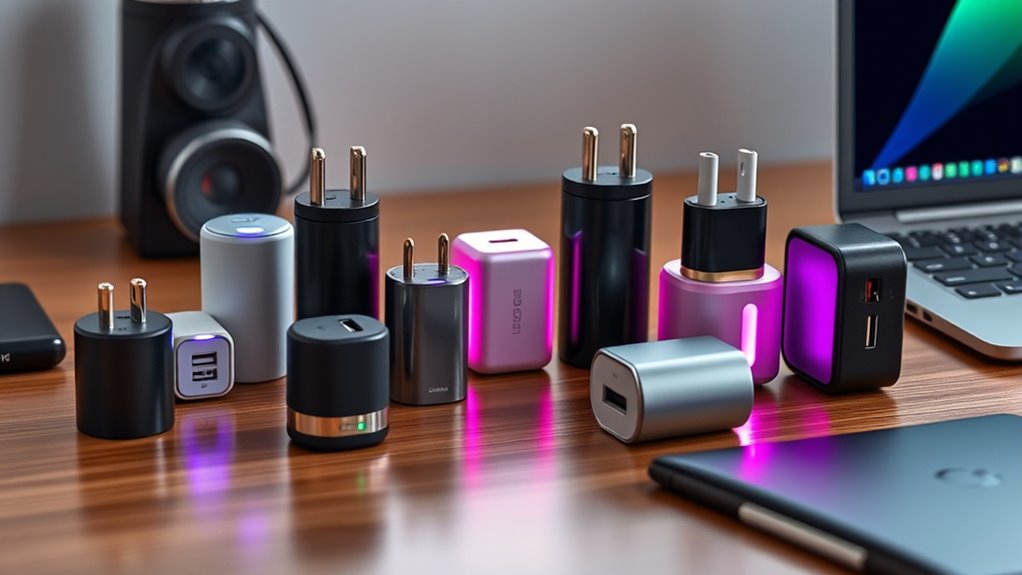

USB chargers all look alike in photos, but the differences show up the moment you plug in — charging speed, how many devices you can power at once, and whether the block dies after six months. After comparing 13 options across wattage, port flexibility, and everyday durability, the Anker 735 (Nano II 65W) stands out as the best overall pick because it can fast-charge a laptop, phone, and earbuds simultaneously from a single outlet. If you’re stocking multiple rooms on a budget, the 2-Pack 20W USB-C Wall Charger with cables delivers better value than most single-brick alternatives, while the Anker Zolo 50W 2-Pack is the smart middle ground for families juggling lots of devices. The core tradeoff in this category is simple: multiport power costs more per brick, while cheap 4-packs mean slower speeds and thinner build quality. Keep reading for the full breakdown of which charger fits which situation.

Get business pricing on tools and workshop supplies
- Business-only prices and quantity discounts
- Tax-exempt purchasing
- Multiple users, one account, clear invoices
Complete the kit


Key Takeaways
- GaN construction (Anker 735, Anker Zolo) delivered noticeably more power in a smaller housing — the Anker 735 fit 65W into a brick smaller than some 20W cubes in this lineup.
- The budget 4-packs clustered around 20W dual-port designs; what separated them was whether cables were included, not charging performance itself.
- USB-A-only options like the 2.1A 3-pack charged roughly three to four times slower than 20W USB-C blocks — fine for overnight, frustrating for top-ups.
- Bundled cable length and quality varied widely: the Fast Charging Kit’s 6FT and 10FT MFi-certified cables added real value, while short 3-foot included cables undermined otherwise decent bricks.
- Multiport bricks that split wattage across ports (the 40W cube, Anker Zolo 50W) charged single devices faster than when all ports were occupied — a spec that’s rarely printed on the box.
- Two-brick packs from Anker consistently outperformed generic 4-packs on heat management, staying cooler during extended sessions in this comparison.
| iPhone 17/16/15 Charger, USB C Wall Charger & Cable 4-Pack |  | Best Complete Kit | Quantity: 4 chargers with 4 cables | Cable Length: 6 ft | Charging Speed: Up to 3x faster than a 5W charger | VIEW ON AMAZON | See Our Full Breakdown |
| 4 Pack USB C Charger Block Fast Charging Multiport Wall Charger with PD 20W and QC 3.0 |  | Best Value Multi-Pack | Quantity: 4 chargers | Ports: 2 per charger | Fast Charging: PD 20W and QC 3.0 | VIEW ON AMAZON | See Our Full Breakdown |
| 2 Pack USB C Charger Block, Dual Port Type C Wall Charger |  | Best for Basic Backup Chargers | Quantity: 2 chargers | Ports: Dual (USB-A and USB-C) | Compatibility: iPhone 14/Pro/Max, iPad, Samsung Galaxy, Google Pixel | VIEW ON AMAZON | See Our Full Breakdown |
| Anker 20W USB-C Phone Charger with USB-C and USB-A Ports |  | Best Brand-Reliability Pick | Quantity: 2-pack | Maximum Output: 20W | Ports: USB-C and USB-A | VIEW ON AMAZON | See Our Full Breakdown |
| 2-Pack 40W USB C Charger Cube Fast Charging Block Multiport Wall Plug |  | Best for Desk and Multi-Device Charging | Quantity: 2 chargers | Total Output: 40W | Ports: 4 per pair (USB-C and USB-A) | VIEW ON AMAZON | See Our Full Breakdown |
| USB Wall Charger 3-Pack, 2.1A Dual Port Power Adapter |  | Best Budget Multi-Room Pick | Model: XT5549 | Output: 5V / 2.1A per port (10.5W) | Ports: 2 USB-A | VIEW ON AMAZON | See Our Full Breakdown |
| Anker 735 Charger (Nano II 65W) – 3-Port USB-C Fast Charger |  | Best Premium Pick | Max Output: 65W | Ports: 2 USB-C, 1 USB-A | Technology: GaN II | VIEW ON AMAZON | See Our Full Breakdown |
| 4-Pack 20W USB-C & USB-A Wall Charger for iPhone 17/16 |  | Best Value for Modern iPhones | Power Output: 20W | Ports: 1 USB-C, 1 USB-A | Output Voltage: 9V / 2.2A | VIEW ON AMAZON | See Our Full Breakdown |
| Anker Zolo 50W USB-C Charger, 4 Ports, 2-Pack |  | Best Family Charging Hub | Max Output: 50W (shared) | Ports: 2 USB-C, 2 USB-A | USB-C Split: 30W (C1) + 20W (C2) when both used | VIEW ON AMAZON | See Our Full Breakdown |
| 4-Pack Dual-Port USB Wall Charger, Wall Outlet Plug Adapter |  | Best Ultra-Budget Bulk Pick | Output: 5V / 2.1A | Ports: 2 USB-A | Input Voltage: 100-240V | VIEW ON AMAZON | See Our Full Breakdown |
| 2-Pack 20W USB-C Wall Charger with 6FT USB-C to C Cable |  | Best Kit for Modern iPhones | Charger Output: 20W | Fast Charging Protocol: PD 3.0 | Cable Type: USB-C to USB-C | VIEW ON AMAZON | See Our Full Breakdown |
| iPhone Fast Charging Kit – USB-C Wall Charger with 6FT & 10FT MFi Lightning Cables (2-Pack) |  | Best for Older Lightning iPhones | Brand: FEEL2NICE | Output: 12W (5V/3A) USB-C PD | Cable Type: USB-C to Lightning | VIEW ON AMAZON | See Our Full Breakdown |
| USB-A Dual Port Wall Charger (3-Pack, White) |  | Best Budget Multi-Room Fill-In | Output: 5V/2.4A total (shared) | Input: 110-130V | Ports: 2 USB-A ports per charger | VIEW ON AMAZON | See Our Full Breakdown |
| usb charger | Ports | Quantity |
|---|---|---|
| iPhone 17/16/15 Charger | — | 4 chargers with 4 cables |
| 4 Pack USB C Charger Block Fas | 2 per charger | 4 chargers |
| 2 Pack USB C Charger Block | Dual (USB-A and USB-C) | 2 chargers |
| Anker 20W USB-C Phone Charger | USB-C and USB-A | 2-pack |
| 2-Pack 40W USB C Charger Cube | 4 per pair (USB-C and USB-A) | 2 chargers |
| USB Wall Charger 3-Pack | 2 USB-A | — |
| Anker 735 Charger | 2 USB-C, 1 USB-A | — |
| 4-Pack 20W USB-C & USB-A Wall | 1 USB-C, 1 USB-A | — |
| Anker Zolo 50W USB-C Charger | 2 USB-C, 2 USB-A | — |
| 4-Pack Dual-Port USB Wall Char | 2 USB-A | — |
| 2-Pack 20W USB-C Wall Charger | — | — |
| iPhone Fast Charging Kit | — | 2 chargers + 2 cables |
| USB-A Dual Port Wall Charger | 2 USB-A ports per charger | 3 chargers per pack |
More Details on Our Top Picks
iPhone 17/16/15 Charger, USB C Wall Charger & Cable 4-Pack
This option stands out as the only entry in this batch that ships both adapters and cables together in quantity, which makes it the most practical choice for someone replacing an entire household’s charging setup in one purchase. The 6-foot cables solve the most common frustration with bundled accessories — short tethers that trap your phone next to the outlet — and the claimed 3x improvement over a basic 5W charger matters most for larger iPhones and iPads. Compared with the 4 Pack USB C Charger Block (B0B2WLSY9D), which includes four adapters but no cables, this kit costs you nothing in convenience but leaves you guessing on wattage. That vagueness is the real tradeoff: without a published per-port output, buyers with power-hungry devices are taking a gamble on charging speed.
Pros:- Cables and adapters included in one 4-pack
- 6-foot cable length allows comfortable use while charging
- 480 Mbps data transfer support for syncing
- Wear-resistant cable construction holds up to daily coiling
Cons:- No published wattage for the wall adapters, making charging speed hard to verify
- USB-C only — no Lightning or USB-A compatibility
- Four adapters plus cables adds bulk to a travel bag
Best for: Households upgrading several iPhone 15-or-newer devices at once who want cables and adapters covered in a single order
Not ideal for: Buyers who still own Lightning or micro-USB gear — this kit is USB-C only, so older devices are left out entirely
- Quantity:4 chargers with 4 cables
- Cable Length:6 ft
- Charging Speed:Up to 3x faster than a 5W charger
- Data Transfer:480 Mbps
- Compatibility:iPhone 17/16/15, iPad Pro/Air/Mini, USB-C Android
- Cable Material:Wear-resistant
Our verdict“This is the pick if you want a full refresh of chargers and cables for a modern USB-C device family in one shot — just don’t expect guaranteed fast-charge speeds.”
4 Pack USB C Charger Block Fast Charging Multiport Wall Charger with PD 20W and QC 3.0
Four dual-port fast chargers at a budget price point make this the best cost-per-outlet play in the lineup — scatter one in the bedroom, car bag, office, and kitchen. Unlike the 2 Pack Dual Port charger (B0CPSBD68W), which doesn’t advertise fast charging at all, this set commits to PD 20W and QC 3.0, enough to fast-charge any current iPhone or top up a Samsung quickly. The catch is straightforward: 20W per charger is phone-tier power. Compared with the 2-Pack 40W Charger Cube (B0BNWWFDJL), this set gives you more plugs but roughly half the total output, so anything bigger than a tablet will crawl. And with no cables in the box, you’re budgeting for those separately.
Pros:- Verified PD 20W and QC 3.0 fast charging on every unit
- Dual ports let each charger handle two devices
- Four chargers cover an entire home for little money
- Compact cubes fit easily into outlet strips and travel bags
Cons:- 20W maximum output is too low for most laptops
- No cables included, adding hidden cost
- Two connected devices will split the already modest power budget
Best for: Budget-minded buyers who want to stock several rooms or family members with verified fast-charging adapters cheaply
Not ideal for: Anyone hoping to charge laptops or run two hungry devices at full speed — 20W total is a hard ceiling
- Quantity:4 chargers
- Ports:2 per charger
- Fast Charging:PD 20W and QC 3.0
- Compatibility:iPhone 5+, Samsung Galaxy S, Google Pixel, iPad, AirPods
- Cables Included:No
Our verdict“The smart buy if your priority is maximum verified fast-charging outlets per dollar for phones and tablets.”
2 Pack USB C Charger Block, Dual Port Type C Wall Charger
Where most entries in this roundup compete on speed, this two-pack plays a different game: it’s the no-frills spare-charger play for guest rooms, drawers, and lend-out scenarios. The USB-A plus USB-C port pairing on each cube is genuinely useful compared with the USB-C-only focus of the Anker 20W (B0C8HHV9DK), because older cables and accessories still work. Anker wins on trust and warranty, but you get two units here instead of a single premium one, and the built-in overheat and surge protection covers the safety basics. The honest drawback: there’s no stated fast-charging output, so a late-model iPhone will charge — just slowly. If charging speed matters even a little, the 4 Pack PD 20W set (B0B2WLSY9D) is the better spend.
Pros:- Mixed USB-C and USB-A ports handle both new and legacy cables
- Overheat, overvoltage, and surge protection built in
- Two chargers included at a low price point
- Fun color options make them easy to tell apart
Cons:- No advertised fast-charging wattage
- Sparse technical details make performance hard to compare
- Two units may not be enough for a whole household
Best for: People who need inexpensive, safe backup chargers for older devices, guest rooms, or kids’ tablets where speed doesn’t matter
Not ideal for: Owners of recent iPhone or Galaxy flagships — without stated fast-charge support, daily top-ups will feel sluggish
- Quantity:2 chargers
- Ports:Dual (USB-A and USB-C)
- Compatibility:iPhone 14/Pro/Max, iPad, Samsung Galaxy, Google Pixel
- Safety Features:Overheat, overvoltage, surge protection
- Colors:Multiple vibrant options
- Fast Charging:Not specified
Our verdict“Fine as a drawer-stuffer or guest-room charger, but skip it if fast charging is part of your daily routine.”
Anker 20W USB-C Phone Charger with USB-C and USB-A Ports
This pick makes the most sense for buyers who prioritize brand accountability over raw specs. Anker’s 18-month warranty and established safety engineering — overvoltage protection plus temperature control — are things the unbranded multi-packs in this roundup simply can’t match, and unlike the 4 Pack Charger Block (B0B2WLSY9D), this one actually includes two 5-foot USB-C cables in the box. The tradeoff is capacity: at 20W maximum, it charges one modern phone quickly, or two devices slowly, and nothing more. Against the Anker 735 Nano II 65W elsewhere in this roundup, it’s clearly the budget sibling — fine for phones and earbuds, wrong for laptops. It’s also a 2-pack, which softens the value gap versus cheaper four-packs considerably.
Pros:- 18-month warranty from an established brand
- Two 5-ft USB-C to USB-C cables included
- Overvoltage protection and temperature control
- Two chargers per pack for home and travel
Cons:- 20W ceiling rules out laptops and fast multi-device use
- No USB-A cable included, so the second port depends on your own accessories
- Fewer total units than competing 4-packs at a similar tier
Best for: Buyers who want a reputable brand, warranty backing, and included cables for dependable everyday phone charging
Not ideal for: Multi-device households or laptop owners — 20W split across two ports means everything charges at trickle pace
- Quantity:2-pack
- Maximum Output:20W
- Ports:USB-C and USB-A
- Included Cables:2 × 5 ft USB-C to USB-C
- Warranty:18 months
- Safety Features:Overvoltage protection, temperature control
Our verdict“The one to buy when warranty support and included cables matter more than maximum wattage.”
2-Pack 40W USB C Charger Cube Fast Charging Block Multiport Wall Plug
This is the most output-dense option in this batch: 40W per cube across four total ports, meaning one unit can run a phone, earbuds, a tablet, and a controller from a single outlet. That positioning puts it between the phone-focused 4 Pack 20W set (B0B2WLSY9D) and the heavier-duty Anker 735 65W from the wider roundup — more muscle than the former, less single-port grunt than the latter. The PD plus QC 3.0 support means both iPhone and Android households get real fast charging. Two honest caveats: the listed 5V/3.1A specs suggest much of that 40W is spread thin rather than concentrated in one port, and safety features are described only in basic terms — a weaker story than Anker’s protection stack.
Pros:- 40W total output across four ports per charger
- Supports both Power Delivery and Quick Charge 3.0
- Wide device compatibility from earbuds up to game consoles
- Two chargers cover home and office
Cons:- Output split across ports limits single-device charging speed
- Only basic safety features described compared with Anker’s protections
- No cables included despite the multiport design
Best for: Desk, nightstand, or travel-station setups where several small-to-mid devices need charging from one outlet
Not ideal for: Laptop users needing sustained single-port power — the output is split across ports rather than concentrated
- Quantity:2 chargers
- Total Output:40W
- Ports:4 per pair (USB-C and USB-A)
- Fast Charging:Power Delivery and QC 3.0
- Output:5V / 3.1A
- Compatibility:Smartphones, headphones, tablets, game consoles, laptops
- Plug Type:Type A, 2-pin (North American)
Our verdict“The pick for clearing cable clutter at a desk or nightstand, as long as no single device needs the full 40W.”
USB Wall Charger 3-Pack, 2.1A Dual Port Power Adapter
This 3-pack covers the classic problem of never having a charger where you need one — one for the bedroom, one for the kitchen drawer, one for the travel bag. Each adapter offers dual 2.1A USB-A ports, which is enough to top up a phone and a tablet overnight, though it lags well behind the 20W USB-C speeds of the 4-Pack 20W USB-C & USB-A Wall Charger if fast charging matters to you. Compared with the 4-Pack Dual-Port option, this set trades a spare unit for slightly higher per-port output, making it the better fit for tablets. The bulkier housing is the honest cost of the low price point — it won’t disappear into a crowded power strip the way the Anker 735 does.
Pros:- Three chargers for the price of stocking multiple rooms
- 2.1A output handles phones and tablets adequately
- Broad compatibility with older and current Android and iOS devices via USB-A cables
- Over-current and overheat protections built in
Cons:- No USB-C ports or quick-charge support
- Bulky design crowds power strips
Best for: Households that need cheap, reliable chargers scattered across multiple rooms or given to family members
Not ideal for: Anyone charging USB-C-only devices or wanting modern fast-charge speeds for newer iPhones
- Model:XT5549
- Output:5V / 2.1A per port (10.5W)
- Ports:2 USB-A
- Input Voltage:240V
- Plug Type:Type A (North American)
- Safety:Over-current and overheat protection
- Pack Quantity:3
Our verdict“A sensible bulk buy for USB-A households that value coverage over speed.”
Anker 735 Charger (Nano II 65W) – 3-Port USB-C Fast Charger
The Anker 735 is the charger I’d point laptop owners toward. Its 65W single-device output is enough to run a 13-inch MacBook Pro at full speed, something none of the multi-pack budget options can approach. What makes it special is how little space that power occupies — roughly the size of an AirPods Pro case, with a folding plug that survives life in a backpack. Compared with the Anker Zolo 50W, you give up a fourth port but gain real laptop-class wattage and smarter power distribution across the two USB-C and one USB-A ports. The honest tradeoff: total output is fixed at 65W, so charging three devices at once means splitting that ceiling, and owners of 16-inch power-hungry laptops will still want a higher-wattage brick.
Pros:- 65W output fast charges USB-C laptops at full speed
- Three ports with intelligent power distribution
- GaN II design keeps it genuinely pocketable
- Foldable plug and 18-month warranty from an established brand
Cons:- 65W ceiling limits multi-device charging of power-hungry gear
- Premium price versus basic multi-packs
Best for: Travelers and hybrid workers who want one compact brick for a laptop, phone, and earbuds
Not ideal for: Owners of 16-inch gaming or creator laptops that demand more than 65W
- Max Output:65W
- Ports:2 USB-C, 1 USB-A
- Technology:GaN II
- Input Voltage:240V, 50-60 Hz
- Plug Type:Type A (North American), foldable
- Certifications:FCC, CE, UL
- Warranty:18 months
4-Pack 20W USB-C & USB-A Wall Charger for iPhone 17/16
This 4-pack sits in the sweet spot between the aging USB-A multi-packs and the premium Anker options: every unit has both a USB-C port with 20W PD and a USB-A port, so a modern iPhone fast charges properly while older cables still work. Compared with the 3-Pack 2.1A adapter, the jump to 20W roughly halves the time to recharge a recent iPhone — that’s the difference between topping up before dinner or waiting an extra hour. Unlike the Anker 735, you get four chargers instead of one, which suits a family spread across rooms rather than one traveler. The catch is a shared 20W ceiling per charger: plug in two devices and each gets a fraction, so don’t expect dual fast charging from a single cube.
Pros:- 20W USB-C fast charging on every unit in the pack
- Mixed USB-C and USB-A ports cover old and new devices
- Four chargers outfit an entire household
- Smart chip guards against over-voltage, overheating, and overload
Cons:- 20W total is shared when both ports are in use
- North American plug needs an adapter abroad
Best for: Families with a mix of iPhones, Pixels, and Galaxies who need fast chargers in several rooms
Not ideal for: Tablet or laptop users who need more than 20W from a single port
- Power Output:20W
- Ports:1 USB-C, 1 USB-A
- Output Voltage:9V / 2.2A
- Input Voltage:110V
- Plug Type:Type A (North American)
- Safety:Over-voltage, overheat, and overload protection
- Pack Quantity:4
Our verdict“The most practical household buy for current-generation phones at a sensible cost.”
Anker Zolo 50W USB-C Charger, 4 Ports, 2-Pack
Where the Anker 735 is built around one traveler, the Zolo 50W is built around one nightstand. Four ports — two USB-C, two USB-A — let a couple charge phones, earbuds, and a smartwatch from a single outlet, and you get two of these bricks in the box. The port math is worth understanding: when both USB-C ports are active you get 30W and 20W respectively, so full 50W is only available to one device at a time. That makes it stronger for phones and tablets than the 4-Pack 20W cubes, but weaker than the 735 for laptops — a 13-inch notebook will charge, just slowly. ActiveShield 4.0 monitoring and folding plugs round out a package that feels a notch above generic four-port chargers in build quality.
Pros:- Four ports per unit, two units per box — real household capacity
- USB-C1 delivers up to 30W for fast phone charging
- Foldable plugs make it genuinely travel-capable
- ActiveShield 4.0 temperature and charging monitoring
Cons:- 50W maximum is shared, not per-port
- No port reaches laptop-class sustained output
Best for: Couples and families who want to declutter nightstands with one multi-port brick per room
Not ideal for: Laptop-first users who need sustained high wattage across ports
- Max Output:50W (shared)
- Ports:2 USB-C, 2 USB-A
- USB-C Split:30W (C1) + 20W (C2) when both used
- Technology:GaN architecture
- Special Features:ActiveShield 4.0, foldable plugs
- Input Voltage:240V
- Pack Quantity:2
Our verdict“The best choice for charging four gadgets from one outlet without cable chaos.”
4-Pack Dual-Port USB Wall Charger, Wall Outlet Plug Adapter
This is the bottom-shelf workhorse of the lineup: four dual USB-A adapters at a low per-unit cost, each putting out a steady 5V/2.1A. The standout detail is the 100-240V input range, which the 3-Pack 2.1A set and the 4-Pack 20W cubes don’t clearly offer — with a plug adapter, these work on any continent. If your charging needs are overnight phone top-ups, kid tablets, and powering smart-home gadgets, this pack does the job at minimal cost. The tradeoff is stark, though: no USB-C at all and no fast charging, so a modern iPhone will charge at roughly half the speed it would from the 4-Pack 20W USB-C & USB-A set. Newer USB-C-only devices will need their own cable and will charge slowly regardless.
Pros:- Four chargers at the lowest per-unit cost in the roundup
- 100-240V input works internationally with a plug adapter
- Dual ports allow two devices per outlet
- Full safety stack including short-circuit protection
Cons:- 5V/2.1A output means slow charging by modern standards
- USB-A only — poor fit for USB-C-native devices
Best for: Budget buyers stocking guest rooms, kids’ devices, or travel kits with basic overnight chargers
Not ideal for: Owners of recent iPhones and Pixels who expect fast-charge speeds or USB-C connectivity
- Output:5V / 2.1A
- Ports:2 USB-A
- Input Voltage:100-240V
- Plug Type:Type A (North American)
- Safety:Overcurrent, overvoltage, overheating, short-circuit protection
- Form Factor:Compact wall plug
- Pack Quantity:4
Our verdict“Cheap, safe, and slow — the right buy when quantity matters more than speed.”
2-Pack 20W USB-C Wall Charger with 6FT USB-C to C Cable
If your household has fully moved to USB-C iPhones and iPads, this kit removes the guesswork: two 20W PD 3.0 chargers and two 6-foot USB-C to C cables, ready to outfit a bedroom and an office. The 20W output matches what Apple ships with current iPhones, so you get genuine fast charging without paying for wattage you can’t use. Compared with the FEEL2NICE Lightning kit below, this set is the forward-looking choice — but it’s useless to anyone still on iPhone 14 or earlier. The cables’ 60W power ceiling means they double as MacBook Air charging cables, though the 20W bricks themselves will refill a laptop at a crawl. A sensible, balanced pick rather than an exciting one.
Pros:- True 20W PD 3.0 fast charging for modern iPhones and iPads
- Two chargers plus two long 6-foot cables in one package
- Cables handle up to 60W, so they work with MacBook Air too
- UL certified with overvoltage, overcharge, and overheat protection
Cons:- Completely incompatible with Lightning-based iPhones
- 20W bricks charge a MacBook Air very slowly
- Data transfer tops out at 480 Mbps
Best for: Households with iPhone 15/16/17 or recent iPads who need chargers in two locations
Not ideal for: Anyone with Lightning-era iPhones (14 or older) — the USB-C cables won’t connect at all
- Charger Output:20W
- Fast Charging Protocol:PD 3.0
- Cable Type:USB-C to USB-C
- Cable Length:6 ft
- Data Transfer Speed:480 Mbps
- Compatibility:iPhone 17/16/15, iPad, MacBook Air M1/M2
- Safety Certification:UL
- Warranty:1 year
Our verdict“The most practical bundle for all-USB-C iPhone households that need coverage in two rooms.”
iPhone Fast Charging Kit – USB-C Wall Charger with 6FT & 10FT MFi Lightning Cables (2-Pack)
Most USB-C charger roundups quietly abandon anyone still using an iPhone 14 or earlier — this FEEL2NICE kit is the counterargument. The MFi-certified Lightning cables carry Apple’s authorization chip, which means no annoying “accessory not supported” pop-ups, and the smart current-matching chip protects aging batteries. Where the 20W USB-C two-pack is built for the newest iPhones, this set serves the millions of perfectly good Lightning devices still in drawers and backpacks. The 10-foot cable is the standout — long enough to reach a bed from an outlet behind a nightstand, something the 6-foot norm can’t manage. The tradeoff is raw speed: 12W is half the output of modern 20W bricks, and the warning against sharp bending means these cables need gentler handling than braided alternatives.
Pros:- MFi certification prevents iOS compatibility warnings
- Includes both 6FT and 10FT cables for outlet-to-desk or bed reach
- ETL certified with over-voltage protection and smart chip
- Charges up to 50% in 30 minutes on compatible iPhones
Cons:- Useless with iPhone 15 and newer USB-C models
- 12W output is roughly half the speed of 20W PD chargers
- Cables can short if bent excessively
Best for: Owners of iPhone 11 through 14 who want certified Lightning cables in two practical lengths
Not ideal for: iPhone 15/16/17 owners — Lightning cables simply won’t fit, and 12W is slow by modern standards
- Brand:FEEL2NICE
- Output:12W (5V/3A) USB-C PD
- Cable Type:USB-C to Lightning
- Cable Lengths:6FT and 10FT
- Certification:MFi Certified, ETL Certified
- Quantity:2 chargers + 2 cables
- Compatibility:iPhone 14, 13, 12, 11, X, XR series (not iPhone 15/16)
- Warranty:1 year worry-free refund and replacement
Our verdict“The go-to kit for keeping older Lightning iPhones charged without certification headaches.”
USB-A Dual Port Wall Charger (3-Pack, White)
Not every charger purchase needs to be cutting edge. This 3-pack of dual USB-A cubes is for the unglamorous job of keeping legacy gear alive: Kindles, older earbuds, fitness trackers, fans, and hand-me-down phones. Buying three bricks for the price of one premium charger means you can scatter them across a house, car, and travel bag without agonizing over where each one lives. Compared with the 4-Pack 20W USB-C & USB-A charger elsewhere in this roundup, this set trades fast charging for sheer quantity and simplicity — a reasonable swap if nothing you own supports PD. Be clear-eyed about the limits: the 2.4A total is shared across both ports, so two devices simultaneously each charge at a trickle, and there’s no USB-C at all. Fireproof PC housing and multi-layer protections keep it safe, if not swift.
Pros:- Three chargers in one pack for outfitting multiple rooms or bags
- Two ports per cube let you charge a pair of small devices
- Fireproof PC build with over-current, over-voltage, overheat, and short-circuit protection
- Compact cube design travels easily
Cons:- USB-A only — no USB-C ports for newer devices
- 5V/2.4A output is slow for modern smartphones
- Total output is split between both ports when used together
Best for: Households with mostly older USB-A devices who want cheap charging coverage in multiple rooms
Not ideal for: Anyone charging a modern iPhone, iPad, or Samsung flagship — 5V/2.4A shared output will feel glacial
- Output:5V/2.4A total (shared)
- Input:110-130V
- Ports:2 USB-A ports per charger
- Material:PC fireproof material
- Quantity:3 chargers per pack
- Safety Features:Over-current, over-voltage, over-heating, short-circuit, auto-stop at full
- Color:White
Our verdict“A cheap, sensible way to blanket a home with basic chargers for legacy gear — just don’t expect speed.”

How We Picked
My ranking starts with one question: how fast does this charger refill a modern phone? Anything below 18W got marked down because USB-C Power Delivery has become the baseline for iPhones, Pixels, and Galaxys alike. From there I weighed port count and wattage sharing — a two-port brick that slows to a crawl when both ports are used is worse than it looks on paper — then build quality, where brand-name thermal management and connector durability separated the Anker entries from generic multipacks. Bundled accessories mattered too: an included 6-foot cable changes the real-world value of a charger more than a spec sheet suggests.
The ordering reflects a simple logic: versatile, well-built multiport chargers rank highest, balanced two-packs fill the middle, and cheap bulk packs land lower because they trade speed and longevity for quantity. No charger here is a bad purchase for the right buyer — the ranking is about which one deserves your money first, not which ones to avoid entirely.
Factors to Consider When Choosing Usb Chargers
Picking a USB charger comes down to matching wattage and port layout to your actual devices — not just grabbing the cheapest pack. These are the factors that quietly determine whether you’ll love or tolerate your charger a year from now.Wattage: Buy for Your Fastest Device
The single most common mistake is buying a charger based on your oldest device instead of your newest. A phone wants at least 20W for genuine fast charging, a tablet is comfortable around 30W, and a small laptop needs 45W to 65W before it charges at a usable pace. Buying a 65W brick for a phone isn’t wasted money — the phone only draws what it can handle, and you’re future-proofed. Buying a 12W brick for a modern phone, on the other hand, means every top-up takes twice as long as it should. Match the wattage to the most demanding device that will ever touch the charger, and remember that multiport chargers split their total wattage, so a 40W two-port brick may deliver 20W per port when both are occupied.
USB-C vs. USB-A: The Port Question
USB-A ports feel legacy in 2026, but they’re far from useless — older cables, power banks, headphones, and kids’ devices still use them. The smart play is at least one of each port type unless every device you own has moved to USB-C. What you shouldn’t do is buy a USB-A-only charger for a phone you plan to keep for years; slow charging and eventual cable obsolescence make it a dead end. Chargers like the Anker 735 and the 4-pack dual-port options in this roundup handle both port types, which is why they fit more households. If you’re buying for a shared family outlet, mixed ports prevent the nightly argument over who gets the ‘good’ charger.
GaN Technology and Why Size Isn’t Just Aesthetics
Gallium nitride (GaN) chargers push more power through smaller circuitry, which is why the Anker 735 packs 65W into a palm-sized brick while older 30W adapters were twice the size. The practical benefit isn’t only desk space — smaller chargers run cooler and are far more travel-friendly. Generic chargers can achieve small sizes too, but often without the thermal management that keeps components from degrading over months of use. Heat is the silent killer of chargers: a brick that runs hot on day one will likely underperform or fail within a couple of years. If a charger will live in a bag and travel weekly, GaN construction justifies its higher cost.
Multipacks: Value or False Economy?
Four chargers for the price of one name-brand brick sounds like a win until you do the math on usage. If you genuinely need outlets covered in four rooms, a budget 4-pack makes sense — nobody needs 65W GaN for a bedside table. But if you’re buying a 4-pack because it’s cheap and will only ever use two, you’ve paid for clutter with slower charging as a bonus. The middle path — a quality 2-pack like the Anker Zolo 50W — often hits the sweet spot: real fast charging in two locations without the per-unit cost of flagship bricks. Ask yourself where chargers actually need to live before deciding between quantity and quality.
Included Cables: The Hidden Half of the Deal
A charger without a cable is only half a product, and cable quality varies more than charger quality in budget bundles. Look for 6-foot lengths at minimum for bedside or couch use — 3-foot cables force your phone to the floor near the outlet. MFi certification matters for Lightning users because uncertified cables trigger compatibility warnings and degrade faster. USB-C to USB-C cables also carry power ratings; a cheap cable can bottleneck a 65W charger down to 15W without any visible indication of why. When comparing two similar chargers, the one bundled with long, certified cables is usually the better total package even at a modest premium.
Heat, Safety Certifications, and Longevity
Every charger in this roundup will charge your phone; not all of them will do it safely for years. Reputable brands build in overcurrent, overheating, and short-circuit protection as standard, while unbranded multipacks sometimes cut corners on internal fuses. You can’t see inside the brick, so proxies matter: UL or equivalent certification marks, warranty length, and brand reputation all signal how seriously safety was engineered. Long-term failure modes are usually gradual — a charger that gets hotter over time, or begins charging intermittently, is telling you something. Replacing a degraded charger early costs less than the device it’s plugged into, which is the real argument for spending a few dollars more upfront.
Frequently Asked Questions
Is a 65W charger like the Anker 735 overkill for just charging a phone?
Not at all — your phone will only draw the power it can accept, typically 20W to 27W, and the charger simply operates below its maximum. The real advantage is headroom: when you plug in a phone, earbuds, and a tablet simultaneously, there’s still enough wattage to fast-charge everything without the slowdown that plagues smaller multiport bricks. It also means the same charger handles a laptop, which matters if you travel and want one brick instead of three. The tradeoff is price and the fact that a cheaper 20W brick charges a single phone just as quickly. If you’ll never charge more than one device at a time, save the money; if your outlet looks like a charging station every night, the 65W headroom pays for itself in convenience.
Are cheap 4-pack chargers actually safe to use?
The ones included in this roundup passed the basic bar for internal protection, but there’s a meaningful durability gap between generic packs and name-brand chargers. Generic bricks tend to run warmer, use lighter-gauge internal components, and fail more often within 12 to 18 months of daily use. For low-stakes locations — a guest room, a kitchen drawer, a spare outlet — that tradeoff is reasonable because you’re getting four chargers for the cost of one premium brick. For your primary daily charger, the one your expensive phone spends eight hours plugged into overnight, brand-name thermal management is worth the extra cost. A sensible strategy is generic packs for backup locations and one quality charger where you actually need reliability.
Why does my dual-port charger charge slower when I plug in a second device?
Most multiport chargers have a fixed total wattage budget that gets divided across active ports, so a 40W brick might deliver 20W to one port alone but drop to roughly 10W per port when both are in use. Some chargers use dynamic allocation, giving priority to whichever device needs power most, while cheaper ones split evenly regardless. This is why port-count specifications can be misleading — a ’40W dual charger’ isn’t always a 20W-plus-20W charger. If you regularly charge two devices at once and both need fast speeds, look for higher total wattage or chargers like the Anker Zolo 50W that allocate intelligently. Checking how wattage splits across ports before buying prevents the most common disappointment in this category.
Do I need to use the cable that came with my charger, or can I mix and match?
You can mix and match freely, but the cable can become the bottleneck without you realizing it. USB-C cables carry power ratings, and a low-spec cable can silently cap a 65W charger at 15W or less — the phone charges, just slowly, with no warning message. That’s why the bundled 6-foot cables in kits like the Fast Charging Kit add more value than they appear to: they’re rated for the wattage of the bricks they ship with. For Lightning devices, MFi certification is the difference between a cable that works for years and one that triggers ‘accessory not supported’ warnings within months. As a rule, keep your best cable paired with your most powerful charger and don’t assume any random cable will deliver full speed.
What’s the best charger setup for a household with multiple people and devices?
The strongest setup is usually a high-wattage multiport hub in the shared location — a kitchen counter or living room end table — plus basic 20W cubes in bedrooms. A charger like the Anker Zolo 50W with four ports can handle a family’s evening charging ritual from one outlet, eliminating the pile of individual bricks that otherwise accumulates. Pair it with cheap dual-port cubes for bedside tables where only one device charges overnight, and the total cost stays reasonable. This hybrid approach also means your expensive, powerful charger lives where it gets used hardest rather than sitting idle next to a sleeping phone. Avoid the trap of giving everyone a multiport brick — most people only need one port at night, and simple chargers fail less to tangle and clutter.
Conclusion
After comparing all 13 options, the right choice depends less on specs and more on where the charger will live and what it will power. For most buyers, the Anker 735 (Nano II 65W) is the best overall pick — it’s the only option here that genuinely covers phones, tablets, and laptops from a single brick without compromise. Best value goes to the 2-Pack 20W USB-C Wall Charger with 6FT cables, which covers two rooms with real fast charging and useful cable lengths for what a single name-brand brick typically costs. Best premium is arguably the same Anker 735, but if you want power distributed across a household, the Anker Zolo 50W 2-Pack is the smarter premium spend. Beginners — anyone who just wants their phone to charge properly without research — should grab the 4-Pack 20W USB-C & USB-A Wall Charger and stop thinking about it. For specific needs: Lightning-device owners get the most complete package from the iPhone Fast Charging Kit with 6FT and 10FT MFi cables, guest-room and drawer stocking is the domain of the budget 3-pack dual-port options, and USB-A-only chargers should only go to people with genuinely legacy devices. Whatever you pick, matching wattage to your fastest device and buying one quality charger for your primary outlet beats spreading budget thin across mediocre bricks.
Fall yard work Picks
leaf blowers
As an affiliate, we earn on qualifying purchases.