Start by evaluating storm damage, identifying hazards, and gathering safety gear. Plan your cleanup by collecting essential tools, prioritizing hazardous debris first, and using power tools carefully. Remove large branches and clear smaller debris, always watching for hidden dangers. Regularly inspect your yard to gauge progress and ensure pathways are safe. Finish by removing all storm debris and taking preventive measures like trimming trees. If you want a detailed step-by-step workflow, keep exploring how to efficiently restore your backyard.

Get business pricing on tools and workshop supplies
- Business-only prices and quantity discounts
- Tax-exempt purchasing
- Multiple users, one account, clear invoices
Key Takeaways
- Conduct a thorough safety assessment to identify hazards before starting cleanup.
- Gather necessary tools and plan a step-by-step approach prioritizing large debris removal.
- Remove large branches and fallen trees first, then gather smaller debris into manageable piles.
- Regularly inspect the yard for hidden dangers and ensure pathways are clear throughout the process.
- Implement preventive measures like tree trimming and routine maintenance to minimize future storm damage.
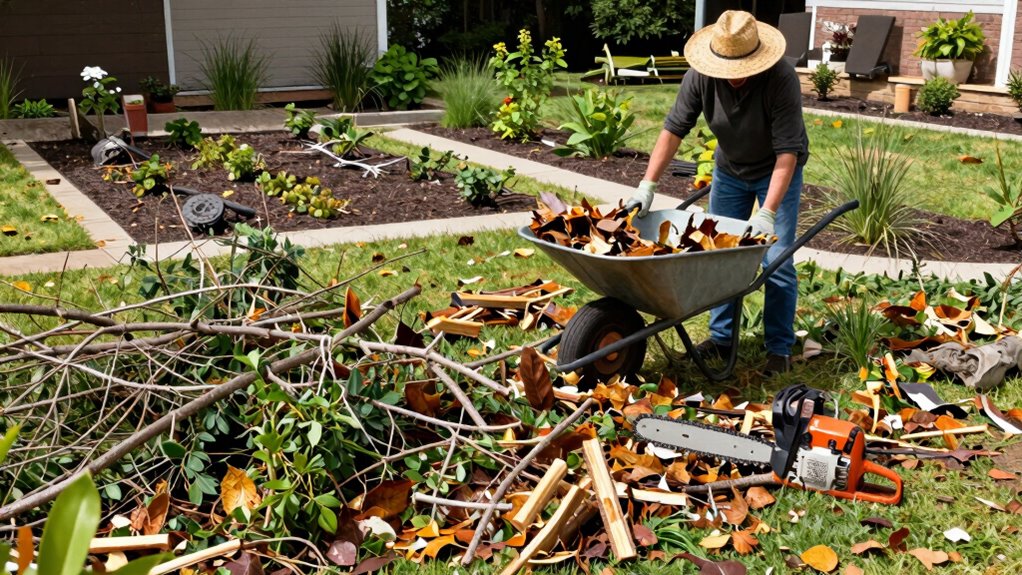
Are you ready to transform your messy backyard into a neat and inviting space? After a storm or a windy day, your yard can look like a tornado passed through, with storm debris scattered everywhere. Creating a structured cleanup workflow will make the task more manageable and safer. The first step is to assess the damage carefully. Look around and identify large branches, fallen trees, and other debris that could pose safety risks. Remember, safety precautions are crucial. Wear sturdy gloves, safety goggles, and sturdy footwear to protect yourself from splinters, sharp objects, or unstable branches. Avoid climbing on unstable trees or limbs, and be cautious of hanging branches that might fall unexpectedly.
Assess storm damage carefully and prioritize safety with proper gear before beginning cleanup.
Next, gather your cleanup tools. You’ll need a rake, trash bags, a chainsaw or handsaw for larger branches, and possibly a leaf blower for lighter debris. Having everything ready saves time and prevents unnecessary trips back and forth. Start by clearing larger, hazardous storm debris first. Cut fallen branches or broken tree limbs into manageable pieces and move them out of your yard. Be mindful of your surroundings and double-check that no power lines are nearby before cutting. When removing debris, keep safety precautions front and center, especially if using power tools. If you’re unsure about handling large branches or trees, consider calling a professional for assistance. Additionally, inspecting your tools and equipment beforehand can help prevent accidents during cleanup. Being aware of storm damage assessment can also help you identify the most urgent areas to address first. Conducting a thorough assessment can also reveal hidden hazards that might not be immediately visible, ensuring a safer cleanup process.
Once the bigger debris is out of the way, focus on the smaller items—twigs, leaves, and other lightweight trash. Use your rake to gather these into piles, making it easier to collect and dispose of. If you have a compost bin, separate organic debris for composting; otherwise, bag everything for curbside pickup. During this process, keep an eye out for hidden hazards beneath the debris, such as nails or glass shards, to prevent injuries. Additionally, being aware of potential hazards that might not be immediately obvious can help you stay safe during cleanup. Taking a moment to inspect your yard can also help identify hidden dangers that might not be immediately obvious. Regularly inspecting and maintaining your yard can reduce the risk of unexpected hazards during future storms.
As you progress, periodically step back and evaluate your work. Check that pathways are clear, and your yard looks tidier. Remember, safety isn’t just about protective gear but also about pacing yourself and knowing your limits. Avoid rushing, especially if there’s still debris that could shift or fall. Once your yard is free of storm debris and looks presentable, consider taking preventive measures for future storms, like trimming trees or reinforcing weak branches. Maintaining a regular cleanup routine will make future storm aftermaths less overwhelming. Being proactive with yard maintenance can significantly reduce the amount of debris and hazards after storms. By following this organized workflow, you’ll efficiently restore your backyard to a safe, clean, and inviting space, all while prioritizing safety precautions every step of the way.
As an affiliate, we earn on qualifying purchases.
Frequently Asked Questions
How Often Should I Inspect My Trees After a Storm?
You should inspect your trees immediately after a storm and then weekly for at least a month. Check their health and root stability, looking for signs of leaning, cracked branches, or exposed roots. Regular inspections help you catch potential hazards early, preventing damage or injury. If you notice any concerning changes, consider consulting an arborist to assess tree health and guarantee your trees remain safe and stable.
What Safety Gear Is Recommended During Cleanup?
Think of safety gear as your shield against chaos. You should wear protective gloves to guard your hands from splinters and debris, and sturdy footwear to keep your feet safe from sharp objects or uneven ground. These essentials help you stay steady and secure during cleanup, turning a potentially risky task into a manageable one. Don’t skip these crucial pieces—your safety depends on them. Stay protected and work confidently!
How to Handle Damaged or Fallen Power Lines Safely?
If you spot fallen lines, stay far away to avoid electrical hazards. Don’t attempt to move or touch fallen lines yourself; they could still be energized. Call emergency services or your utility company immediately, and keep others away from the area. Wait for professionals to handle the situation safely. Always prioritize safety first when dealing with fallen lines to prevent injury or electrocution.
When Is the Best Time to Compost Storm Debris?
You should compost storm debris once you’ve separated waste properly and the debris is free of hazardous materials like chemicals or sharp objects. The best compost timing is when the debris is dry and broken down into smaller pieces, which speeds up decomposition. Waste separation helps prevent contamination, ensuring your compost remains healthy and safe. Keep the debris in a compostable pile, turn it regularly, and wait several months for rich, usable compost.
How Can I Prevent Future Storm Damage to My Backyard?
To prevent future storm damage, prioritize landscape planning and choose storm-resistant plants. You should reinforce your yard’s stability with sturdy trees, secure loose structures, and clear debris regularly. Plant trees with deep roots, install windbreaks, and use native, resilient plants that withstand harsh weather. By proactively designing your backyard with these strategies, you create a resilient space that minimizes damage and protects your landscape during storms.
As an affiliate, we earn on qualifying purchases.
Conclusion
Now that you’ve tackled the chaos with a meticulous cleanup routine, bask in your glorious victory over nature’s tantrums. Remember, the fallen branches and scattered debris are just tokens of your bravery—proof that you’re a backyard warrior. So, sit back, sip your drink, and marvel at your triumph. After all, who needs a peaceful yard when you can have a battlefield? Embrace the mess; it’s your badge of honor in this wild, windy world.
As an affiliate, we earn on qualifying purchases.
garden safety gloves and goggles
As an affiliate, we earn on qualifying purchases.
As an affiliate, we earn on qualifying purchases.
Fall yard work Picks
leaf blowers
As an affiliate, we earn on qualifying purchases.