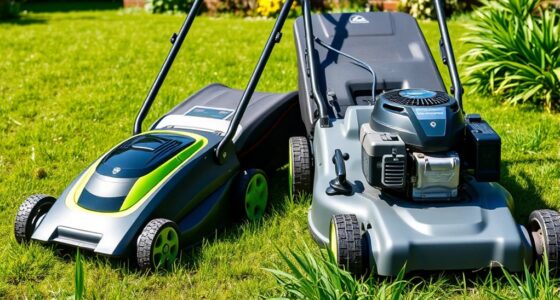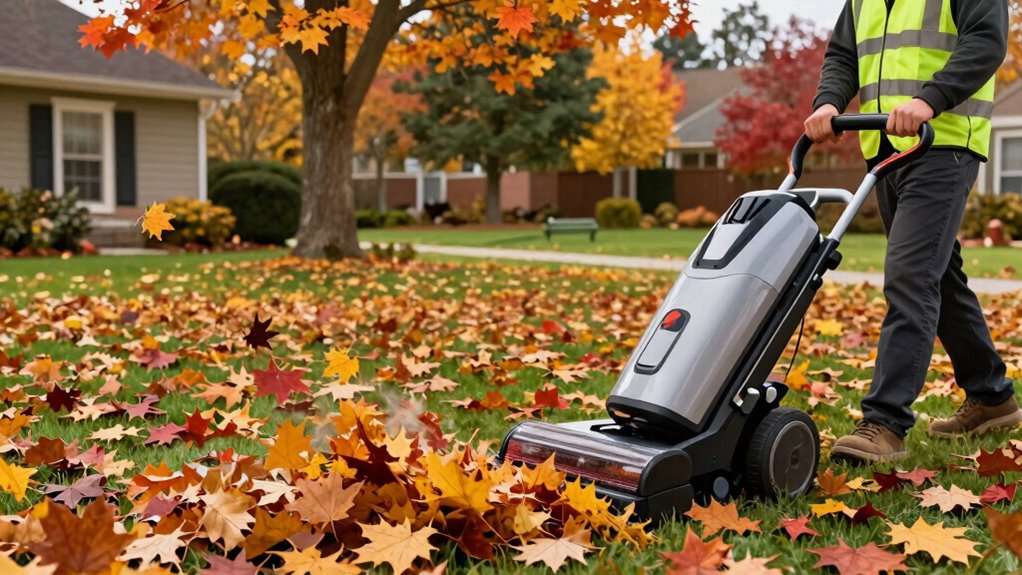

To save hours each fall and spring, develop a leaf management plan that includes shredding leaves for faster composting and mulching. Use blowers or rakes to gather leaves efficiently into piles, then transfer or mulch them directly to minimize trips. Keep your equipment well-maintained to work smoothly and consider layering shredded leaves with kitchen scraps for nutrient-rich compost. Maintaining this routine not only reduces yard waste but also promotes a healthy landscape—stick with it to learn more.

Get business pricing on tools and workshop supplies
- Business-only prices and quantity discounts
- Tax-exempt purchasing
- Multiple users, one account, clear invoices
Key Takeaways
- Implement routine mulching to reduce leaf volume and fertilize your lawn naturally.
- Use high-powered blowers and mulching mowers for efficient leaf collection and processing.
- Regularly turn and maintain compost piles to turn yard waste into nutrient-rich soil quickly.
- Shred leaves before composting to accelerate decomposition and minimize cleanup.
- Store equipment properly and keep blades sharp to ensure smooth, time-saving yard work.
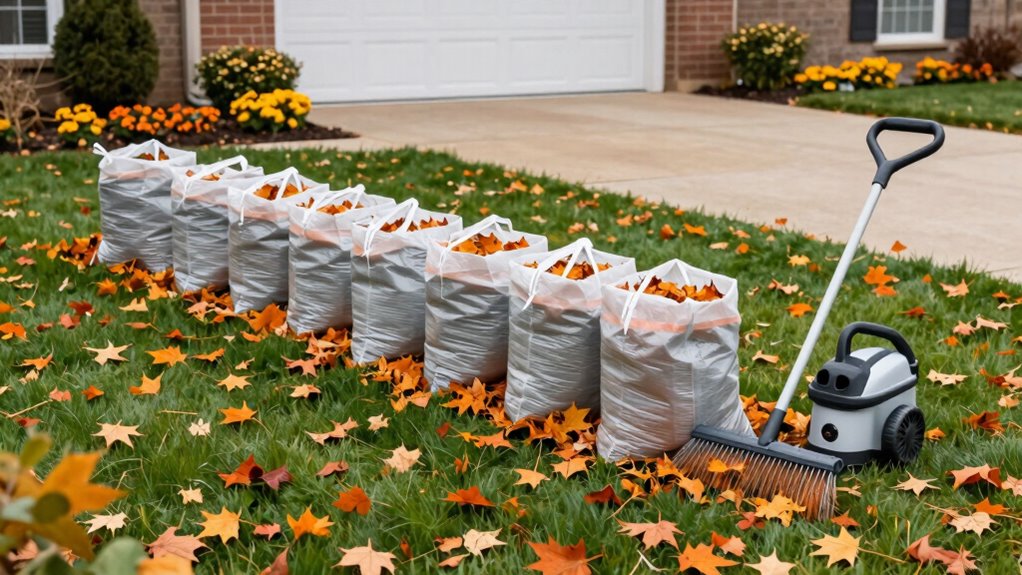
As autumn arrives, managing fallen leaves becomes a necessary part of maintaining a healthy and attractive landscape. Instead of feeling overwhelmed by the sheer volume of leaves, you can develop a leaf management plan that saves you hours each fall and spring. One of the most effective strategies is to master composting techniques. By composting your leaves, you turn what seems like yard waste into valuable compost that enriches your soil. To do this efficiently, shred the leaves first—using a lawn mower or leaf shredder—to accelerate decomposition. Layer shredded leaves with other compost materials like grass clippings or kitchen scraps, and keep the pile moist and aerated. Regular turning speeds up the process, guaranteeing you get nutrient-rich compost faster, which reduces the need for additional fertilization and minimizes yard waste. Proper equipment maintenance is also essential for making leaf cleanup faster and less frustrating. Well-maintained tools make leaf cleanup faster and less frustrating. Sharpen your leaf blower blades regularly; dull blades require more effort and waste fuel. Clean your yard vacuums and mulchers to prevent clogging and ensure smooth operation. Properly storing equipment during off-seasons prevents rust and damage, so it’s ready to use when leaves start falling. Investing in versatile tools also saves time—consider a high-powered leaf blower for quick collection, and a durable tarp or leaf bag system to transport and store leaves without hassle. To streamline leaf collection, establish a routine that fits your landscape’s needs. For example, use your blower or rake to gather leaves into manageable piles, then transfer them directly onto your compost bin or mulch area. This reduces the number of trips across your yard and prevents leaves from scattering everywhere. Mulching mowers are a game-changer; they chop leaves into tiny pieces that can be left on your lawn as natural fertilizer, saving you time and effort. When you mulch your leaves regularly, you minimize the volume you need to bag or compost, freeing up space and reducing cleanup time. Incorporating these practices into your seasonal routine guarantees that leaf management doesn’t become a dreaded chore. Creating a sustainable yard care routine can help maintain not only your landscape’s health but also promote a healthier environment overall. Understanding yard waste and how to manage it effectively can make a significant difference in your overall landscape maintenance. Additionally, incorporating air quality considerations, like minimizing dust and debris from leaf cleanup, can improve indoor and outdoor air environments. Using proper equipment that minimizes dust emissions can further enhance this effort. With the right techniques, tools, and habits, you’ll handle fallen leaves efficiently, turning what used to be hours of work into a straightforward, manageable task. Over time, your yard will look tidy and healthy without the stress and exhaustion that often accompany fall and spring cleanups.
Products Worth Considering

Shark Pet Cordless Stick Vacuum IX141

Google Nest Learning Thermostat Pro Edition (4th Gen, 2024) with Temperature Sensor, Polished Silver

Levoit Air Purifier for Home, Pets, Bedroom – Smart Wi‑Fi for Large Rooms
As an affiliate, we earn on qualifying purchases.
Frequently Asked Questions
How Often Should Leaf Management Equipment Be Maintained?
You should maintain your leaf management equipment regularly, ideally before each peak season, to guarantee peak performance. Seasonal scheduling is essential, so calibrate equipment like blowers and vacuums annually to keep them efficient. Perform routine maintenance after heavy use, checking for wear and tear. Regularly inspecting and calibrating your equipment helps prevent breakdowns, saves time, and assures your leaf management plan runs smoothly every fall and spring.
Can the Plan Be Adapted for Different Tree Types?
Coincidentally, your plan can adapt to different tree types by considering tree diversity and seasonal adaptations. You should tailor your equipment and timing to match each species’ leafing patterns, ensuring efficiency. For instance, broadleaf trees might need different tools than conifers. By observing seasonal changes and adjusting your approach, you’ll effectively manage diverse landscapes, saving time while respecting each tree’s unique leaf shedding cycle.
What Safety Precautions Are Recommended During Leaf Cleanup?
During leaf cleanup, you should always wear protective gear like gloves, goggles, and sturdy clothing to prevent injuries. Stay aware of hazards such as uneven ground, hidden debris, or slippery surfaces, especially in fall and spring conditions. Keep tools in good condition and use them properly to avoid accidents. By maintaining hazard awareness and wearing appropriate protective gear, you minimize risks and guarantee a safe, efficient cleanup process.
Is Special Training Required to Implement the Plan?
You don’t need special training to implement this plan, but skill development is highly recommended. With proper training, you’ll gain the confidence to efficiently handle leaf cleanup, reduce safety risks, and improve your overall approach. Focus on learning the best techniques, safety precautions, and equipment usage. This continuous skill development guarantees you can manage leaf removal quickly, safely, and effectively, making your seasonal cleanup less stressful and more manageable.
How Does Weather Impact the Effectiveness of the Plan?
Weather variability considerably impacts the effectiveness of your leaf management plan, especially during seasonal challenges. Heavy rain or strong winds can make leaf cleanup more difficult and less efficient, while dry, calm days allow for quicker collection. To maximize efficiency, you should monitor weather forecasts closely, plan leaf removal on favorable days, and be flexible with your schedule to adapt to changing conditions. This proactive approach helps maintain ideal results.
Conclusion
By following this leaf management plan, you’ll save hours each fall and spring, making yard cleanup less of a chore. Implementing efficient techniques like mulching and composting not only saves time but also benefits your garden. Did you know that mulching leaves can return up to 1,000 pounds of nutrients per acre to your soil? With these strategies, you’ll enjoy a cleaner yard and healthier plants, all while reducing waste and your workload.