
TL;DR
A cordless drill set usually includes a drill driver, a rechargeable battery, a charger, and a case, but kit contents vary widely. Choose a drill type and battery platform to suit your projects, then compare battery capacity, comfort, and useful accessories instead of buying based on voltage or piece count alone.
A kit with 100 accessories can still leave you without the one drill bit your project needs. That is the trap with cordless drill sets: the box looks generous, but the useful value depends on the tool, battery, and parts inside.

Get business pricing on tools and workshop supplies
- Business-only prices and quantity discounts
- Tax-exempt purchasing
- Multiple users, one account, clear invoices
This guide helps you choose a set for real jobs, from assembling a bookcase to hanging shelves or drilling into brick. You will learn how to tell drill types apart, read battery labels, check kit contents, and avoid paying extra for features you will rarely use.
The best set is the one that feels controlled in your hand and has enough battery for your work. A lighter kit may suit a weekend of curtain-rod installation better than a heavier, high-capacity bundle. And if you already own tools, the battery platform could matter more than the drill itself.
Read the included-items list: “set” does not guarantee a second battery, useful bits, or an impact driver.
Choose a drill driver for general home jobs, a hammer drill for many masonry tasks, and an impact driver for frequent fastener driving.
Do not treat 18V and 20V Max as directly comparable power ratings; compare the full tool and battery system.
Higher Ah can extend runtime but adds weight, and actual runtime depends on the job and tool.
Check exact battery compatibility and try the tool with its battery attached before committing to a platform.
Know what you’re buying before you trust the box
A cordless drill set is a bundle built around a battery-powered drill, but it can range from a simple starter kit to a two-tool combo. Most include a drill or drill driver, a rechargeable battery, a charger, and a case. Some sets add a second battery, drill bits, driver bits, sockets, or an impact driver.
The word “set” does not tell you how useful the contents are. One box may include a well-balanced drill and two batteries; another may pile in dozens of low-use bits but offer only one small battery. Check the product list rather than judging by the photo. A set usually includes the essentials, but the battery count, battery capacity, and charger type can vary.
Imagine you are putting up a shelf on Saturday. The kit’s case and driver bits help you get started, but you still need the right bit for the wall and a suitable wall anchor. Included accessories are a convenient starter supply, not a promise that every bit will fit every task.
Before buying, check exactly what is included: tool type, battery quantity and amp-hour rating, charger, case, and the size and type of accessories. Some sets add an impact driver, which can be valuable if you drive many long screws. Others include extras that may sit untouched in a drawer.
Products Worth Considering

eufy Security 5-Piece Home Alarm Kit

Philips Hue Bridge Pro Starter Kit with 4 A19 E26 Color Smart Bulbs

Sonos One Two-Room Smart Speaker Set with Alexa, Black
As an affiliate, we earn on qualifying purchases.
Choose a drill type that matches your actual projects
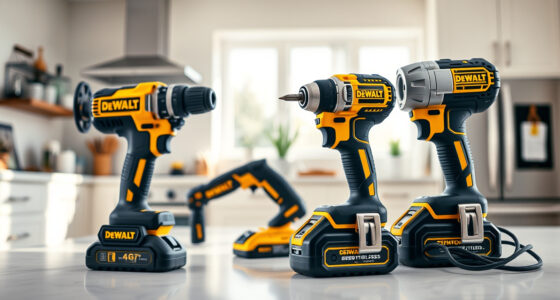
Cordless drill sets work best when the tool type matches the task: a drill driver handles ordinary drilling and screwdriving, a hammer drill adds a masonry-focused hammering action, and an impact driver specializes in driving fasteners. These tools can look similar in a product photo, but they do different jobs.
A drill driver is the flexible pick for furniture assembly, pilot holes, and everyday home repairs. Its clutch helps limit turning force while you drive a screw, reducing the chance of stripping the head or sinking the screw too far. A hammer drill adds a pulsing action for brick and some masonry. For frequent or larger holes in concrete, a rotary hammer may be a better tool.
An impact driver delivers strong rotational impacts that help drive long screws into framing or dense wood. It is not a stand-in for a drill when you need clean, controlled holes. Think of building a backyard planter: use a drill driver for neat pilot holes, then an impact driver for the long screws. One tool can do both jobs in a pinch, but the right tool makes the work easier and more controlled.
Ask yourself what you will build in the next year, not what you might tackle someday. If you mainly assemble flat-pack furniture and hang light shelves, a basic drill-driver kit can be plenty. If you regularly build decks or drive long fasteners, a drill-and-impact combo can save time and wrist strain.
Compare 12V and 18V/20V Max without getting fooled by labels
12V and 18V/20V Max describe common cordless tool platforms, but a higher label does not automatically mean a better drill. Voltage can relate to the work a platform can handle, yet the motor, design, battery, and workload also affect performance. “20V Max” typically names a battery’s maximum voltage; 18V commonly refers to its nominal rating, so those figures are not a simple apples-to-apples power test.
A compact 12V set may feel nimble when you assemble cabinets, work overhead, or reach into a narrow cupboard. An 18V or 20V Max kit may suit more demanding tasks and offer a wider selection of tools in some brand families. The tradeoff is that bigger tools and batteries can add weight. After an hour of overhead work, a lighter drill can feel like a much better choice than a more powerful one.
Battery capacity appears in amp-hours (Ah). More Ah can extend runtime, but often adds weight and cost. A 2 Ah battery is not a guaranteed number of working hours: drilling large holes in hardwood uses power differently from driving small screws into soft pine. A spare battery lets you continue while the other charges, but a larger battery is not always worth carrying for a quick repair.
For example, if you are fitting curtain rods in three rooms, a compact kit with a spare battery may be more practical than the heaviest high-capacity bundle. If your projects involve repeated drilling in thick lumber, a higher-capacity platform may earn its extra heft. Compare comfort and tool selection alongside the label.
Check the battery platform before you commit to a brand
Battery compatibility can make a drill set a long-term investment: many batteries work with other tools from the same brand and voltage family, but compatibility varies. If you plan to add a sander, saw, or outdoor tool later, check that the specific battery fits those models before you buy.
This is where a kit’s value can grow. A homeowner who buys a drill today and a compatible circular saw next year may be able to share batteries and chargers. But brand loyalty is not a reason to assume every battery fits every tool. Voltage families, battery designs, and product lines can differ even under the same company name.
Look up the manufacturer’s compatibility information for the exact battery and tools, and check whether replacement batteries are readily available. A low-priced kit is less appealing if replacing its battery later is difficult or costly. Recent tool lines also include more compact designs, brushless motors, and faster chargers, but features and kit contents change; verify current details with the manufacturer.
Picture a small renovation: your drill battery runs low halfway through assembling kitchen cabinets. If another compatible battery is charging nearby, you can keep working. If the battery only fits one older tool, your options shrink. The platform is not just a label; it shapes which tools you can add and how easily you can keep the work moving.
Use comfort and controls to make accurate work easier
Comfort and control matter because a drill that feels balanced is easier to guide, especially during overhead work or when you need a straight hole. Check the weight with the battery attached, grip shape, trigger response, work light, belt clip, and whether you can reach the speed selector and clutch without changing your hold.
A keyless chuck holds the bit and lets you tighten or loosen it by hand. Multiple speed settings help match the drill to the task, while an adjustable clutch helps stop screwdriving before you damage the material. A low setting can give you more control when fastening a small screw into a soft cabinet panel; a higher setting can suit drilling, depending on the bit and material.
If you can try a tool in person, hold it as if you were drilling above shoulder height. Does the nose dip? Can you squeeze the trigger gently, or does it jump to speed? Imagine installing a curtain bracket while standing on a step stool: a bright work light and controllable trigger can help you see and place the screw, while an awkward, nose-heavy tool makes the task more tiring.
Controls do not replace safe setup. Secure the workpiece, wear eye protection, and keep loose clothing and hair away from rotating parts. Before changing bits, switch the tool off and follow its manual. For drilling near wiring or pipes, use appropriate detection tools and stop if you are unsure what lies behind the surface.
Follow five checks to pick a kit you’ll keep using
To choose a cordless drill set, start with your next real project, then verify the tool, battery, and contents against that job. A short checklist is more useful than counting accessories or choosing the biggest voltage number on the shelf.
- Name your usual tasks. Furniture and household repairs often call for a drill driver; frequent masonry work may call for a hammer drill.
- Choose a workable weight. Hold the tool with its battery attached, particularly if you expect overhead jobs.
- Check battery details. Compare battery count and Ah, and confirm the platform supports tools you may buy later.
- Inspect what the box includes. Confirm the charger, case, bits, and whether a second tool is actually useful.
- Match accessories to the material. Wood, metal, and masonry call for different bits; a starter assortment may not cover your project.
For a concrete example, say you want to install a bookcase, assemble a desk, and hang a few pictures. A comfortable drill driver with a charger, case, and useful driver bits may cover those jobs without an impact driver or a heavy masonry kit. If your list instead includes repeated long screws and regular brick drilling, compare combo kits and hammer-drill options.
Consider brushless motors in context. They can improve efficiency and reduce routine motor wear compared with brushed designs, but the benefit depends on the tool and how often you use it. A daily user may value that upgrade; an occasional user may get more value from a spare battery or a better-fitting grip. Set a budget, then favor the features you will notice on every job.
Frequently Asked Questions
What is the difference between a drill driver, hammer drill, and impact driver?
A drill driver handles general drilling and screwdriving, while a hammer drill adds a hammering action for masonry. An impact driver is built mainly for driving fasteners, especially long screws; it does not replace a drill when you need a clean, controlled hole.
Should I buy a 12V or 18V/20V Max cordless drill set?
A 12V kit can be lighter and easier to handle for household assembly and overhead jobs. An 18V or 20V Max platform may suit more demanding work, but higher voltage alone does not guarantee better performance. Compare weight, battery options, and the actual tools you plan to use.
What do voltage and amp-hours mean on a drill battery?
Voltage identifies a battery platform and relates to how the tool is designed to operate; 20V Max usually refers to maximum voltage, while 18V commonly describes nominal voltage. Amp-hours (Ah) indicate battery capacity, but more Ah usually means more weight and does not give a guaranteed runtime.
Do batteries work across all tools from the same brand?
No. Batteries often fit tools within the same brand and voltage family, but compatibility can vary by product line and battery design. Check the manufacturer’s compatibility list for the exact battery and tool before you buy.
Do I need a hammer drill for brick or concrete?
A hammer drill can help with drilling into brick and some masonry. For frequent or larger holes in concrete, a rotary hammer may be a better fit. Use the right masonry bit, wear eye protection, and check for hidden wiring or pipes before drilling.
Is a drill and impact-driver combo kit worth the extra cost?
A combo kit can be useful if you regularly drill pilot holes and drive many long screws, such as when building a deck or planter. For occasional furniture assembly and household repairs, a drill driver alone may cover your needs for less money and with less kit weight.
What safety steps should I follow when using a cordless drill?
Wear eye protection, secure the workpiece, use the correct bit, and keep hair and loose clothing away from rotating parts. Switch off the tool before changing bits, and check for hidden wiring or pipes before drilling into walls. Follow the tool manual and stop if the work or material poses a risk you cannot assess safely.
Conclusion
Choose your cordless drill set by the jobs you actually do: match the drill type to the material, check the battery platform, and handle the tool before you buy. A modest kit that feels balanced and includes the right essentials will serve you better than a crowded case of accessories you never use.
Pick the right tool, fit the right bit, and let the first clean hole tell you whether you chose well.