
To design a rain garden that effectively handles runoff, start by choosing a low spot or slightly downhill area near drainage sources. Size it about 10-20% of your drainage area and dig a basin 4 to 8 inches deep with gentle slopes. Use native plants with diverse roots and a suitable soil mix to promote infiltration. Regularly inspect and maintain your garden to keep it functioning efficiently. Continuing further will provide you with detailed steps to create a sustainable, functional rain garden.
Key Takeaways
- Select a low-lying or downhill location to intercept runoff effectively.
- Size the rain garden to cover approximately 10-20% of the drainage area for optimal capacity.
- Use native soil mixes with sand and compost to promote infiltration and water absorption.
- Choose diverse native plants with varying root depths, placing taller species centrally and shorter ones near edges.
- Regularly inspect and maintain the garden by removing debris, checking for erosion, and replenishing mulch.

Have you ever wondered how to create a beautiful and functional landscape that manages stormwater effectively? Designing a rain garden is a smart way to do this, and it starts with understanding stormwater management principles. Your goal is to capture and filter runoff before it reaches storm drains or waterways, reducing flooding and pollution. To achieve this, you need to carefully plan your rain garden’s placement, size, and plant choices. Selecting native plants is a vital step, as they are adapted to your local climate and soil conditions, making them more resilient and easier to maintain. Native plants also help support local ecosystems by providing habitat for pollinators and other wildlife.
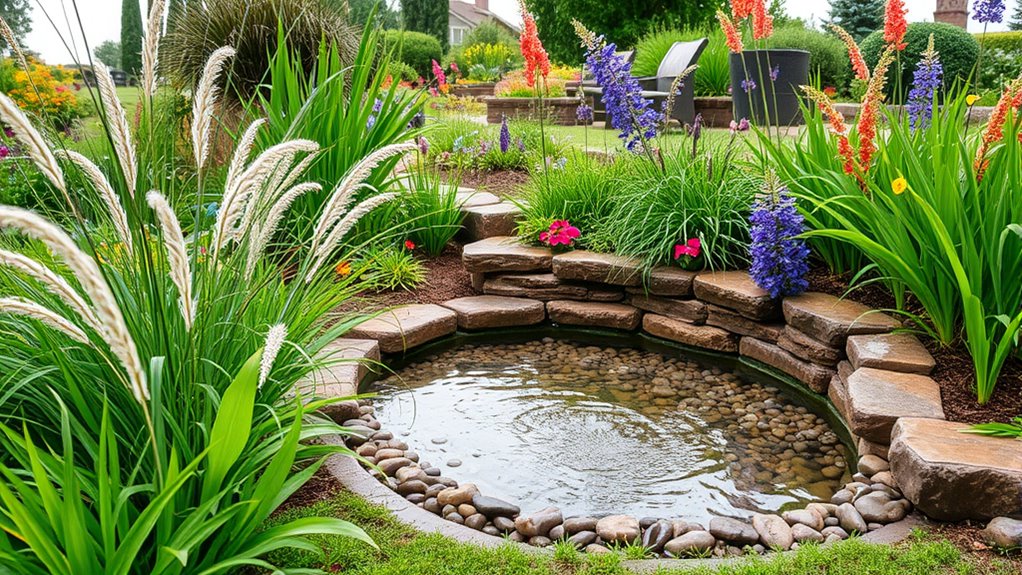
Begin by choosing a suitable location for your rain garden—ideally, a low spot where water naturally collects or an area that’s slightly downhill from your roof drain or driveway. You want the garden to intercept runoff before it enters stormwater systems. Once you’ve picked the spot, determine the size based on the area you’ll be draining. A common rule is to make the garden about 10-20% of the drainage area’s size. The depth should be between 4 to 8 inches, with the edges gently sloping to allow for easy plant growth and maintenance. Dig out the area to the desired depth, creating a basin that can hold water temporarily. Be sure to include a soil mix that promotes infiltration—often a combination of native soil, sand, and compost. Proper soil infiltration is essential for the effectiveness of your rain garden in managing runoff.
Choose a low spot downhill, dig a basin 4-8 inches deep, and add a soil mix to promote water infiltration.
Plant selection is essential for the success of your rain garden. Native plants are your best choice because they thrive in local conditions and require less watering and fertilizing. Choose a mix of species with different root depths to optimize water absorption and filtration. For example, sedges, switchgrass, and native flowering perennials are excellent options. These plants not only look attractive but also help stabilize the soil and prevent erosion. When planting, place taller species towards the center or back and shorter ones near the edges for visual appeal and effective water capture. Mulching the garden helps retain moisture and suppress weeds, making your native plant selection flourish.
Maintaining your rain garden involves regular inspections, especially after storms. Remove debris and check for erosion or standing water that persists longer than usual. If necessary, add more mulch or tweak plant placement to improve water absorption. By thoughtfully designing your rain garden with stormwater management in mind and choosing native plants, you create a sustainable landscape that benefits both your property and the environment. It’s a simple yet powerful way to handle runoff responsibly while enhancing your outdoor space’s beauty.
Frequently Asked Questions
How Do I Choose the Best Location for My Rain Garden?
You should pick a location with well-draining soil and high permeability, guaranteeing water soaks in quickly. Avoid shaded areas, as shade can slow evaporation and encourage mosquito breeding. Choose a spot at least ten feet from your home’s foundation to prevent water damage. Look for an area where runoff naturally flows, like a slope, but avoid low spots that may pool water excessively. This ensures your rain garden functions effectively.
What Plants Are Most Effective in Absorbing Runoff?
You should choose plants like native grasses and flowering perennials that are well-adapted to your local climate. These plants effectively absorb runoff, filter pollutants, and prevent erosion. Native grasses such as switchgrass or sedge work great, while flowering perennials like coneflowers or black-eyed Susans add beauty and function. By selecting these hardy, water-loving plants, you’ll create a rain garden that efficiently manages runoff and supports local ecosystems.
How Deep Should the Rain Garden Be for Optimal Performance?
Imagine a bowl catching rain—your rain garden should be about 4 to 8 inches deep for ideal performance. This depth promotes soil absorption and water retention, allowing runoff to filter naturally. Too shallow, and it won’t hold enough water; too deep, and it risks poor drainage. Aim for that sweet spot, ensuring your garden effectively manages runoff while supporting healthy plant growth.
Can a Rain Garden Be Installed on a Slope?
Yes, you can install a rain garden on a slope, but you’ll need to incorporate slope stabilization techniques to prevent erosion. Proper planning guarantees your rain garden maintains its aesthetics and functions well. Use terracing, mulch, or retaining features to manage water flow and stabilize the soil. This way, your rain garden stays beautiful and effective, even on a hillside.
What Maintenance Is Required to Keep a Rain Garden Functional?
You might worry about upkeep, but with simple steps, your rain garden stays functional. Regularly conduct soil testing to verify proper drainage and adjust as needed. Remove debris and weeds, and replenish mulch selection annually to retain moisture and suppress weeds. By staying proactive, you’ll prevent clogging and erosion, keeping your rain garden healthy and effective at managing runoff. Maintenance is straightforward, and your garden will thrive with consistent care.
Conclusion
By carefully designing your rain garden, you create a beautiful, functional landscape that manages runoff efficiently. Think of it as a sponge, soaking up excess water like a gentle giant absorbing every drop. With proper plant selection and thoughtful placement, your rain garden becomes a essential part of your environment, reducing pollution and preventing erosion. Embrace this eco-friendly project, and you’ll enjoy a more sustainable yard that works with nature, not against it.