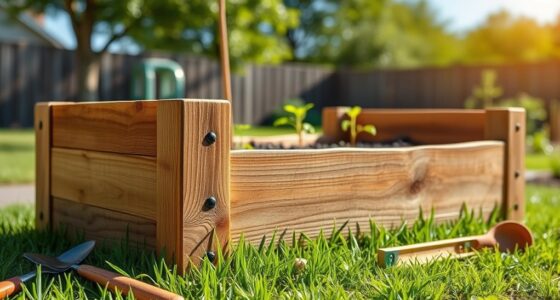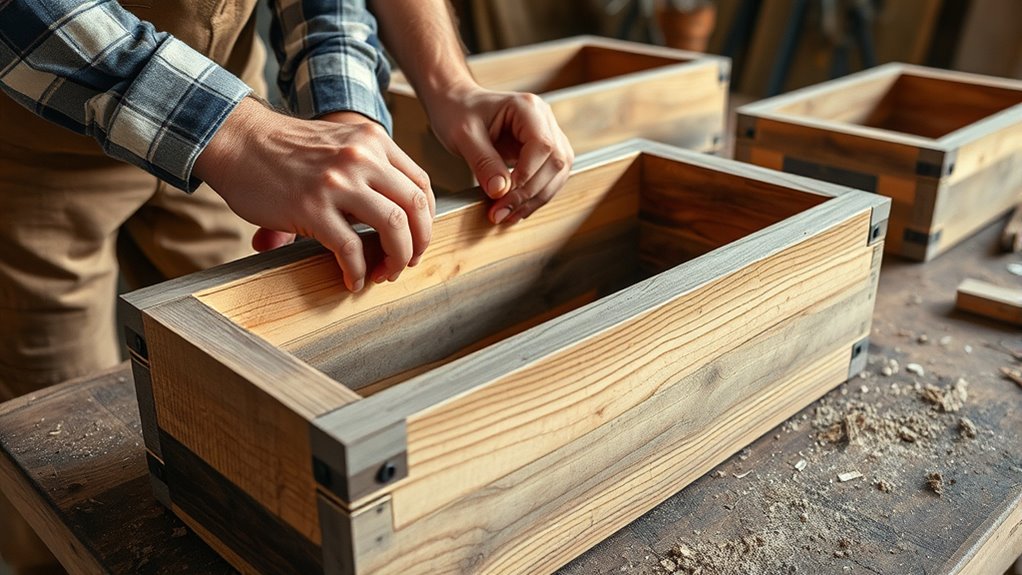

Constructing planter boxes from recycled wood is a great way to add rustic charm to your garden while promoting sustainability. Start by sourcing reclaimed pallets, old furniture, or construction scraps, then carefully inspect and sand the wood for safety. Measure, cut, and assemble your pieces, sealing them with eco-friendly protectants to withstand outdoor elements. If you want to learn how to customize your planters for your space and style, you’re in the right place to discover more tips.
Key Takeaways
- Source reclaimed wood from pallets, scraps, or old furniture, ensuring it’s free of nails, rot, and debris.
- Measure and cut the recycled wood to desired dimensions, then sand edges for safety and aesthetics.
- Assemble the planter box using eco-friendly sealers or stains to protect against moisture and pests.
- Customize sizes and shapes to fit specific garden spaces or design preferences.
- Place the finished planter in your garden or balcony, adding plants for a sustainable and rustic appeal.
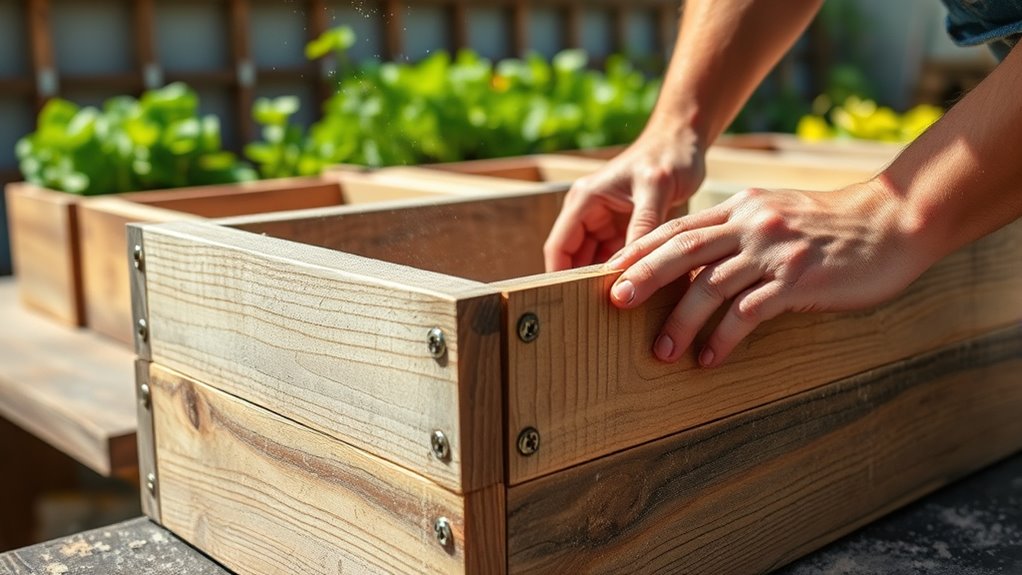
Building your own planter boxes is a rewarding project that adds beauty and functionality to your garden or balcony. When you choose to construct your planter boxes from recycled wood, you’re not only creating a charming addition to your outdoor space but also embracing sustainable materials that help reduce waste. Using recycled wood is a smart choice for DIY gardening enthusiasts who want to minimize their environmental impact while designing something unique and sturdy. It’s an excellent way to give new life to old, discarded wood pieces, turning them into functional planters that can host your favorite plants.
Starting with recycled wood means you can get creative with different types and sizes of wood, making each planter box one-of-a-kind. You might find reclaimed pallets, leftover construction scrap, or old furniture that can be repurposed into durable planter boxes. Before you begin, inspect the wood carefully for nails, screws, or rot, and sand down rough edges to keep your DIY gardening project safe and neat. Not only does this approach promote sustainability, but it also keeps costs down, making it accessible for anyone interested in gardening on a budget. Plus, the rustic look of recycled wood adds a charming, weathered appeal that complements any garden style.
Get creative with recycled wood for unique, budget-friendly planter boxes that add rustic charm to your garden.
As you assemble your planter boxes, think about the longevity of your recycled materials. You can treat the wood with eco-friendly sealers or stains to protect it from moisture and pests, extending the life of your creation. This step ensures your planter boxes will stand up to the elements and continue to serve your gardening needs for years. Additionally, selecting appropriate materials and techniques can further enhance the durability of your planters. The process is straightforward—measure, cut, assemble, and seal—making it perfect for DIY gardening beginners and seasoned gardeners alike. Using recycled wood also offers an opportunity to customize the size and shape of your planters, fitting them perfectly into your space and design preferences.
Constructing planter boxes from recycled wood not only supports sustainable materials but also fosters a sense of accomplishment. As you see your project come together, you’ll feel proud knowing you’re making eco-friendly choices that benefit the environment. Plus, these DIY gardening projects often bring a deeper connection to your plants, as you’ve invested time and effort into crafting their home. Whether you’re planting herbs on a balcony or flowers in your backyard, these recycled wooden planters will serve as a confirmation to your creativity and commitment to sustainable living. In the end, you’ll have functional, beautiful, and environmentally conscious planter boxes that enhance your outdoor space while reducing waste.
reclaimed wood planter boxes
As an affiliate, we earn on qualifying purchases.
As an affiliate, we earn on qualifying purchases.
Frequently Asked Questions
How Do I Choose the Best Recycled Wood for Planter Boxes?
When choosing recycled wood for planter boxes, you should prioritize wood quality to guarantee durability and safety for plants. Look for well-sourced materials free of nails, rot, or mold. Use sourcing strategies like checking local salvage yards or online platforms for reclaimed wood with clear provenance. Select sturdy, weather-resistant wood like cedar or redwood, which naturally withstands outdoor conditions, ensuring your planter lasts longer.
What Tools Are Essential for Building Recycled Wood Planter Boxes?
You need a few essential tools to build your recycled wood planter boxes. A power drill is vital for making precise holes and securing screws efficiently. A measuring tape guarantees your cuts are accurate, helping you achieve the right dimensions. Additionally, consider using a saw for cutting the wood, a square for alignment, and sandpaper for smoothing rough edges. With these tools, your project will be straightforward and successful.
How Can I Prevent Pests From Damaging My Recycled Wood Planter Boxes?
Think of your planter boxes as castles; you want to keep pests at bay. To do that, apply pest-resistant treatments to the wood, creating a barrier pests won’t cross. Combine this with natural pest deterrents like neem oil or garlic spray for extra protection. Regularly inspect your boxes, remove debris, and guarantee proper drainage. These steps make pests think twice before invading, keeping your plants healthy and thriving.
What Safety Precautions Should I Take During Construction?
When constructing your recycled wood planter boxes, always wear safety gear like goggles, gloves, and a dust mask to protect yourself. Practice tool safety by keeping blades sharp, handling power tools carefully, and following the manufacturer’s instructions. Make sure your workspace is clean and well-lit, and stay alert to prevent accidents. Taking these precautions helps make certain your project is safe and successful from start to finish.
How Do I Treat Recycled Wood to Ensure Longevity?
To make certain your recycled wood lasts, you should focus on wood preservation and weatherproofing techniques. Start by cleaning the wood thoroughly, removing dirt and old paint. Apply a quality wood preservative to protect against rot and pests. Then, use a weatherproof sealant or stain to shield it from moisture and UV damage. Regular maintenance, like reapplying sealant every couple of years, will keep your planter boxes looking great and long-lasting.
DIY recycled wood garden planters
As an affiliate, we earn on qualifying purchases.
As an affiliate, we earn on qualifying purchases.
Conclusion
Building your own planter box from recycled wood not only benefits the environment but also saves you money—did you know that using reclaimed wood can reduce waste by up to 30%? By choosing to repurpose materials, you’re giving new life to old wood and creating a beautiful, eco-friendly garden feature. So, grab your tools and start crafting your unique planter box today—your plants and the planet will thank you!
eco-friendly outdoor planter kits
As an affiliate, we earn on qualifying purchases.
As an affiliate, we earn on qualifying purchases.
rustic wooden planter box supplies
As an affiliate, we earn on qualifying purchases.
As an affiliate, we earn on qualifying purchases.