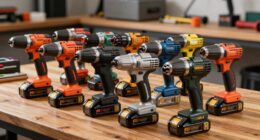
To set up a battery charging station, choose a well-ventilated, dry area with easy access and proper electrical wiring. Install weatherproof enclosures, secure mounting, and verify all wiring is insulated and grounded correctly. Use circuit breakers, safety disconnects, and surge protectors to safeguard equipment. Add clear signage, lighting, and safety features like emergency call buttons for user safety. Following proper safety standards and practices will help guarantee a safe, efficient charging station that performs well — keep exploring for more tips.
Key Takeaways
- Choose a location with ample sunlight, proper ventilation, and safe access, avoiding shading and obstructions.
- Install weatherproof enclosures and secure wiring with proper grounding for electrical safety.
- Incorporate circuit breakers, safety disconnects, and surge protectors to safeguard against electrical faults.
- Ensure clear pathways, adequate lighting, and safety signage to protect users and facilitate safe operation.
- Follow local codes, manufacturer guidelines, and consult certified professionals for compliance and optimal setup.
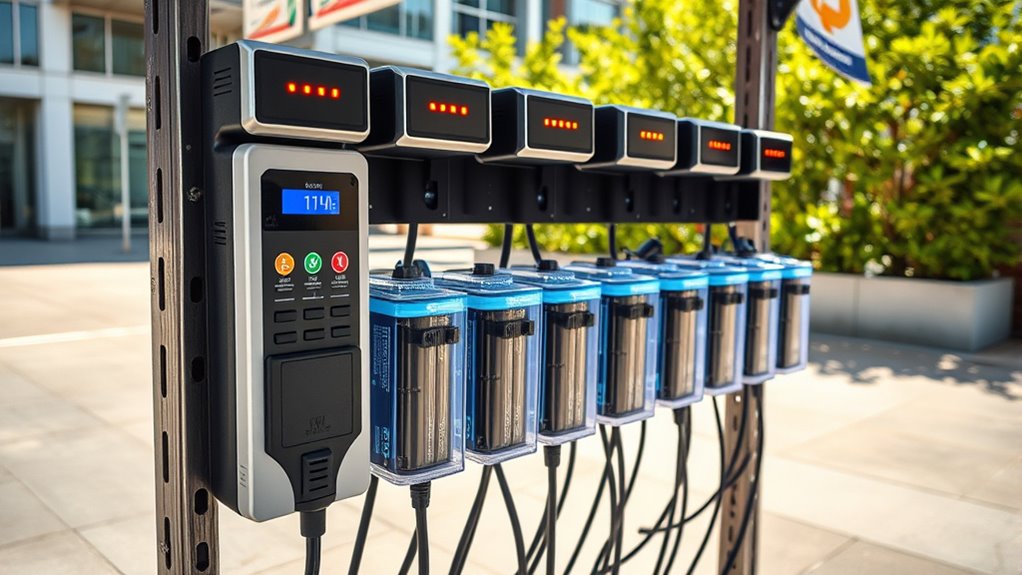
As electric vehicles become more popular, having convenient access to reliable battery charging stations has never been more important. Whether you’re setting up a charging station at home or in a public space, careful planning is essential to ensure safety, efficiency, and sustainability. One of the first considerations is solar panel placement, especially if you want to incorporate renewable energy into your setup. Proper placement of solar panels is vital to maximize sunlight exposure throughout the day. You should position them in an area that receives direct sunlight for most of the day, typically facing south in the northern hemisphere, and at an angle that captures the maximum solar energy based on your geographic location. Avoid shading from trees, nearby buildings, or other obstructions, as even partial shading can considerably reduce energy production. Additionally, make certain that the panels are securely mounted and tilted correctly to withstand weather conditions and optimize energy generation. Ensuring the panels are positioned correctly can significantly improve their efficiency and lifespan.
Once your solar panels are in place, focus on safety precautions to protect both users and equipment. Electrical safety is paramount when installing a battery charging station. Make sure all wiring is properly insulated and grounded to prevent electrical shocks or fires. Use weatherproof enclosures for electrical components to shield them from rain, snow, and dust, which could cause malfunctions or hazards. When integrating solar power, install appropriate circuit breakers and safety disconnects to allow easy shutdowns during maintenance or emergencies. Keep clear signage indicating the station’s electrical nature and safety instructions to inform users and prevent accidental contact with live parts. Also, consider installing surge protectors to safeguard your equipment from voltage spikes caused by lightning or grid fluctuations. Regular inspections and maintenance are key to catching potential issues early and maintaining safe operation.
Furthermore, make certain your station is positioned in a way that minimizes hazards for users. Clear pathways and well-lit areas improve safety during charging, especially at night. If you’re installing a public station, consider adding safety features like cameras or emergency call buttons. When working with solar panel placement and electrical components, always follow local codes and manufacturer instructions. If you’re unsure about the technical aspects, hiring a certified electrician or solar specialist can save you time and ensure compliance with safety standards.
weatherproof electrical enclosure for battery charging station
As an affiliate, we earn on qualifying purchases.
As an affiliate, we earn on qualifying purchases.
Frequently Asked Questions
What Safety Precautions Are Essential During Installation?
You should prioritize fire safety by keeping a fire extinguisher nearby and guaranteeing proper ventilation. When handling electrical wiring, wear insulated gloves and use tools designed for electrical work. Always turn off power before installing or modifying wiring, and double-check connections for safety. Avoid overloading circuits and follow local electrical codes. These precautions help prevent accidents, reduce fire risk, and ensure safe operation of your battery charging station.
How to Choose the Right Charger for Different Batteries?
Choosing the right charger involves considering your batteries’ capacity and desired charging speed. You want a charger that matches the battery’s capacity to prevent overloading or undercharging, which could reduce lifespan. Look for adjustable charging options to optimize speed without risking damage. Also, verify compatibility with your specific battery type. By matching these factors, you’ll ensure efficient, safe charging and prolong your batteries’ life.
Can I Operate the Station Outdoors in All Weather Conditions?
Yes, you can operate your station outdoors in all weather conditions if you consider weather considerations and outdoor durability. Make sure to select a weatherproof enclosure, use durable materials, and install protective covers to shield sensitive equipment from rain, snow, and extreme temperatures. Regularly inspect your setup for wear and tear, and ensure proper drainage to prevent water damage. Proper planning guarantees your station remains functional regardless of weather challenges.
What Maintenance Is Required for Optimal Performance?
You need to give your station a little TLC to keep it in peak shape. Regularly check connections, clean dust, and update software if applicable. This way, you’ll prolong your battery’s lifespan and maximize charging cycles. Think of it like fueling a race car—small adjustments now prevent major breakdowns later. Consistent maintenance ensures your station runs smoothly, delivers reliable power, and keeps your batteries performing at their best for the long haul.
Are There Any Legal Regulations for Setting up a Charging Station?
Yes, you need to check permit requirements and zoning restrictions before setting up your charging station. You should obtain any necessary permits from local authorities to guarantee compliance with safety and environmental standards. Additionally, zoning restrictions might limit where you can install the station, so verify with your city or county regulations. Failing to follow these rules could lead to fines or having to relocate your station later.
solar panel mounting kit for outdoor use
As an affiliate, we earn on qualifying purchases.
As an affiliate, we earn on qualifying purchases.
Conclusion
Now that you’ve set up your battery charging station, you’re like a lighthouse guiding energy safely to each device. With every connection, you’re fueling future adventures and powering progress. Your station stands as a beacon of readiness in a world that never stops moving. Just imagine it as a steady heartbeat, pulsing life into gadgets and gadgets, keeping everything alive and humming along smoothly. You’ve created more than a station—you’ve sparked a hub of endless possibilities.
circuit breaker safety disconnect switch
As an affiliate, we earn on qualifying purchases.
As an affiliate, we earn on qualifying purchases.
emergency call button for public charging stations
As an affiliate, we earn on qualifying purchases.
As an affiliate, we earn on qualifying purchases.