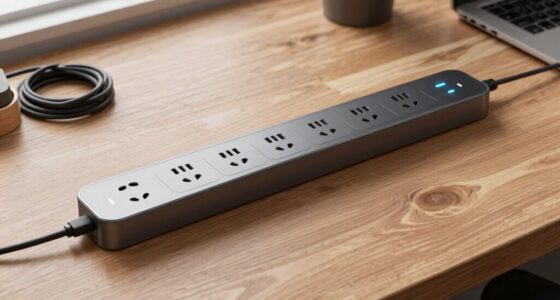
A bad extension cord setup can quietly damage your power tools by causing voltage drops, overheating, and internal wear over time. Using cords that aren’t rated for your tools’ power needs increases the risk of short circuits and sparks, which can weaken components and reduce lifespan. Damaged or frayed cords silently threaten safety and performance. Keep in mind, proper setup and maintenance are key—if you want to learn how to protect your tools further, stay tuned.
Key Takeaways
- Improperly rated cords cause voltage drops, leading to inefficient power delivery and potential internal damage to tools.
- Damaged or frayed cords increase sparks, short circuits, and the risk of electrical overload, harming your tools over time.
- Using cords across high-traffic areas or with physical damage can cause power surges and stress on the equipment.
- Repeated stress from poor setup accelerates wear and tear, reducing tool lifespan and increasing repair costs.
- Neglecting regular inspection and proper maintenance allows hidden damage to silently degrade tool performance.

Using a faulty or improperly set up extension cord can quickly lead to damage your power tools and pose safety risks. When you ignore proper cord safety, you’re not only risking electrical hazards but also the longevity of your equipment. An extension cord that’s not rated for the power tools you’re using or that’s damaged can cause inconsistent power delivery, which often results in subtle yet costly damage to your tools. Over time, this can weaken internal components, reduce motor life, and even cause tools to malfunction unexpectedly.
Using improper extension cords can damage tools and create safety hazards over time.
One of the main dangers of an unsafe extension cord setup is the risk of electrical hazards. When cords are frayed, damaged, or not grounded correctly, they can create sparks or short circuits. These electrical hazards put you at risk of shocks, fires, or other accidents. It’s tempting to overlook worn-out cords or to stretch them across high-traffic areas, but doing so increases the chance of tripping over or damaging the cord further. This not only compromises cord safety but also escalates the risk of electrical hazards, which could result in serious injuries or property damage. Proper cord maintenance can significantly reduce these risks and prolong the life of your extension cords.
Another common mistake is using an extension cord that isn’t suitable for the power load of your tools. Power tools often require specific voltage and current levels, and a cord that’s too thin or too long can cause voltage drops. This low voltage can cause your tools to run inefficiently, overheat, or stall, which quietly damages internal parts over time. You might not notice these issues immediately, but repeated stress on your tools can lead to early failure, costly repairs, or the need for replacements. Regularly checking the power capacity of your extension cord can help prevent these issues. Additionally, a properly rated extension cord ensures your tools receive consistent power and operate safely. Ensuring the correct extension cord rating for your specific power tools is also critical to avoid hidden damage and ensure safe operation.
Proper setup involves more than just plugging in a cord. You need to ensure the extension cord is rated correctly for your tools’ power demands, isn’t damaged, and is used in a way that prevents physical wear and electrical hazards. Keep cords off wet surfaces, avoid pinching or crushing them, and regularly inspect for signs of wear. When you do this, you’re actively practicing good cord safety and reducing the risk of electrical hazards that could harm you or your equipment. Additionally, understanding the importance of proper electrical safety practices can help prevent hidden damage and ensure your tools perform reliably for years to come.
heavy-duty extension cords for power tools
As an affiliate, we earn on qualifying purchases.
As an affiliate, we earn on qualifying purchases.
Frequently Asked Questions
How Can I Tell if My Extension Cord Is Faulty?
You can tell if your extension cord is faulty by inspecting the cord insulation for cracks, cuts, or fraying, which could expose wires. Also, check the plug for corrosion or burn marks, indicating poor connections or electrical issues. If the cord feels hot during use or sparks when plugged in, it’s time to substitute it. These signs help prevent damage to your power tools and ensure safety during operation.
Are There Specific Extension Cords Recommended for Power Tools?
You should look for extension cords designed specifically for power tools, as they prioritize durability and safety. Choose cords with thick insulation and high power capacity to handle demanding tools without risking damage. These cords often have robust cord insulation and higher gauge numbers. Don’t cut corners—using the right extension cord guarantees your tools perform effectively and last longer, preventing costly repairs and safety hazards.
What Safety Precautions Should I Take With Extension Cords?
You should always inspect your extension cords for proper insulation quality and avoid damaged or frayed cords to prevent electrical hazards. Store cords properly by coiling them neatly to avoid kinks and damage. Never overload the cord beyond its rated capacity, and keep it out of water or wet areas. Regularly check for wear and tear, and unplug cords when not in use. These precautions help protect your tools and guarantee safety.
How Often Should I Replace My Extension Cords?
You should replace your extension cords whenever you notice signs of damage, such as fraying, exposed wires, or broken prongs. Regular cord maintenance is essential to guarantee safety and performance, so inspect cords before each use. Proper storage also helps prolong their lifespan by preventing unnecessary wear. If a cord shows damage or no longer functions properly, replace it immediately to avoid risking damage to your power tools or safety hazards.
Can Using Multiple Extension Cords Cause Damage?
Using multiple extension cords can cause electrical interference and increase the risk of power surges, which may damage your power tools. When you connect several cords, voltage drops can occur, leading to inconsistent power flow. This not only hampers tool performance but can also strain the motor, potentially causing long-term damage. To protect your tools, use a single, properly rated extension cord and avoid daisy-chaining multiple cords together.
grounded extension cords for power tools
As an affiliate, we earn on qualifying purchases.
As an affiliate, we earn on qualifying purchases.
Conclusion
If you overlook the importance of a proper extension cord setup, you might be gently steering your power tools toward unnecessary wear. Small compromises today can quietly influence their longevity, much like a subtle nudge in the wrong direction. By paying attention now and making mindful choices, you’re not just protecting your tools—you’re ensuring they serve you well for years to come. A little care goes a long way in keeping your workshop running smoothly.
As an affiliate, we earn on qualifying purchases.
rated extension cords for high power tools
As an affiliate, we earn on qualifying purchases.
As an affiliate, we earn on qualifying purchases.