
To set up your workshop first aid kit, choose a sturdy, clearly labeled container and place it in a central, accessible spot away from dust and moisture. Stock it with essentials like adhesive bandages, sterile gauze, antiseptic wipes, gloves, and emergency items such as CPR masks. Keep an updated inventory, include emergency contact info, and make certain everyone knows the kit’s location. Maintaining safety awareness and ongoing training helps you respond swiftly—learn more details to keep your workspace safe and prepared.
Key Takeaways
- Choose a durable, clearly labeled container and place it centrally in the workshop for easy access.
- Stock the kit with essential supplies like bandages, gauze, antiseptics, gloves, and emergency items.
- Conduct regular inventory checks, replace expired items, and keep documentation of emergency contacts.
- Train staff on first aid procedures and conduct safety drills to ensure preparedness.
- Display clear signage for kit location and integrate safety protocols into daily routines for quick response.
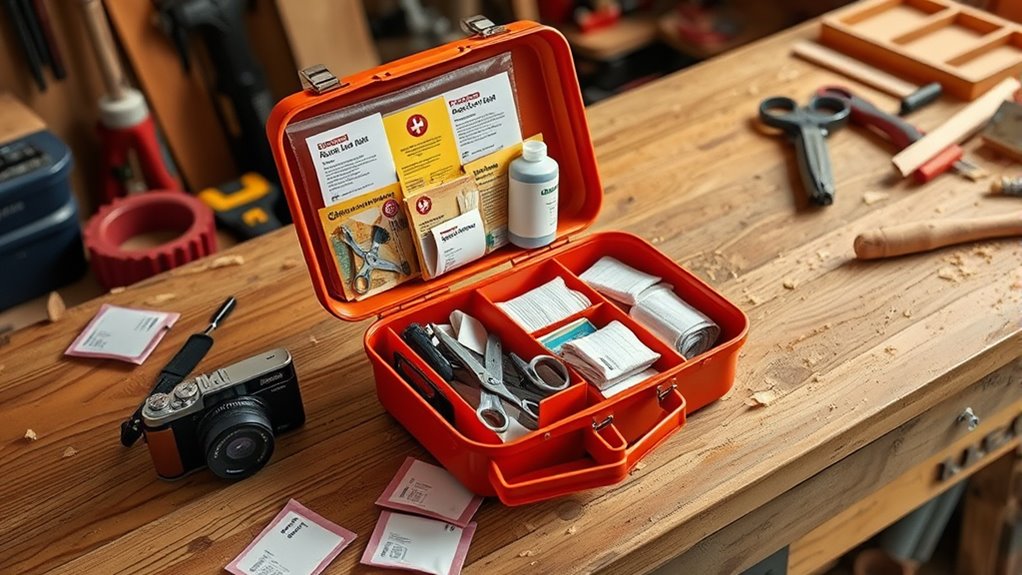
Having a well-organized first aid kit in your workshop is essential for handling minor injuries promptly and safely. When accidents happen, quick access to the right supplies can make all the difference in preventing further harm. To guarantee you’re prepared, you need to contemplate safety protocols and emergency preparedness as guiding principles when setting up your kit. Start by choosing a sturdy, clearly labeled container that’s easy to access in case of an emergency. Keep it in a central location where everyone in your workshop knows its whereabouts, and make sure it’s protected from dust, moisture, and damage to maintain the integrity of your supplies.
Organize a sturdy, labeled first aid kit in a central, protected location for quick, safe access during emergencies.
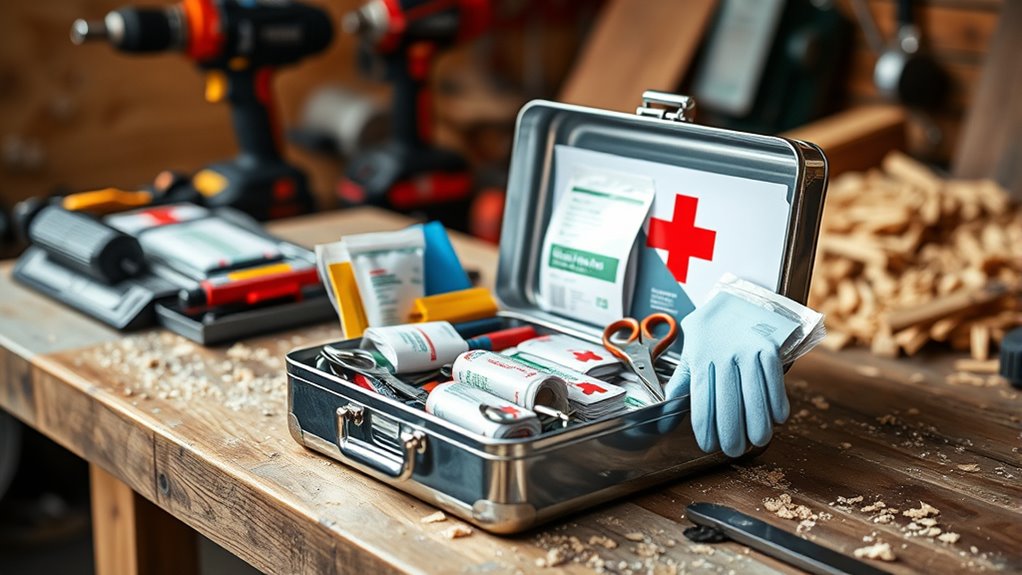
Next, stock your first aid kit with essential items tailored to the types of injuries most common in your workshop environment. Basic supplies include adhesive bandages in various sizes, sterile gauze pads, adhesive tape, scissors, tweezers, antiseptic wipes, and antibiotic ointment. You should also include gloves, preferably disposable, to prevent infection when treating wounds. For more serious injuries, have a space reserved for a CPR mask or face shield, along with an emergency blanket to keep someone warm if necessary. It’s also wise to include a digital or printed list of emergency contact numbers, including local hospitals, poison control, and a designated safety officer. Regular maintenance and inventory checks are important to ensure your supplies are current and ready for use.
In addition to physical supplies, your setup should incorporate safety protocols for responding to injuries. This means training yourself and your team on proper first aid procedures and ensuring everyone knows how to quickly access and use the kit. Regularly review and update the contents of your first aid kit, replacing expired or used items promptly. Having a plan for emergency preparedness involves not only stocking supplies but also practicing safety drills so that everyone knows what to do in case of an accident. Clear signage indicating the location of the first aid kit and safety equipment can also enhance readiness.
Ultimately, a well-stocked, organized first aid kit is a crucial part of your workshop’s safety measures. It demonstrates your commitment to safety protocols and minimizes risks by ensuring that minor injuries are managed effectively on-site. By integrating emergency preparedness into your setup, you’re better equipped to handle unexpected incidents swiftly and confidently, reducing potential complications and maintaining a safer working environment for everyone involved. Additionally, understanding the importance of Paint Sprayer Maintenance and Troubleshooting can help prevent accidents related to equipment malfunction, contributing to overall workshop safety.
Frequently Asked Questions
How Often Should I Restock My Workshop First Aid Kit?
You should restock your workshop first aid kit at least every six months, or more often if you use supplies frequently. Keep a regular restock schedule and check your supply inventory monthly to spot expired or used items. This way, you’ll guarantee your kit is always ready for emergencies, and you won’t run out of essential supplies when you need them most. Regular maintenance keeps everyone safe.
Are There Specific Legal Requirements for Workshop First Aid Kits?
You need to guarantee your workshop first aid kit meets legal compliance and safety regulations, which vary by location. Check local laws to determine specific requirements for items, kit size, and accessibility. Staying compliant helps protect you and your workers, so regularly review regulations and update your kit accordingly. Failing to meet these standards could lead to legal issues or inadequate emergency response in your workshop.
Can I Customize My First Aid Kit for Different Workshop Hazards?
Absolutely, you can customize your first aid kit for different workshop hazards. For example, if you work with chemicals, including hazard-specific supplies like eye wash solutions and chemical burn ointments makes sense. Personalized safety guarantees you’re prepared for unique risks, so tailor your kit accordingly. Assess your workshop’s hazards carefully, then add items that address those specific dangers, providing quick, effective responses when accidents happen.
What Training Is Recommended for Workshop First Aid Responders?
You should pursue first aid training that covers workplace safety and emergency preparedness. Look for courses certified by organizations like the Red Cross or OSHA, which teach you how to handle common injuries and emergencies in a workshop setting. This training equips you with essential skills, guarantees you respond effectively during incidents, and helps maintain a safe environment. Regular refreshers keep your knowledge current and boost your confidence in emergency situations.
How Do I Dispose of Expired or Unused First Aid Supplies Properly?
You open your first aid kit and realize some supplies are expired. To dispose of them properly, don’t toss them in the trash. Instead, follow proper disposal methods for hazardous waste, which might involve taking them to a designated collection site or contacting local waste authorities. This guarantees you prevent accidents or environmental harm. Handling expired supplies carefully keeps your workshop safe and compliant with health regulations.
Conclusion
Think of your workshop first aid kit as a safety net beneath a tightrope walker. When you set it up properly, you’re prepared to catch any mishaps before they fall into chaos. Regularly check and update your supplies to keep it ready for action. Remember, a well-stocked kit isn’t just a box of bandages—it’s your safety partner, ready to support you when you need it most. Stay prepared, stay safe, and keep your workshop a secure space.