To replace a broken window pane, start by wearing gloves and protective gear, then carefully remove any remaining shards using a utility knife and a putty knife. Measure the opening accurately and select a suitable, safety-minded glass type like tempered or laminated glass. Fit the new piece, secure it with glazing points, and seal around the edges with glazing compound or putty. For a safe, durable fix, follow these steps closely—more detailed tips are just ahead.
Key Takeaways
- Wear gloves and eye protection, and clear the area to safely remove broken glass.
- Use a utility knife to cut through old glazing and carefully pry out remaining shards.
- Measure the window opening precisely and select a suitable, durable glass type like tempered or laminated.
- Secure the new glass with glazing points, then apply glazing compound or putty around the edges.
- Ensure the window is sealed properly to prevent drafts and moisture intrusion.
Have you ever wondered how to replace a broken window pane quickly and safely? It’s a task that might seem daunting at first, but with the right approach, you can manage it efficiently and reduce the risk of injury. Before you start, make sure you understand the importance of window safety. Handling glass can be dangerous, especially if you’re not wearing gloves or if the shards are sharp. Wearing sturdy gloves and eye protection is essential to prevent cuts. Also, clear the area around the window to avoid accidents from falling glass pieces. Knowing about different glass types can help you choose the right replacement and install it properly. For example, safety glass options like tempered or laminated glass are more resistant to breakage and safer if shattered, which is worth considering for future upgrades to prevent injuries.
Always wear gloves and eye protection when replacing a broken window to ensure safety.
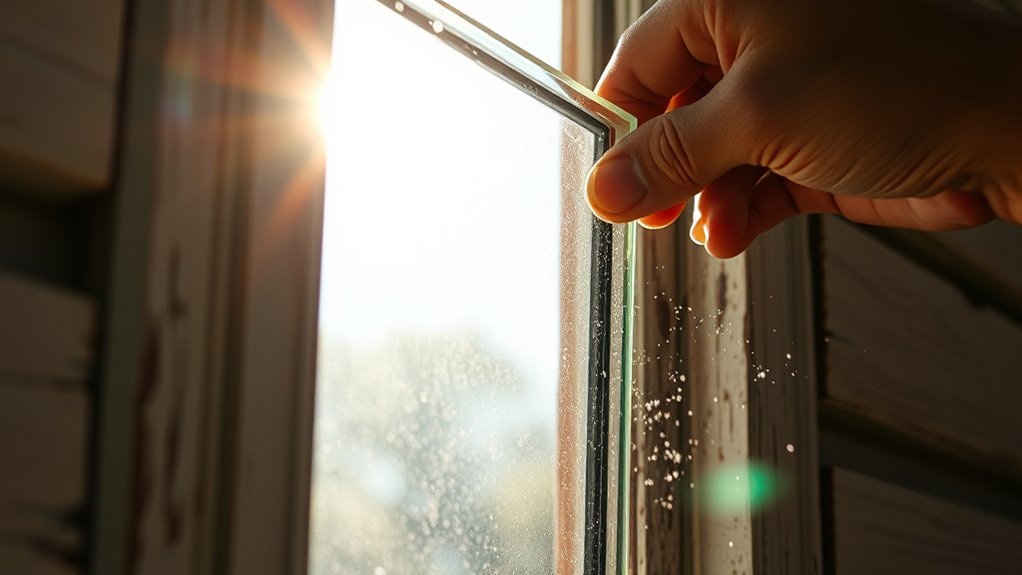
Once you’ve prepared yourself and gathered the necessary tools—such as a putty knife, utility knife, glazing points, and the new glass—you’re ready to begin. Start by carefully removing the broken glass. Use a utility knife to cut through any old glazing putty or paint sealing the glass in place. Wearing gloves, gently pry out any remaining shards, making sure to dispose of the broken pieces safely. Be cautious not to press too hard, as this could cause the glass to break further or cause injury. Once all shards are cleared, inspect the window frame for damage or rotting wood that might need repair. If the frame is compromised, fixing it beforehand ensures your new pane stays secure. Additionally, checking the frame’s integrity can help prevent future breakage caused by structural issues.
Next, measure the opening accurately. It’s vital to get the size right so your replacement glass fits snugly. When selecting the glass type, consider durability and safety. Tempered glass, for instance, is four times stronger than regular glass and shatters into small, blunt pieces, reducing injury risk. Laminated glass holds together when broken, offering extra safety. Once you’ve ordered or cut your new glass to size, place a thin bead of glazing compound around the frame’s edges. Carefully set the new pane into the opening, pressing gently to ensure it seats properly. Secure it with glazing points, pressing them into the frame to hold the glass in place. Finish by applying more glazing compound or putty around the edges to seal the window and prevent drafts or moisture intrusion.
Replacing a broken window pane isn’t just about fixing a crack; it’s about doing it safely and with the right materials. Understanding window safety and glass types helps you make smarter choices, ensuring your home remains secure and your repair lasts. With patience and attention, you’ll have that window restored quickly and safely, ready to withstand the elements once more.
Frequently Asked Questions
How Do I Prevent Future Window Breakage?
To prevent future window breakage, focus on improving window security and glass durability. You can install reinforced or laminated glass, which withstands impacts better. Adding security locks and window sensors deters vandalism and accidental damage. Regularly inspect your windows for weak spots or cracks, and consider using storm windows or protective films for extra protection. These steps help guarantee your windows stay intact and secure over time.
What Safety Gear Is Recommended for Window Replacement?
Imagine a shard of glass flying like a tiny dagger—your safety during window replacement is vital. You should wear safety glasses to protect your eyes from flying splinters and work gloves to shield your hands from cuts and sharp edges. These safety gear essentials keep you safe from unexpected accidents, ensuring your task is smooth and injury-free. Don’t skip them; your safety is worth every piece of protective equipment.
Can I Replace a Window Pane Without Removing the Entire Window?
You can definitely do a DIY window repair by replacing just the broken pane without removing the entire window. Focus on carefully removing the old glass, clean the frame, and then set the new pane securely in place. Make sure to wear safety gear like gloves and goggles during pane replacement, and work slowly to avoid injury. This approach saves time and effort, making your window repair more manageable.
How Long Does It Typically Take to Replace a Window Pane?
When you ask how long window repair or glass replacement takes, it usually depends on the window’s size and accessibility. Typically, it takes about 30 minutes to a few hours. If you’re experienced or hiring professionals, it can be quicker. Keep in mind, additional time might be needed for drying or adhesive setting. Planning ahead guarantees your window repair is efficient and minimizes disruption.
Are There Eco-Friendly Options for Replacing Window Glass?
You’re wondering if eco-friendly options for replacing window glass exist. Yes, you can choose recycled glass, which reduces waste and conserves resources. Additionally, biodegradable sealants are available to replace traditional, chemical-based options, making your project more environmentally friendly. These choices help you lower your carbon footprint while maintaining a durable, functional window. Switching to recycled materials and biodegradable products supports sustainability and protects the environment.
Conclusion
Think of your window as a clear lens into your world. When it’s broken, it’s like a fog clouding your view. Replacing that pane restores the clarity, letting in light and fresh perspectives. Just as a skilled gardener prunes away dead branches to let new growth flourish, fixing your window opens up opportunities and a brighter outlook. So, take action—repair the pane and let your outlook shine through, crystal clear and full of promise.