Using a moisture meter regularly can save your wood projects before they fail by ensuring the wood is dry and stable. High moisture levels can cause warping, cracking, and mold, which compromise your work’s durability. By checking moisture content at different stages, you catch problems early and avoid costly mistakes. Incorporating this habit helps you produce stronger, longer-lasting results. Keep going, and you’ll discover more tips to keep your woodworking projects successful and moisture-free.
Key Takeaways
- Regular moisture testing prevents warping, cracking, and mold by ensuring wood stays within optimal moisture levels.
- Verifying moisture content before assembly reduces the risk of joints loosening or surfaces cracking.
- Consistent monitoring helps identify residual moisture issues early, allowing timely re-drying or storage adjustments.
- Using a moisture meter guides proper drying methods, improving project stability and longevity.
- Habitual checks enhance craftsmanship quality, saving time and materials by avoiding costly failures.
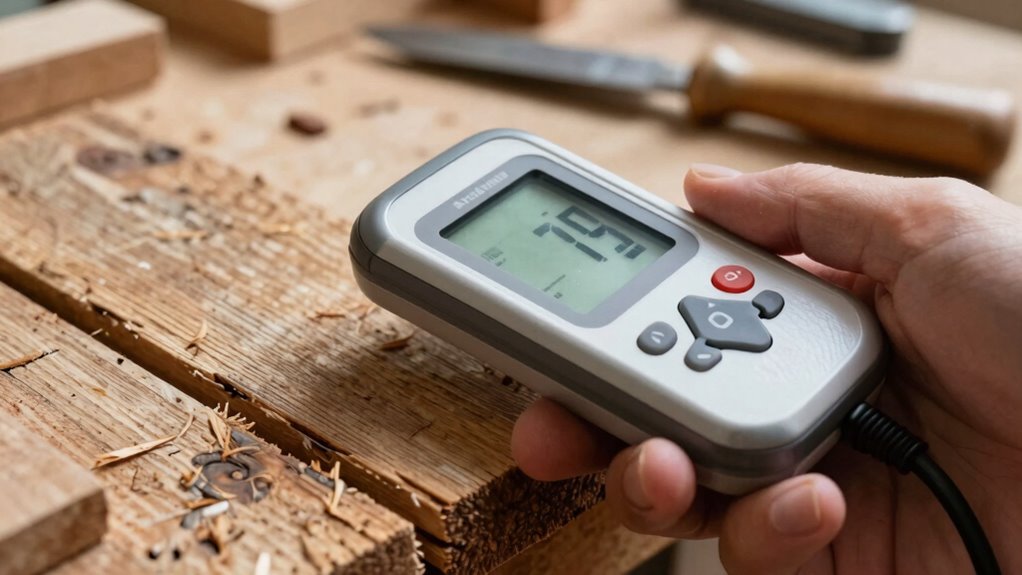
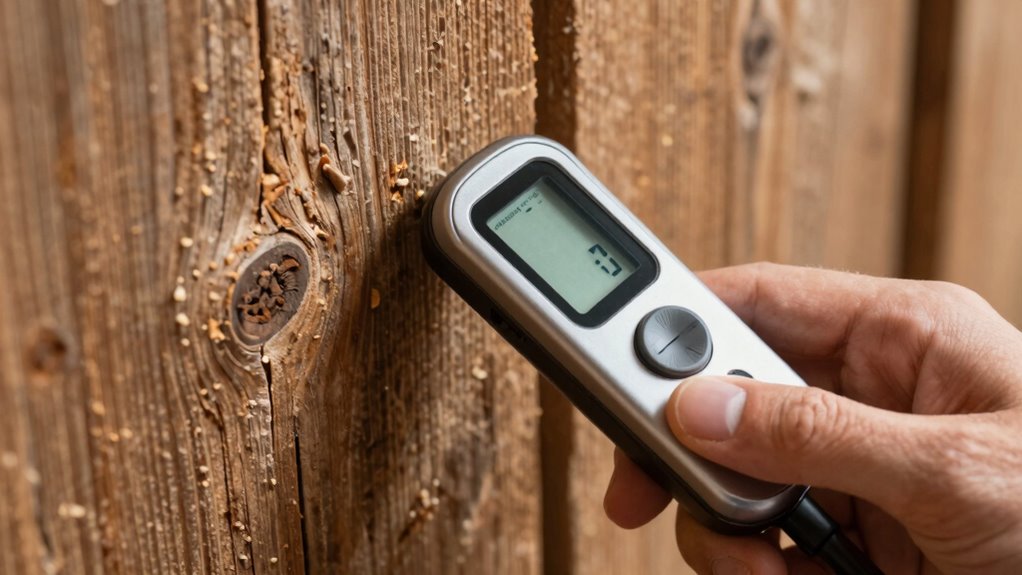
Have you ever wondered how to guarantee your wood projects turn out perfectly? The key often lies in understanding and managing moisture content. Wood drying is a critical step before you start any project, as high moisture levels can lead to warping, cracking, or even mold growth down the line. Using a moisture meter becomes your best tool to ensure that your wood is properly dried and ready to work with. Monitoring moisture content accurately helps you avoid costly mistakes and guarantees a professional finish.
Ensuring proper wood moisture levels with a meter guarantees a flawless, durable project.
When you check the moisture content of your wood, you get an exact reading of how wet or dry the material is. This measurement is crucial because wood naturally contains water, and if it’s too moist, it can shrink or swell after you’ve assembled your project. These changes can cause joints to loosen or surfaces to crack, ruining your hard work. By habitually testing your wood with a moisture meter, you gain confidence that your wood has reached the ideal moisture level, typically around 6-8% for indoor projects and slightly more for outdoor use.
Incorporating this habit into your workflow is simple but powerful. Before purchasing your wood, you can use the moisture meter to verify the moisture content, especially if it’s stored in a humid environment. During your project, testing different areas of the wood ensures consistency, preventing surprises during assembly. After cutting or planing, a quick check can reveal if the wood is still drying or if it’s ready for the next step. This way, you avoid working with wood that might still be losing moisture or still too wet, both of which can compromise the quality of your work. Proper moisture management is essential for ensuring the longevity and stability of your finished piece. Additionally, understanding the wood’s moisture content can help you select the right drying method or environment if necessary. Being aware of moisture levels also helps you better predict how your project will respond to environmental changes over time.
Making moisture meter testing a routine habit also means you’re better prepared to troubleshoot issues as they arise. If your project starts to warp or crack unexpectedly, you can quickly check the moisture content to see if residual moisture is to blame. This proactive approach saves you time and materials, as you can re-dry or adjust your storage conditions before the problem worsens. It’s an easy habit that pays off by ensuring your wood is consistently at the right moisture level, leading to stronger, more durable results.
In the end, a moisture meter isn’t just a gadget; it’s your safeguard against moisture-related failures. By habitually checking moisture content throughout your woodworking process, you’re actively preventing the common pitfalls caused by improper wood drying. This small habit can be the difference between a project that looks great and one that fails prematurely. It’s a simple step, but it’s one that guarantees your craftsmanship stands the test of time. Proper moisture management is essential for durable, high-quality woodworking projects.
digital wood moisture meter
As an affiliate, we earn on qualifying purchases.
As an affiliate, we earn on qualifying purchases.
Frequently Asked Questions
How Often Should I Check Moisture Levels During a Project?
You should check moisture levels frequently throughout your project, ideally every few days, especially during critical stages like drying or finishing. Make sure your moisture meter is properly calibrated for accurate readings. Keep in mind that wood can absorb or lose moisture quickly, so regular checks help you avoid surprises. Consistent monitoring with a calibrated tool helps you manage moisture absorption effectively, preventing warping or cracking in your wood projects.
Can Moisture Meters Be Used on All Types of Wood?
Yes, moisture meters can be used on all types of wood, but you must consider the specific wood species, as different woods have varying moisture content ranges. Always guarantee your meter is calibrated correctly for each wood type to get accurate readings. Proper calibration helps you avoid mistakes that could lead to wood warping or cracking, ensuring your project stays stable and durable regardless of the wood species you choose.
What Is the Ideal Moisture Content for Woodworking Projects?
Ironically, the ideal moisture content for woodworking is between 6% and 8%, just enough to prevent wood expansion or contraction issues. You’d think balancing this is simple, but misjudging can lead to cracked joints or warped surfaces. By maintaining this range, you help your project stay stable, avoiding costly repairs. Use your moisture meter diligently—this small step can save your project from disastrous wood expansion or contraction.
Are Moisture Meters Accurate for Both Seasoned and Green Wood?
Moisture meters can be quite accurate for both seasoned and green wood if you regularly perform moisture calibration. Seasoned wood tends to have a stable moisture content, making readings more reliable, while green wood’s higher moisture levels can vary. To guarantee precision, calibrate your meter according to the wood species and moisture level. This habit helps you assess properly during wood seasoning, preventing issues like warping or cracking in your projects.
How Do Environmental Conditions Affect Moisture Readings?
Imagine a warm breeze shifting humidity levels around your wood, causing moisture readings to dance unpredictably. Environmental conditions like wood drying and humidity fluctuations directly impact these readings, making them less stable. When humidity rises, your wood absorbs moisture, raising the readings. Conversely, in dry conditions, readings drop. To guarantee accurate moisture levels, measure in stable environments, and be mindful of these fluctuations that can mislead your assessment.
moisture meter for woodworking
As an affiliate, we earn on qualifying purchases.
As an affiliate, we earn on qualifying purchases.
Conclusion
Using a moisture meter can be your secret weapon to prevent wood project failures. By checking moisture levels, you guarantee your wood is properly dried, reducing warping and splitting. Did you know that over 70% of wood failures are caused by improper moisture content? Don’t let your hard work go to waste—invest in a moisture meter and give your projects the best chance to succeed. It’s a small step that saves time, money, and frustration in the long run.
wood moisture content tester
As an affiliate, we earn on qualifying purchases.
As an affiliate, we earn on qualifying purchases.
handheld moisture meter for wood
As an affiliate, we earn on qualifying purchases.
As an affiliate, we earn on qualifying purchases.