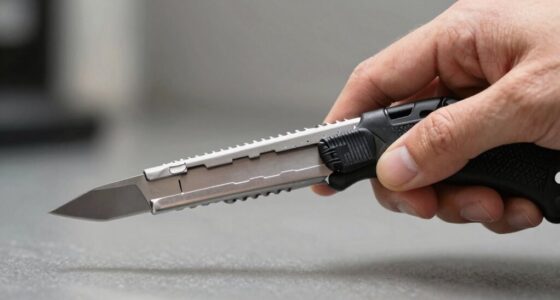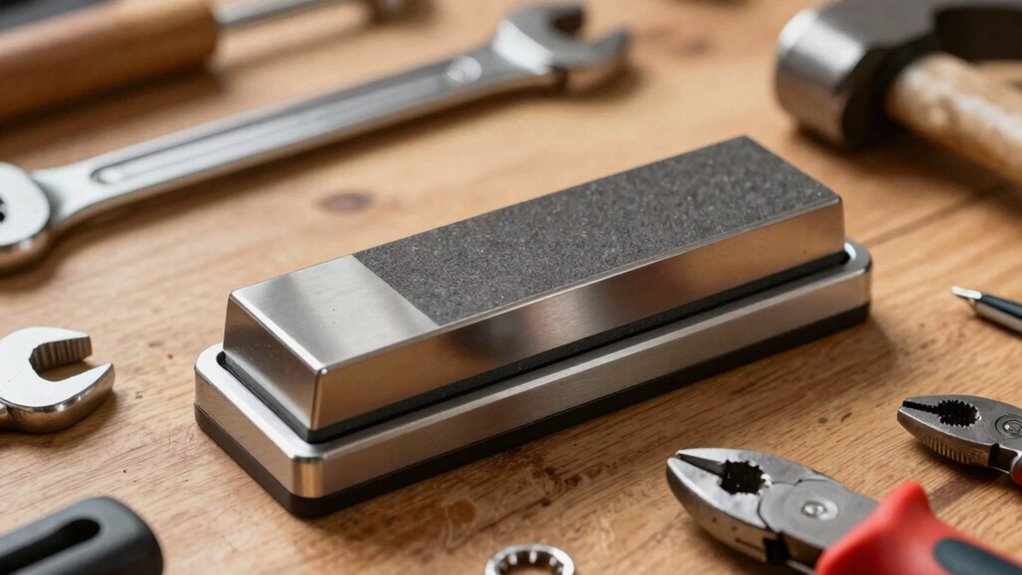

A professional knife sharpening system should give you repeatable edge angles and enough control to match the knives you actually own. I name the Work Sharp Professional Precision Adjust Knife Sharpening System Kit my best overall pick for its guided approach and broad sharpening range, while the Work Sharp Precision Adjust Elite stands out for value and the 10-Inch Variable-Speed Wet Sharpening System for heavier, workshop-style sharpening. The main tradeoff is between hands-on angle control, faster powered sharpening, and a compact setup that is easier to store. Some systems suit pocket knives better; others make more sense for kitchen blades or frequent tool maintenance. Read on for the full comparison and a guide to choosing by knife type, skill level, and sharpening routine.

Get business pricing on tools and workshop supplies
- Business-only prices and quantity discounts
- Tax-exempt purchasing
- Multiple users, one account, clear invoices
Complete the kit

Key Takeaways
- The Professional Precision Adjust kit is the most balanced choice in this lineup for buyers who want guided angle control across a range of knives.
- The Precision Adjust Elite is the value-focused guided pick, while the newer professional kit is better suited to buyers prioritizing a more capable setup.
- Manual guided systems offer more deliberate control than electric sharpeners, but require more time and operator attention.
- The wet sharpening system serves a different job: it is aimed at workshop use and larger tools, rather than quick kitchen touch-ups.
- Rolling and compact systems trade range for convenience; check blade geometry and supported angles before choosing one for a varied knife collection.
| XARILK GEN3 Guided Knife Sharpening System |  | Best Value Guided System | Brand: XARILK | Model: US-KN-300 | Material: Aluminum Alloy | VIEW ON AMAZON | See Our Full Breakdown |
| Work Sharp Precision Adjust Elite Knife Sharpener |  | Best Overall for Most Users | Angle Range: 15° to 30° | Abrasives: 320-grit and 600-grit diamond plates | Extras: Ceramic finishing rod, serrated rod, tri-brasive attachment | VIEW ON AMAZON | See Our Full Breakdown |
| RUIXIN PRO RX-008 Professional Knife Sharpener |  | Best for Serious Edge Refinement | Brand: RUIXIN PRO | Model: RX-008 | Material: Stainless Steel | VIEW ON AMAZON | See Our Full Breakdown |
| Rolling Knife Sharpener Kit with Diamond & Ceramic Wheels |  | Best for Quick Kitchen Maintenance | Angle Options: 15° and 20° magnetic guide | Wheels: Diamond (restore) and ceramic (polish) | Material: Beech wood, ceramic, stainless steel | VIEW ON AMAZON | See Our Full Breakdown |
| Professional Electric Knife Sharpener with Diamond Abrasives |  | Best for Speed | Stages: 4 sharpening slots | Abrasive: 100% diamond abrasives | Angles: 15° and 20° plus open any-angle groove | VIEW ON AMAZON | See Our Full Breakdown |
| Work Sharp Professional Precision Adjust Knife Sharpener Kit |  | Best for Precise Manual Sharpening | Brand: Work Sharp | Model: WSBCHPAJ-PRO-ATL | Angle range: 15–30 degrees | VIEW ON AMAZON | See Our Full Breakdown |
| Work Sharp Ken Onion Edition Knife & Tool Sharpener Elite Mk2 | 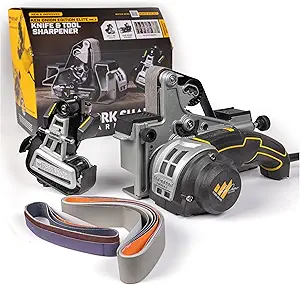 | Best for Custom Grinding and Tool Versatility | Brand: Work Sharp | Model: WSKTS-KO2-ELT-ATL | System type: Benchtop sharpening system | VIEW ON AMAZON | See Our Full Breakdown |
| SHARPAL 202H Precision Knife Sharpening System, Adjustable Angle 10–35° |  | Best for Wide Angle and Blade-Width Flexibility | Angle range: 10–35 degrees | Abrasive set: Seven pieces | Diamond grits: 220, 325, 600, and 1000 | VIEW ON AMAZON | See Our Full Breakdown |
| 10-Inch Variable-Speed Wet Sharpening System |  | Best for Cool Grinding and Workshop Tools | Grinding wheel diameter: 10 inches | Stropping wheel diameter: 8 inches | Motor current: 1.0–1.2 A | VIEW ON AMAZON | See Our Full Breakdown |
| VIDOME Professional 3-Stage Electric Knife Sharpener |  | Best for Fast Kitchen Edge Maintenance | Stages: 3 | Abrasive material: Diamond abrasives and stropping disks | Edge angle: 15 degrees | VIEW ON AMAZON | See Our Full Breakdown |
| knife sharpening system professional | Material |
|---|---|
| XARILK GEN3 Guided Knife Sharp | Aluminum Alloy |
| Work Sharp Precision Adjust El | Plastic, Stainless Steel |
| RUIXIN PRO RX-008 Professional | Stainless Steel |
| Rolling Knife Sharpener Kit wi | Beech wood, ceramic, stainless steel |
| Professional Electric Knife Sh | — |
| Work Sharp Professional Precis | — |
| Work Sharp Ken Onion Edition K | — |
| SHARPAL 202H Precision Knife S | Monocrystalline diamond, corundum, leather, aluminum alloy, and stainless steel |
| 10-Inch Variable-Speed Wet Sha | — |
| VIDOME Professional 3-Stage El | — |
More Details on Our Top Picks
XARILK GEN3 Guided Knife Sharpening System
The XARILK GEN3 stands out for bringing machined aluminum construction and genuine diamond plates to a price point where most competitors rely on plastic frames. Its three-stone progression (320#, 800#, 2000#) covers the full journey from repairing a chipped edge to polishing a refined bevel, which is more range than the two diamond plates in the Work Sharp Precision Adjust Elite. The adjustable angle and pressure settings mean results stay repeatable once you dial in a recipe for a favorite blade. The tradeoff: it arrives as a partial kit requiring assembly with self-tapping screws, so expect some tinkering before the first sharpening session. Compared with the RUIXIN PRO RX-008, it offers fewer stones but a cleaner, less cluttered workflow.
Pros:- Machined aluminum alloy body delivers rigidity most budget systems lack
- Three diamond stones span repair through polish in one kit
- Adjustable angle and pressure suit both newcomers and experienced sharpeners
- Handles kitchen, outdoor, and folding knives
Cons:- Requires assembly with self-tapping screws out of the box
- Only three fixed grit levels — no path to ultra-fine polishing beyond 2000#
Best for: Budget-conscious enthusiasts who want full-grit progression and solid metal build without paying premium-system prices
Not ideal for: Buyers who want a clamp-and-go experience — the assembly requirement makes it frustrating for anyone unwilling to tinker
- Brand:XARILK
- Model:US-KN-300
- Material:Aluminum Alloy
- Grit Levels:320#, 800#, 2000# diamond plates
- Adjustability:Adjustable angle and pressure
- Compatibility:Kitchen, outdoor, and folding knives
- Included:3 diamond stones, Allen wrench, sharpener body, screws
Our verdict“A smart middle-ground pick for sharpeners who want metal-body precision on a budget and don’t mind some setup work.”
Work Sharp Precision Adjust Elite Knife Sharpener
This is the pick I would point most buyers toward first, because it solves the hardest problem in sharpening — consistency — with a foolproof clamped, fixed-angle design. The 15°–30° angle range covers Japanese kitchen knives down to heavy cleavers, and unlike the XARILK GEN3, it adds a dedicated conical ceramic rod for serrated blades, a category most guided systems simply ignore. The tri-brasive attachment extends its reach to curved blades like karambits and hawkbills. Where the RUIXIN PRO RX-008 demands patience and technique across ten stones, the Precision Adjust Elite trades maximum refinement for speed and repeatability — clamp, set the angle, and sharpen. The real cost is ceiling: with 320 and 600 diamond plates plus ceramic, it cannot match the RX-008’s 3000# polish for mirror edges.
Pros:- Foolproof guided design delivers consistent angles for any skill level
- Serrated blade rod handles bread and steak knives most systems can’t
- Wide 15°–30° angle range suits Japanese, Western, and outdoor blades
- Complete kit with coarse and fine diamond plates, ceramic rod, and tri-brasive attachment
Cons:- Grit selection tops out at 600 diamond plus ceramic, limiting final polish
- Plastic-heavy build feels less premium than all-metal systems like the XARILK GEN3
Best for: Home cooks, hunters, and EDC enthusiasts who want repeatable professional edges without a steep learning curve
Not ideal for: Mirror-edge purists — the grit ceiling is too low for the ultra-refined polish ten-stone systems produce
- Angle Range:15° to 30°
- Abrasives:320-grit and 600-grit diamond plates
- Extras:Ceramic finishing rod, serrated rod, tri-brasive attachment
- Design:Fixed-angle clamped guided system
- Material:Plastic, Stainless Steel
- Dimensions:14″L x 6.75″W x 5″H
- Weight:3 pounds
Our verdict“The most balanced choice in the lineup — fast, consistent, and versatile enough that most buyers will never need another system.”
RUIXIN PRO RX-008 Professional Knife Sharpener
Where the Work Sharp Precision Adjust Elite optimizes for speed and simplicity, the RUIXIN PRO RX-008 goes the opposite direction: a ten-stone progression from 120# to 3000# that can take a blade from badly damaged to mirror-polished in one session. The 360° rotation flip mechanism is the standout — flip the blade without unclamping it, and both sides stay symmetrical, something the XARILK GEN3 can’t match at any grit. The stainless steel body and G-clamp mounting make it genuinely stable on a workbench. But this is a system that rewards patience. Angle setting carries a stated +/- 2° deviation, and hitting precise bevels may require a separate angle-measuring app, so it demands more skill than the clamp-and-sharpen Work Sharp approach.
Pros:- Ten whetstones spanning 120#–3000# cover repair through mirror polish
- 360° flip design keeps both blade sides symmetrical without reclamping
- Stainless steel construction with a secure G-clamp for bench stability
- Safety handle keeps hands clear of the edge during use
Cons:- Angle accuracy of +/- 2° may require an external app or gauge for precision work
- Stones have a reputation for arriving broken in shipping
Best for: Hobbyist sharpeners and small-workshop users who want full repair-to-mirror polish capability and don’t mind a learning curve
Not ideal for: Casual cooks wanting quick touch-ups — ten stones and careful angle setting are overkill for weekly kitchen maintenance
- Brand:RUIXIN PRO
- Model:RX-008
- Material:Stainless Steel
- Whetstones:10 stones, 120#–3000#
- Angle Adjustment:Fixed-angle with +/- 2° deviation
- Mounting:G-clamp
- Rotation:360° flip mechanism
Our verdict“The pick for sharpeners chasing refined, polished edges who will invest the time the ten-stone workflow demands.”
Rolling Knife Sharpener Kit with Diamond & Ceramic Wheels
This rolling system plays a different role than everything else here: it’s a maintenance tool, not a restoration tool. The concept is simple — the blade sits on a magnetic guide set at 15° or 20°, and you roll the wheel along the edge. The diamond wheel restores, the ceramic wheel refines. Compared with the Work Sharp Precision Adjust Elite, it’s far less capable on damaged or serrated blades, but for keeping an already-sharp kitchen knife sharp, it’s faster, quieter, and honestly more pleasant to use. The beech wood body also earns it countertop real estate that plastic systems never get. The honest limitation: only two angles, two wheels, and no real metal removal capability for chips or reprofiling — the RUIXIN PRO RX-008 exists for that job.
Pros:- Rolling motion with magnetic guide keeps angles consistent with almost no technique
- Diamond plus ceramic wheel pairing handles both restoring and refining
- Wooden body looks at home on a kitchen counter
- Compact at under 4 inches long and 1.6 pounds
Cons:- Only two fixed angles and two wheels — very limited grit progression
- Not capable of serious repair, reprofiling, or serrated blades
Best for: Home cooks with decent knives who want an elegant, low-effort way to maintain edges rather than rebuild them
Not ideal for: Anyone with damaged, chipped, or very dull blades — the light abrasion can’t reprofile or repair
- Angle Options:15° and 20° magnetic guide
- Wheels:Diamond (restore) and ceramic (polish)
- Material:Beech wood, ceramic, stainless steel
- Color:Natural Beech Brown
- Dimensions:3.94″L x 2.36″W x 6.7″H
- Weight:1.6 pounds
Our verdict“A beautiful, effortless maintenance tool for knives that are already in good shape — buy it to keep edges sharp, not to save neglected ones.”
Professional Electric Knife Sharpener with Diamond Abrasives
When the priority is minutes, not refinement, this electric system earns its slot. Four stages running 100% diamond abrasives sharpen, hone, and polish at 15° or 20°, with an open groove for freehand any-angle work — and the claimed ~10-second resharpening time beats every manual system in this roundup by an order of magnitude. The hidden extendable ceramic rod is a genuinely useful bonus, covering scissors and axes that even the Work Sharp Precision Adjust Elite can’t fully address. The tradeoff is the classic electric-sharpener one: spring guide rods remove more material faster than guided stones, so heavy repeated use eats blade life quicker than the gentle XARILK or RUIXIN stone systems. The ceramic rod also ships with cosmetic scratches from factory QC testing — functional, but not flawless out of the box.
Pros:- Fastest sharpening in the lineup at roughly 10 seconds to resharpen
- Four diamond-abrasive stages plus open any-angle groove for flexibility
- Extendable hidden ceramic rod handles scissors, axes, and honing
- Low-noise motor backed by a 2-year warranty
Cons:- Faster material removal wears blades down sooner than stone-based guided systems
- Ceramic rod may arrive with cosmetic scratches from factory testing
Best for: Busy households and frequent cooks who value fast, repeatable touch-ups across knives, scissors, and axes
Not ideal for: Owners of expensive Japanese knives or thin blades — aggressive electric abrasion shortens edge life versus stone systems
- Stages:4 sharpening slots
- Abrasive:100% diamond abrasives
- Angles:15° and 20° plus open any-angle groove
- Ceramic Rod:Extendable, 10–20 cm
- Voltage:120 volts
- Sharpening Time:~50 seconds first sharpening, ~10 seconds resharpening
- Warranty:2 years
Our verdict“The right choice when speed and versatility across a whole tool drawer matter more than maximum edge refinement.”
Work Sharp Professional Precision Adjust Knife Sharpener Kit
Angle control and a broad abrasive progression make this Work Sharp a strong fit for sharpeners who want repeatable edges without moving to a powered machine. Its digital angle indicator and 15–30-degree adjustment help set an edge to suit kitchen, pocket, or hunting knives, while seven abrasives take a blade from coarse repair through ceramic honing and leather stropping. Compared with the Work Sharp Ken Onion Edition Elite Mk2, this kit keeps the process manual and focused on guided edge work rather than adding a blade-grinding attachment for custom shaping. That simplicity can suit routine sharpening, though it offers less flexibility for broader grinding tasks. The metal construction and three-year warranty support frequent use, but the clamp-based setup takes more hands-on adjustment than an electric sharpener.
Pros:- Digital angle indicator supports repeatable settings from 15 to 30 degrees
- Seven abrasives cover coarse sharpening through fine ceramic honing and stropping
- Metal construction is suited to regular bench use
- Three-year warranty
Cons:- Manual clamping and abrasive changes take more time than powered sharpening
- The 15–30-degree range is narrower than the SHARPAL 202H’s stated 10–35-degree range
- No dedicated blade-grinding attachment for custom grinds
Best for: Knife owners who want measured angle control and a full manual grit progression for kitchen, pocket, and hunting blades
Not ideal for: Users who need fast, powered sharpening or want to reshape blades with a dedicated grinding attachment
- Brand:Work Sharp
- Model:WSBCHPAJ-PRO-ATL
- Angle range:15–30 degrees
- Included abrasives:220, 320, 400, 600, and 800 grit diamond; fine ceramic; leather strop
- Construction:Metal
- Warranty:3 years
- Origin:Designed and calibrated in Ashland, Oregon
Our verdict“Choose this kit for guided, angle-conscious manual sharpening across several knife types, provided you do not need powered grinding.”
Work Sharp Ken Onion Edition Knife & Tool Sharpener Elite Mk2
Two sharpening modes distinguish the Ken Onion Elite Mk2 from the guided clamp systems in this roundup. The guide cassette supports repeatable edges on knives and tools, while the blade-grinding attachment gives users a separate route for custom grinds and a wider range of shaping work. That makes it more adaptable than the Work Sharp Professional Precision Adjust Kit, which centers on controlled manual sharpening with a defined 15–30-degree range. Quick, tool-free mode changes also make switching tasks less involved. The tradeoff is its benchtop footprint: it suits a dedicated work area better than a compact drawer or occasional touch-up station. The supplied details do not specify abrasive grits or angle limits, so buyers who need those measurements before choosing should compare the published kit contents carefully.
Pros:- Guide cassette and grinding attachment serve distinct sharpening tasks
- Tool-free mode changes simplify switching between attachments
- Designed for knives and tools
- Three-year warranty
Cons:- Benchtop format needs a dedicated workspace
- Supplied product details do not state grit options or angle range
- More involved equipment than a basic guided sharpener for routine touch-ups
Best for: Knife makers and serious owners who want one benchtop system for repeatable edges plus custom grinding on knives and tools
Not ideal for: Apartment cooks or occasional sharpeners without dedicated bench space, or buyers who need specified grit and angle details
- Brand:Work Sharp
- Model:WSKTS-KO2-ELT-ATL
- System type:Benchtop sharpening system
- Sharpening modes:Guide cassette and blade-grinding attachment
- Mode changes:Tool-free
- Intended use:Knives and tools
- Warranty:3 years
- Origin:Designed and calibrated in Ashland, Oregon
Our verdict“Pick the Elite Mk2 if custom grinding and tool versatility matter enough to justify a permanent bench setup.”
SHARPAL 202H Precision Knife Sharpening System, Adjustable Angle 10–35°
A 10–35-degree range and distance-based angle setting give the SHARPAL 202H unusual flexibility among the guided systems here. Its sliding clamps are described as accommodating narrow pocket blades through wide cleavers, while the flip mechanism is intended to preserve the setting when sharpening both sides. The supplied seven-piece abrasive kit runs from 220-grit diamond plates through 6000-grit whetstones and a leather strop, a broader polishing progression than the Work Sharp Professional Precision Adjust Kit, whose stated range is 15–30 degrees. This makes SHARPAL the more adaptable match for varied blade widths and edge preferences. In exchange, its metal base and carry case make for a substantial setup; at 4.4 kg with listed dimensions of 14.2 by 12.2 by 5.2 inches, it is not a grab-and-go compact sharpener.
Pros:- 10–35-degree adjustment covers a wider stated range than the Work Sharp Professional Precision Adjust
- Seven abrasive pieces span coarse repair through fine whetstone finishing and stropping
- Sliding clamps and flip mechanism support work across varied blade widths
- Metal construction, anti-slip base, and rigid carry case
Cons:- At 4.4 kg, it is heavy for frequent transport
- Its listed 14.2-by-12.2-inch footprint takes considerable storage space
- Manual clamp-and-plate sharpening requires more setup than the VIDOME electric model
Best for: Enthusiasts who sharpen both narrow pocket knives and wide kitchen blades and want broad angle and grit choices
Not ideal for: Travelers or occasional users who want a lightweight, quick-stow sharpening tool
- Angle range:10–35 degrees
- Abrasive set:Seven pieces
- Diamond grits:220, 325, 600, and 1000
- Whetstone grits:3000 and 6000
- Finishing abrasive:Leather strop with 2 oz green polishing compound
- Material:Monocrystalline diamond, corundum, leather, aluminum alloy, and stainless steel
- Dimensions:14.2 × 12.2 × 5.2 inches
- Weight:4.4 kg
- Warranty:3 years
Our verdict“Choose the SHARPAL 202H when broad angle adjustment and blade-width range outweigh weight and setup time.”
10-Inch Variable-Speed Wet Sharpening System
Water-cooled grinding and variable speed set this system apart from the clamp-guided sharpeners in the roundup. Its 10-inch aluminum oxide wheel runs at 90–160 RPM, and the water trough helps keep tools cool during grinding; an 8-inch leather wheel then supports burr removal and edge refinement. The adjustable guide and horizontal or vertical jig positions also make it more suited to a workshop mix of knives, chisels, and other tools than the Work Sharp Professional Precision Adjust Kit, which is a more compact manual system for guided knife edges. This wet grinder offers a different scale of work, but it needs a stable bench and more care. The leather wheel must run in the correct direction or the blade can cut into it, and the supplied details do not specify an angle range.
Pros:- Water trough helps limit heat during grinding
- Variable 90–160 RPM operation offers speed adjustment
- 10-inch grinding wheel and 8-inch leather stropping wheel support grinding and burr removal
- Jig support can be positioned horizontally or vertically
Cons:- Requires a stable workshop bench and more setup than guided manual systems
- Leather wheel direction must be observed to avoid cutting into it
- No specific angle range is provided in the supplied details
Best for: Workshop users who sharpen knives alongside chisels and want slow, water-cooled grinding with a stropping wheel
Not ideal for: Kitchen users seeking a compact, low-setup sharpener or buyers who need a stated angle range
- Grinding wheel diameter:10 inches
- Stropping wheel diameter:8 inches
- Motor current:1.0–1.2 A
- Rotation speed:90–160 RPM
- Grinding wheel material:Aluminum oxide
- Stropping wheel material:Leather
- Jig support positions:Horizontal and vertical
Our verdict“Choose this wet system for slower workshop sharpening across knives and tools, if you can manage its bench setup and wheel direction.”
VIDOME Professional 3-Stage Electric Knife Sharpener
Three powered stages and fixed 15-degree guides make the VIDOME a convenience-focused choice for kitchen edge maintenance. Diamond abrasives in the first two stages sharpen and hone, while the third uses stropping disks to finish; magnetic chip collection is meant to simplify cleanup. The guided pull-through approach is much quicker to operate than the SHARPAL 202H, which offers manual angle adjustment and a longer abrasive progression for more hands-on control. VIDOME also claims compatibility with straight, ceramic, and serrated knives, but its 15-degree edge target limits flexibility: it can convert 20-degree knives to a finer edge rather than preserve multiple angle choices. The simple switch and short stated sharpening times favor routine touch-ups, while the motor noise and blade-pulling technique demand attention during use.
Pros:- Three stages combine diamond sharpening and honing with stropping
- Designed for straight, ceramic, and serrated knives
- Magnetic chip collection can simplify cleanup
- Flexible guides are intended to hold the blade angle along its length
Cons:- Uses a 15-degree target rather than an adjustable angle range
- The blade must be pulled back evenly and promptly through the guide
- Stated operating noise is 60–80 dB
Best for: Home cooks who want quick powered maintenance for straight, ceramic, and serrated kitchen knives at a 15-degree edge
Not ideal for: Sharpening enthusiasts who want adjustable angles, manual grit control, or custom edge geometry
- Stages:3
- Abrasive material:Diamond abrasives and stropping disks
- Edge angle:15 degrees
- Compatible knife types:Straight, ceramic, and serrated
- Operating noise:60–80 dB
- Chip collection:Magnetic
- Stated first sharpening time:Approximately 30 seconds
- Stated resharpening time:Approximately 10 seconds
Our verdict“Pick VIDOME for quick kitchen touch-ups across several knife types if its fixed 15-degree edge suits your blades.”

How We Picked
I compared these systems by how well their design supports a repeatable edge, how clearly a buyer can control angle and pressure, and which knife types each format can reasonably serve. I also weighed setup and storage demands, abrasive options, upkeep, and the skill needed to get consistent results. A wide selection of stones matters only when the holder keeps the blade stable; powered speed matters only when the user can avoid removing more material than needed.
The ranking favors systems with a useful balance of control, versatility, and manageable learning demands for serious home or workshop sharpening. Guided manual systems place ahead of simpler electric models for buyers seeking professional-style precision, while specialized picks earn their place for portability, beginner access, or larger tools. Product names and listed features inform these distinctions; individual performance can vary with technique, blade condition, and compatibility.
| knife sharpening system professional | Material |
|---|---|
| XARILK GEN3 Guided Knife Sharp | Aluminum Alloy |
| Work Sharp Precision Adjust El | Plastic, Stainless Steel |
| RUIXIN PRO RX-008 Professional | Stainless Steel |
| Rolling Knife Sharpener Kit wi | Beech wood, ceramic, stainless steel |
| Professional Electric Knife Sh | — |
| Work Sharp Professional Precis | — |
| Work Sharp Ken Onion Edition K | — |
| SHARPAL 202H Precision Knife S | Monocrystalline diamond, corundum, leather, aluminum alloy, and stainless steel |
| 10-Inch Variable-Speed Wet Sha | — |
| VIDOME Professional 3-Stage El | — |
Factors to Consider When Choosing Knife Sharpening System Professional
Before choosing a professional knife sharpening system, I would start with the knives and the sharpening routine, not the number of included accessories. A setup that matches blade shape, edge angle, and available workspace is easier to use consistently. These factors help separate a capable tool from one that looks versatile on paper but does not fit your collection.
Match the system to your blade shapes
List the knives you expect to sharpen, including their blade lengths, widths, and profiles. Narrow pocket blades, broad chef’s knives, recurved edges, and short utility blades can each behave differently in a clamp or guide. A system may offer many angle settings yet still hold a particular blade awkwardly. Check how the blade is secured and whether the abrasive can reach the heel and tip without changing your grip. For an unusual or varied collection, a flexible guided system is often a safer choice than a format built around one blade shape. Avoid buying based on the word “professional” alone; fit determines whether you can maintain the edge you want.
Choose control that fits your skill and patience
Guided systems reduce angle drift, but they do not remove the need to use steady pressure and follow a repeatable sequence. If you are new to sharpening, a clear guide can make technique easier to learn than freehand work. Electric systems shorten the process, though speed can make it easier to remove too much metal or create an edge that does not match your preference. A manual system usually takes longer but gives you more time to monitor progress. Think about whether you enjoy a careful maintenance routine or want occasional sharpening with fewer steps. The best fit is the one you can use consistently without rushing.
Understand what the abrasives are for
Included stone count is a poor substitute for understanding grit progression and abrasive material. Coarser abrasives can repair a damaged or neglected edge, while finer stages refine an edge that is already shaped. Diamond, ceramic, and conventional stones each have different wear and care needs, so follow the maker’s instructions rather than assuming every abrasive can be cleaned or lubricated the same way. A large kit can be useful if you will use its stages, but unused stones add storage and setup work. For routine touch-ups, a simpler progression may be easier to maintain. Consider replacement availability too, since a system is less useful if its consumables are hard to find.
Account for workspace, noise, and cleanup
A sharpening system needs a stable place where the blade can move without striking nearby objects. Clamped guided systems often need room for the base and abrasive movement, while rolling sharpeners need a flat surface and a suitable contact area. Powered and wet systems bring added concerns such as noise, water management, and cleanup. If you sharpen in a shared kitchen or small apartment, those details may matter more than maximum speed. Check how the unit stores and whether accessories remain organized between sessions. A compact tool is convenient, but confirm that compactness does not make your common knives difficult to position.
Set an edge angle for the knife’s job
There is no single angle that suits every knife, and a system’s adjustment range is only useful if it supports your intended edge. A thinner edge can cut efficiently but may be less forgiving under hard use; a more robust edge can suit tougher tasks. Preserve a factory edge when you are unsure, especially on a knife with a specialized grind or heat treatment. Do not change angles simply because a system makes adjustment easy. If you maintain several knives for different tasks, record the angle and abrasive sequence used for each one. That small habit makes repeat sharpening more predictable.
Pay for capability you will actually use
Higher-capability systems make sense when you sharpen often, maintain several blade types, or need finer control over the process. For occasional kitchen upkeep, a simpler system may be easier to set up and maintain. A premium package can include useful flexibility, but its complexity can become a burden if most of its settings and accessories stay unused. Compare the base system, replacement abrasives, storage needs, and any special maintenance before deciding. Buyers who sharpen tools as well as knives may benefit from a different format than cooks maintaining a few kitchen blades. Spend for a clear improvement in fit or control, not for an impressive feature list.
Frequently Asked Questions
Is a guided system or an electric sharpener better for professional-style results?
A guided manual system is a better fit when you value angle control and want to monitor each sharpening stage closely. An electric model can be more convenient for routine work, but its speed calls for a light, careful technique. Neither format guarantees a good edge on its own; blade support, abrasive condition, and consistent use all matter. If you sharpen different knives and want to learn what each stage does, guided equipment offers a clearer process. If convenience matters most, check that the powered system’s guides suit your blades.
Can one sharpening system handle both kitchen knives and pocket knives?
Some guided systems are designed to accommodate both, but compatibility depends on blade dimensions and how each knife sits in the holder. A broad chef’s knife and a short pocket blade may require different clamping positions or careful repositioning to keep the angle consistent. Rolling sharpeners can be convenient on suitable flat blades, yet they may not fit every profile or edge geometry. Check the manufacturer’s supported blade sizes and shapes before buying. For a mixed collection, prioritize stable positioning over the largest advertised angle range.
Should I buy a system with many stones if I only sharpen at home?
Not necessarily. A practical progression that covers edge repair and refinement is more useful than a large set of abrasives you rarely use. Extra stages can help if you maintain a range of steels or want a particular finish, but they add storage, cleaning, and decision-making. Home sharpeners often get better results by learning a consistent sequence on a manageable set. Look at the availability and care requirements of replacement abrasives as well. Choose the larger kit only when its added stages solve a real need.
Is a wet sharpening system a good first choice for kitchen knives?
It can work for kitchen knives, but it brings a different setup and maintenance routine from a compact guided sharpener. Water management, workspace, and learning how to control the blade against the wheel all affect the experience. A wet system may make more sense if you also maintain larger tools or want a workshop station. For occasional kitchen sharpening, a guided system is often simpler to position and store. Consider where you will use and clean the machine before choosing it as your only sharpener.
How can I avoid removing too much metal when sharpening?
Start with a fine enough abrasive for the knife’s condition and use light, controlled pressure. Coarse stages belong to damaged or significantly dull edges; routine upkeep rarely calls for aggressive material removal. Follow a consistent sequence and check progress instead of making many extra passes by habit. Powered sharpeners deserve particular restraint because they remove material quickly. If you are uncertain about a knife’s edge or construction, preserve its existing geometry and consult the maker’s guidance before changing the angle.
Conclusion
I would choose the Work Sharp Professional Precision Adjust kit as the best overall for a buyer who wants guided control and broad utility. The Precision Adjust Elite is my best value for someone who wants a capable manual setup without prioritizing every added refinement. Beginners should favor a guided system with straightforward angle setting, while buyers seeking speed for routine kitchen use may prefer an electric option and accept less hands-on control. For a premium workshop setup that also suits larger tools, the 10-Inch Variable-Speed Wet Sharpening System has the clearest specialized role. If portability is the priority, consider the rolling kit; match its format to your blades before settling on it.
Columbus Day / Indigenous Peoples' Day Picks
long weekend sales
As an affiliate, we earn on qualifying purchases.