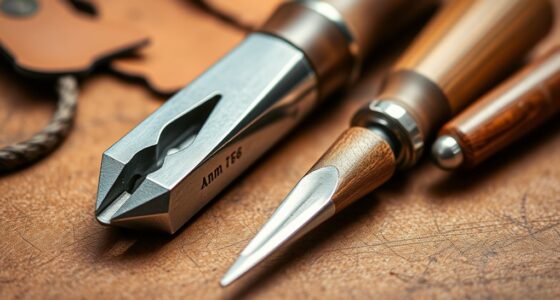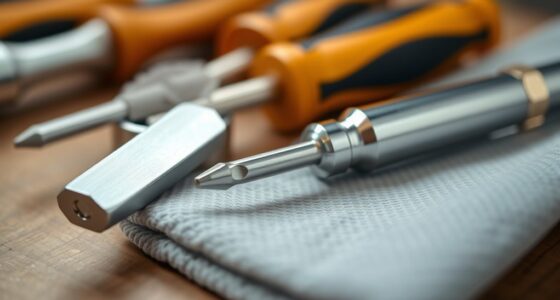
To prevent rust, store your hand tools in a dry, well-ventilated area and use proper organization solutions like magnetic strips and wall-mounted racks. Keep tools off damp surfaces and away from moisture to reduce exposure to air and humidity. Regularly wipe down tools and racks with a dry cloth, and treat rust spots immediately. Proper storage not only prolongs your tools’ life but also keeps your workspace efficient — find out more about effective storage options below.
Key Takeaways
- Use magnetic strips for small tools to keep them off surfaces and reduce rust exposure.
- Install wall-mounted racks in dry, ventilated areas to organize larger tools and prevent moisture buildup.
- Regularly clean and dry tools and storage surfaces to remove moisture and prevent rust formation.
- Apply rust inhibitors or protective coatings to tools and racks for added corrosion resistance.
- Store tools in a climate-controlled environment, avoiding damp or unventilated spaces like basements or garages.

Keeping your hand tools organized is essential for efficiency and safety in any workspace. When your tools are cluttered or poorly stored, it becomes harder to find what you need quickly, and you risk damaging or losing them altogether. One effective way to keep your tools accessible and protected from rust is by using magnetic strips and wall-mounted racks. These storage solutions not only save space but also help maintain the condition of your tools by reducing exposure to moisture and air, which are primary causes of rust.
Organize tools with magnetic strips and wall racks to prevent rust and boost workspace safety.
Magnetic strips are a game-changer for organizing small to medium-sized tools like screwdrivers, pliers, and chisels. They attach directly to your wall, providing a secure and visible place for your tools so you can grab them instantly. Because magnetic strips hold tools firmly in place, you’re less likely to drop or misplace them, which minimizes damage and accidental exposure to moisture. To prevent rust, make sure the magnetic strip is installed in a dry, well-ventilated area. Regularly check and clean the magnetic strip to remove any accumulated dust or debris that could trap moisture. This simple maintenance helps keep your tools in prime condition and prevents corrosion over time.
Wall-mounted racks are another excellent storage option that can be customized to fit your workspace. They come in various sizes and configurations, allowing you to hang larger tools or organize multiple smaller ones efficiently. Metal racks with coated or painted finishes are especially good for resisting rust, but it’s still important to keep them dry and clean. When installing wall-mounted racks, avoid areas prone to high humidity or direct contact with water, as moisture exposure accelerates rust formation. Regularly wiping down the rack and your tools with a dry cloth helps reduce moisture buildup. If you notice any rust beginning to form on your tools or rack, treat it immediately with a rust inhibitor or gently sand it off to prevent spreading.
In addition to using magnetic strips and wall-mounted racks, consider applying protective coatings or rust inhibitors on your tools, especially if you store them in less controlled environments. Proper storage in a dry, ventilated space makes a significant difference. Elevate your tools off the ground on a shelf or pegboard, and avoid leaving them in damp areas like basements or garages without climate control. Using proper storage techniques can significantly reduce rust formation and extend the life of your tools. Incorporating these storage solutions and maintenance habits ensures your hand tools stay rust-free and ready for use whenever you need them, prolonging their lifespan and keeping your workspace safe and efficient.
Frequently Asked Questions
What Are the Best Materials for Rust-Resistant Tool Storage?
You should choose metal containers made from stainless steel or powder-coated metals for rust resistance. These materials naturally resist corrosion and are durable. Additionally, applying silicone coatings inside your storage areas creates a moisture barrier, preventing rust from forming on your tools. Combining these materials with proper ventilation and regular maintenance keeps your hand tools in excellent condition and free from rust, ensuring they last longer and perform better.
How Often Should I Inspect My Tools for Rust?
You should inspect your tools for rust at least once a month to guarantee proper tool maintenance. Regular checks help you catch early signs of rust, allowing you to apply rust prevention techniques like cleaning, drying, and applying protective coatings promptly. Consistent inspections keep your tools in top shape, extend their lifespan, and prevent costly damage, making tool maintenance easier and more effective over time.
Can I Use Household Products to Prevent Rust?
Like a knight preparing for battle, you can definitely use household products to prevent rust. DIY rust removers like vinegar or baking soda work well for cleaning, but for ongoing protection, commercial rust inhibitors are more reliable. Remember, these products create a barrier that prevents moisture from reaching your tools. Regularly applying them keeps rust at bay, making your tools last longer and stay sharp.
What’s the Ideal Humidity Level for Storage Areas?
You should aim to keep your storage area’s humidity level between 40-50%. Proper humidity control helps prevent rust and corrosion on your tools. Using a dehumidifier offers significant benefits, like maintaining consistent humidity and reducing moisture buildup. This creates an ideal environment, protecting your tools from rust while making storage safer and more efficient. Regularly monitor humidity levels to ensure your tools stay in top condition.
Are There Eco-Friendly Rust Prevention Options?
Think of eco-friendly rust prevention options as a gentle rainforest shield for your tools. You can opt for biodegradable coatings or plant-based oils that act like a protective skin, preventing rust without harming the environment. These natural solutions seep into the metal, offering a sustainable barrier that’s kind to the planet and effective against corrosion. Embrace greener choices to keep your tools pristine while nurturing our world.
Conclusion
Remember, storing your tools properly is like planting seeds in rich soil—you guarantee they stay healthy and ready when you need them. I once neglected a wrench in a damp garage, and rust quickly took hold. That simple mistake cost me hours of work. By investing a little time in rust-proof storage solutions, you protect your tools and keep your projects flowing smoothly. Think of it as nurturing your tools so they’re always prepared to help you grow your skills.