
To plan a water‑wise garden for drought conditions, start by capturing rainwater with harvesting systems to guarantee a steady, free water supply. Use mulch and choose drought-tolerant plants that need less watering. Employ efficient drip irrigation or soaker hoses, watering early or late to reduce evaporation. Regularly monitor soil moisture to avoid over- or underwatering. These integrated strategies help conserve water and boost your garden’s resilience—continue to learn how to create a sustainable, drought-ready landscape.
Key Takeaways
- Install rainwater harvesting systems to collect and store water for garden irrigation during droughts.
- Select drought-tolerant, climate-adapted plants to reduce water dependency.
- Use efficient watering methods like drip irrigation and watering during cooler times to minimize evaporation.
- Incorporate organic mulch to retain soil moisture and suppress weeds naturally.
- Regularly monitor soil moisture to adjust watering schedules and prevent over or underwatering.
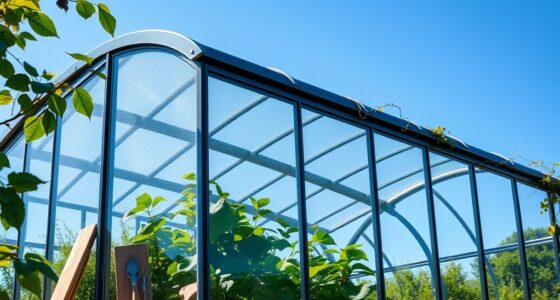
Have you ever wondered how to create a lush garden that conserves water and reduces your environmental impact? If so, planning a water-wise garden is your best move, especially during drought conditions. The first step involves understanding how rainwater harvesting can play a essential role in your garden’s water sustainability. By capturing rainwater from roofs or other surfaces, you can divert this natural resource directly into storage tanks or barrels. Not only does this reduce reliance on municipal water supplies, but it also provides you with a free, renewable source for watering your plants. Installing a simple rainwater harvesting system is straightforward and highly effective. Use downspouts to direct water into barrels, and connect multiple units if needed to increase capacity. This stored rainwater becomes especially valuable during dry spells, ensuring your garden remains vibrant without wasting tap water.
Capture rainwater to create a sustainable, water-efficient garden and reduce your environmental impact.
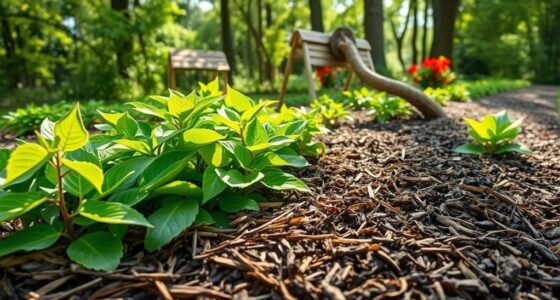
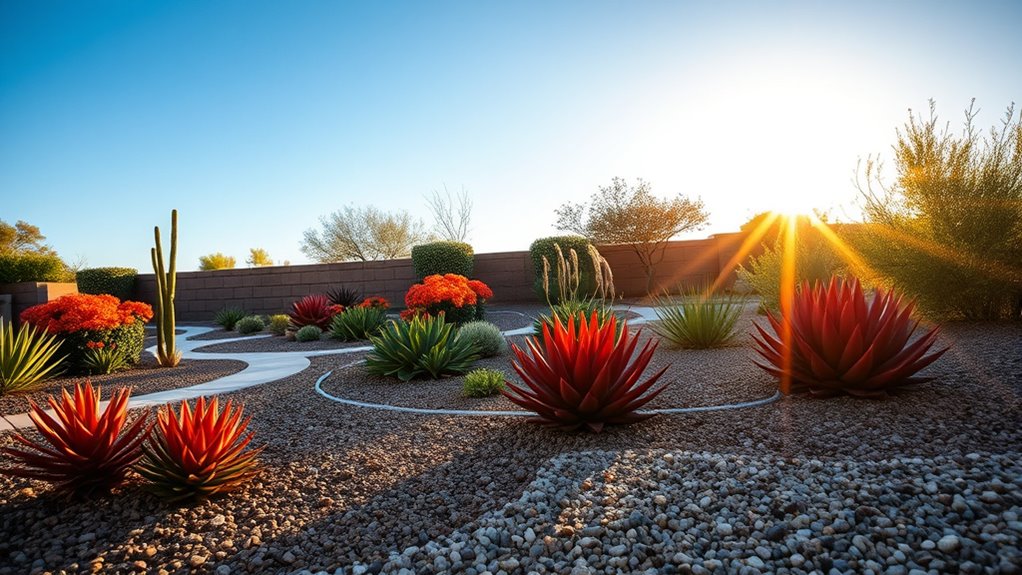
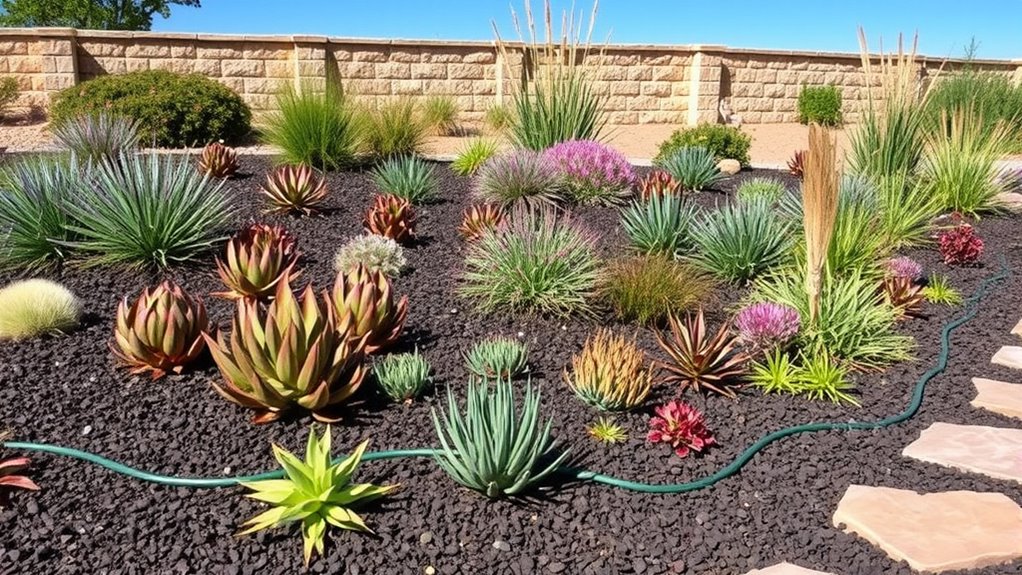
Alongside rainwater harvesting, soil moisture management becomes key in drought conditions. When your soil maintains proper moisture levels, your plants stay healthier and require less supplemental watering. To achieve this, incorporate organic mulch like straw, bark, or compost around your plants. Mulch helps retain soil moisture, suppress weeds, and regulate soil temperature—all of which conserve water. Additionally, choose drought-tolerant plants suited for your climate. These species naturally require less water once established, reducing your garden’s overall water footprint. When watering, focus on deep, infrequent sessions rather than frequent shallow watering. This encourages roots to grow deeper into the soil, making plants more resilient during dry periods.
Efficient watering techniques support soil moisture management as well. Use drip irrigation or soaker hoses to deliver water directly to the roots, minimizing evaporation and runoff. Timing is key: water early in the morning or late in the evening when temperatures are cooler. Regularly check soil moisture levels with a simple finger test or a moisture meter to avoid overwatering or underwatering. Consistent monitoring allows you to adapt your watering schedule, ensuring your plants get just the right amount of moisture they need to thrive without waste. Incorporating climate-adapted plant choices can further enhance drought resilience and reduce water needs over time.
Ultimately, combining rainwater harvesting with smart soil moisture management creates a sustainable, resilient garden even in drought conditions. It reduces your dependence on municipal water sources, saves money, and helps protect the environment. By making these practices part of your gardening routine, you can enjoy a lush, healthy garden that’s both beautiful and eco-friendly. With deliberate planning and simple techniques, you’ll turn your outdoor space into a model of water conservation that withstands the challenges of limited water availability.
rainwater harvesting system for garden
As an affiliate, we earn on qualifying purchases.
As an affiliate, we earn on qualifying purchases.
Frequently Asked Questions
How Do I Select Drought-Tolerant Plants for My Climate?
To select drought-tolerant plants for your climate, focus on plant adaptability and choose drought-resistant varieties suited to your area. Research native plants, as they’re naturally adapted to local conditions, ensuring better survival and less water use. Look for species labeled as drought-resistant at local nurseries, and consider soil and sun exposure. By selecting these resilient plants, you’ll create a sustainable, water-wise garden that thrives even during droughts.
What Soil Amendments Improve Water Retention in Drought-Prone Areas?
Imagine your soil as a sponge waiting to absorb life. To improve water retention in drought-prone areas, focus on soil health with amendment options like organic compost, which enriches nutrients and boosts moisture retention. Adding biochar or aged manure enhances soil structure, helping it hold water longer. These amendments create a resilient foundation, ensuring your drought-tolerant plants thrive even during dry spells.
How Often Should I Water My Water-Wise Garden During Drought Conditions?
During drought conditions, you should water your water-wise garden deeply once or twice a week, adjusting based on drought frequency. Focus on watering early in the morning or late evening to minimize evaporation. Pay attention to your plants’ needs and soil moisture levels, and avoid overwatering. This schedule helps conserve water while keeping your drought-tolerant plants healthy, ensuring your garden thrives even during prolonged dry spells.
Can Native Plants Reduce Water Usage Effectively?
Native plants indeed reduce water usage effectively, especially when you consider their drought-resistant benefits. They’re adapted to your region’s climate, meaning they thrive with less water and minimal maintenance. By choosing native plants, you create a drought-resistant garden that conserves water naturally, supports local ecosystems, and lowers your overall water bills. So, incorporating native plants is a smart, sustainable choice for efficient water use and resilient drought-tolerant landscaping.
What Are the Best Mulch Options for Conserving Soil Moisture?
You should choose mulch types like bark, straw, or shredded leaves to maximize moisture retention in your garden. These options create a barrier that reduces evaporation and keeps soil consistently moist. Organic mulches break down over time, enriching your soil and improving water retention. Avoid inorganic mulches like gravel, which don’t hold moisture as effectively. Proper mulching helps your plants thrive while conserving water during drought conditions.
drought-tolerant plants for landscaping
As an affiliate, we earn on qualifying purchases.
As an affiliate, we earn on qualifying purchases.
Conclusion
Think of your garden as a wise old tree, deep roots reaching for hidden water sources and leaves that conserve every drop. By planning your water-wise garden, you’re nurturing a resilient ecosystem that thrives even in drought. Like a skilled captain steering through a dry season, you can create a lush haven that uses water sparingly yet abundantly. Embrace this journey, and watch your garden flourish with mindful care and patience.
drip irrigation kit for garden
As an affiliate, we earn on qualifying purchases.
As an affiliate, we earn on qualifying purchases.
garden moisture meter
As an affiliate, we earn on qualifying purchases.
As an affiliate, we earn on qualifying purchases.