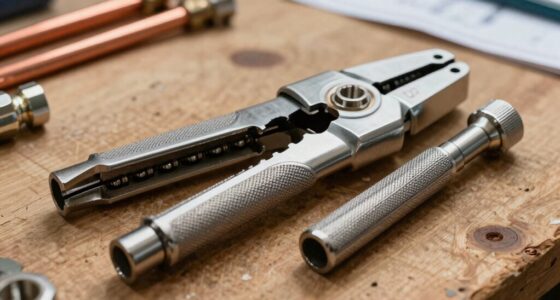
To clean rusty hand tools without damaging their edges, start by evaluating the rust’s severity. For light surface rust, soak the tools in vinegar for a few hours, then wipe away the rust with a soft cloth or brush. For heavier rust, apply a baking soda paste, let it sit for about 30 minutes, then gently scrub. Taking care during these steps preserves your tools and helps keep their edges sharp—more tips await if you keep exploring.

Get business pricing on tools and workshop supplies
- Business-only prices and quantity discounts
- Tax-exempt purchasing
- Multiple users, one account, clear invoices
Key Takeaways
- Use vinegar soak for light rust to dissolve corrosion without damaging edges.
- Apply baking soda paste for stubborn rust, gently scrubbing to avoid scratching.
- Always test cleaning methods on a small area before full treatment.
- Dry tools thoroughly and apply oil to create a protective barrier against future rust.
- Store tools in a dry environment with moisture absorbers to prevent rust formation.
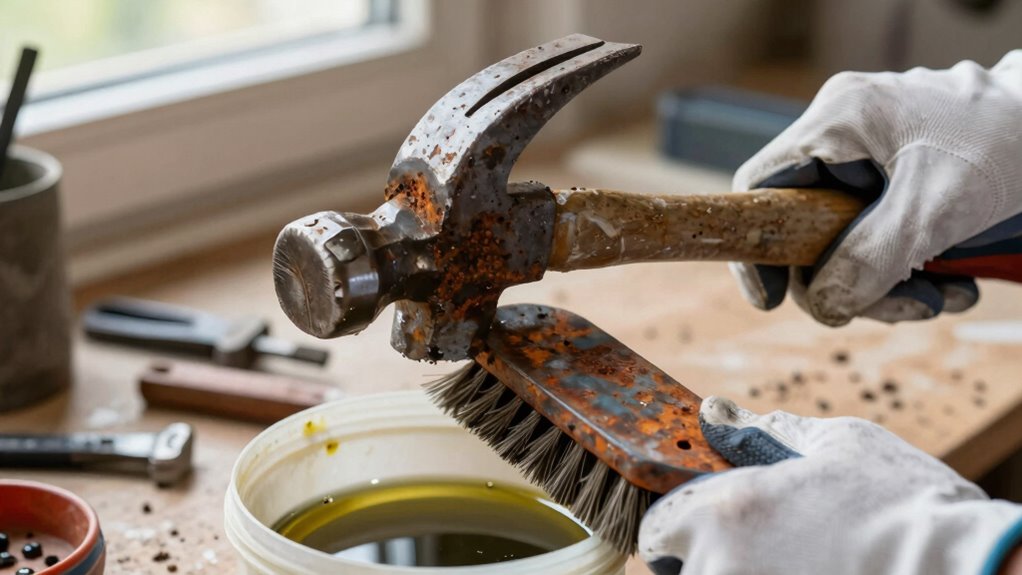
Rusty hand tools can be salvaged with a few simple steps, saving you money and extending their lifespan. When dealing with rust, your goal is to remove it effectively without damaging the tool’s edges or compromising its integrity. Start by evaluating the extent of the rust and choosing the right rust removal techniques. For light surface rust, soaking the tools in white vinegar for a few hours can work wonders. Vinegar’s acidity dissolves rust without harsh scrubbing, helping you preserve the tool’s sharp edges. After soaking, use a soft wire brush or a cloth to wipe away the loosened rust. For heavier rust, you might need to use a rust remover or apply a paste made from baking soda and water. Spread the paste over the rusted areas, let it sit for 30 minutes, then scrub gently with a soft-bristled brush. This guarantees you remove rust without scratching or damaging the metal surface. Regular maintenance, including proper storage**, is essential to prevent future rust buildup and prolong the life of your tools. Additionally, understanding the causes of rust can help you better prevent future corrosion and keep your tools in optimal condition. Using protective coatings and environmental control can further reduce the risk of rust formation on your tools. Proper drying techniques and humidity control play a crucial role in preventing moisture-related rust. To prevent future rust, it’s essential to dry your tools thoroughly after cleaning and exposure to moisture. Applying a light coat of oil, such as mineral oil or WD-40, creates a protective barrier that wards off moisture and oxidation. Regularly inspecting your tools and reapplying oil helps maintain their condition over time. Maintaining consistent maintenance routines is key to avoiding rust buildup and ensuring your tools stay in good working order. When storing your hand tools, keep them in a dry, climate-controlled environment, ideally in a toolbox or cabinet with silica gel packets** to absorb excess humidity. These simple steps form part of effective rust prevention routines, reducing the likelihood of rust buildup down the line.
vinegar rust remover for hand tools
As an affiliate, we earn on qualifying purchases.
As an affiliate, we earn on qualifying purchases.
Frequently Asked Questions
Can Rust Damage the Tool’s Metal Permanently?
Rust can cause permanent damage to your tools’ metal if left untreated, weakening their structure over time. To prevent this, practice rust prevention by keeping tools dry and applying protective coatings. Regular tool maintenance helps identify early rust spots, making it easier to clean and restore your tools. Acting quickly and maintaining proper care guarantees your tools stay functional and last longer, avoiding costly replacements.
Is It Safe to Use Commercial Rust Removers?
Using commercial rust removers can be safe if you follow the instructions carefully. Always check the label for chemical safety guidelines, and wear protective gear like gloves and goggles. Be mindful of the environmental impact; opt for eco-friendly options whenever possible. Proper ventilation during use helps prevent inhaling fumes. By taking these precautions, you can effectively remove rust without risking your health or harming the environment.
How Often Should I Clean My Hand Tools?
You should clean your hand tools after every few uses, especially if they’re exposed to moisture or dirt. Imagine your tools resting in a tidy tool storage, gleaming and ready to work. Regular cleaning prevents rust, so apply protective coatings after cleaning to keep moisture out. This habit extends their life, guarantees maximum performance, and keeps your workspace safe. Consistent maintenance makes your tools last longer and work better.
Will Cleaning Rust Affect the Tool’s Corrosion Resistance?
Cleaning rust may temporarily affect your tool’s corrosion resistance, but proper tool maintenance and surface preparation can restore it. When you remove rust carefully, you prevent further damage and maintain the integrity of edges. Use gentle cleaning methods, like rust removers or abrasive pads, and then apply a protective coating or oil. This approach guarantees your tools stay resistant to corrosion while preserving their sharpness and overall functionality.
Are There Eco-Friendly Rust Removal Options?
Yes, there are eco-friendly rust removal options. You can use natural remedies like baking soda paste or white vinegar, which are safe and environmentally friendly solutions. These eco-friendly solutions effectively loosen rust without harsh chemicals, protecting both your tools and the environment. Simply apply the remedy, let it sit, then scrub gently to remove rust. This approach keeps your tools functional and preserves their edges while being kind to the planet.
As an affiliate, we earn on qualifying purchases.
Conclusion
Now that you know how to tackle rust on your hand tools, you can keep them in tip-top shape without losing their sharp edges—think of it as giving your trusty whittling knife a Renaissance facelift. Remember, a little elbow grease and patience go a long way. With these simple steps, your tools will serve you faithfully for many moons to come. So, grab that elbow grease, and turn back the rust like a true craftsman of yore!
soft wire brush for rust cleaning
As an affiliate, we earn on qualifying purchases.
As an affiliate, we earn on qualifying purchases.
As an affiliate, we earn on qualifying purchases.
Fall Picks
fall essentials
As an affiliate, we earn on qualifying purchases.