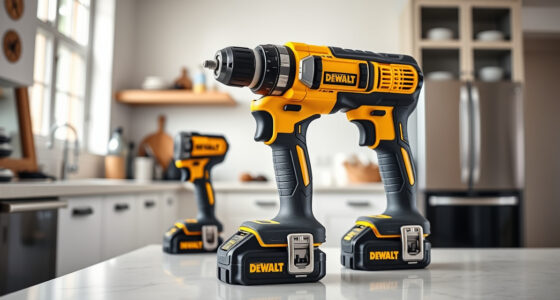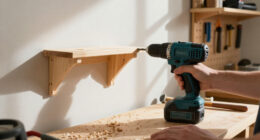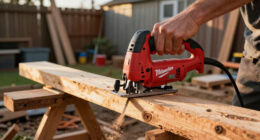
DIYers comparing compact cordless drills are usually choosing between a tool that feels easy in the hand and one that can take on tougher jobs without slowing down. A 12V compact drill is generally lighter and smaller; a compact 18V model typically has more power and often longer runtime. Those differences matter more than the voltage label alone: chuck design, battery size, speed settings, and the specific model all affect performance.

Get business pricing on tools and workshop supplies
- Business-only prices and quantity discounts
- Tax-exempt purchasing
- Multiple users, one account, clear invoices

VIWKO 12V Cordless Drill Driver Set with 92 Accessories
- ✔ Voltage: 12 V
- ✔ Maximum torque: 250 in-lb
- ✔ Maximum speed: 650 RPM

FADAKWALT 12V Cordless Drill Set with Battery and Charger
- ✔ Voltage: 12 V
- ✔ Maximum torque: 180 in-lbs (19 N·m)
- ✔ Maximum speed: 650 RPM

GRENPRO 8V Pink Cordless Drill Set with 43-Piece Accessory Kit
- ✔ Voltage: 8 V
- ✔ Maximum torque: 12 N·m
- ✔ Maximum speed: 800 RPM
For hanging shelves, assembling furniture, and occasional pilot holes, a 12V drill is often the more comfortable choice. If your projects include larger holes, dense materials, or repeated work across a room, an 18V compact drill is usually the safer buy. The comparison below focuses on those everyday tradeoffs, including what the higher price buys and when it is unnecessary.
At a Glance
| Criteria | 12V compact cordless drill | 18V compact cordless drill | Winner |
|---|---|---|---|
| Size and weight | Usually smaller and lighter, though battery size changes the feel. | Compact versions remain manageable but are usually heavier and bulkier. | A |
| Power for demanding work | Well suited to common fastening and modest drilling; less reserve for large bits or dense stock. | More reserve for larger holes, tougher materials, and repeated fastening. | B |
| Runtime and battery capacity | Smaller batteries are common; runtime depends on battery capacity and workload. | Often available with higher-capacity batteries; demanding work can still drain them quickly. | B |
| Control for light tasks | Lower power can make it easier to manage for small screws, with clutch and trigger control still important. | Can handle light tasks well, but requires care to avoid overdriving small fasteners. | A |
| Comfort over a session | Less tiring overhead or one-handed, especially in cramped spaces. | More weight can tire the wrist and arm during overhead or prolonged use. | A |
| Typical cost and ecosystem | Often a lower-cost entry point; value improves if you already own compatible 12V batteries. | Often costs more, especially as a bare tool or with larger batteries; platform ownership affects value. | Depends |
| Versatility across projects | Strong for household repairs, assembly, and light woodworking. | Covers light DIY and a broader range of demanding jobs. | B |
VIWKO 12V Cordless Drill Driver Set with 92 Accessories
For a DIYer who wants one compact drill kit to cover a variety of routine jobs, VIWKO has the strongest all-around specification mix here. Its stated 250 in-lb torque is higher than FADAKWALT’s 180 in-lbs, and its 25+1 clutch settings offer more adjustment points for dialing back force when driving screws. That extra control can help avoid burying fasteners or damaging softer materials, where maximum power is not the goal.The kit is also more complete on paper than GRENPRO’s: it lists a 2.0Ah battery and fast charger, plus drill bits, driver bits, screws, anchors, an extension bar, and a flexible shaft driver. That is useful for a household starter kit, although the accessory count alone does not tell us about bit quality or durability. VIWKO’s flexible shaft can help reach awkward fasteners, but it cannot replace a right-angle drill for every tight space.There are limits. Its maximum listed speed is 650 RPM, below GRENPRO’s 800 RPM, so buyers prioritizing a higher stated top speed may prefer the smaller 8V option for light work. The 1.42 kg listed weight is also worth considering if extended overhead use is common. We would choose VIWKO for the broadest mix of home tasks, but skip it if you want the lightest-feeling drill or need a tool specified for masonry drilling.
Pros:
- Highest stated torque in this comparison at 250 in-lb.
- 25+1 clutch settings support more fastening adjustment than the other picks.
- Includes a 2.0Ah battery and fast charger.
- Broad kit includes drill and driver bits, screws, anchors, and flexible shaft.
Cons:
- Maximum listed speed of 650 RPM is lower than GRENPRO’s 800 RPM.
- Listed item weight is 1.42 kg, which may feel substantial during extended overhead work.
- Included accessory quantity does not establish bit quality or long-term durability.
Best for: DIYers who want a broadly equipped 12V drill kit for furniture assembly, household fastening, and general wood or plastic projects.
Not ideal for: Buyers seeking the lightest listed option, a higher top speed, or a drill explicitly specified for masonry or concrete.
Bottom line: We recommend VIWKO for DIYers who want the most adaptable mix of stated torque, clutch control, and ready-to-use kit contents.
“We recommend VIWKO for DIYers who want the most adaptable mix of stated torque, clutch control, and ready-to-use kit contents.”
FADAKWALT 12V Cordless Drill Set with Battery and Charger
FADAKWALT is the control-focused 12V alternative to VIWKO. Its 21+1 clutch settings are fewer than VIWKO’s 25+1, and its stated torque is lower at 180 in-lbs, but those figures still describe a drill intended for more than occasional delicate screwdriving. An electric brake is listed as well, which stops rotation when the trigger is released and can make positioning feel more deliberate during repeated fastening.The rubber grip and compact dimensions are appealing for furniture assembly or work in dim corners, where comfort and the built-in LED matter. It includes a 1.5Ah battery and charger, along with drill and screwdriver bits, anchors, an extension bar, and a flexible shaft. Compared with GRENPRO, this is the more capable-looking choice for varied DIY tasks because it is a 12V model with higher stated torque and a listed battery. Compared with VIWKO, it gives up some torque and battery capacity, while retaining useful control features.Its 650 RPM maximum speed matches VIWKO’s listed ceiling and trails GRENPRO’s. The 1.5Ah battery is also smaller than VIWKO’s 2.0Ah unit, so buyers expecting longer stretches between charges may prefer the top-ranked kit. Although the set includes masonry bits, the supplied description does not specify hammer action or confirm masonry capability. We would keep it to materials and tasks the drill is designed for rather than treating the bit assortment as a promise of concrete drilling.
Pros:
- 21+1 clutch settings support controlled screwdriving.
- Electric brake and LED work light are useful for deliberate fastening in dim areas.
- Rubber grip and compact dimensions suit household projects.
- Battery, charger, flexible shaft, extension bar, and bits are included.
Cons:
- Stated torque of 180 in-lbs is below VIWKO’s 250 in-lb figure.
- The 1.5Ah battery has less listed capacity than VIWKO’s 2.0Ah battery.
- Maximum speed is 650 RPM, and masonry capability is not established by the supplied description.
Best for: DIYers who value a comfortable grip and controlled screwdriving, and want a 12V kit with a battery and charger included.
Not ideal for: Buyers who want the highest stated torque, the largest listed battery capacity, or confirmed masonry-drilling capability.
Bottom line: FADAKWALT suits buyers who put grip, braking, and fastening control ahead of maximum torque or battery capacity.
“FADAKWALT suits buyers who put grip, braking, and fastening control ahead of maximum torque or battery capacity.”
GRENPRO 8V Pink Cordless Drill Set with 43-Piece Accessory Kit
GRENPRO is the light-duty specialist in this group. Its 8V format, lightweight design, and one-handed-use positioning make it a plausible match for furniture assembly, small repairs, and drilling in wood or plastic. It also has the highest listed top speed at 800 RPM, compared with 650 RPM for both 12V options. That speed figure does not make it more powerful: its stated torque is only 12 N·m, so we would not choose it over VIWKO or FADAKWALT for jobs that call for greater fastening force.Its 3/8-inch keyless chuck, variable-speed trigger, forward/reverse switch, and LED cover the basics for household work. Type-C charging may be convenient if that matches the charging setup a buyer already uses. The included kit lists drill and fastening bits, anchors, a connector, and a torpedo level, whereas the VIWKO kit adds a listed battery and fast charger alongside a broader accessory assortment.The most important caveat is the battery: the supplied details list a 2000 mAh capacity but also state that lithium batteries are not sold with the product. We cannot resolve that mismatch from the information provided, so buyers should confirm what is actually included before expecting to use the drill. GRENPRO is also explicitly intended for wood and plastic, not masonry or concrete. Choose it for light tasks and compact handling; choose either 12V model when higher stated torque and an included battery are more important.
Pros:
- Compact, lightweight design is positioned for one-handed household use.
- Highest stated maximum speed in the group at 800 RPM.
- Variable-speed trigger, forward/reverse switch, keyless chuck, and LED provide useful basic control.
- Type-C charging and a starter assortment of bits and anchors are listed.
Cons:
- Stated torque of 12 N·m is lower than either 12V drill’s listed torque.
- Battery details conflict: capacity is listed, but the supplied cons say lithium batteries are not sold with the product.
- Intended for wood and plastic, not masonry or concrete.
Best for: DIYers handling occasional, light screwdriving and small drilling jobs in wood or plastic who prioritize a compact 8V design and Type-C charging.
Not ideal for: Buyers who need higher torque, a drill specified for masonry, or certainty that a usable battery is included without checking the listing.
Bottom line: GRENPRO is the compact, light-duty choice for simple household jobs, provided the battery situation is confirmed before purchase.
“GRENPRO is the compact, light-duty choice for simple household jobs, provided the battery situation is confirmed before purchase.”
As an Amazon Associate we earn from qualifying purchases.
Key Differences
The biggest practical gap is reserve power. Both categories can handle routine household drilling and screw driving, but a compact 18V drill is better prepared for larger holes, denser materials, and repeated work. That does not mean every 18V model is automatically stronger than every 12V model: motor design, gearing, bit choice, and battery condition matter. Still, when a job gets harder, the 18V class generally leaves more headroom.
The 12V advantage is handling. Less weight and a smaller body can make a real difference when working above shoulder height, inside cabinets, or through a long furniture assembly. An 18V drill can serve the same light tasks, but the extra capability is of little use if its weight makes the work less comfortable. Cost is similarly tied to fit: paying more for 18V makes sense when the additional capacity will see regular use, while a 12V kit is often better value for occasional, modest jobs.
Detailed Comparison
Size and weight (12V compact cordless drill wins — moderate)
A 12V drill usually wins for compactness and low weight, making it easier to fit between cabinet sides or use at arm’s length. The gap is moderate: compact 18V models can be short and well balanced, but their batteries commonly add weight. If overhead work or tight access is frequent, that difference is noticeable. Check the tool with its supplied battery, since the bare-tool specification does not show the working weight.
Power for demanding work (18V compact cordless drill wins — major)
An 18V compact drill usually wins when drilling wider holes, driving longer screws, or working repeatedly in dense wood. Its greater reserve can reduce stalling and the need to stop between tasks. The gap is moderate to major depending on the work: for small pilot holes it may not matter, while larger bits expose it quickly. Use sharp, appropriate bits and the correct speed; voltage alone cannot compensate for poor technique.
Runtime and battery capacity (18V compact cordless drill wins — moderate)
Compact 18V kits often offer larger-capacity batteries, which can support longer sessions, so B has the advantage for sustained work. The gap is moderate, not guaranteed: runtime varies with battery amp-hours, material, bit size, and how often the drill is loaded. A 12V drill with a spare battery may outlast a single-battery 18V kit in a workday. Compare the actual package and replacement battery cost.
Control for light tasks (12V compact cordless drill wins — minor)
A 12V drill often feels easier to keep steady on small screws and delicate hardware because it is lighter and has less power in reserve. This is a minor edge, since both categories can be controlled with a variable-speed trigger, suitable clutch setting, and a gentle touch. An 18V drill is not inherently unsuitable for furniture assembly; it just rewards more care to avoid stripping a screw or damaging soft material.
Comfort over a session (12V compact cordless drill wins — moderate)
A is usually more comfortable for repeated overhead fastening, shelf installation, or long assembly sessions because less weight is held away from the body. This moderate difference adds up over time. On a brief task, either drill may feel fine; for a full afternoon of overhead work, a heavier battery can become tiring. Balance matters too, so handle both if possible and consider the battery that will actually be used.
Typical cost and ecosystem (moderate difference)
There is no universal winner on price. 12V kits often cost less to enter, but an 18V drill may be better value if its platform already powers your other tools. Battery compatibility can outweigh the drill’s sticker price: buying a new charger and batteries for either system changes the calculation. Compare complete kits, warranty terms, and the cost of an extra battery. The difference is moderate when starting fresh and minor when you own a compatible platform.
Versatility across projects (18V compact cordless drill wins — moderate)
An 18V compact drill covers more of the range from routine repairs to tougher drilling, so it wins for a mixed project list. The gap is moderate for a homeowner who sometimes builds or renovates, but small for someone whose tasks rarely go beyond pilot holes and screws. Neither drill replaces a hammer drill for regular masonry work; check the model’s features and limits before expecting it to handle concrete.
12V compact cordless drill: Pros and Cons
Pros:
- Usually lighter and easier to maneuver in cramped spaces.
- Comfortable for overhead work and extended light assembly.
- Often a less expensive way to cover routine home repairs.
Cons:
- Less reserve for larger bits, dense materials, and repeated heavy fastening.
- Smaller batteries may mean shorter sessions unless you buy a spare.
- May feel limiting as projects grow more demanding.
18V compact cordless drill: Pros and Cons
Pros:
- More power reserve for demanding drilling and screw driving.
- Often pairs with higher-capacity batteries for longer work sessions.
- A more adaptable choice for varied DIY projects.
Cons:
- Typically heavier, which can make overhead work more tiring.
- May cost more once batteries and charger are included.
- Extra power takes care when driving small screws into soft material.
Who Should Choose What
Choose 12V compact cordless drill if:
- Your usual jobs are furniture assembly, picture hanging, pilot holes, and small household repairs.
- You work overhead or inside cabinets often and put comfort ahead of power reserve.
- You want a lower-cost drill and do not expect frequent work in dense materials.
Choose 18V compact cordless drill if:
- You regularly drill larger holes or drive longer fasteners into hardwood or other dense stock.
- Projects run long enough that battery capacity and fewer interruptions matter.
- You want one compact drill to cover light repairs as well as tougher DIY jobs.
Skip both if: You need a tool for frequent concrete drilling, heavy construction, or sustained high-load work; choose a hammer drill or a more powerful tool suited to that workload.
Value for Money
Pay more for a compact 18V drill when its extra reserve will be used regularly or when you already own compatible batteries and a charger. For a homeowner who builds shelves, tackles repairs, and drills into varied materials, that added range can justify the higher kit cost. If your work is mostly small screws and occasional holes, the 12V drill is often the better value: it costs less to get started and is easier to handle. Compare the full kit price, since a bare tool is only a bargain if you already have batteries in that platform.
Final Verdict
For most DIYers whose projects stay light and occasional, choose the 12V compact drill: its lower weight and easier handling are useful every time you pick it up, while many household tasks do not need 18V reserve. Choose the compact 18V drill if you often work in dense material, drill larger holes, or want more flexibility for future projects. The deciding factor is how often your work pushes beyond routine fastening. Pay the 18V premium for that capacity when you will use it; otherwise, a 12V kit is the more comfortable and economical fit.
Frequently Asked Questions
Is a 12V drill powerful enough for most DIY projects?
For common jobs such as furniture assembly, hanging shelves, pilot holes, and small repairs, generally yes. Larger holes and dense materials can call for more reserve, where a compact 18V drill has the advantage.
Does an 18V compact drill always outperform a 12V drill?
No. Voltage is only one part of performance; motor design, gearing, battery condition, and drill bits also matter. Compare model specifications and intended use rather than relying on voltage alone.
Will the extra weight of an 18V drill matter?
It matters most during overhead work, long sessions, and tasks in tight spaces. For brief jobs, the difference may be modest. Try to compare the tool with the battery attached, since that is how you will use it.
Should I pay more for an 18V drill?
Pay more if you regularly drill larger holes, work with dense materials, or already own compatible 18V batteries. For light household tasks, a 12V drill usually offers better value and easier handling.