
For woodworking, choosing between a 12V and 18V cordless drill is less about which tool has the bigger number and more about the holes and fasteners you regularly handle. Both can drive screws and drill many common holes in wood. The practical tension is weight and control against power and capacity: a 12V model is easier to manage during cabinet assembly, pilot-hole drilling, and overhead work, while an 18V model gives you more headroom for large auger bits, long screws, and extended work sessions.

Get business pricing on tools and workshop supplies
- Business-only prices and quantity discounts
- Tax-exempt purchasing
- Multiple users, one account, clear invoices
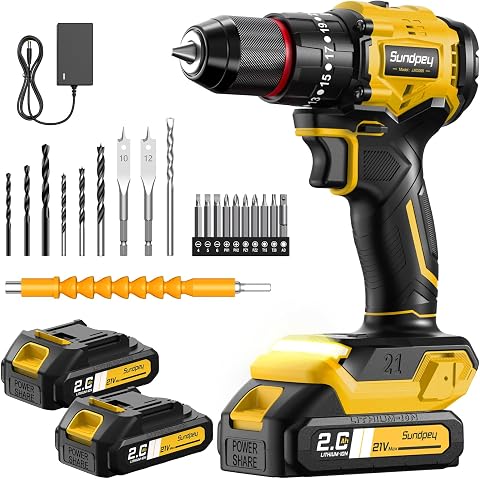
Sundpey 21V Brushless Cordless Hammer Drill Set
- ✔ Voltage: 21 V
- ✔ Motor: Brushless
- ✔ Maximum torque: 620 in-lb (70 N·m)

BLACK+DECKER 20V MAX POWERCONNECT Cordless Drill Driver Kit, 100-Piece
- ✔ Voltage: 20 V MAX
- ✔ Maximum torque: 150 in-lb
- ✔ Maximum rotational speed: 650 RPM

DEKOPRO 20V Cordless Drill Set with Battery and Charger
- ✔ Voltage: 20 V
- ✔ Maximum torque: 40 N·m
- ✔ Speed settings: 2: 0–350 RPM and 0–1,350 RPM
Choose a 12V drill if your projects mostly involve furniture, cabinetry, and finish work, and you value a compact tool. Choose 18V if you often work with thick or dense lumber, use larger accessories, or want one drill that can take on broader construction and renovation tasks. Battery platform, clutch quality, chuck, speed settings, and the actual tool’s balance matter too; voltage alone does not guarantee a better woodworking drill.
At a Glance
| Criteria | 12V cordless drill | 18V cordless drill | Winner |
|---|---|---|---|
| Weight and control | Usually lighter and less tiring for precise, repeated work | Usually heavier, though compact models can be well balanced | A |
| Power for drilling | Handles common wood bits; less reserve for large bits or resistant stock | More torque and headroom for larger bits, long screws, and demanding drilling | B |
| Screw driving | Well suited to ordinary woodworking screws with a good clutch | Better suited to frequent long screws and tougher assemblies, with care to avoid overdriving | Depends |
| Runtime and workload | Often adequate for small and medium projects; smaller batteries may run down sooner under heavy loads | Often available with higher-capacity batteries and better suited to sustained workloads | B |
| Access and ergonomics | Compact body helps in cabinets, corners, and overhead positions | Bulkier models can be awkward in confined spaces | A |
| Platform versatility | Often a smaller tool range, depending on brand and battery system | Usually part of a broader system of compatible tools | B |
| Value | Good value when light weight and sufficient capacity matter more than maximum output | Worth the extra cost when higher capacity or a wider platform will be used | Depends |
Sundpey 21V Brushless Cordless Hammer Drill Set
For woodworking that involves repeated screwdriving as well as drilling, the Sundpey 21V Brushless has the most capable stated power package here. Its listed 620 in-lb of torque exceeds the figures given for the other two drills, and its 0–400 RPM low gear gives us a slower range for starting screws with more control. The included pair of 2.0Ah batteries also offers a practical advantage over the single-battery DEKOPRO and BLACK+DECKER kits: we can keep a charged battery ready rather than stopping as soon as one runs down.The two-speed setup reaches 1,800 RPM in high gear, making it the most versatile stated option for ordinary drilling in this group. Its three modes include hammer drilling, but that mode is not a woodworking advantage and should be treated as an occasional extra rather than a reason to choose it for a wood shop. The 3/8-inch keyless chuck is also smaller than the half-inch chuck specified for DEKOPRO, which may limit the range of compatible larger-shank accessories.There are meaningful caveats. Sundpey lists maximum drilling depth in wood as 3 inches, but gives no matching hole diameter, so we should not interpret that as proof of broad boring capacity. Its stated battery runtime is one hour under no-load conditions, which does not tell us how long it will last under demanding work. Compared with the BLACK+DECKER, Sundpey offers substantially more stated torque and a faster top speed, but fewer clutch positions than BLACK+DECKER’s 24 are not specified here—only 23 torque settings are listed. This is our strongest all-round pick, not a substitute for a drill whose capacity is clearly specified for large woodworking bits.
Pros:
- Highest stated torque in this comparison at 620 in-lb
- Two 2.0Ah batteries allow a charged spare to be ready
- Low 0–400 RPM gear supports more controlled screw starts
- Includes a keyless metal chuck, LED, assorted bits, and flexible shaft
Cons:
- 3/8-inch chuck is smaller than DEKOPRO’s listed half-inch maximum chuck
- Wood drilling depth is listed without a comparable hole diameter
- No-load runtime figure does not establish practical working runtime
Best for: Woodworkers who want higher stated torque, a slow screwdriving gear, and a spare battery for multi-step DIY projects.
Not ideal for: Buyers who need a half-inch chuck, clearly documented large-hole capacity, or a drill dedicated to frequent heavy boring.
Bottom line: We rank Sundpey first for its torque, low-speed control, and two-battery kit, while keeping its unclear drilling-capacity details firmly in view.
“We rank Sundpey first for its torque, low-speed control, and two-battery kit, while keeping its unclear drilling-capacity details firmly in view.”
BLACK+DECKER 20V MAX POWERCONNECT Cordless Drill Driver Kit, 100-Piece
When woodworking means assembling cabinets, furniture, jigs, or small projects with many different screws, BLACK+DECKER’s 24-position clutch is its clearest advantage. More clutch positions can give us finer adjustment between driving and stopping, helping reduce overdriving when working with softer wood or smaller fasteners. That makes this kit more appealing for careful assembly than DEKOPRO’s 18+1 settings, although clutch count alone cannot guarantee a particular result.The 100-piece accessory set and storage case also make it the most ready-to-organize package in this comparison. Its battery belongs to the POWERCONNECT system, a useful consideration if we already own compatible BLACK+DECKER tools. Against Sundpey, however, this drill gives up substantial stated torque: its maximum is 150 in-lb, compared with Sundpey’s 620 in-lb. It also lists a maximum speed of just 650 RPM, so drilling holes is likely to feel more limited than with Sundpey’s 1,800 RPM top gear or DEKOPRO’s 1,350 RPM.We should be careful with the description of it as lightweight: the supplied item weight is 6.1 pounds, which is higher than DEKOPRO’s listed 2.5 pounds, and the dimensions include the kit presentation rather than necessarily describing the bare tool. Its 1.5Ah battery is also the smallest stated capacity here, tied with DEKOPRO but without Sundpey’s second battery. The listed 10 mm wood drilling capacity is clearer than DEKOPRO’s 2 mm figure, yet still modest for larger woodworking holes. We place it second because its control-focused clutch and organized accessory bundle are genuinely useful for assembly, not because it is the strongest drilling option.
Pros:
- 24-position clutch provides the most adjustment positions listed here
- 100-piece accessory set and zippered storage case are included
- Battery is compatible with other BLACK+DECKER POWERCONNECT tools
- Soft-grip handle supports a comfortable hold during assembly work
Cons:
- 650 RPM listed maximum speed is the lowest stated top speed in this group
- 150 in-lb maximum torque is well below Sundpey’s stated figure
- Single 1.5Ah battery and 10 mm wood capacity limit its scope
Best for: Woodworkers focused on small builds, furniture assembly, and screwdriving who value clutch adjustment, a storage case, and POWERCONNECT compatibility.
Not ideal for: Buyers who frequently drill larger holes, need faster drilling, or want higher torque and a second battery in the box.
Bottom line: We recommend BLACK+DECKER for controlled small-project assembly and accessory organization, but not for buyers prioritizing drilling speed or torque.
“We recommend BLACK+DECKER for controlled small-project assembly and accessory organization, but not for buyers prioritizing drilling speed or torque.”
DEKOPRO 20V Cordless Drill Set with Battery and Charger
DEKOPRO’s strongest case is its stated 2.5-pound compact build, which suits short jobs where a heavier drill may feel cumbersome. It includes a 20V battery, charger, and a useful starter assortment of drill and screwdriver bits, so we can move from basic repairs to small woodworking tasks without assembling a kit from separate purchases. The 0–350 RPM low gear is also the slowest starting range listed among these models, giving us a potentially useful pace for beginning screwdriving carefully.Its two-speed gearbox reaches 1,350 RPM, a middle ground between BLACK+DECKER’s 650 RPM and Sundpey’s 1,800 RPM. That makes it more flexible for routine drilling than the BLACK+DECKER on paper, though it does not approach Sundpey’s stated torque or battery provision. DEKOPRO lists 40 N·m of maximum torque and 18+1 settings; BLACK+DECKER offers more clutch positions, while Sundpey is the stronger choice when higher torque and an extra battery matter.The specification that gives us pause is its stated 2 mm wood drilling capacity, an unusually small figure for a drill described for DIY projects. We should not quietly assume that it means a different dimension or a broader practical limit: buyers planning ordinary larger pilot, clearance, or boring holes should seek clarification before relying on it. The kit also includes just one 1.5Ah battery, so there is no ready spare as with Sundpey. We rank it third not because its compact form lacks value, but because the capacity statement and single small battery make it a less convincing woodworking choice than the other two.
Pros:
- Listed 2.5-pound weight is the lightest in this comparison
- Low gear starts at 0–350 RPM for measured screwdriving
- Includes charger, drill bits, screwdriver bits, and magnetic bit holder
- Half-inch maximum chuck size offers broad accessory-shank compatibility on paper
Cons:
- Only one 1.5Ah battery is included
- Listed wood drilling capacity of 2 mm is unusually restrictive and unclear
- 40 N·m stated torque is below Sundpey’s listed 70 N·m
Best for: DIYers who prioritize a light, compact drill for occasional screwdriving and small household or woodworking jobs.
Not ideal for: Woodworkers who need reliable capacity for larger holes, long shop sessions, or a spare battery to minimize interruptions.
Bottom line: We choose DEKOPRO for light, compact DIY work, but its stated wood capacity should be clarified before we make it our main woodworking drill.
“We choose DEKOPRO for light, compact DIY work, but its stated wood capacity should be clarified before we make it our main woodworking drill.”
As an Amazon Associate we earn from qualifying purchases.
Key Differences
The clearest everyday difference is handling. A lighter 12V drill is easier to hold steady for a row of pilot holes, to use inside a cabinet, or to operate at shoulder height. That can improve practical accuracy and reduce fatigue, especially for hobbyists who do not need high torque on every task. It is not automatically more precise, though: chuck runout, trigger control, balance, and a suitable bit also affect results.
An 18V drill wins when the job demands more from the motor or battery. Larger-diameter bits, long fasteners, thick stock, and repeated drilling can load a compact drill heavily. The additional capacity reduces the chance that you will need to slow down, swap tools, or stop for a battery change. The tradeoff is bulk: if most of your work is small-scale assembly, that extra reserve may rarely pay for the added weight and purchase cost.
Neither voltage is a guarantee of quality. Compare the specific drill’s clutch, two-speed gearbox, chuck, speed control, battery capacity, and balance. For woodworking, a drill with a well-tuned clutch and controlled low-speed trigger can be more useful than a higher-voltage tool that is heavy or difficult to control. Also check whether you already own batteries for a platform; the cost and convenience of sharing them can change the value calculation.
Detailed Comparison
Weight and control (12V cordless drill wins — moderate)
12V wins by a moderate margin for handling. These drills are commonly lighter, making them more comfortable for repetitive pilot holes, small fasteners, and overhead assembly. Less mass also makes it easier to keep the bit aligned when working one-handed, though technique and tool balance still matter. An 18V drill can be perfectly manageable, especially in a compact configuration, but its extra weight is a cost you feel most when the work is frequent or awkwardly positioned.
Power for drilling (18V cordless drill wins — major)
18V wins by a major margin for demanding drilling. It generally provides more torque and capacity for large bits, deeper holes, and dense or thick material. That headroom is useful when a project calls for repeated heavy drilling rather than a single occasional hole. A good 12V drill remains capable of common woodworking holes, but forcing a small tool through an oversized bit can slow the work and strain the motor or battery. Use sharp, appropriate bits and avoid forcing either drill.
Screw driving (moderate difference)
The winner depends on the fasteners and the user’s control. For ordinary cabinet, furniture, and general woodworking screws, either class can work well when paired with the right bit and a clutch. The lighter 12V tool is comfortable for many repeated, smaller screws. An 18V drill has an advantage with long screws or frequent driving into harder stock, but extra torque also makes it easier to strip a head, snap a screw, or bury it too deeply. Set the clutch and finish delicate work at a controlled speed.
Runtime and workload (18V cordless drill wins — moderate)
18V usually wins for sustained, demanding use, with a moderate gap. Many 18V systems offer larger-capacity batteries, and higher power helps the drill cope with repeated heavy tasks. Actual runtime depends on battery capacity, tool efficiency, bit size, material, and how much pressure the job requires, so voltage alone cannot predict hours of use. For a small project or occasional repairs, a 12V battery may last long enough and keep the kit lighter. For a full day of drilling, spare batteries matter on either platform.
Access and ergonomics (12V cordless drill wins — moderate)
12V wins by a moderate margin in tight spaces. A shorter, smaller drill can fit more readily between shelves, inside cabinets, and near a corner where a bulky body would obstruct the work. That can reduce awkward wrist angles and make assembly easier. Not all 12V drills are especially compact, and some 18V compact models narrow the gap. Compare the actual tool’s head length and grip rather than relying only on its battery label.
Platform versatility (18V cordless drill wins — moderate)
18V often wins by a moderate margin. Many manufacturers build a broad range of compatible 18V tools, making it easier to share batteries across drills, saws, sanders, and other workshop equipment. That matters if you plan to expand a cordless setup. Some brands also offer extensive 12V systems, so check the specific lineup before deciding. If you already own batteries, staying on that platform can be more valuable than a theoretical difference in tool capability.
Value (moderate difference)
Neither voltage is the automatic value winner. A 12V kit is good value when its lighter form is useful and it can handle the work you actually do; paying for unused torque adds little. An 18V kit is worth more when it replaces a second tool, supports demanding projects, or shares batteries with equipment you already use. Compare complete kit costs, including batteries and charger, rather than tool-only prices. Paying extra for 18V makes sense only when its capacity or ecosystem provides a real benefit.
12V cordless drill: Pros and Cons
Pros:
- Lightweight handling reduces fatigue during assembly and repeated light drilling.
- Compact designs are often easier to position in cabinets and tight spaces.
- Plenty capable for many pilot holes, furniture projects, and ordinary screws.
- A sensible choice when portability and control matter more than maximum torque.
Cons:
- Less reserve for large-diameter bits, long screws, and demanding stock.
- Heavy workloads may drain smaller batteries more quickly or require more pauses.
- The available compatible tool range may be narrower, depending on the brand.
18V cordless drill: Pros and Cons
Pros:
- More torque and capacity for large bits, thick lumber, and long fasteners.
- Better suited to sustained, demanding work and larger batteries.
- Often connects to a broad cordless tool platform.
- A versatile choice for woodworking that overlaps with renovation or construction.
Cons:
- Usually heavier, which can make delicate or overhead work more tiring.
- Bulk can limit access in small cabinets and narrow work areas.
- Extra power can damage work or fasteners if speed and clutch settings are poorly controlled.
- The higher purchase cost may buy little for users who only drill small holes and drive short screws.
Who Should Choose What
Choose 12V cordless drill if:
- You mainly build furniture, assemble cabinets, or do repairs with common-size bits and screws.
- You often work overhead or in confined spaces and want a lighter drill.
- You value fine handling and already own batteries in a compatible 12V system.
- You rarely drill large holes or drive long fasteners into dense stock.
Choose 18V cordless drill if:
- You regularly drill larger holes or work with thick, dense lumber.
- You drive long screws often or need a drill for both woodworking and broader construction tasks.
- You work for long sessions and can benefit from higher-capacity batteries or spares.
- You want access to a wider cordless tool platform and will use more of its tools.
Skip both if: If your work mainly involves precise joinery holes, repeated production drilling, or driving without damaging finished surfaces, consider adding a drill press, dedicated driver, or specialized jig instead of expecting one cordless drill to cover every task.
Value for Money
Pay more for 18V when the added capacity solves a recurring problem: large bits bogging down, long screws taking too much effort, frequent battery changes, or the need to power other workshop tools on the same platform. In those cases, the higher cost buys useful range rather than a specification you rarely use.
For modest woodworking, 12V is often the better value if it includes a decent battery, charger, clutch, and chuck. Its lower weight can be a daily benefit, while unused torque is not. Kit pricing and brand ecosystems vary, so compare the total cost of the tool and batteries you need. If you already own compatible batteries, that can make either choice the economical one.
Final Verdict
For most hobby woodworkers whose work centers on furniture, cabinetry, and household projects, choose a good 12V drill. It has enough capacity for common drilling and screw driving, and its lighter, more compact form is useful throughout assembly. Choose 18V if large holes, long fasteners, dense lumber, extended workloads, or a broader cordless tool collection are regular parts of your work. The deciding factor is not voltage on its own: it is whether the 18V drill’s extra reserve will be used often enough to justify its weight and cost.
Do not pay more for 18V merely because it sounds more capable. Pay for it when you need that capability. If you are unsure, list the largest bit and longest screw you use regularly, then compare the specific tools’ weight, battery setup, clutch, and balance.
Frequently Asked Questions
Is a 12V drill strong enough for woodworking?
For many woodworking tasks, yes. A suitable 12V drill can handle common pilot holes, smaller wood bits, and ordinary screws. Its limits show up sooner with large bits, thick or dense stock, and repeated heavy drilling. Match the tool to the bit and task rather than forcing it when it slows down.
Will an 18V drill damage wood more easily?
Not if you control it, but greater torque can make overdriving or stripping easier. Use the clutch for screws, select a suitable speed, and keep the drill aligned. For delicate work, a lighter drill can feel easier to manage, but careful settings and technique matter more than voltage alone.
Does 18V always mean longer battery runtime?
No. Runtime depends on battery capacity, tool efficiency, the size of the bit, the material, and the workload. 18V kits often offer larger batteries and handle heavy work more readily, but compare battery capacity and expected use rather than assuming voltage determines runtime.
Should woodworking beginners buy 12V or 18V?
For furniture assembly, small projects, and common household woodworking, a 12V kit is often the more comfortable starting point. Pick 18V if you already expect to drill large holes, drive long screws, or build a wider cordless tool collection. A well-made tool with a useful clutch matters more than buying the highest voltage.
Black Friday Picks

Sonos One SL (3-Pack) – Microphone-Free Speaker, Black
As an affiliate, we earn on qualifying purchases.