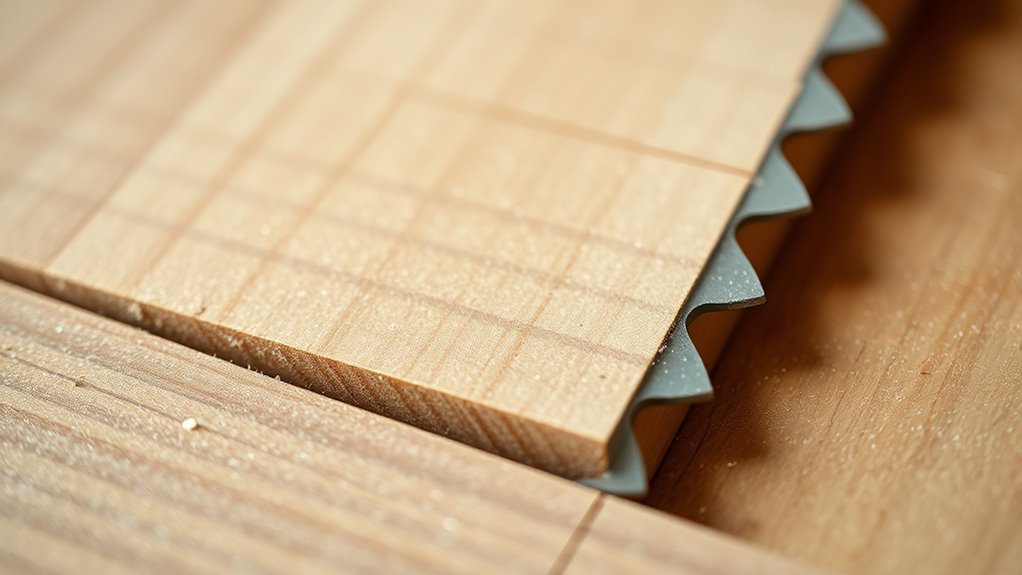

Understanding saw kerf and blade thickness helps you make precise cuts and save material. The kerf is the width of the cut, which depends on the thickness of the blade. Thinner blades produce narrower kerfs, reducing waste, while thicker blades can offer more stability. Vibration also affects cut quality, so choosing the right blade is key. Keep exploring to learn how selecting the proper blade enhances your project results and efficiency.

Get business pricing on tools and workshop supplies
- Business-only prices and quantity discounts
- Tax-exempt purchasing
- Multiple users, one account, clear invoices
Key Takeaways
- Blade thickness directly determines the kerf width, affecting material waste and cut precision.
- Narrower blades produce thinner kerfs, ideal for detailed projects and conserving material.
- Thicker blades create wider kerfs, offering more stability but increasing material loss.
- Blade vibration influences cut quality; thicker blades are generally more stable, reducing wobble.
- Selecting the appropriate blade thickness based on material and project needs optimizes cutting accuracy.
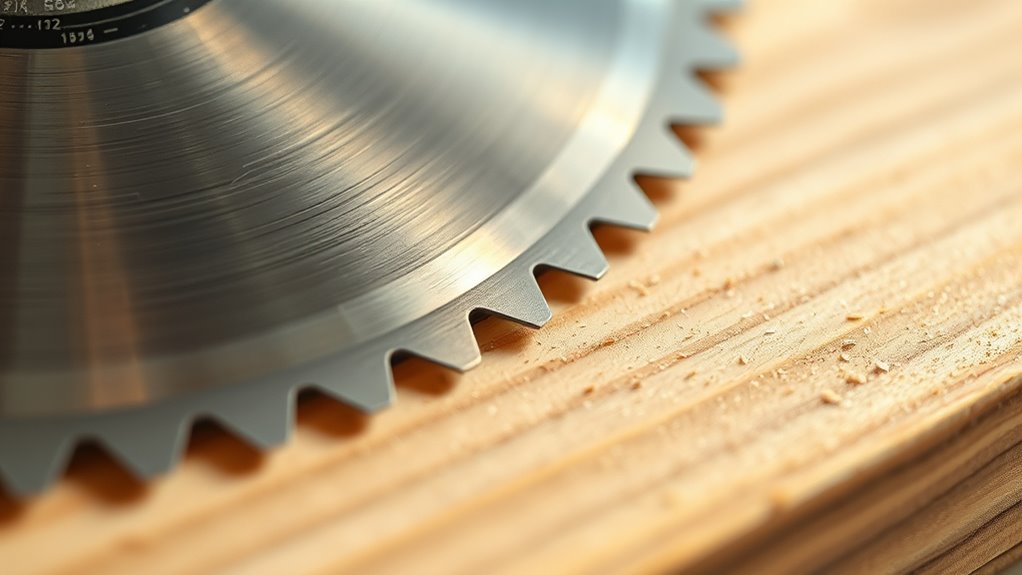
When choosing a saw blade, understanding the concepts of kerf and blade thickness is essential for accurate cuts and minimizing material waste. These factors directly influence your cut quality and efficiency. Blade thickness, or the width of the cutting edge, determines the kerf, which is the width of material removed during the cut. A thinner blade produces a narrower kerf, reducing waste and preserving more of your material. Conversely, a thicker blade creates a wider kerf, which might be beneficial for stability but results in more material loss. Knowing this helps you select the right blade for your project to maximize material savings and achieve precise results.
Blade vibration also plays a fundamental role in cut quality. When a blade vibrates excessively during operation, it can cause uneven cuts, reduce cut precision, and even lead to blade damage. Vibration is often influenced by blade thickness and the overall design of the blade. Thinner blades tend to be more flexible, which can sometimes increase vibration if not properly stabilized. On the other hand, thicker blades are generally more stable, minimizing vibration and leading to cleaner, more accurate cuts. To optimize cut precision, it’s imperative to choose a blade that balances thickness and stability appropriate for your material and cutting machine.
Excessive blade vibration reduces cut quality and can cause damage; choose a blade that balances thickness and stability.
The interaction between blade vibration and kerf width is critical. Excessive vibration can cause the blade to wobble slightly, widening the kerf and compromising accuracy. This wobbling not only affects the precision of your cut but can also cause jagged edges or splintering, especially on delicate materials. To mitigate this, ensure your blade is mounted correctly and is of high quality, with proper teeth alignment and tension. Using a blade with the right thickness for your application also helps maintain stability, reducing vibration and ensuring your cuts are straight and precise.
Additionally, understanding how blade thickness impacts cut precision helps you make better choices for specific projects. For fine woodworking, a thin kerf blade offers high precision and less waste, perfect for detailed work. For heavy-duty cutting through thick or dense materials, a thicker, more stable blade might be necessary to maintain control and reduce vibration. Always match your blade’s thickness and design to your material and saw type. Proper maintenance, such as keeping blades sharp and well-aligned, further reduces vibration and enhances cut accuracy. Being aware of blade stability and its impact on vibration can significantly improve your cutting results.
precision saw blades for woodworking
As an affiliate, we earn on qualifying purchases.
As an affiliate, we earn on qualifying purchases.
Frequently Asked Questions
How Does Blade Material Affect Kerf Width?
Blade material directly impacts kerf width because different materials influence blade durability and material compatibility. A more durable blade made from high-quality steel or carbide maintains a consistent kerf, reducing waste and ensuring cleaner cuts. Conversely, blades made from less durable materials may wear faster, causing kerf variations. By choosing the right blade material, you guarantee peak performance, reduce blade wear, and achieve precise cuts suited to your specific material, enhancing your overall work quality.
Can Kerf Width Impact Material Waste?
Sure, because who doesn’t love wasting more material, right? Kerf width definitely impacts material waste—you lose more with wider cuts. When you prioritize saw blade durability, you tend to get better kerf width accuracy, minimizing waste. It’s a win-win; less waste means more efficiency. So, pay attention to kerf width, keep your blades sharp, and save both material and money, all while pretending you’re eco-friendly.
Are Thinner Blades More Prone to Bending?
Thinner blades can be more prone to bending because their increased blade flexibility makes them less rigid. This flexibility can affect kerf precision, leading to less accurate cuts. While thinner blades allow for less material waste, they require careful handling to prevent bending during operation. If you prioritize precise cuts, consider balancing blade thickness with strength to minimize bending without sacrificing kerf accuracy.
How Do I Choose the Right Blade for Delicate Cuts?
Think of choosing a blade like finding a ballet dancer—delicate, precise, and graceful. For delicate cuts, select a blade with fine teeth and guarantee perfect blade alignment. Keep blade tension just right—too loose, and it wobbles; too tight, and it cracks. This balance helps you make smooth, accurate cuts without splintering or tearing, giving your project a professional finish. Proper blade tension and alignment are your secret tools for finesse.
Does Kerf Width Influence Cutting Speed?
Yes, kerf width influences cutting speed because a wider kerf removes more material, which can slow you down and impact cutting precision. A narrower kerf allows for faster cuts and less material waste, but it might compromise blade durability if it’s too thin. When choosing your blade, consider balancing kerf width to optimize cutting speed without sacrificing precision or blade longevity.
As an affiliate, we earn on qualifying purchases.
Conclusion
Now that you understand saw kerf and blade thickness, you’re better equipped to make precise cuts and avoid waste. Think of these measurements as the heartbeat of your woodworking projects—silent but essential. When choosing a blade, remember that the right kerf isn’t just a detail; it’s the difference between a perfect cut and a costly mistake. So, keep these insights close and let your craftsmanship speak for itself.
sturdy table saw blades for dense materials
As an affiliate, we earn on qualifying purchases.
As an affiliate, we earn on qualifying purchases.
high stability woodworking saw blades
As an affiliate, we earn on qualifying purchases.
As an affiliate, we earn on qualifying purchases.
Halloween Picks
halloween
As an affiliate, we earn on qualifying purchases.