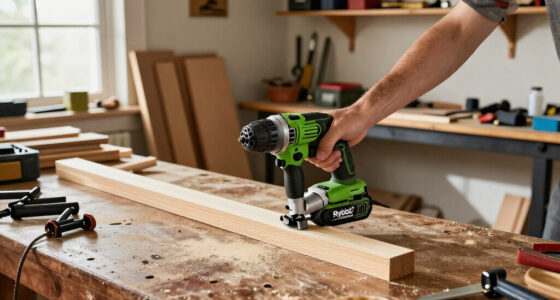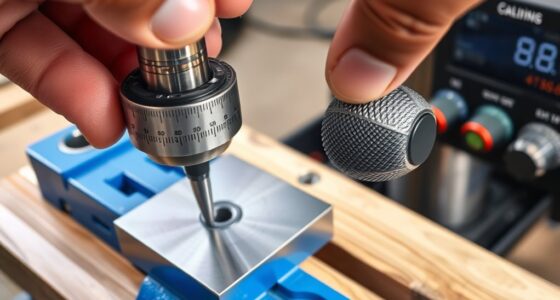
The key habit that separates clean cuts from sketchy ones is maintaining a proper blade setup and staying vigilant with safety checks. You should regularly inspect and align the blade, guarantee it’s sharp, and adjust the height and angle before each cut. By being disciplined and attentive, you create a safer workspace and achieve more precise results. Keep practicing these routines, and you’ll find your cuts become cleaner and more confident every time. Stay with us to learn how to master these habits.

Get business pricing on tools and workshop supplies
- Business-only prices and quantity discounts
- Tax-exempt purchasing
- Multiple users, one account, clear invoices
Key Takeaways
- Consistently check and adjust blade height and angle before each cut.
- Maintain sharp, clean blades through regular inspection and proper cleaning.
- Ensure proper blade alignment for accurate, smooth cuts.
- Follow a routine safety check to verify all safety features are functioning.
- Focus on attention to detail and discipline to produce precise, clean cuts consistently.
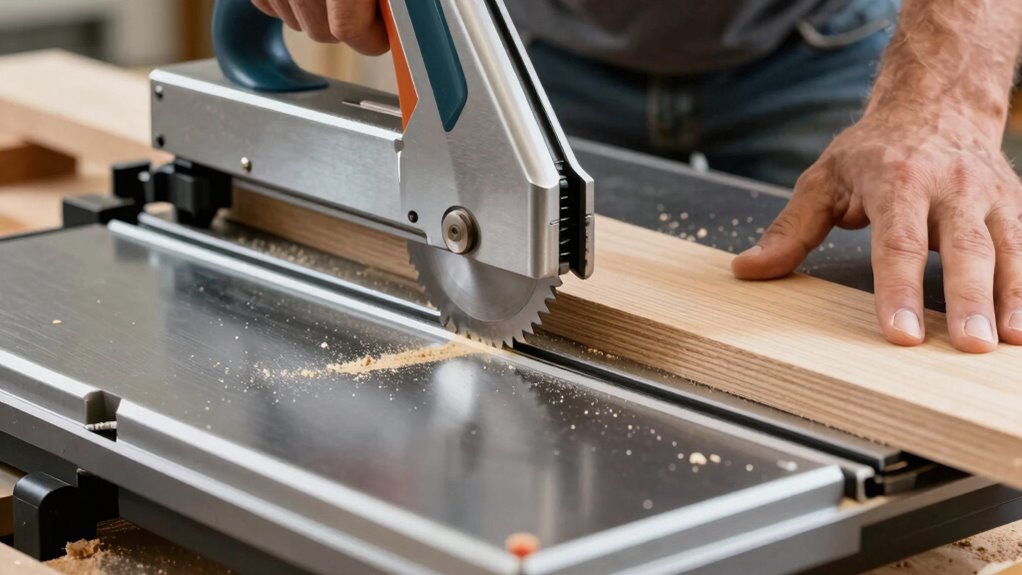
Many woodworking enthusiasts develop a routine around their table saw that becomes second nature, often without realizing how deeply it’s ingrained. This routine isn’t just about speed; it’s about consistency, safety, and quality. One of the most critical habits you can develop is following strict safety precautions every time you use your saw. This means always wearing safety glasses, keeping your hands clear of the blade, and ensuring the saw is properly grounded. Never bypass safety features or take shortcuts, even when you’re in a rush. Developing this habit keeps you protected from potential injuries and sets a standard for every cut you make.
Prioritize safety every time—wear glasses, keep hands clear, and never bypass safety features to protect yourself and ensure quality cuts.
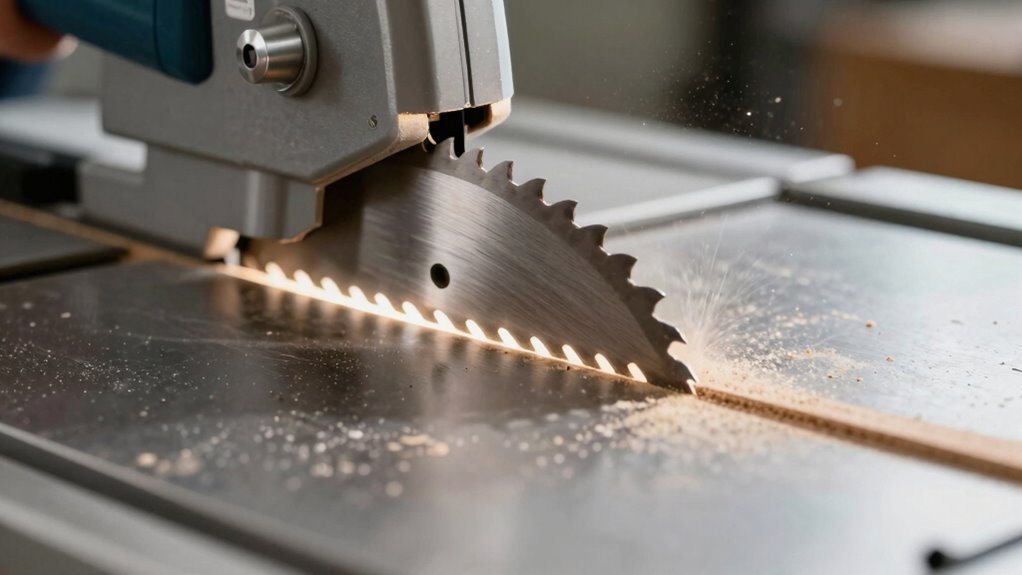
Equally important is maintaining your blade. Regular blade maintenance isn’t just about prolonging the life of your saw; it directly impacts the quality of your cuts. A dull or dirty blade can cause uneven cuts, kickbacks, and increased strain on your motor. Make it a point to inspect the blade before every use—look for signs of dullness, buildup of resin or pitch, or damage. Clean your blade frequently with the appropriate tools, and replace it when it’s worn down beyond safe or effective use. Sharp, well-maintained blades make cleaner cuts, reducing splintering and rough edges, and help you achieve precision effortlessly. Additionally, developing a habit of consistent maintenance keeps your saw performing at its best and minimizes unexpected breakdowns. Remember, proper lubrication of moving parts can also prevent unnecessary wear and ensure smoother operation.
Developing a habit of proper blade maintenance also encourages you to be more mindful of your overall setup. You’ll learn to check and adjust the blade height and angle carefully each time, ensuring your cuts are accurate. When you take the time to set the blade correctly and keep it sharp, you’re less likely to experience errors or accidents. This routine becomes instinctive, so you don’t have to think twice before starting a project. Clean cuts aren’t just about aesthetics; they’re about safety and efficiency. Well-maintained blades produce smoother cuts, which means less force needed and less chance of kickback or binding. Additionally, paying attention to safety features and ensuring they are functioning properly can prevent potentially serious injuries. Developing a consistent safety routine reinforces your awareness of hazards and helps prevent complacency while working. Remember, the proper blade alignment is crucial for ensuring both safety and precision in your work.
Ultimately, the habit that separates clean cuts from sketchy ones boils down to attention to detail. By consistently following safety precautions and prioritizing blade maintenance, you create a safer workspace and improve your craftsmanship. It’s about cultivating discipline—making these practices automatic so that each time you power up your saw, your focus remains on precision and safety. Over time, this routine becomes second nature, ensuring your woodworking projects are not only beautiful but also safe and reliable.
Products Worth Considering

Philips Hue Bridge Pro Starter Kit with 4 A19 E26 Color Smart Bulbs

Shark AV2501S AI Ultra Robot Vacuum with Matrix Clean and Self-Empty Base

Dyson Ball Animal 2 Total Clean Upright Vacuum Cleaner, Blue
As an affiliate, we earn on qualifying purchases.
Frequently Asked Questions
How Often Should I Calibrate My Table Saw?
You should calibrate your table saw every few months or whenever you notice uneven cuts or increased tear-out. Check blade alignment regularly to guarantee straight cuts, especially after moving or transporting the saw. Also, keep dust collection in mind—clogged ports can affect performance and safety. Regular calibration helps maintain precision, prolongs tool life, and guarantees cleaner, safer cuts every time you use your saw.
What Safety Gear Is Essential When Using a Table Saw?
Did you know that over 30,000 injuries occur annually from table saw accidents? To stay safe, you must wear essential safety gear. Protective glasses shield your eyes from flying debris, while hearing protection prevents long-term hearing loss. Always wear these while operating a table saw, and consider additional gear like push sticks and dust masks. Prioritizing safety keeps you protected and makes sure your woodworking remains enjoyable.
Can I Use a Table Saw for Materials Other Than Wood?
You can use a table saw for alternative materials, but you must check blade compatibility first. Not all blades are suitable for materials like plastic, metal, or composite boards. Using the wrong blade can damage your saw or produce unsafe cuts. Always verify that your blade is designed for the specific material you’re working with, and adjust your saw settings accordingly to guarantee safe, clean cuts.
How Do I Choose the Right Blade for Different Cuts?
Choosing the right blade is like selecting a trusted partner for your project. For rip cuts, use a blade with fewer teeth for faster, rough cuts; for crosscuts, opt for a blade with more teeth for cleaner finishes. Blade types vary based on the material and cutting techniques you prefer. Always match the blade to your specific task, ensuring precision and safety in every cut.
What Are Common Mistakes to Avoid With Table Saws?
To avoid common table saw mistakes, always check blade alignment before cutting; misaligned blades cause kickbacks and uneven cuts. Use proper push stick techniques to keep your hands safe and maintain control, especially on narrow or tricky cuts. Never remove safety guards or rush through a cut. Staying attentive, maintaining the saw, and practicing safe push techniques ensure cleaner cuts and reduce the risk of accidents.
Conclusion
Mastering the table saw habit isn’t just about precision; it’s about cultivating a gentle respect for the tool. When you develop these habits, you’re subtly guiding yourself toward cleaner cuts and safer workdays. Think of it as fine-tuning your craft—finding that sweet spot where skill and caution dance together. Keep nurturing this habit, and you’ll find your woodworking journey becomes not just easier, but truly more enjoyable. After all, a little care goes a long way.