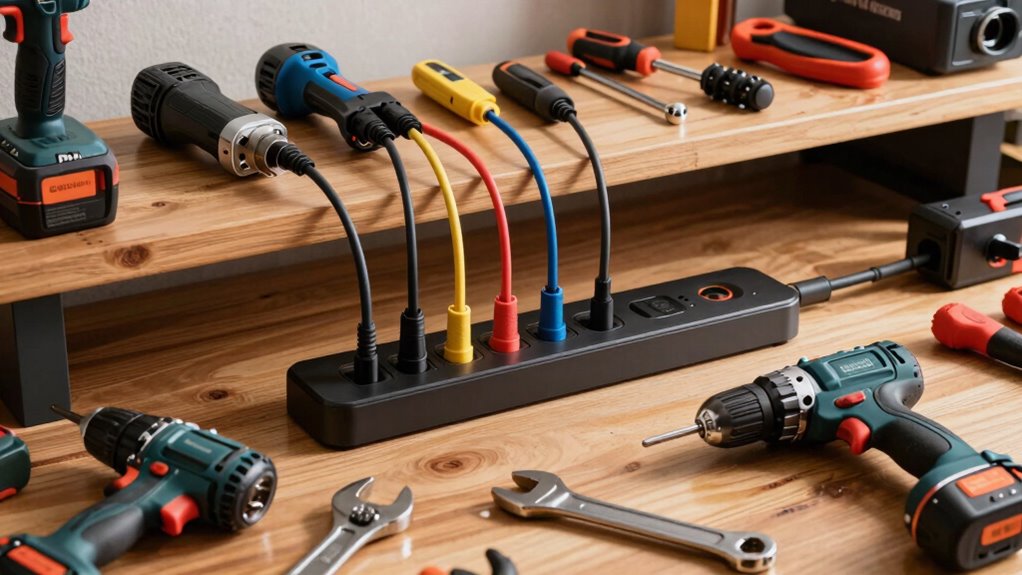

To make tool swapping less annoying, set up a workbench power strip with modern features like wireless charging pads and built-in surge protection. Keep your tools organized and easily accessible, reducing clutter and cord tangling. Guarantee safety by choosing a strip with grounding and overload protection. Regularly check connections to maintain safety and reliability. If you want to discover how to optimize your setup further, there’s more to explore that can transform your workspace.

Get business pricing on tools and workshop supplies
- Business-only prices and quantity discounts
- Tax-exempt purchasing
- Multiple users, one account, clear invoices
Key Takeaways
- Incorporate a power strip with wireless charging pads for quick device and tool recharging.
- Use surge-protected power strips to prevent damage during frequent tool swaps.
- Choose a setup with multiple outlets and USB ports for easy, clutter-free tool and gadget access.
- Ensure safety features like grounding and overload protection for reliable tool switching.
- Keep tools organized with a mounted or accessible power strip to reduce workspace clutter and improve efficiency.

Setting up a workbench power strip is a straightforward way to keep your tools and devices organized and easily accessible. When you install a quality power strip, you’re not just adding convenience—you’re enhancing safety and efficiency. Modern workbench power strips often come with added features like wireless charging pads and surge protection, which make tool swapping less frustrating. Wireless charging allows you to power compatible devices, like smartphones or small powered tools, without cluttering your workspace with extra cords. Just place your device on the pad, and it’ll start charging, freeing up outlets for your power tools and other equipment. This feature is especially handy if you regularly need to switch between tools and gadgets, because it reduces the number of cords tangled around your workspace. Additionally, choosing a power strip with built-in safety features helps protect both your tools and yourself from electrical hazards. Surge protection is another essential feature that you should look for when setting up your workbench power strip. Power surges can occur unexpectedly due to lightning strikes or fluctuations in your electrical system, risking damage to sensitive tools and electronics. A power strip with built-in surge protection acts as a safeguard, preventing sudden voltage spikes from frying your equipment. It’s a small investment that could save you money on replacements and repairs in the long run. Incorporating safety measures like proper grounding and circuit overload protection further enhances your workspace’s safety. Using high-quality electrical components in your setup ensures that your workbench remains reliable and safe over time. Including regular inspection of your electrical connections can help catch potential issues before they cause damage or hazards. When you combine surge protection with wireless charging, you create a workspace that’s both safer and more streamlined. You won’t have to worry about your devices or tools getting damaged by power surges, and you’ll spend less time untangling cords or searching for outlets.
Products Worth Considering

Bose SoundLink Flex Bluetooth Speaker (2nd Gen) – Portable Outdoor Speaker with Hi‑Fi Audio, Waterproof and Dustproof, USB‑C, Up to 12 Hours

Bose SoundLink Plus Portable Bluetooth Speaker, Wireless Outdoor Speaker, Up to 20 Hours Battery Life, Waterproof and Dustproof, Black

Ring Floodlight Cam Wired Plus, 1080p HD Outdoor Security Camera with Motion-Activated Floodlights, Black
As an affiliate, we earn on qualifying purchases.
Frequently Asked Questions
How Do I Prevent Overloading the Power Strip?
To prevent overloading your power strip, always check its maximum wattage and avoid plugging in too many high-power tools. Use surge protection to safeguard your devices and make sure the strip can handle your equipment’s power needs. Keep cords organized with proper cord management so you can easily monitor each device’s usage. Regularly unplug unused tools, and never exceed the power strip’s rated capacity to stay safe and prevent overloads.
Can I Use a Power Strip Outdoors?
You can use a power strip outdoors if it has weatherproof outlets and is specifically designed for outdoor use. Look for outdoor power strips with protective covers that shield against moisture, dirt, and temperature changes. Always confirm the power strip is rated for outdoor use, and keep it off the ground to avoid water exposure. Using weatherproof outlets helps protect your tools and creates a safer, more reliable outdoor power setup.
What Safety Precautions Should I Take?
You should prioritize electrical safety by using a power strip rated for outdoor use, ensuring it’s weatherproof and grounded properly. Always connect it to a GFCI outlet to prevent electrical shock, especially in wet conditions. Use circuit protection devices like circuit breakers or surge protectors to prevent overloads. Keep the power strip off wet surfaces, and avoid overloading it to reduce fire risks. Regularly inspect all cords and outlets for damage.
How Long Should the Cords Be?
Think of your cords as rivers flowing smoothly; their length determines how freely your tools move. For power strip placement, aim for cords that are long enough to reach your tools comfortably without tension or excess. Generally, 6 to 10 feet is ideal, allowing flexibility without clutter. This balance helps maintain safety, efficiency, and ease of tool swapping, ensuring your workspace remains organized and your workflow seamless.
Is There a Recommended Brand for Workbench Power Strips?
For workbench power strips, brands like Belkin, Tripp Lite, and APC come highly recommended for their product durability and reliable performance. These brands are known for sturdy construction, safety features, and long-lasting use, which are essential for a busy workshop. You’ll want a power strip with enough outlets and surge protection to keep your tools safe. Investing in a reputable brand guarantees safety and reduces the need for frequent replacements.
Conclusion
By setting up your workbench with a well-organized power strip, you turn chaos into a symphony of efficiency. No more crawling behind the bench or hunting for outlets—just a smooth, steady flow of power at your fingertips. This setup makes tool swapping feel as easy as flipping a switch, transforming your workspace into a well-oiled machine. Embrace this simple upgrade, and watch your projects glide along effortlessly, like a well-rehearsed tune.