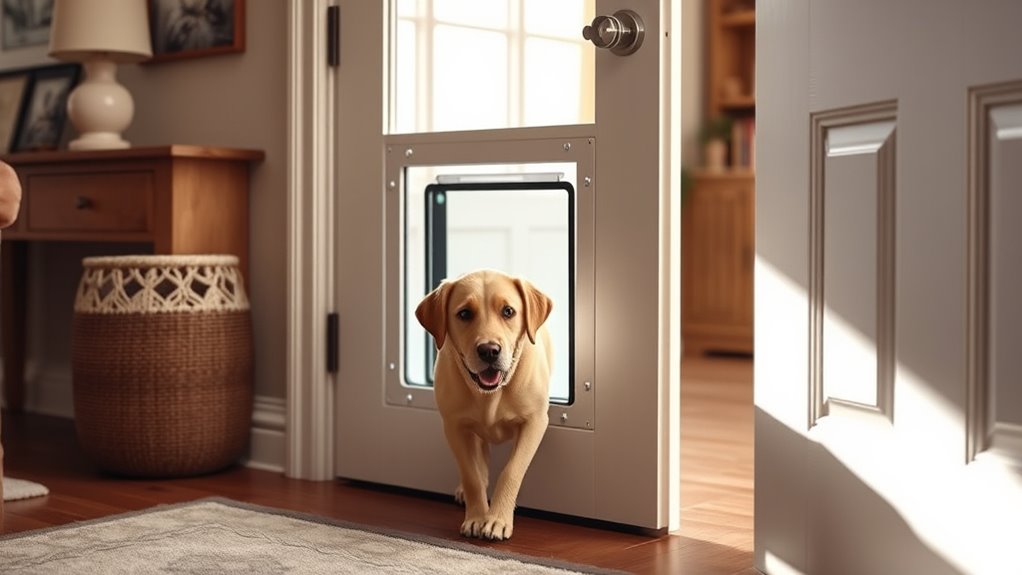

Smart dog doors with microchip access can let an authorized pet pass while limiting entry by other animals, but the options vary in how they identify pets and which sizes they fit. I’d start with the SureFlap Microchip Pet Door for a straightforward microchip-based choice, the PetSafe SmartDoor Connected if connected controls matter, and the High Tech Pet Power Pet if you want automatic operation for a larger opening. The main tradeoffs are microchip recognition versus a separate collar sensor, door size, installation work, and whether app connectivity is worth the added setup. Some products are cat doors or suited only to small dogs, so matching the opening to your pet is as important as the access method. Read on for the full comparison and guidance on choosing a door that fits your home.

Get business pricing on tools and workshop supplies
- Business-only prices and quantity discounts
- Tax-exempt purchasing
- Multiple users, one account, clear invoices
Complete the kit

Key Takeaways
- Microchip access and collar sensors are different approaches: SureFlap and PetSafe microchip models can read a pet’s implanted chip, while several iGuardPaw and electronic models rely on a supplied sensor or key attached to a collar.
- Pet size narrows the field quickly: Cat doors and small models are not substitutes for large dog doors; check the usable opening and your pet’s shoulder width before choosing.
- Connected control comes with extra setup: PetSafe SmartDoor Connected and SureFlap Connect add app-based features, with the SureFlap Connect requiring a hub.
- Wall installation is a distinct project: Aiday’s wall-oriented design targets homes where a door installation is not suitable, but wall thickness and fit need careful checking.
- The strongest fit depends on the access method you will maintain: Microchip readers avoid managing a separate key, while collar-sensor systems can suit pets without a readable chip but depend on wearing the sensor.
- Automatic operation and selective entry are not the same feature: Power-driven doors can prioritize opening behavior, while locking modes and access controls determine which pets or animals can pass.
| SureFlap Microchip Cat Flap, White |  | Best for Microchip-Only Entry | Color: White | Access: Selective entry; scans microchip on entry only | Identity capacity: Up to 32 | VIEW ON AMAZON | See Our Full Breakdown |
| iGuardPaw Automatic Dog Door with Collar Sensor, Medium |  | Best for Scheduled Dog Access | Size: Medium | Material: Aluminum frame, tunnel, and aluminum-edged flap | Flap opening: 9 1/16 in W × 14 9/16 in H | VIEW ON AMAZON | See Our Full Breakdown |
| PetSafe Microchip Cat Door with 4-Way Lock |  | Best for Manual Lock Control | Microchip compatibility: FDXB 15-digit microchips | Programmable pets: Up to 40 | Locking options: Locked, Unlocked, Enter Only, Exit Only | VIEW ON AMAZON | See Our Full Breakdown |
| High Tech Pet Power Pet Automatic Pet Door, Large |  | Best for Large Dogs and Security | Size: Large | Maximum weight capacity: 100 lb | Compatible pet: Dog | VIEW ON AMAZON | See Our Full Breakdown |
| Smart Electronic Pet Door for Cats and Small Dogs, Small, White |  | Best for Small Pets Using a Sensing Key | Size: Small | Color: White | Included: One pet door and one sensing key | VIEW ON AMAZON | See Our Full Breakdown |
| iGuardPaw Automatic Smart Dog Door with Collar Sensor, Large |  | Best for Draft Control | Size: Large | Material: Aluminum frame, tunnel, and aluminum-edged flap | Compatible door thickness: 1.25–2.19 inches | VIEW ON AMAZON | See Our Full Breakdown |
| Automatic Electronic Pet Door with Sensor Key, Large |  | Best for Multi-Pet Households | Size: Large | Maximum pet weight: 85 lbs | Maximum compatible thickness: 3.1 inches | VIEW ON AMAZON | See Our Full Breakdown |
| PetSafe SmartDoor Connected Pet Door, Medium |  | Best App-Controlled Pick | Size: Medium | Access methods: Pet Door Key or compatible microchip | Connectivity: 2.4 GHz Wi-Fi | VIEW ON AMAZON | See Our Full Breakdown |
| SureFlap Microchip Pet Door Connect (Hub Required) |  | Best for Small Pets and Activity Tracking | Door opening: 6 11/16 in W × 7 in H | Suitable for: Cats and small dogs | Microchip access: Yes | VIEW ON AMAZON | See Our Full Breakdown |
| PetSafe Electronic Pet Door with Collar Key Sensor, Large |  | Best for Large Dogs | Size: Large | Maximum pet weight: 100 pounds | Compatible door thickness: Up to 2 inches | VIEW ON AMAZON | See Our Full Breakdown |
| Aiday Automatic Smart Dog Door for Walls with Sensor Collars, Large |  | Best for Large Dogs and Wall Installs | Pet weight capacity: Up to 100 lbs | Included sensor collars: 2 | Sensing ranges: 20–28 inches or 35–43 inches | VIEW ON AMAZON | See Our Full Breakdown |
| SureFlap Microchip Pet Door, Brown |  | Best for Microchip Access in Small Dogs | Color: Brown | Pet capacity: Up to 32 identities | Microchip compatibility: 9-digit Avid Secure, 10-digit FDXA, and 15-digit FDXB | VIEW ON AMAZON | See Our Full Breakdown |
| SureFlap Microchip Pet Door, White |  | Best for Scheduled Microchip Entry | Color: White | Entry control: Selective entry; any animal can exit | Pet identities stored: Up to 32 | VIEW ON AMAZON | See Our Full Breakdown |
| smart dog doors with microchip access | Power | Size |
|---|---|---|
| SureFlap Microchip Cat Flap | Four AA non-rechargeable alkaline batteries, not included | — |
| iGuardPaw Automatic Dog Door w | — | Medium |
| PetSafe Microchip Cat Door wit | Battery-powered | — |
| High Tech Pet Power Pet Automa | AC adapter; optional rechargeable battery | Large |
| Smart Electronic Pet Door for | Battery-powered | Small |
| iGuardPaw Automatic Smart Dog | — | Large |
| Automatic Electronic Pet Door | 4 D-cell and 2 CR2032 batteries, not included | Large |
| PetSafe SmartDoor Connected Pe | Batteries or wall adapter, sold separately | Medium |
| SureFlap Microchip Pet Door Co | — | — |
| PetSafe Electronic Pet Door wi | 4 D-cell batteries, not included | Large |
| Aiday Automatic Smart Dog Door | — | — |
| SureFlap Microchip Pet Door | 4 C-cell alkaline batteries, not included | — |
| SureFlap Microchip Pet Door | 4 C alkaline batteries, not included | — |
More Details on Our Top Picks
SureFlap Microchip Cat Flap, White
I’d choose the SureFlap Microchip Cat Flap for a household that wants to keep unrecognized animals from entering without relying on a collar key. It stores up to 32 microchip identities and fits doors, windows, or walls, giving it more installation flexibility than the PetSafe Microchip Cat Door with 4-Way Lock, which needs extra accessories for some surfaces. The opening is sized for cats, though, so this is a poor match for the dog-sized passages offered by the iGuardPaw Automatic Dog Door. Access is selective on entry only; it does not provide the same four-way manual control as PetSafe. Battery power avoids wiring, and a low-battery indicator gives a heads-up, but batteries are not included and pets without compatible chips need a separately sold collar tag.
Pros:- Stores up to 32 microchip identities for multi-pet households
- Selective entry helps keep unrecognized animals from coming inside
- Can be installed in doors, windows, or walls
- Low-battery indicator and three-year warranty
Cons:- Small flap opening is intended for cats, not most dogs
- Uses four AA batteries, which are not included
- A separate collar tag is needed for pets without compatible microchips
Best for: Cat households that want selective entry for several microchipped pets and need door, window, or wall installation flexibility
Not ideal for: Dog owners or households that need a large opening, exit restrictions, or built-in manual lock modes
- Color:White
- Access:Selective entry; scans microchip on entry only
- Identity capacity:Up to 32
- Compatible microchips:9-digit Avid Secure, 10-digit FDXA, and 15-digit FDXB
- Flap opening:4 3/4 in H × 5 5/8 in W
- Power:Four AA non-rechargeable alkaline batteries, not included
- Estimated battery life:Up to 12 months, depending on use
- Installation:Doors, windows, or walls
- Warranty:Three years
Our verdict“Choose this for microchip-controlled cat entry and flexible mounting, but pick a dog door or a model with more lock settings if those controls matter more.”
iGuardPaw Automatic Dog Door with Collar Sensor, Medium
The iGuardPaw Automatic Dog Door suits owners who want a medium dog opening and control over when their pet can pass through. Its collar sensor unlocks the door, while Auto, Timer, and Manual modes give it a scheduling option absent from the High Tech Pet Power Pet Automatic Pet Door’s listed access modes. The tradeoff is that it uses a collar sensor rather than reading an implanted microchip, so it is not a direct fit for buyers who specifically want microchip recognition. The aluminum frame, magnetic seals, and soft-close flap are intended to limit noise and drafts, but the motor only unlocks the flap; the dog still has to push it open. Installation also requires cutting a sizable opening in a door or wall.
Pros:- Timer mode adds scheduled access alongside Auto and Manual settings
- Aluminum frame and aluminum-edged flap are designed for everyday use
- Magnetic seals and soft-close flap help limit drafts and noise
- Includes a cutout template and installation instructions
Cons:- Uses a collar sensor rather than reading an implanted microchip
- Requires a door or wall cutout
- The motor unlocks the flap, but the pet must push it open
Best for: Owners of medium dogs who want collar-controlled entry and scheduled access through a door or wall
Not ideal for: Buyers who require implanted-microchip recognition, avoid cutting an opening, or need a fully powered flap movement
- Size:Medium
- Material:Aluminum frame, tunnel, and aluminum-edged flap
- Flap opening:9 1/16 in W × 14 9/16 in H
- Frame dimensions:11 7/8 in W × 19 1/8 in H
- Required cutout:9 11/16 in W × 15 11/32 in H
- Compatible thickness:1.25–2.19 in
- Access modes:Auto, Timer, Manual
- Compatible pets:Cats and dogs
- Color:White
Our verdict“Pick this for a medium dog when collar sensing and scheduled access matter more than microchip reading or a self-opening flap.”
PetSafe Microchip Cat Door with 4-Way Lock
I’d put the PetSafe Microchip Cat Door ahead of simpler entry-only flaps for households that need to control both entry and exit. It recognizes up to 40 compatible pets and offers Locked, Unlocked, Enter Only, and Exit Only settings, which gives owners more direct control than the SureFlap Microchip Cat Flap’s selective-entry setup. That added control makes it useful for managing outdoor access, but its compatibility is limited to 15-digit FDXB microchips. The listed fit covers wood, PVC, and uPVC; metal, glass, brick, or wall installation calls for additional accessories. Like SureFlap, it is a cat door rather than a dog-sized option, and pets without compatible chips need separately sold collar keys. Battery power also means replacing batteries is part of ownership.
Pros:- Programs up to 40 pets, more than the SureFlap Microchip Cat Flap
- Four lock settings include entry-only and exit-only control
- Weather stripping helps reduce drafts
- Fits wood, PVC, and uPVC doors
Cons:- Reads only 15-digit FDXB microchips
- Additional accessories are required for metal, glass, brick, or wall installation
- Requires batteries, and collar keys for pets without chips are sold separately
Best for: Multi-cat households with 15-digit FDXB chips that want to restrict entry, exit, or both using manual lock settings
Not ideal for: Owners with other microchip types, dog-sized pets, or installation surfaces that need extra accessories
- Microchip compatibility:FDXB 15-digit microchips
- Programmable pets:Up to 40
- Locking options:Locked, Unlocked, Enter Only, Exit Only
- Power:Battery-powered
- Door compatibility:Wood, PVC, and uPVC
- Additional installation accessories:Required for metal, glass, brick, or wall installation
- Collar keys:Sold separately for pets without microchips
Our verdict“Choose this cat door when four-way control and capacity for many FDXB-chipped pets outweigh broader chip compatibility and simpler installation.”
High Tech Pet Power Pet Automatic Pet Door, Large
For a large dog, the High Tech Pet Power Pet prioritizes a powered opening and physical security over implanted-microchip access. It responds to the included water-resistant MS-5 ultrasonic collar, with directional sensing designed to reduce false triggers. A steel dead bolt, sealed panel, and anti-pinch system give it a more security-focused setup than the iGuardPaw Automatic Dog Door, whose flap the pet must push open after it unlocks. That difference may suit dogs that struggle with a conventional flap, though this model still depends on a specific genuine collar. Its four modes cover inward, outward, two-way, and locked access. It runs from an AC adapter; backup power requires an optional rechargeable battery. The 100-pound capacity makes it a dog-focused choice, but the listed thickness range is fixed at two inches.
Pros:- Powered door opens for a pet wearing the included MS-5 collar
- Directional sensing helps reduce false triggers
- Steel dead bolt and anti-pinch safety system add security and protection
- Four modes control inward, outward, two-way, or locked access
Cons:- Requires a genuine High Tech Pet MS-5 ultrasonic collar rather than an implanted microchip
- Optional rechargeable backup battery is not included
- Listed compatible thickness is fixed at 2 inches
Best for: Owners of dogs up to 100 pounds who want a powered door, directional collar sensing, and a secured flap
Not ideal for: Buyers who require microchip access, need broad collar compatibility, or want battery backup included
- Size:Large
- Maximum weight capacity:100 lb
- Compatible pet:Dog
- Compatible collar:High Tech Pet MS-5 ultrasonic collar
- Access modes:In Only, Out Only, In & Out, Locked
- Compatible thickness:2 in
- Power:AC adapter; optional rechargeable battery
- Mounting:Door or wall
- Frame material:Plastic
Our verdict“Choose this for a large dog that benefits from a powered, secured flap, provided collar-based access meets your needs.”
Smart Electronic Pet Door for Cats and Small Dogs, Small, White
This small electronic door makes sense for a cat or compact dog when a simple sensing-key system is enough. It supports locked, unlocked, and automatic modes, with adjustable closing times and room for up to five keys. Compared with the SureFlap Microchip Cat Flap, it does not read an implanted microchip; the included key must be worn by the pet. That may be easier for owners whose pets are not chipped, but additional keys are sold separately and the five-key limit can constrain larger households. Its 35-pound weight limit and small size rule out many dogs, even though it covers both cats and small dogs. Battery operation avoids a wired power connection, while plastic construction and limited access modes make it a more basic choice than the larger, security-focused High Tech Pet Power Pet.
Pros:- Includes one sensing key for automatic access
- Offers locked, unlocked, and automatic modes
- Adjustable closing time lets owners set how quickly it shuts
- Supports up to five sensing keys per door
Cons:- Uses sensing keys rather than reading implanted microchips
- Small size and 35-pound limit exclude many dogs
- Additional keys are sold separately
Best for: Owners of cats or dogs under 35 pounds who want automatic access with an included sensing key and straightforward modes
Not ideal for: Households with larger dogs, more than five pets, or a firm requirement for implanted-microchip recognition
- Size:Small
- Color:White
- Included:One pet door and one sensing key
- Maximum pet weight:35 lb
- Maximum compatible thickness:3.15 in
- Material:Plastic
- Modes:Locked, unlocked, automatic
- Maximum keys per door:Five
- Power:Battery-powered
Our verdict“Choose this for a small pet when a sensing key and basic automatic access fit better than microchip reading or a larger dog door.”
iGuardPaw Automatic Smart Dog Door with Collar Sensor, Large
The iGuardPaw Large suits households that want collar-controlled access with attention to drafts and noise. Its magnetic closure, flexible seals, and soft-close damper help limit flapping and air leakage, while Auto, Timer, and Manual modes give owners control over when the opening is available. Compared with the PetSafe Electronic Pet Door with Collar Key Sensor, this model lists a specific door-thickness range and includes a cutout template, but PetSafe supports pets up to 100 pounds and offers adjustable detection range. The iGuardPaw’s aluminum frame and tunnel offer a sturdier material choice than the plastic-framed PetSafe, though the flap still relies on the pet to push through after the motor unlocks it. Its large cutout also calls for careful planning before installation.
Pros:- Collar sensor restricts access to recognized pets
- Auto, Timer, and Manual modes offer flexible control
- Magnetic seals and soft-close damping help reduce drafts and noise
- Aluminum frame and tunnel provide a sturdy construction option
Cons:- Requires a substantial cutout measuring 12 7/8 × 20 7/16 inches
- Motor unlocks the flap but does not push it open
- Fits doors only within the specified 1.25–2.19-inch thickness range
Best for: Owners of larger pets who want collar-sensor access, quieter closure, and scheduled access in a door within the listed thickness range
Not ideal for: Renters or owners unwilling to make a large permanent cutout, and pets that need a flap that opens automatically
- Size:Large
- Material:Aluminum frame, tunnel, and aluminum-edged flap
- Compatible door thickness:1.25–2.19 inches
- Flap opening:12 3/16 × 19 11/16 inches
- Frame dimensions:15 1/8 × 24 1/4 inches
- Required cutout:12 7/8 × 20 7/16 inches
- Access modes:Auto, Timer, Manual
- Closure:Magnetic
Our verdict“Choose the iGuardPaw Large if draft control and an aluminum build matter more than hands-free flap opening.”
Automatic Electronic Pet Door with Sensor Key, Large
For homes with several authorized dogs, this large sensor-key door stands out for supporting up to five keys per door and offering adjustable sensitivity. Locked, Unlocked, and Automatic modes make it possible to set the door for everyday access or shut it down when needed. Compared with the PetSafe Electronic Pet Door with Collar Key Sensor, it also supports multiple pets, while its stated maximum compatible thickness of 3.1 inches accommodates thicker doors than PetSafe’s 2-inch limit. The tradeoff is power: it requires both four D-cell and two CR2032 batteries, none included, and extra keys must be purchased separately. Buyers should also note that the access token is a sensing key rather than a listed microchip reader, so this model is a better fit for people comfortable equipping pets with collar keys.
Pros:- Supports up to five sensing keys per door
- Adjustable sensitivity helps tailor key detection
- Locked, Unlocked, and Automatic modes provide access control
- Compatible with doors up to 3.1 inches thick
Cons:- Four D-cell and two CR2032 batteries are not included
- Extra sensing keys are sold separately
- Uses a collar sensing key rather than listed microchip access
Best for: Households with multiple medium or large dogs that need individual collar keys and a door compatible with thicker installations
Not ideal for: Owners seeking microchip-only access or a battery-ready setup without separately sourcing cells and additional keys
- Size:Large
- Maximum pet weight:85 lbs
- Maximum compatible thickness:3.1 inches
- Material:Plastic
- Modes:Locked, Unlocked, Automatic
- Key capacity:Up to 5 keys per door
- Power:4 D-cell and 2 CR2032 batteries, not included
- Included:Pet door and 1 sensing key
Our verdict“Pick this door for a multi-dog household that values key capacity and thick-door compatibility over microchip entry.”
PetSafe SmartDoor Connected Pet Door, Medium
The PetSafe SmartDoor Connected is the most app-focused option in this group: owners can set schedules, lock it remotely, and receive smartphone notifications when pets use the door. It accepts a Pet Door Key or compatible microchip, giving buyers a choice between collar-based identification and selective microchip entry. That makes it more flexible to manage from afar than the SureFlap Microchip Pet Door Connect, whose remote features depend on a separate Hub. PetSafe still needs a stable 2.4 GHz Wi-Fi connection, and its wall adapter is sold separately, so app control comes with setup dependencies. Its medium size also makes it a poor match for households whose dogs need a larger opening; buyers should check the dimensions before choosing it for a dog.
Pros:- App supports custom schedules and remote locking
- Smartphone notifications report pet use
- Accepts a Pet Door Key or compatible microchip
- Weather sealing and multi-point locking help control access and exposure
Cons:- Requires a high-speed 2.4 GHz Wi-Fi connection
- Wall adapter is sold separately
- Medium size may not suit larger dogs
Best for: Owners of cats or suitably sized pets who want app scheduling, remote locking, and activity notifications through home Wi-Fi
Not ideal for: Homes without reliable 2.4 GHz Wi-Fi or owners of dogs that need a large flap opening
- Size:Medium
- Access methods:Pet Door Key or compatible microchip
- Connectivity:2.4 GHz Wi-Fi
- Control:My PetSafe app
- Power:Batteries or wall adapter, sold separately
- App features:Custom schedules, remote locking, smartphone notifications
- Security:Weather sealing and multi-point locking
Our verdict“Choose the PetSafe SmartDoor Connected if remote app control matters and your pet fits a medium door.”
SureFlap Microchip Pet Door Connect (Hub Required)
The SureFlap Microchip Pet Door Connect makes the most sense for cats and small dogs whose owners want access tied to the pet’s existing microchip. Its app monitoring and activity history add a useful record of when a pet uses the door, while remote locking and curfew scheduling help shape access around a household routine. Compared with the medium PetSafe SmartDoor Connected, this SureFlap is more explicit about serving small pets and microchip identification, but its opening is just 6 11/16 inches wide by 7 inches high. Remote functions also require a separate SureFlap Hub. That additional hardware is a practical dependency for anyone buying specifically for app control, and the small opening rules it out for most dogs.
Pros:- Uses the pet’s microchip for selective access
- App enables remote locking and unlocking
- Supports curfew scheduling
- Tracks pet activity over time
Cons:- SureFlap Hub is required and sold separately
- Small 6 11/16 × 7-inch opening excludes most dogs
- Remote functions depend on the additional Hub
Best for: Cat owners and owners of small dogs who want microchip recognition, remote curfews, and usage history
Not ideal for: Owners of medium or large dogs, or buyers who want app features without adding a separate Hub
- Door opening:6 11/16 in W × 7 in H
- Suitable for:Cats and small dogs
- Microchip access:Yes
- Hub:Required; sold separately
- Control:Smart app control
- App functions:Remote locking and unlocking, curfew scheduling
- Monitoring:Tracks pet activity over time
Our verdict“Pick this SureFlap for a microchipped cat or small dog if activity tracking is worth adding the required Hub.”
PetSafe Electronic Pet Door with Collar Key Sensor, Large
The PetSafe Electronic Pet Door with Collar Key Sensor is the clearest fit here for a larger dog: it is specified for pets up to 100 pounds, and its adjustable detection range reaches up to 3 feet. The compatible collar key triggers unlocking, then the door locks after the pet passes through. Compared with the Automatic Electronic Pet Door with Sensor Key, Large, this PetSafe accommodates a higher stated pet weight, while the other model supports doors up to 3.1 inches thick and five keys. PetSafe itself fits doors up to 2 inches thick and supports up to five keys, but owners must supply four D-cell batteries. Wall mounting also calls for a separately sold installation kit. This is collar-key access, not listed microchip recognition, so buyers seeking direct chip reading should look elsewhere.
Pros:- Designed for pets weighing up to 100 pounds
- Adjustable collar-key detection range reaches up to 3 feet
- Locks automatically after the pet passes through
- Supports up to five programmable keys
Cons:- Requires four D-cell batteries, which are not included
- Wall installation kit is sold separately
- Uses a collar key rather than listed microchip access
Best for: Owners of large dogs up to 100 pounds who want collar-key entry and automatic relocking in a door up to 2 inches thick
Not ideal for: Buyers who require microchip recognition, need a thicker-door fit, or want wall installation without a separate kit
- Size:Large
- Maximum pet weight:100 pounds
- Compatible door thickness:Up to 2 inches
- Key capacity:Up to 5 keys
- Unlock detection range:Adjustable up to 3 feet
- Power:4 D-cell batteries, not included
- Installation:Interior or exterior doors; wall installation kit available separately
- Flap material:Insulated UV sun protection material
Our verdict“Choose this PetSafe for a large dog that can wear a collar key and needs a roomy, automatically relocking door.”
Aiday Automatic Smart Dog Door for Walls with Sensor Collars, Large
The Aiday Large is the wall-install pick for households that need a full-size opening and controlled access. Its sensor collars authorize specific pets, while adjustable sensing ranges, custom schedules, and manual control give owners several ways to manage when the door responds. Compared with the SureFlap Microchip Pet Door, Brown, which reads implanted microchips or an RFID tag and suits small dogs, the Aiday is built for pets up to 100 pounds and uses collars rather than microchip recognition. The tradeoff is a more involved installation: the wall needs an 11.2 × 18.1-inch opening, and the unit needs continuous plug-in power. Its dual flaps, magnetic seals, and anti-pinch protection add practical weather and safety features, but buyers should check wall depth and outlet access before choosing it.
Pros:- Sensor collars limit access to authorized pets
- Custom schedules and manual control offer flexible access
- Fits pets weighing up to 100 pounds
- Dual flaps, magnetic seals, and anti-pinch protection address drafts and pet safety
Cons:- Wall installation requires cutting an 11.2 × 18.1-inch opening
- Needs continuous plug-in power and an accessible outlet
- Uses sensor collars rather than reading implanted microchips
Best for: Owners of large dogs who want scheduled, collar-controlled access through an exterior wall and have a nearby outlet.
Not ideal for: Renters or owners seeking implanted-microchip recognition, a simple door-mounted installation, or battery-powered operation.
- Pet weight capacity:Up to 100 lbs
- Included sensor collars:2
- Sensing ranges:20–28 inches or 35–43 inches
- Access control:Custom scheduling and manual control
- Wall thickness:4.1–7.1 inches
- Required wall opening:11.2 × 18.1 inches
- Flap dimensions:10.2 × 15.6 inches
- Frame and power:Aluminum; plug-in with extension cord included
Our verdict“Choose the Aiday if you need a large, scheduled wall door controlled by sensor collars and can accommodate its opening and power requirements.”
SureFlap Microchip Pet Door, Brown
The SureFlap Microchip Pet Door in Brown is the direct choice for owners who want their pet’s implanted chip to serve as the key. It also accepts an RFID collar tag and stores up to 32 identities, so it can suit multi-pet homes without asking every animal to wear a sensor collar. Compared with the Aiday Automatic Smart Dog Door, it fits a much smaller opening and is intended for large cats and small dogs, but it runs on batteries rather than requiring a nearby outlet. The flap measures 7 × 6.69 inches, which limits who can use it; measure your pet before buying. Four C-cell batteries are not included, and its battery setup trades continuous plug-in power for occasional replacement. Door, window, or wall installation is available, though the installation cutout still needs careful planning.
Pros:- Reads compatible implanted microchips or the included RFID collar tag
- Stores up to 32 pet identities
- Battery-powered design avoids a required nearby outlet
- Supports door, window, or wall installation
Cons:- The 7 × 6.69-inch flap is too small for many dogs
- Four C-cell batteries are required and not included
- Wall or window installation may call for additional planning or accessories
Best for: Owners of small dogs or large cats who want selective entry using an implanted microchip or RFID tag, including households with multiple pets.
Not ideal for: Owners of medium or large dogs, or anyone who wants app-connected controls or a larger flap opening.
- Color:Brown
- Pet capacity:Up to 32 identities
- Microchip compatibility:9-digit Avid Secure, 10-digit FDXA, and 15-digit FDXB
- Flap opening:7 in W × 6.69 in H
- Installation cutout:8.15 in W × 9.21 in H
- Power:4 C-cell alkaline batteries, not included
- Estimated battery life:Up to 12 months
- Warranty:Three years
- Included access tag:One RFID collar tag
Our verdict“Pick the brown SureFlap for small pets when microchip or RFID entry matters more than a large opening or connected controls.”
SureFlap Microchip Pet Door, White
The white SureFlap Microchip Pet Door suits owners who want to limit which animals can enter and set scheduled locking and unlocking. Like the brown SureFlap, it reads compatible implanted microchips or an RFID collar tag and stores up to 32 pet identities, making either color a more direct fit for microchip-based access than the collar-controlled Aiday Automatic Smart Dog Door. The white model’s listed control is selective for entry only: any animal can exit. That matters for homes where blocking unauthorized animals from leaving is part of the plan. Its 7 × 6 11/16-inch flap also points toward small pets rather than larger dogs. Battery operation removes the need for a power outlet, while wall or glass installation may require additional accessories. Choose this version when its scheduled locking and white finish fit your setup; the small opening remains the main limitation.
Pros:- Recognizes compatible microchips or an RFID collar tag
- Stores up to 32 pet identities
- Scheduled locking and unlocking can match household routines
- Works with door, window, or wall installations when properly equipped
Cons:- Selective control applies to entry; any animal can exit
- Small flap opening limits suitability for dogs
- Four C alkaline batteries are not included; wall or glass installs may need accessories
Best for: Owners of small pets who want scheduled locking, microchip-based entry control, and flexibility to install in a door, window, or wall.
Not ideal for: Owners of large dogs or households that need to restrict which animals can exit as well as enter.
- Color:White
- Entry control:Selective entry; any animal can exit
- Pet identities stored:Up to 32
- Microchip compatibility:9-digit Avid Secure, 10-digit FDXA, and 15-digit FDXB
- Flap opening:6 11/16 in H × 7 in W
- Power:4 C alkaline batteries, not included
- Estimated battery life:Up to 12 months, depending on use
- Installation:Doors, windows, or walls; accessories may be required
- Warranty:Three years
Our verdict“Choose the white SureFlap for small pets when scheduled microchip entry control matters and unrestricted exit is acceptable.”
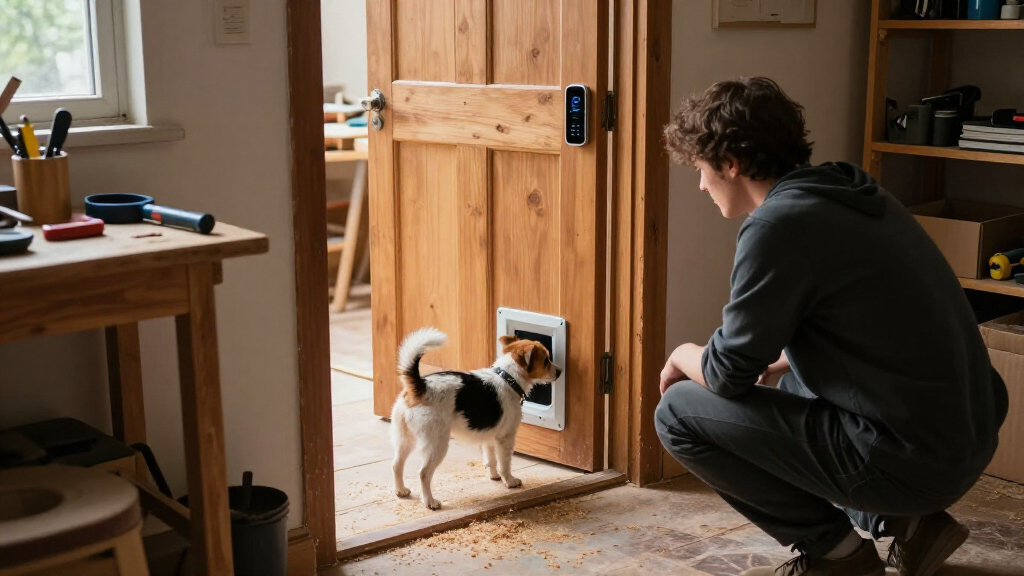
How We Picked
I compared the 13 listed models around the decisions that matter most for this category: how each door identifies an authorized pet, the intended pet size, installation type, operating and locking features, and the upkeep those choices create. A built-in microchip reader has a different day-to-day burden from a collar key: the former depends on chip compatibility and reader placement, while the latter depends on the pet keeping its sensor on. I also treated connectivity and powered operation as separate benefits, since app control or an automatic panel may add convenience without being necessary for every household.
The ranking favors options whose stated access method and intended use align clearly with the smart dog door search, while accounting for fit and installation limits. Dog-sized and adaptable choices rank ahead of cat-only models for most dog owners; connected and wall-installation models earn attention for specific needs, not simply for having more features. Product names alone do not confirm compatibility or opening dimensions, so buyers should verify manufacturer specifications for their pet, microchip type, and installation location before choosing.
Factors to Consider When Choosing Smart Dog Doors With Microchip Access
Choosing a smart door is a fit-and-routine decision as much as a technology decision. I’d work through these factors before settling on a model, because a capable access system cannot compensate for an opening that is too small or an installation that does not suit the home.
Match the access method to your pet
First determine whether you want the door to read an implanted microchip or recognize a separate collar sensor. Microchip access can reduce the need to keep a tag attached, but you should confirm that the reader supports your pet’s chip format and that your pet’s chip can be read reliably at the door. A collar key can be a practical option for pets without a compatible chip, though it adds a small item that can be lost or removed. In a multi-pet household, check whether the system can register each authorized pet and whether all pets can use the same access method. Avoid choosing by the word “smart” alone: it may refer to sensor-triggered opening, app control, or both.
Measure the usable opening, not just the pet
Measure your dog’s width and height at the points needed to pass through comfortably, then compare those figures with the manufacturer’s usable flap dimensions. The outer frame size can be larger than the actual passage, so it is not a reliable stand-in. Consider whether your dog is still growing, has a broad chest, or may hesitate at a tight flap. Cat doors and small-pet models can appear similar in product listings while offering too little clearance for a dog. Leave enough room for ordinary movement without making the opening so large that it creates a poor fit for your home’s weather or security needs.
Plan installation around the actual opening
A door-mounted model may be simpler when the chosen door has enough flat space and a suitable construction, but cutting into glass, metal, or a reinforced panel can require a compatible insert or professional work. Wall installations call for a tunnel or other treatment suited to the wall’s depth and materials. Measure the installation surface, check for framing or wiring where relevant, and confirm the manufacturer’s supported thickness before buying. A common mistake is to select the pet door first and only then discover that the intended location cannot accept its frame. If you rent or want to preserve the original door, weigh removable panels or other less permanent options where the product supports them.
Separate access control from app features
Decide what you want to control remotely: locking schedules, entry records, notifications, or simply the ability to manage access without walking to the door. Connected features may require a hub, a stable home network, account setup, or continued app support, so check the full requirements before treating connectivity as a convenience. If you mainly need to keep unfamiliar animals out, reliable selective entry and practical lock controls may matter more than remote status updates. For households with changing routines, scheduled access can help, but it should not replace a clear plan for feeding, supervision, or emergencies. Buy connected functionality for a task you expect to use regularly.
Account for weather, security, and maintenance
A pet door creates another opening in the home’s envelope, so inspect the flap seal, frame fit, and any included weather features against your climate and location. Ask how the door behaves during a power interruption and whether it can be locked manually if electronics stop working. Battery-powered keys or readers add a maintenance schedule; app-connected devices may add software and network dependencies. Keep the sensor area clean and check moving parts periodically, since dirt or a misaligned flap can affect operation. If the door faces a public walkway or an area with frequent wildlife, prioritize the locking arrangement and installation quality over convenience features.
Decide when paying for more features makes sense
Extra automation makes sense when it solves a recurring problem, such as managing access while you are away or operating a heavy panel for a larger dog. It is harder to justify when the household only needs a simple selective-entry flap and manual locking. Compare the total setup burden, including hubs, collars, batteries, adapters, and installation, rather than focusing on the door alone. A basic microchip model may be the easier long-term fit if you want fewer parts to track, while a collar-sensor model can serve pets whose chips are incompatible. Pick the least complicated design that meets your real access and fit requirements.
Frequently Asked Questions
Will a microchip pet door work with every implanted pet microchip?
No single product name guarantees support for every chip format. Check the manufacturer’s compatibility list against your pet’s chip number or ask your veterinarian to identify the chip type. A reader also needs to detect the chip as the pet approaches, so positioning and the pet’s habits can affect reliability. If compatibility is uncertain, compare the door’s return policy and any alternative collar-key option before installation. Do not cut an opening until you have confirmed that the access method works for your pet.
Should I choose a collar sensor instead of microchip recognition?
A collar sensor can be a useful route when a pet has no implanted chip or its chip is unsupported, and it may let you replace or reassign a key more easily. The tradeoff is that the pet has to wear the sensor consistently, and it can be lost, damaged, or removed. Microchip recognition avoids that separate item but depends on chip compatibility and the reader detecting the pet correctly. Consider your pet’s collar habits and how many animals need access. The right choice is the one your household can keep working every day.
Can I use a cat-sized microchip door for a small dog?
Possibly, but the product label alone cannot answer that safely. Compare the usable opening dimensions with your dog’s measurements and account for the way the flap swings or lifts. A small dog may fit through a cat door, while a broad or tall dog may find it uncomfortable even if its weight seems suitable. Check the manufacturer’s stated pet-size guidance and installation limits as well. When the fit is marginal, choose a larger model intended for dogs rather than relying on a tight passage.
Does a connected pet door need a hub or home internet?
Requirements vary by model, so check the product’s current setup details before buying. The SureFlap Microchip Pet Door Connect listing specifies a required hub, and connected controls may rely on a network connection for remote features. A door’s basic access function may not use the same connection as app features, but the manufacturer’s documentation should confirm what remains available offline. Also consider where the hub will sit and whether the signal reaches the installation area. If you do not expect to use remote controls or notifications, a non-connected model may be simpler.
What should I check before installing a smart dog door in a wall or glass door?
Confirm that the specific model supports the material and thickness of the intended surface, and check whether a separate adapter, tunnel, or compatible insert is required. Measure the opening and surrounding space, then verify that framing, wiring, and other obstacles will not interfere with the cutout. Glass installations can require a purpose-made panel, while wall installations need enough depth for a secure, weather-resistant passage. Consider who will perform the work and whether the installation can be reversed later. Resolve these points before purchasing, since access features cannot fix a poor physical fit.
Conclusion
For most dog owners, I’d begin with the SureFlap Microchip Pet Door as the best overall direction when a direct microchip reader and a suitable opening meet the household’s needs. The best value depends on the needed size and whether a collar sensor is acceptable; compare the simpler sensor-key models against microchip options after checking the full installation requirements. For a premium connected setup, consider PetSafe SmartDoor Connected or SureFlap Connect if app features justify their added setup, including the required hub for SureFlap Connect. Beginners may prefer a straightforward microchip flap with a confirmed chip match and uncomplicated installation. For large dogs, automatic operation, or wall mounting, focus on the High Tech Pet Power Pet, large sensor-door options, or Aiday wall model respectively, and verify dimensions and installation compatibility before deciding.
Fall yard work Picks
leaf blowers
As an affiliate, we earn on qualifying purchases.