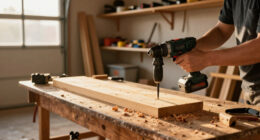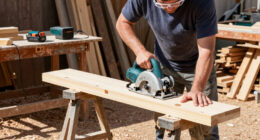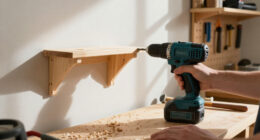
The angle grinder safety habit you must never skip is wearing protective gear. This includes safety glasses or a full-face shield to guard your eyes and face from flying debris, and hearing protection to prevent hearing damage from loud noise. Gloves also protect your hands from sharp edges and hot surfaces, but avoid loose-fitting ones to prevent getting caught in moving parts. Prioritizing this habit considerably reduces injury risk—stay with us to explore more essential safety tips.

Get business pricing on tools and workshop supplies
- Business-only prices and quantity discounts
- Tax-exempt purchasing
- Multiple users, one account, clear invoices
Key Takeaways
- Always inspect the grinding wheel for cracks or damage before use.
- Wear appropriate protective gear, including safety glasses and hearing protection.
- Secure the workpiece firmly to prevent movement during operation.
- Ensure the angle grinder’s guard is in place and properly adjusted.
- Maintain a stable stance and proper grip to control the tool effectively.
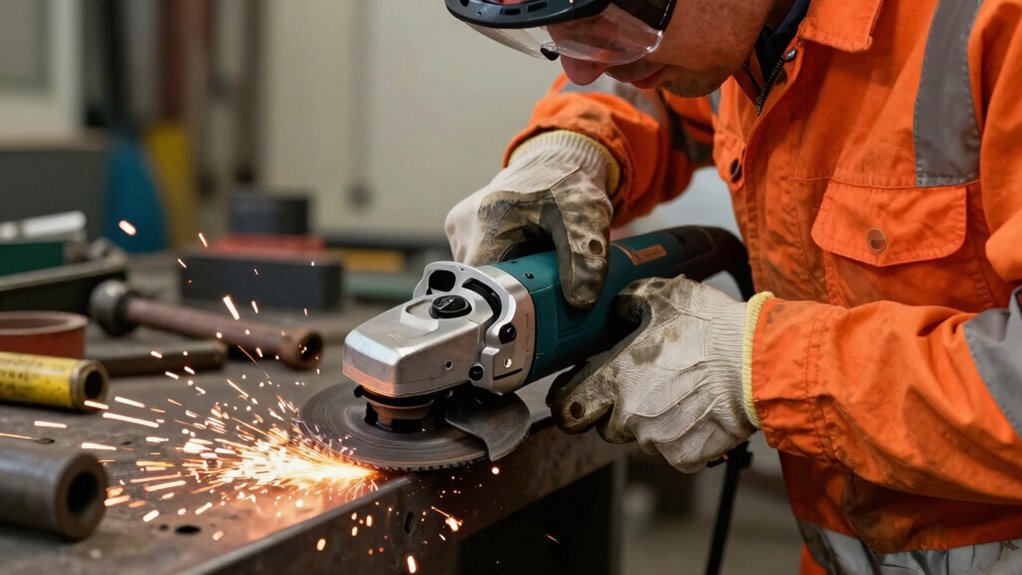
Have you ever considered how a simple safety habit can prevent serious injuries when using an angle grinder? It’s often the small, overlooked actions that make the biggest difference. Wearing the appropriate protective gear isn’t just a suggestion; it’s a critical step to safeguarding yourself from sparks, debris, and potential projectiles. Safety glasses or a full-face shield should be your first line of defense, protecting your eyes and face from flying fragments. Hearing protection, like earplugs or earmuffs, helps prevent hearing loss from the loud noise generated during operation. Gloves can protect your hands from sharp edges and hot surfaces, but they shouldn’t be loose-fitting, which could get caught in the tool’s moving parts. When you prioritize wearing protective gear every time you operate the grinder, you establish a safety habit that considerably reduces your risk of injury. Developing a safety-conscious mindset is essential for long-term injury prevention and responsible tool handling.
Tool maintenance plays an equally essential role in safe operation. Before you start, inspect your angle grinder thoroughly. Check for damaged cords, loose parts, or worn-out wheels. Using a damaged tool can cause unexpected malfunctions, leading to accidents. Make sure the grinding wheel is properly mounted and in good condition—cracks or chips mean it’s unsafe to use and should be replaced immediately. Regularly cleaning and lubricating your tool keeps it running smoothly, preventing overheating and mechanical failures. Developing a routine of inspecting and maintaining your equipment is a safety habit that guarantees your tool operates as intended, minimizing the chance of unexpected breakdowns or dangerous sparks. Additionally, understanding the importance of proper tool inspection can help you identify potential hazards before they become serious issues. Incorporating preventive maintenance into your routine enhances safety and extends the lifespan of your tools. Ensuring your tools are in optimal condition is also an integral part of hazard prevention. Establishing a systematic approach to equipment upkeep further reduces risks associated with neglected tools.
You should also always check your work area for hazards before beginning any task. Clear away clutter, secure your workpiece, and ensure your footing is stable. When you combine diligent tool maintenance with wearing protective gear, you create a safety net that catches many potential issues before they escalate. Remember, safety isn’t just about quick reactions; it’s about proactive habits. Never skip inspecting your equipment, never compromise on protective gear, and always take the time to prepare your workspace. These habits might seem small, but they form the foundation of safe, efficient work with an angle grinder. By making protective gear and tool maintenance non-negotiable parts of your routine, you protect yourself from accidents and ensure your work remains precise and controlled. Safety should never be optional—it’s a fundamental part of every task you undertake with an angle grinder.
Products Worth Considering

Dyson Airwrap Multi-Styler Complete Long

Hisense 55E6QF 55-Inch E6 Cinema Series 4K QLED Smart Fire TV

TCL 55-Inch R7D Series QLED 4K UHD HDR Roku Smart TV (55R7D, 2026)
As an affiliate, we earn on qualifying purchases.
Frequently Asked Questions
How Often Should I Inspect My Angle Grinder for Safety?
You should inspect your angle grinder for safety before each use. Check for any damage, loose parts, or worn-out components. Also, make sure the battery is properly maintained, with clean contacts and no corrosion, and that it’s charged correctly. Follow storage best practices by keeping it in a dry, secure place when not in use. Regular inspections help prevent accidents, ensuring your tool operates safely and efficiently every time.
What PPE Is Essential When Using an Angle Grinder?
When using an angle grinder, you need to wear proper personal protective equipment (PPE) like safety glasses or a face shield, ear protection, gloves, and a dust mask. Always guarantee proper tool maintenance before use to prevent accidents. PPE shields you from sparks, debris, and loud noise, making your work safer. Never skip these safety measures, as they’re essential for protecting yourself during every angle grinder task.
Can I Use a Damaged Disc Safely?
Using a damaged disc isn’t worth risking your safety; it can cause dangerous vibrations or shattering. Always check disc compatibility and inspect for cracks or chips before use. If you notice any damage, replace the disc immediately. Protective barriers, like guards and shields, are essential to contain debris if something goes wrong. Prioritize safety over convenience—never compromise by using a compromised disc, and always follow safety protocols.
How Do I Choose the Right Guard for My Grinder?
You should choose a guard that fits your grinder perfectly, ensuring easy guard adjustments for a secure fit. Check disc compatibility to match the guard with the size and type of disc you’re using. Always select a guard that covers the disc fully to protect your eyes and face. Properly fitted guards prevent debris from flying and reduce risk of injury, making your work safer and more efficient.
What Are Common Signs of Equipment Wear?
You should look for common signs of equipment wear like unusual noises, decreased performance, or excessive vibrations. Regular equipment maintenance helps spot wear indicators early, preventing accidents. Check for cracked or worn-out guards, damaged switches, or frayed cords. Pay attention to overheating or smoke. Recognizing these signs promptly guarantees safe operation, prolongs your tool’s life, and keeps your work environment safe. Always inspect your equipment before use.
Conclusion
Remember, adopting the safety habit of always wearing proper protective gear isn’t just about following rules—it’s about protecting yourself from potential hazards you might not see coming. Some say safety precautions are overkill, but history proves otherwise: countless accidents could have been avoided with simple habits. So, stay vigilant, stay prepared, and make safety your top priority. After all, you’re the only one responsible for your well-being when using an angle grinder.