
TL;DR

Get business pricing on tools and workshop supplies
- Business-only prices and quantity discounts
- Tax-exempt purchasing
- Multiple users, one account, clear invoices
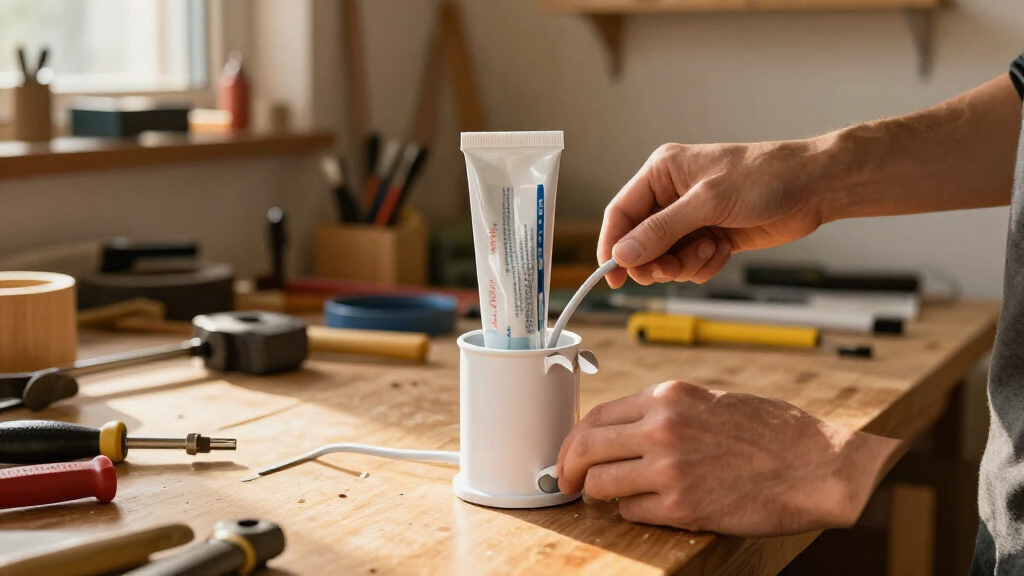
Hunker reported on a cord-organizing idea from YouTube creator Graceful DIY: cut an opening in an empty toothpaste tube, wrap it around a bundled cord, and fasten it using the tube’s dispensing end and cap. The low-cost reuse is intended for smaller cords, not extension cords or other large bundles; the report does not provide testing or durability results.
Hunker has reported on a cord-organizing hack from YouTube creator Graceful DIY, who repurposes an empty toothpaste tube as a wrap for a bundled cord. The method uses cuts in the tube to let its dispensing end pass through an opening, with the cap helping hold the bundle in place; it is presented as an option for small cords rather than large extension-cord bundles.
Hunker’s account describes a process that starts by cutting a small strip from the sealed end of a toothpaste tube so the inside can be cleaned. The tube and cap are washed with warm, soapy water and dried. The sealed end is then folded inward by about an inch, and two small diagonal cuts are made through the fold. Opening it back up creates a diamond-shaped hole.
After the cord is untangled and gathered into a bundle, the tube is wrapped around it. The dispensing end is pushed through the new hole and the cap is screwed on to help keep the wrap closed. The cord remains bundled while the tube stays in place, according to the report’s description. The source does not give measurements, test results or a comparison with commercially sold cord organizers.
The report says the idea is unsuitable for extension cords and other large bundles, but could be tried on smaller household and personal-electronics cords, including those for hair tools, irons, coffee makers, blenders, computer cables, game controllers, phone chargers and wired earphones. Hunker also notes that users can keep the method out of sight by applying it to appliances or cables normally stored away.
A Small Reuse for Everyday Cords
The proposal addresses two familiar household nuisances: cords that tangle in storage and empty toothpaste packaging that may be difficult to recycle. Reusing a tube gives it another purpose before disposal, while the materials called for are limited to an empty tube and scissors. That makes the idea inexpensive to try, although it does not establish that the method has a measurable environmental benefit or replaces recycling options where those are available.
For readers with small appliance leads or spare charging cables, the practical appeal is that the tube forms a simple band around a gathered cord. It may help keep a stored cable together without buying a dedicated organizer. The approach also has limits: tube sizes and materials vary, and the report does not establish how securely different cords will fit or how long a tube will hold up with repeated use.
Products Worth Considering

Dyson Ball Animal 3 Corded Upright Vacuum

Bose TV Speaker Compact Soundbar with Bluetooth and HDMI-ARC, Black

Dyson V8 Cordless Vacuum
As an affiliate, we earn on qualifying purchases.
How the Tube Becomes a Cord Wrap
The idea is part of a broader effort to organize the cords still found around homes, despite the growth of wireless devices. Hunker says Graceful DIY demonstrated the toothpaste-tube approach in a YouTube video, then outlines how to prepare the tube, make the opening and secure it around a cord. The supplied report does not identify when the video was posted or provide details about the creator beyond the name used.
Hunker describes toothpaste tubes as difficult to recycle and says they often end up in landfills. That is the publication’s general context for the reuse suggestion; the article does not identify a specific recycling program or assess the material of the tube used in the demonstration. It also recommends emptying the tube as fully as possible before cutting it. Cleaning the container before handling the cord is part of the described method, not a substitute for checking whether the tube is suitable for a particular cable.
“The cord will stay tangle-free for as long as you keep it wrapped.”
— Hunker, reporting on the Graceful DIY method
Fit and Durability Are Untested
The report does not say what toothpaste-tube materials or dimensions were used in the demonstration, how many times the cut tube can be reused, or whether the method holds cords securely during travel or frequent handling. It also provides no testing against other organizers. Performance is described, not independently measured, and results may differ depending on the size and flexibility of both the tube and the cord.
It is also unclear whether the approach suits every cord that fits inside the wrap. The source does not address cable manufacturers’ storage guidance, nor does it claim the tube protects cords from damage. Readers should treat it as a way to keep a small cord bundled, not as electrical protection or a repair method. The article supplies no specific recycling guidance for tubes that cannot be reused.
Try It on a Small Cable
Hunker’s report offers a do-it-yourself procedure rather than announcing a product or a formal test. Anyone trying it can start with a thoroughly emptied tube and a small, untangled cord, then check that the wrap holds without pulling tightly on the cable. The method should not be used for large extension cords, which the report says are outside its intended use.
No follow-up testing, product release or further development is identified in the source. The next practical step for readers is to assess whether a clean tube fits the cord they want to store and to discard it if it tears or fails to stay in place. Any environmental advantage will depend on the tube’s material and local disposal options, details the report does not establish.
Key Questions
How does the toothpaste-tube cord organizer work?
After cleaning and drying the empty tube, cut two small diagonal slits in a folded section of its sealed end to make a diamond-shaped opening. Wrap the tube around a bundled cord, pass the dispensing end through the opening and screw on the cap to help keep it together.
Which cords can the hack hold?
Hunker suggests trying it on smaller cords, such as phone chargers, wired earphones, appliance leads, computer cables and game-controller cords. The report says it is not suited to extension cords or other large bundles.
Does the method protect a cable from damage?
The report presents the tube as a way to keep a cord bundled and reduce tangling. It does not claim that the tube protects cables from wear, damage or electrical hazards.
Is the toothpaste tube recyclable?
Hunker says many toothpaste tubes are difficult to recycle, but the supplied report does not identify a recycling option for a particular tube or location. Check local recycling guidance; the reuse suggestion does not replace that information.
Source: hunker.com