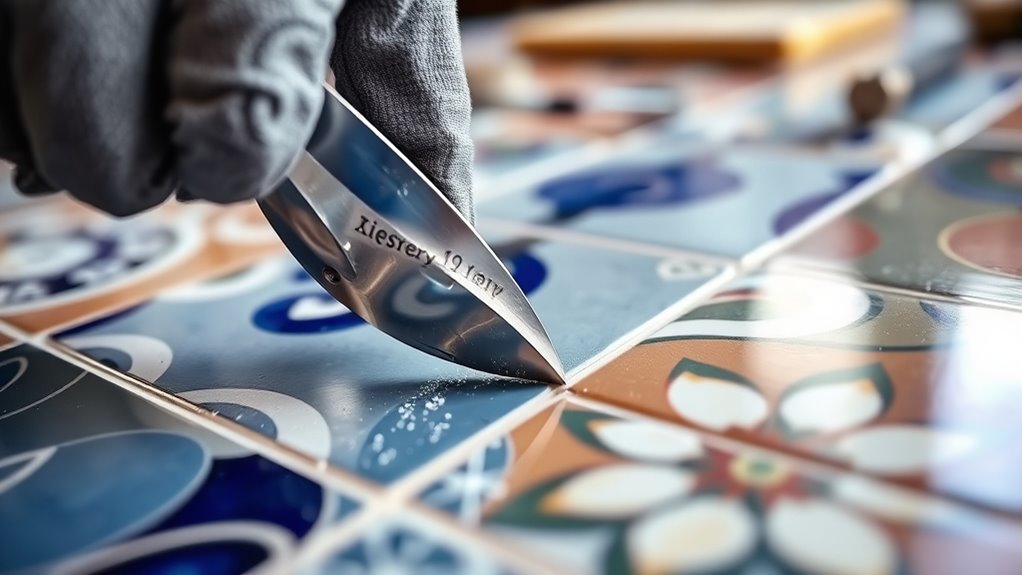

When using a tile cutter for ceramic projects, you’ll want to guarantee precise, clean cuts with minimal effort. First, position and secure your tile properly, then use firm, controlled movements to score and break along the line. Always wear safety goggles and gloves for protection, and double-check your measurements before cutting. Regular maintenance of your cutter keeps it in top condition. Keep practicing, and you’ll master the technique for professional-looking results. Keep exploring for detailed tips to improve your skills further.

Get business pricing on tools and workshop supplies
- Business-only prices and quantity discounts
- Tax-exempt purchasing
- Multiple users, one account, clear invoices
Key Takeaways
- Ensure proper tile positioning and secure it firmly before making cuts.
- Use firm, controlled pressure to operate the cutter smoothly without forcing.
- Regularly inspect and replace the cutting wheel for clean, precise cuts.
- Wear safety goggles and gloves to protect against shards and dust during cutting.
- Clean and store the tile cutter properly after use to maintain its performance and safety.

If you’re working on a ceramic project, using a tile cutter can make the process much easier and more precise. It helps you achieve clean, straight cuts quickly, saving you time and effort. To get the best results, you need to pay attention to tile cutter maintenance. Regularly inspecting and cleaning your tool ensures it stays in good working order. Keep the cutting wheel free of debris and replace it when it becomes dull or damaged. Lubricate the moving parts periodically to prevent rust and ensure smooth operation. Proper maintenance not only extends the life of your tile cutter but also guarantees cleaner cuts and safer use. Additionally, understanding the proper technique can prevent mistakes and improve your overall craftsmanship.
Speaking of safety, always remember to adhere to safety precautions when using a tile cutter. Wear safety goggles to protect your eyes from sharp shards or dust. Gloves can protect your hands from cuts, especially when handling sharp tiles or broken pieces. Make sure your workspace is clean and well-lit to avoid accidents. Before starting, double-check that the tile is properly positioned and secured—this prevents slipping, which could cause uneven cuts or injuries. Keep your fingers clear of the cutting wheel and handle the tool with firm, controlled movements. Never force the cutter; if it’s resisting, stop and check for issues rather than forcing it through.
A key safety tip is to use the tile cutter on a stable surface. This minimizes the risk of slips or mishandling during the cutting process. Be cautious of the sharp edges of broken tiles afterward, and dispose of debris properly. When you’re finished, clean your tile cutter thoroughly to remove dust and debris that could interfere with future cuts. Proper storage also matters—keep the tool in a dry, safe place to prevent rust and damage. Understanding the importance of regular maintenance can significantly impact your project’s success and safety.
Products Worth Considering

Shark AV2501S AI Ultra Robot Vacuum with Matrix Clean and Self-Empty Base

Philips Hue Amarant Outdoor Smart Light Bar, Black

Philips Hue Play Gradient Light Tube, Large, Black
As an affiliate, we earn on qualifying purchases.
Frequently Asked Questions
Can I Cut Glass Tiles With a Ceramic Tile Cutter?
You can’t cut glass tiles with a ceramic tile cutter because they’re designed specifically for ceramic and porcelain. For glass cutting, you’ll need a glass cutter or a wet saw with a diamond blade. After cutting, remember to polish the edges to prevent chipping and guarantee a smooth finish. Using the right tools for glass and tile polishing helps you achieve clean, precise cuts without damaging the material.
What Safety Gear Should I Wear When Using a Tile Cutter?
Wearing safety gear when using a tile cutter is essential—you don’t want tiny shards flying faster than a rocket! Always wear protective eyewear to shield your eyes from chips and dust, and don’t forget sturdy hand gloves to protect your hands from cuts. These simple precautions keep you safe and let you focus on your project. Safety first guarantees your ceramic masterpiece turns out perfect, without any accidents!
How Do I Measure Tiles Accurately Before Cutting?
You should start by using reliable measuring tools like a tape measure or a ruler to get precise dimensions. Mark your measurements clearly on the tile with a pencil. Use layout techniques, such as creating a chalk line or a guide, to make certain straight cuts. Double-check your measurements before cutting to avoid mistakes. Accurate measuring and careful layout help you achieve clean, professional results with your tile project.
What Maintenance Does a Tile Cutter Require?
Did you know that a well-maintained tile cutter can last up to five years? You need to regularly perform maintenance by cleaning and lubricating the parts to make certain of smooth operation. Replace the blade when it becomes dull or chipped. Keep the cutter free of dust and debris, and check the moving parts for wear. Proper maintenance ensures precise cuts and extends your tool’s lifespan.
Can I Cut Curved or Irregularly Shaped Tiles?
You can’t cut curved or irregularly shaped tiles directly with a standard tile cutter, as it’s designed for straight cuts. For tile shaping and irregular cuts, you’ll need specialized tools like a wet saw or tile nippers. These tools give you precision and control for shaping tiles to fit around curves or unique spaces. Always take your time and wear safety gear to make certain clean cuts and safe handling.
Conclusion
Now that you know how to use a tile cutter, imagine the possibilities. As you make that first precise cut, a world of creative projects awaits—each tile fitting perfectly into your vision. But beware: the true magic happens when you step back and see your masterpiece take shape. Will your next project be your best yet? Grab your tools, and let the anticipation of what’s to come drive you forward. The perfect finish is just a cut away.